Tag: news

  • Why Annexing Greenland Would Be a Strategic Mistake for the United States 

    President Trump’s push to acquire Greenland threatens to fracture NATO. Here is why the U.S. military presence is already secure, and why upsetting the world order over the Arctic is a geopolitical error.
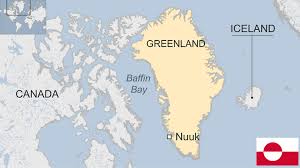

    Blue Press Journal – In recent weeks, the geopolitical chatter has shifted drastically toward the Arctic, with President Donald Trump reviving a controversial ambition: the acquisition of Greenland. From floating the idea of a purchase to alluding to the use of military force, the rhetoric has escalated quickly.

    However, a closer look at the geopolitical landscape, existing military infrastructure, and the unwavering will of the Greenlandic people reveals that upsetting the current world order to seize this territory is not just diplomatically volatile—it is strategically unnecessary.

    A Sovereign Nation, Not a Commodity

    The most glaring flaw in the proposal to “take” Greenland is the dismissal of its sovereignty. Greenland is not uninhabited real estate; it is a self-governing nation within the Kingdom of Denmark.

    In a unified and emphatic statement, European leaders—including French President Emmanuel Macron, German Chancellor Friedrich Merz, and UK Prime Minister Keir Starmer—declared that “Greenland belongs to its people.” They made it clear that decisions regarding the island are for Denmark and Greenland alone.

    This sentiment is echoed on the ground. In a rare show of political unity, Greenland’s party leaders issued a joint statement firmly rejecting Trump’s overtures. “We don’t want to be Americans, we don’t want to be Danes, we want to be Greenlanders,” the statement read. This aligns with public sentiment; a poll conducted last January found that 85 percent of the population opposes joining the United States.

    Furthermore, the claim that the U.S. needs to seize the island for “national security” ignores the fact that Washington already maintains a significant military footprint there. The Pituffik Space Base (formerly Thule Air Base) provides critical early warning and space surveillance capabilities. The U.S. does not need to own Greenland to secure it; the current alliance structure guarantees access.

    The Cost to NATO and the West

    Beyond the question of necessity lies the question of cost. Attempting to force the acquisition of Greenland would likely shatter the Western alliance system.

    Denmark asserts control over Greenland in the same legal framework the United States uses to govern Alaska or Vermont. If Washington were to use military force against Copenhagen—a NATO ally—it would trigger a constitutional crisis within the alliance. It would mark the first time in history that a NATO member has threatened military action against another.

    Such a move would validate the narratives of adversaries like Russia and China by fracturing the unity of the West. As Danish Prime Minister Mette Frederiksen noted in her joint statement with European leaders, security in the Arctic must be achieved collectively. Unilateral aggression undermines the very principles of sovereignty and territorial integrity that the U.S. and its allies are sworn to protect.

    Climate Integrity vs. Resource Extraction

    Finally, there is the matter of values. Trump’s vision for Greenland often implies resource extraction, yet the island has charted its own course regarding the climate crisis. In 2021, Greenland passed legislation banning all new oil exploration and drilling. The government described this as a “natural step,” signaling that the nation prioritizes climate integrity over economic exploitation.

    Ignoring this local governance to pursue resource interests highlights a fundamental misunderstanding of the territory’s priorities.

    The rhetoric of acquiring Greenland makes for sensational headlines, but the reality is a diplomatic minefield. The United States already possesses the military access it needs, the indigenous population is vehemently opposed to the idea, and the move would alienate America’s closest allies in Europe.

    In the Arctic, security is best maintained through cooperation and respect for sovereignty, not through the upending of the post-World War II order.

  • ICE Shooting in Minnesota Raises Serious Questions About Use of Force

    ICE shooting in Minnesota

    Blue Press Journal – The recent fatal shooting of Renee Nicole Good, a 37-year-old Minneapolis woman, by an Immigration and Customs Enforcement (ICE) agent has sparked intense public debate, political outrage, and calls for accountability. The incident, captured in video footage and widely shared on social media, has drawn scrutiny not only for the circumstances surrounding the shooting, but also for how federal officials have framed the event.

    Conflicting Narratives and Political Reactions

    In the hours following the shooting, Minnesota Senator Tina Smith expressed her shock and dismay after reviewing eyewitness accounts and video evidence. Contrary to federal claims that Good had committed “an act of domestic terrorism” by attempting to run over an agent, Smith noted the footage did not support such assertions. Homeland Security Secretary Kristi Noem’s remarks, amplified by former President Donald Trump and Vice President JD Vance, were criticized as politically charged and at odds with the evidence.

    Minnesota’s Bureau of Criminal Apprehension (BCA) has been blocked from participating in the investigation by the FBI, further deepening community mistrust. The lack of transparency has fueled concerns about federal overreach and the erosion of public trust in law enforcement.

    Officer Protocols: Never Stand in Front of a Car

    Law enforcement training across the United States emphasizes that officers should never position themselves directly in front of a vehicle. Law enforcement experts and modern police training generally teach that 
    officers should never intentionally position themselves directly in front of a vehicle due to the extreme danger and the potential for creating a situation (officer-created jeopardy) that forces the use of deadly force. Doing so significantly increases the risk of injury or death and can escalate situations unnecessarily. Best practice dictates that officers should maintain safe angles and use cover where possible, reducing the likelihood of confrontations that end in lethal force.

    In this case, questions arise about why the ICE agent placed themselves in proximity to the vehicle, and why shots were fired after any immediate threat had passed. Video analysis suggests that two of the three shots occurred when the agent was at the side of the car — a position that training guidelines typically recognize as lower risk compared to standing in front.

    Why Were Three Shots Fired?

    The decision to discharge a firearm is governed by strict use-of-force policies. These policies require that lethal force only be used when there is an imminent threat to life. Public concern has grown over the fact that two of the shots were fired when the car was no longer headed toward the officer, raising the possibility that the threat had diminished. This discrepancy underscores the importance of transparent investigations and adherence to established safety protocols.

    The Need for Accountability and Public Trust

    The Minnesota ICE shooting illustrates the urgent need for clear, unbiased investigations when law enforcement actions result in fatalities, especially in the Trump lead administration. Political rhetoric and conflicting narratives undermine public confidence and obscure the facts. For communities to feel safe and respected, law enforcement agencies must follow established safety procedures, ensure proportional responses, and remain transparent in their actions.

  • Accountability Needed: The Unjustified Shooting of Renee Nicole Good by ICE Agent

    Blue Press Journal – On January 7th, 2026, a disturbing incident unfolded in Minneapolis, where U.S. Immigration and Customs Enforcement (ICE) agents fatally shot 37-year-old Renee Nicole Good. The circumstances surrounding the shooting have sparked widespread outrage and criticism, with many calling into question the actions of the ICE agent involved. As the investigation into this incident continues, it is imperative that those responsible are held accountable for their actions.

    According to eyewitness footage and expert analysis, the ICE agent who shot Good failed to follow accepted police training protocols. Gil Kerlikowske, former Commissioner of U.S. Customs and Border Protection (CBP) during the Obama administration, stated on CNN that the agent’s actions were “tactics that no legitimate law enforcement agency would use.” Kerlikowske emphasized that the agent’s decision to stand in front of Good’s vehicle and attempt to open the door handle put himself in harm’s way, a clear example of “self-imposed jeopardy.” The Supreme Court has recently weighed in on this issue, underscoring the importance of law enforcement officers avoiding such situations.

    The video footage of the incident is disturbing. As the maroon SUV reverses and attempts to leave the scene, three ICE agents surround the vehicle. One agent approaches the driver’s side window, shouting “get out of the fucking car,” while another moves towards the front of the vehicle, which is against police protocol and places himself in self-imposed jeopardy. As the car accelerates to the right, the agent at the front left corner fires at least three shots into the driver’s side window. The fact, which is on tape, that Good was allowing another car to pass through the area before attempting to drive away raises questions about the agent’s justification for using deadly force.

    The aftermath of the shooting is equally troubling. A physician who approached the scene to offer assistance was denied access by the ICE agents, who claimed they had their own medics on the way. This response not only demonstrates a lack of concern for Good’s well-being but also highlights the agency’s prioritization of their own protocols over the needs of the individual involved.

    News outlets have extensively covered the incident, with many criticizing the ICE agent’s actions. On MSNBC’s “Morning Joe,” the panel repeatedly showed the footage of the shooting, highlighting the agent’s questionable behavior. “That’s not, you would think, the behavior of someone who was then planning to use their vehicle as a weapon when she’s letting another car drive through,” one panelist noted. The agent’s decision to grab the door handle, again placing himself in self-imposed jeopardy, which escalated the situation, and again has also been called into question.

    ICE’s response to the incident has been widely criticized as misleading. In their initial statement, the agency failed to provide accurate information about the events leading up to the shooting. This lack of transparency has contributed to the growing distrust of ICE’s handling of the situation.

    As the investigation into the shooting continues, it is essential that the ICE agent responsible is held accountable for their actions. The fact that Good was unarmed and posed no immediate threat to the agents involved raises serious concerns about the use of deadly force. The agent’s failure to follow established protocols and the agency’s subsequent misrepresentation of the facts demonstrate a clear need for greater oversight and accountability within ICE and the agents.

    As we move forward, it is crucial that those responsible for this incident are brought to justice and that measures are taken to prevent similar incidents in the future. The public deserves transparency and accountability from law enforcement agencies.

    YOU CAN SEE THE VIEDO HERE

  • 83% of Americans Demand End to Secrecy on Lethal Extrajudicial Boat Strikes

    Americans are speaking clearly: secrecy must end, and accountability must begin.

    Blue Press Journal – A new national poll reveals a striking consensus among the American public: 83% of respondents believe the Trump administration should end its secrecy surrounding alleged lethal, extrajudicial boat strikes in the Caribbean and other international waters. Nearly seven in ten voters say the administration has failed to provide adequate evidence to justify the reported killing of at least 114 individuals during these operations.

    Despite the gravity of these allegations, the administration has offered little transparency about the scope, legality, or oversight of this campaign. According to human rights observers, targeted bombings of alleged drug-smuggling vessels have continued into the new year—operations carried out far from public scrutiny and without clear accountability. 

    This lack of disclosure has become even more concerning in light of recent geopolitical developments. While headlines have focused on President Trump’s unlawful attempt to depose Venezuelan President Nicolás Maduro and gain control over the country’s oil reserves, the boat strike campaign has persisted largely unnoticed. For critics, this raises troubling questions about the administration’s priorities, its adherence to international law, and its respect for human rights.

    Transparency is a cornerstone of democratic governance. When lethal force is used beyond U.S. borders—particularly in cases where evidence is scarce and oversight is absent—the public has a right to know the rationale, legal basis, and consequences of such actions. The overwhelming demand for disclosure reflected in the poll underscores a deep mistrust of secretive military and paramilitary activities conducted without congressional debate or judicial review.

  • The Curious Case of Wag the Dog: From Fiction to Reality

    Blue Press Journal – In 1997, the satirical film Wag the Dog was released, poking fun at the idea of a president fabricating a war to distract from a personal scandal. Fast forward to January 2026, and it seems like the movie’s writers were more prophets than scriptwriters. The current President of the United States, Donald Trump, has invaded Venezuela, leaving many to wonder: what’s really going on here?

    As it turns out, the timing of the invasion is suspiciously convenient, coinciding with the stalling of the release of the Epstein Files. The connection between Trump and Jeffrey Epstein has been well-documented, and the upcoming revelations are likely to be… let’s just say, not great for Trump’s reputation.

    Wag the Dog’s plot follows a spin doctor (played by Robert De Niro) who creates a fake war to divert attention from a presidential scandal. Sound familiar? The movie’s absurdity is now mirroring reality, with Trump’s invasion of Venezuela serving as a potential distraction from the Epstein Files.

    While the reasons behind Trump’s actions are multifaceted, drug’s – oil (??) one thing is clear: the optics are suspicious. As the saying goes, “when you’re in a hole, stop digging.” Trump seems to be digging a trench. The question on everyone’s mind is: will the public be fooled by this diversion?

    History buffs will recall the USS Maine incident in 1898, where a fabricated explosion was used as a pretext for war with Spain. The phrase “Remember the Maine” became a rallying cry, illustrating the power of manufactured crises. It appears Trump is attempting to create his own “Maine moment” with Venezuela.

    The Epstein Files are a ticking time bomb, and Trump’s actions might be an attempt to defuse the situation – or at least take the heat off. However, this strategy may backfire. The public is more aware of spin doctoring and manufactured crises than ever before.

    As the drama unfolds, one can’t help but wonder: are we living in a real-life Wag the Dog? Is Trump trying to distract us from the Epstein Files by invading Venezuela? The answer, much like the truth behind the Epstein Files, remains to be seen. One thing is certain, though – the next few weeks will be a wild ride.

    While we can’t know for sure what’s driving Trump’s actions, the parallels between Wag the Dog and current events are undeniable. As the situation develops, it’s essential to stay informed and keep a watchful eye on the narrative. After all, as the great philosopher, Ferris Bueller, once said, “Life moves pretty fast. If you don’t stop and look around once in a while, you could miss it.”

  • US Forces Seize Control of Russian-Flagged Oil Tanker in North Atlantic

    Blue Press Journal – January 7, 2026

    In a significant escalation of tensions, US military forces have successfully boarded and taken control of a Russian-flagged oil tanker in the North Atlantic, according to reports from the Associated Press on January 7, 2026. The operation, led by the US Coast Guard and military, follows a weeks-long pursuit of the vessel across the Atlantic.

    The tanker, originally known as the Bella-1, had been attempting to evade US maritime authorities after slipping through a US-imposed “blockade” of sanctioned tankers. Despite previous efforts by the US Coast Guard to board the vessel, it had rebuffed their attempts, leading to a heightened standoff.

    The seizure operation involved the use of helicopters and at least one Coast Guard vessel, marking a significant show of force by US authorities. The move is likely to heighten tensions between the US and Russia, particularly in the context of ongoing US involvement in Venezuela.

    The incident underscores the complexities of global maritime law and the challenges of enforcing economic sanctions. As the situation continues to unfold, it remains to be seen how Russia and other involved parties will respond to the US actions.

  • House Republicans Release Jack Smith Deposition Transcript: Five Key Revelations on Trump Investigations

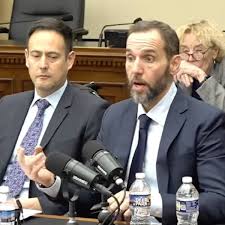
    Blue Press Journal – On New Year’s Eve, House Republicans released the long-anticipated 255-page transcript of former special counsel Jack Smith’s deposition before the House Judiciary Committee. The timing of the release has sparked debate among legal experts and journalists, with some calling it “suspicious” given its proximity to the holidays and ongoing scrutiny of President Donald Trump. The document adds fuel to the fire as the Trump administration faces mounting pressure to address the FBI’s recent unsealing of files linking Trump to disgraced financier Jeffrey Epstein. Here’s a breakdown of the most significant claims from Smith’s testimony and their broader implications. 


    1. Smith Vows to Prosecute a Former President “Regardless of Party”

    Jack Smith, the special counsel overseeing multiple investigations into Trump, asserted that the evidence against the former president and his allies is “powerful.” He emphasized that the speed and confidence of his team’s work reflect their belief that they could secure convictions at trial. When asked if he would prosecute a former president based on the same facts today, Smith replied unequivocally: “I would do so regardless of whether that President was a Republican or a Democrat.” This statement underscores the gravity of the case and signals a commitment to impartial justice. 


    2. Supreme Court’s Trump Immunity Ruling Didn’t Exonerate Jan. 6 Actions

    During the hearing, Democratic Rep. Jamie Raskin questioned Smith about the Supreme Court’s controversial 2024 decision granting Trump broad immunity. Smith rejected the notion that the ruling absolved Trump of accountability for his role in the January 6, 2021, Capitol attack. “I don’t think it was an exoneration,” he stated, reiterating that “substantial evidence” supports a criminal case against Trump. The remark highlights the legal ambiguity surrounding presidential immunity and its potential limits post-presidency. 


    3. Smith Warns of Potential Retaliation from Trump

    Smith acknowledged the risks of his work, noting that Trump has a history of targeting critics. “I am eyes wide open that this President will seek retribution against me if he can,” he said, citing examples like Trump’s litigation against New York Attorney General Letitia James and former FBI Director James Comey. The warning underscores the polarized climate surrounding these investigations and the personal stakes for those involved. 


    4. Congressional Members Were Part of Trump’s “Criminal Scheme”

    Smith revealed that Trump and his associates attempted to pressure members of Congress to overturn the 2020 election results. “President Trump and his associates tried to call Members of Congress in furtherance of their criminal scheme,” he said, clarifying that Trump, not his legal team, selected those contacted. This admission could intensify scrutiny of lawmakers’ roles in the effort to subvert the election. 


    5. Smith Denies Claims of Political Bias

    Throughout the deposition, Republicans tried to frame Smith as a partisan prosecutor. Smith pushed back, stating: “I wouldn’t stand for it, and the people who worked in my office wouldn’t stand for that either.” His defense of his integrity reinforces the credibility of the investigations and counters accusations that the probe was politically motivated. 


    Why This Deposition Matters

    Smith’s testimony occurs amid a charged political landscape. The FBI’s recently unsealed Epstein files, which detail Trump’s ties to the financier, have further complicated the former president’s legal challenges. Meanwhile, the Supreme Court’s immunity ruling and pressure on Congress to release more documents keep the spotlight on Trump’s conduct. Smith’s deposition adds a pivotal layer to these narratives, offering insights into the strength of the case against Trump and the legal principles at stake. 

    Transcript here:

  • Why Trump’s Greenland Ambition Would Be a Diplomatic and Strategic Disaster for the U.S.

    Trump’s Greenland Plan

    Blue Press Journal (DC) – When President Donald Trump floated the idea of the United States acquiring Greenland—by purchase or, as some reports suggested, by force—the world responded with disbelief and alarm. Though the concept of territorial expansion might have belonged to the 19th century, Trump’s fixation on the Danish-controlled island in the 21st century raised serious concerns about America’s foreign policy direction, its alliances, and its credibility on the world stage.

    A Costly and Misguided Pursuit

    Secretary of State Marco Rubio attempted to calm fears among lawmakers and news media, explaining that Trump’s plan was to use taxpayer dollars to buy Greenland, its mineral wealth, and its population of roughly 30,000. While the idea of purchasing land isn’t unprecedented—after all, the U.S. acquired Alaska from Russia in 1867—this modern proposal was widely seen as impractical and reckless. Greenland is not just a piece of real estate; it’s an autonomous territory of Denmark, a NATO ally. Any attempt to coerce or pressure Denmark would undermine the very principles of sovereignty that the U.S. has long defended.

    Undermining Alliances and the Global Order

    Critics, including political commentators like Joe Scarborough, emphasized that America’s true strength lies not in territorial expansion but in its alliances. As Scarborough noted, the combined GDP of the U.S. and Europe dwarfs that of rivals like Russia and China. Together, these democratic powers have historically defeated threats such as Nazism and communism. Turning against a NATO partner like Denmark would fracture this unity, sending a chilling message to friends and adversaries alike.

    The suggestion that the U.S. might seize a NATO ally’s territory shattered confidence in the post-World War II order. International reaction was swift and negative. Danish Prime Minister Mette Frederiksen called the proposal “absurd,” while European leaders have expressed concerns about the stability of U.S. foreign policy. Even within Washington, lawmakers from both parties dismissed the idea as diplomatically disastrous.
    Strategic Myopia in a Changing World

    While Trump fixated on Greenland and Venezuela, China was making rapid advances in technology, artificial intelligence, and global influence. Experts warned that such outdated, 19th-century pursuits distracted from the real 21st-century challenges—economic competition, cybersecurity, and the rise of authoritarian influence. As Scarborough pointed out, “China is eating our lunch across the globe,” while the U.S. risked chasing symbolic victories that could isolate it from its allies.

    America’s Power Lies in Partnership

    Attempting to take Greenland—whether through purchase or force—would not strengthen America. It would fracture alliances, destabilize global order, and erode trust among nations that have long stood by the U.S. In today’s interconnected world, power is measured not by the land one controls but by the partnerships one maintains. For the United States to remain a global leader, it must invest in diplomacy, innovation, and unity—not in outdated dreams of territorial conquest.

  • CBS News Faces Backlash For Jan. 6 Report: “An Outrage”

    CBS News anchor Tony Dokoupil sparks backlash for “both sides” framing in a Jan. 6 anniversary segment

    Blue Press Journal – CBS News is facing widespread criticism following a controversial segment marking the fifth anniversary of the January 6, 2021, attack on the U.S. Capitol. The report, anchored by CBS Evening News host Tony Dokoupil, has been condemned by journalists and media critics for minimizing the gravity of the event and employing a “both sides” framing that many viewed as misleading.

    A Controversial Segment and Its Fallout

    During the broadcast, Dokoupil summarized the day’s political statements with what critics describe as a false equivalence between former President Donald Trump and Democratic leaders. The segment was widely circulated on social media after a short clip appeared on X (formerly Twitter). In it, Dokoupil stated that “President Trump today accused Democrats of failing to prevent the attack on the Capitol, while House Democratic leader Hakeem Jeffries accused the president of ‘whitewashing it.’”

    Observers argue that this summary stripped away crucial historical context. The January 6 attack left five people dead and injured more than 140 police officers. The violence was incited by Trump’s repeated false claims of election fraud and his call for supporters to “fight like hell” to halt the certification of the 2020 election. By failing to highlight these facts, critics say CBS News appeared to downplay the former president’s role in the insurrection.

    Critics Demand Accountability

    Political analyst Larry Sabato called the coverage “an outrage,” urging CBS journalists to publicly condemn the segment. Sports and political commentator Keith Olbermann went further, calling for Dokoupil’s removal from the air. Their critiques underscore a growing concern among media watchers that CBS News, under new editorial leadership, may be drifting toward a dangerous form of “both sides journalism” that equates fact and falsehood in the name of balance.

    Comparing CBS to Other Networks

    Notably, CNN’s Anderson Cooper offered a sharply different approach in his own Jan. 6 coverage. Cooper described the day as a violent attack by “a mob of Trump supporters lied to by the president and his allies,emphasizing accountability and historical accuracy. The contrast between CBS’s restrained tone and CNN’s fact‑driven framing has fueled debate about the responsibilities of major networks in covering democracy‑defining events.

    The Broader Implications for CBS News

    The backlash to CBS’s Jan. 6 report raises deeper questions about the network’s editorial direction. Under editor‑in‑chief Bari Weiss, whose previous ventures have been criticized for amplifying right‑wing viewpoints, CBS appears to be recalibrating its news identity. Whether this shift reflects a deliberate strategy to appeal to conservative audiences or a broader institutional misjudgment remains to be seen. 

    Still, the reaction from journalists and viewers alike suggests that CBS risks eroding trust at a moment when public confidence in media is already fragile. For a news organization with decades of credibility, the stakes could not be higher.

  • DOJ Walks Back Trump Claim on Venezuela’s Alleged ‘Cartel de los Soles’

    BLUE PRESS JOURNAL (NYC) – In a stunning courtroom admission, the (Trump) U.S. Department of Justice (DOJ) has now acknowledged that the so-called Cartel de los Soles — once touted as the centerpiece of the Trump administration’s anti-Venezuela narrative — is not an actual criminal organization. This admission undermines years of political rhetoric, raises serious questions about U.S. foreign policy credibility, and reignites comparisons to past military interventions justified by questionable intelligence.

    From “Kingpin” to Fictional Cartel

    The Trump administration declared Venezuelan President Nicolás Maduro a “kingpin” of international drug trafficking, claiming he headed the Cartel de los Soles. The name, which translates to “Cartel of the Suns,” was presented as evidence of a sophisticated criminal syndicate. 

    However, as Latin American experts have long explained — and as the New York Times reported — Cartel de los Soles is not a literal cartel. Instead, it is a colloquial expression dating back to the 1990s, used to refer to corrupt Venezuelan military officials accused of involvement in drug smuggling. The “suns” refer to insignia worn by Venezuelan generals, much like stars worn by American officers. 

    The DEA’s own National Drug Threat Assessment has never listed Cartel de los Soles among recognized trafficking organizations. Nor has the United Nations Office on Drugs and Crime included it in its World Drug Report.

    Why the DOJ’s Admission Matters

    Following Maduro’s capture by U.S. forces, a new indictment dropped the claim that Cartel de los Solesexists. While the DOJ continues to allege Maduro’s involvement in drug trafficking, it has abandoned one of its most high-profile accusations — likely because proving the cartel’s existence in court would be impossible. 

    This reversal casts doubt on the integrity of the original charges. As Elizabeth Dickinson of the International Crisis Group told the New York Times, labeling Cartel de los Soles as a foreign terrorist organization was “far from reality.” 

    Ben Norton, editor of the Geopolitical Economy Report, argued that the abrupt change reveals “the entire US war is based on lies,” drawing a direct parallel to the false “weapons of mass destruction” narrative used to justify the 2003 Iraq invasion.

    Oil Reserves, Not Drug Boats?

    Initially, Trump’s escalation against Venezuela was framed as a mission to stop drug shipments from reaching U.S. shores. But Trump later admitted the real goal was to seize control of Venezuela’s vast oil reserves and hand them over to American companies. 

    This revelation further supports the view that the Cartel de los Soles narrative was a manufactured pretext for economic and geopolitical gain, rather than a legitimate counter-narcotics operation.

    A Pattern of Manufactured Threats

    The DOJ’s retreat on this claim is not an isolated incident. It fits a broader historical pattern in which U.S. adminstrations — have used exaggerated or false threats to justify sanctions, regime change, and even military intervention. 

    From Iraq’s alleged WMDs to Libya’s “imminent massacre,” the tactic is familiar: craft a compelling but misleading danger, rally public support, and pursue strategic objectives under the guise of humanitarian or security concerns.

    Accountability Is Overdue

    The erosion of the Cartel de los Soles narrative should serve as a wake-up call. If U.S. government agencies can promote unfounded claims to justify aggressive foreign policy, public trust is at risk — and so is the integrity of democracy itself. 

    As the DOJ’s courtroom admission shows, truth eventually surfaces. But for Venezuela, and for the American public, the cost of these fabricated narratives is measured in human lives, economic destabilization, and decades of mistrust.