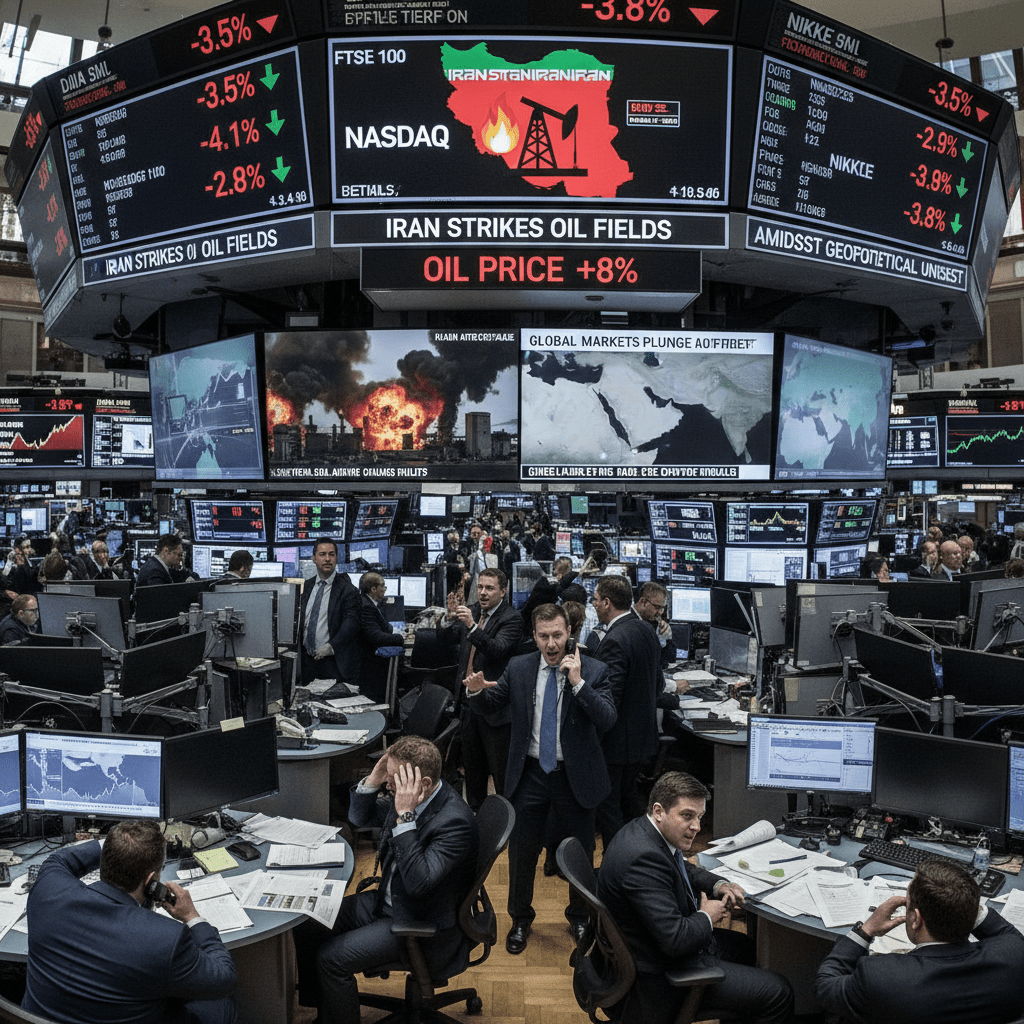
The Economic Fallout of Trump’s Iran Conflict
Blue Press Journal – The global energy landscape is currently facing a catastrophic destabilization. Following targeted Iranian strikes on critical energy infrastructure in the Gulf—specifically two major refineries in Kuwait and Qatar’s vital Ras Laffan natural gas terminal—Brent crude has surged toward the $115 mark. As Tehran’s offensive disrupts the flow of approximately 20% of the world’s liquefied natural gas (LNG), the specter of a “macro wrecking ball” hanging over the global economy has become a grim reality.
A Manufactured Crisis and the Trump Administration
While the physical damage to the Strait of Hormuz and surrounding facilities is undeniable, financial analysts and geopolitical experts are increasingly pointing the finger at the White House. Critics argue that the Trump administration’s decision to initiate this conflict was a strategic blunder of historic proportions. According to reports from The New York Times, high-level security officials previously indicated there was no immediate or imminent security threat from Iran that warranted a full-scale kinetic engagement.
By prioritizing a hawkish foreign policy over regional stability, the administration has arguably invited the very energy crisis it claimed to prevent. This “war of choice” has now pushed the national average price of gas to a staggering $3.88 per gallon as of March 19, 2026, placing an immense burden on American households.
Global Market Contagion
The economic repercussions are being felt far beyond U.S. borders. On Thursday, Brent crude jumped 6% to $113.77 per barrel, a massive leap from the sub-$73 levels seen prior to the commencement of hostilities. The Financial Times reports that European natural gas benchmarks have doubled in just thirty days, threatening a wave of “debilitating inflation” across the continent.
Global indices are reflecting this instability:
- Japan’s Nikkei 225 plummeted 3.4% as the Bank of Japan froze interest rates.
- Germany’s DAX and London’s FTSE 100 both saw losses exceeding 2%.
- Wall Street futures remain in the red as the Federal Reserve warns that persistent inflation, fueled by the war, limits their ability to provide further interest rate relief.
As the Strait of Hormuz remains effectively shuttered to tanker traffic, the question remains: was the pursuit of this conflict worth the systematic dismantling of global economic stability? For now, the world pays the price at the pump and in the markets for a war that many intelligence experts claim was entirely avoidable.
 Blue Press Journal