Blue Press Journal – The 2026 Department of Justice raid on a Fulton County, Georgia election office, seizing ballots and machinery, was a watershed moment. While framed as an investigation into the 2020 election, legal experts and election officials nationwide interpreted it as a dangerous escalation and a potential dress rehearsal for future electoral disruption.
Election law scholar Richard Hasen of UCLA Law warned in Slate that the action appeared less about the past and more like a “test run for messing with election administrators” in upcoming contests. This aligns with a persistent pattern of baseless election fraud claims being used to justify unprecedented federal overreach into state-run elections.
The prospect of similar ballot seizures during or after the 2026 midterms raises profound legal and constitutional alarms. As the Brennan Center for Justice’s Wendy Weiser stated, such actions would be “wildly illegal,” requiring judicial warrants or subpoenas that are meant to serve as a check on power. However, the legally questionable Fulton County warrant, now itself being challenged in court for its “Material Omissions and Misstatements,” demonstrates how these safeguards can be exploited.
In response, Democratic secretaries of state are not standing idle. Officials in states like Colorado and Minnesota have publicly outlined their preparations to immediately challenge any federal interference in the courts. “We’ve been preparing for this event and many other scenarios of federal disruption,” Colorado’s Jena Griswold noted, underscoring the heightened state of alert.
A potential legal defense may ironically come from a recent Supreme Court decision, Bost v. Illinois State Board of Elections. As analyzed by SCOTUSblog, this ruling could provide candidates standing to sue in advance to prevent actions—like seizing ballots—that threaten a “fair process and an accurate result,” offering a new tool to preempt interference before it occurs.
While the administration seeks to expand its electoral power, a coalition of state officials, legal experts, and judicial checks stands as a barrier to these efforts in 2026.
Trump’s Iran War: Billions Squandered, Lives Shattered, and a Cloud of Doubt Looming Over the Timing
BLUE PRESS JOURNAL – Two weeks into a conflict that lacks clear objectives or exit strategies, President Donald Trump faces mounting scrutiny over his decision to launch strikes against Iran—a move critics argue serves as a convenient distraction from the ongoing Jeffrey Epstein files controversy while draining American taxpayer resources.
The human and financial toll continues to escalate. According to The Associated Press, American casualties have mounted while the administration struggles to articulate why the nation went to war in the first place. Taxpayers are footing the bill for an open-ended military engagement that has already disrupted global energy markets, with the Center for Strategic and International Studies estimating that prolonged Gulf conflicts cost billions weekly in operational expenses alone.
Meanwhile, Trump’s economic promises are crumbling.Reuters reports that oil prices have surged past $100 per barrel in some markets, directly contradicting campaign pledges to lower everyday costs for working families. Rather than addressing these concerns, the President spent last weekend golfing at his West Palm Beach club—just hours after attending dignified transfers for fallen service members, a move that drew bipartisan condemnation for its apparent indifference.
The geopolitical fallout extends beyond Tehran. In a move that has alarmed national security experts, the Treasury Department eased sanctions on Russian oil shipments, effectively bolstering Vladimir Putin’s war machine in Ukraine while American interests suffer. Ukrainian President Volodymyr Zelenskyy explicitly criticized the decision, telling The Guardian it “certainly does not help peace” but instead strengthens Moscow’s position.
Democratic strategists see opportunity in the chaos. With midterm elections approaching, party leaders are unified in highlighting Republican failures on economic stability. “They’re flying by the seat of their pants, and the rest of us are paying the price,” noted Kelly Dietrich of the National Democratic Training Committee, referencing the administration’s lack of long-term planning.
Trump’s response to criticism has been characteristically combative. He recently claimed media outlets “want us to lose the War,” while his broadcast regulator threatened licensing repercussions—an escalation that raises First Amendment concerns. Even MAGA loyalists like Tucker Carlson have broken ranks, questioning why a president who campaigned on ending foreign wars instead initiated another open-ended conflict.
As the Strait of Hormuz remains volatile and international allies scramble to secure shipping lanes, one question persists: Is this war about American security, or about securing headlines away from damaging domestic revelations?
The Cost of Forever War: Trump’s Iran Escalation Triggers Global Market Meltdown and Gas Price Shock
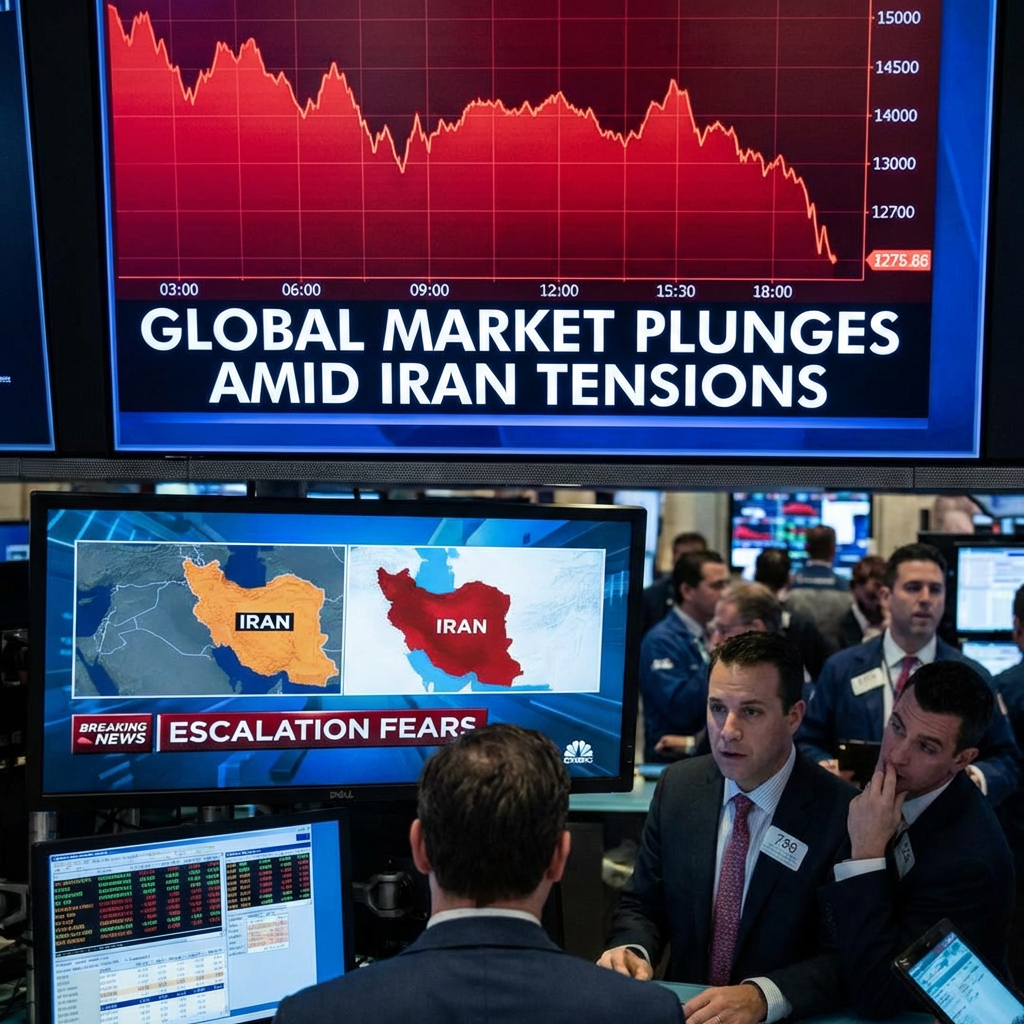
BLUE PRESS JOURNAL ( 3/3/2026) – Global financial markets plunged into chaos Tuesday as the economic realities of President Donald Trump’s widening war with Iran came crashing down on Wall Street, sending the Dow Jones Industrial Average plummeting over 1,000 points and driving crude oil prices toward the psychologically devastating $100-per-barrel threshold.
The sell-off—echoing across trading floors from Seoul to Frankfurt—reflects growing panic that the administration’s decision to assassinate Iranian Supreme Leader Ayatollah Ali Khamenei and subsequent strikes on the U.S. Embassy in Riyadh have triggered a conflict with no clear exit strategy, one that threatens to choke global energy supplies just as inflation-weary consumers were hoping for financial relief.
By 10 a.m. Eastern Time, the Dow had collapsed 1,048 points (2.1%), while the S&P 500 and Nasdaq Composite each shed 2% of their value. The rout extended far beyond American borders. South Korea’s Kospi index cratered 7.2%—its worst single-day decline since 2022—as the energy-import-dependent nation confronted the vulnerability of its supply chains. Germany’s DAX dropped 3.8%, hammered by soaring natural gas prices reminiscent of the energy crisis following Russia’s invasion of Ukraine.
The Pump Price Punishment
For American households, the war’s immediate sting is appearing at the gas station. The national average for regular unleaded jumped 11 cents overnight to $3.11 per gallon, according to data from motor club AAA, with analysts warning that prices could spiral toward $4.00 if hostilities disrupt traffic through the Strait of Hormuz—the narrow maritime chokepoint through which roughly 20% of global oil shipments pass daily.
Brent crude, the international benchmark, surged another 7.5% to $83.58 per barrel, while U.S. West Texas Intermediate climbed 7.6% to $76.64. To put this in context, Brent was trading near $70 less than a week ago—a volatility spike that signals markets pricing in sustained supply risk.
“This isn’t just a geopolitical crisis; it’s an economic assault on working families,” said economic analysts at the Roosevelt Institute, noting that every $10 increase in oil prices historically translates to roughly 25-30 cents added to the average gallon of gasoline. The timing could scarcely be worse for the Federal Reserve, which has been attempting to guide inflation toward its 2% target after years of price instability.
Trump’s “Forever War” Doctrine
The market collapse accelerated late Monday after Trump took to his social media platform to declare that “wars can be fought ‘forever,’ and very successfully” given America’s munitions stockpiles—a statement that extinguished hopes for a swift diplomatic resolution and suggested a prolonged, open-ended military commitment with incalculable economic costs.
This rhetoric marks a dangerous escalation from the administration’s initial justification for strikes against Iranian leadership. Where officials initially framed the killing of Khamenei as a precision response to specific threats, Trump’s latest comments reveal a strategic framework that could commit the United States to years of asymmetric warfare, mirroring the quagmires of Iraq and Afghanistan but with significantly higher economic stakes for domestic consumers.
Historical context underscores the risk. During Trump’s first term, the 2020 assassination of Iranian General Qassem Soleimani triggered immediate spikes in oil prices and temporary market instability, though de-escalation followed within days. The current scenario—involving the death of Iran’s supreme leader and attacks on diplomatic facilities in Saudi Arabia—represents a qualitatively superior level of conflict that threatens regional energy infrastructure directly.
The Fed’s Impossible Position
The economic fallout extends beyond the pump. Treasury yields spiked Tuesday, with the 10-year note climbing to 4.09% from 4.05% as bond markets priced in “warflation”—the toxic combination of supply shock-driven price increases and stagnating growth. Higher yields translate directly to more expensive mortgages, auto loans, and business financing, potentially choking off the soft landing the Federal Reserve has been carefully engineering.
Critically, the inflationary pressure from oil shocks severely constrains the Fed’s ability to respond to slowing economic growth. While Trump has aggressively demanded rate cuts in increasingly personal terms targeting Fed Chair Jerome Powell, traders at CME Group are now pushing expectations for monetary easing deeper into the summer, recognizing that cutting rates while energy prices surge would risk unleashing runaway inflation.
Aviation and Industry in the Crosshairs
The transportation sector is bearing the immediate brunt. United Airlines cratered 5%, American Airlines dropped 4.4%, and Delta shed 4% as investors recalculated profit margins against jet fuel costs that rise in lockstep with crude prices. The industry, still recovering from pandemic-era disruptions, now faces the dual threat of canceled routes through Middle Eastern airspace and structurally higher operating costs that will inevitably pass to consumers in the form of expensive tickets.
Gold, which had briefly touched $5,300 during the initial flight to safety, retreated 4.9% to $5,053 as rising yields made the non-interest-bearing asset less attractive, while Bitcoin fell below $67,000—demonstrating that even digital “safe havens” provide little shelter when war drives dollar-denominated borrowing costs upward.
With inflation expectations unanchoring and global supply chains facing their most severe test since 2022, the economic verdict on Trump’s Iran strategy is becoming clear: this is a war that American households cannot afford, and one that global markets will not tolerate indefinitely.
BLUE PRESS JOURNAL – The Supreme Court’s decisive ruling that nullified President Donald Trump’s emergency tariffs ignited a frantic legal scramble. Hundreds of companies—from a New York wine importer to shipping giant FedEx—are now filing lawsuits to reclaim duties they allege were unlawfully collected. The fight has split into two competing jurisdictional tracks, while the Trump administration and the Department of Justice (DOJ) deliberately drag their feet.
Two Front‑Line Challengers VOS Selections, a New York wine and spirits importer represented by the Liberty Justice Center, is pressing the U.S. Court of Appeals for an immediate mandate so lower courts can begin processing refunds. The importer previously secured a verbal guarantee from the administration that any successful claim would be reimbursed promptly. In contrast, AGS Company Automotive Solutions of Michigan, the lead docket in a consolidated case, is demanding a hearing to lift a December‑23 judicial stay, arguing that each day of delay deepens the prejudice to plaintiffs.
DOJ’s 90‑Day Freeze: A Stalling Tactic Despite early assurances, the DOJ now argues for a 90‑day freeze to let “political branches consider options,” labeling rapid refunds as “ill‑conceived.” President Trump, meanwhile, has suggested the process could take years and has urged the Supreme Court to rehear the case—a rarity not seen in nearly seven decades (Reuters). Such postponements appear designed to protect the administration’s political capital rather than remedy wronged businesses.
Political Backlash and Legislative Action Democratic governors from Illinois, New York, Maryland and California have issued invoices demanding billions in refunds for their residents. Senators Ed Markey, Ron Wyden and Jeanne Shaheen have introduced legislation compelling U.S. Customs and Border Protection to issue full refunds with interest within 180 days, prioritizing small‑business owners (Politico).
A Call for Uniform, Court‑Supervised Relief The Liberty Justice Center warns that a “900‑case pileup” will overwhelm the courts if each company pursues separate suits. Yet the administration’s resistance to an expedited, uniform process leaves businesses in limbo, facing mounting legal costs and uncertain timelines.
Bottom line:The Trump administration’s deliberate delays and the DOJ’s procedural roadblocks betray a disregard for fiscal justice, forcing American businesses to fight a protracted legal battle for money they are rightfully owed.
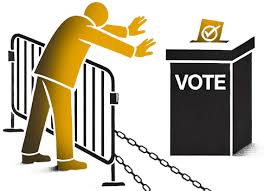
Blue Press Journal – Last week, Republican lawmakers reignited a deeply troubling campaign to pass the SAVE Act, introducing new bills in both the House and Senate. This renewed push, following the widespread rejection of last year’s attempt, represents a blatant effort to undermine the fundamental right to vote for millions of American citizens. Far from securing elections, these proposals, particularly the House’s “Make Elections Great Again Act,” are poised to create chaos, impose significant burdens on voters and election officials, and disproportionately silence marginalized communities.
At its core, the SAVE Act mandates a “show your papers” requirement for voter registration, demanding documents like passports or birth certificates. This seemingly straightforward requirement masks a harsh reality: over 21 million American citizens lack ready access to these specified documents. As analyses from organizations like the Brennan Center for Justiceconsistently show, millions of Americans, nearly half the population, don’t possess a passport, and many more lack easy access to a physical copy of their birth certificate. This policy would erect formidable barriers, particularly for younger voters, voters of color, and rural communities who often face greater logistical and financial hurdles in obtaining these documents. Moreover, millions of women whose married names may not align with their birth certificates or passports would be forced to navigate additional, costly bureaucratic hoops simply to exercise their constitutional right.
The financial burden on voters is undeniable. Obtaining a birth certificate or passport incurs fees, which, for many, represent an unnecessary and prohibitive cost to participate in democracy. This effectively imposes a poll tax, placing the responsibility on individual citizens to pay for documentation that, in most cases, is entirely unneeded to confirm their eligibility.
Beyond the immediate impact on voters, the SAVE Act proposals threaten to inject unprecedented chaos into election administration. The bills would place unfunded mandates on already stretched state and local election officials, compelling them to manage complex new verification processes. Officials making honest mistakes could face severe civil and even criminal penalties, risking punishment for allowing an eligible citizen to vote if the “papers” aren’t deemed sufficient. A rushed implementation, set to take effect within a year or two, would inevitably lead to widespread confusion, further hindering citizens’ ability to cast ballots.
The House’s “Make Elections Great Again Act” introduces an alarming array of additional obstacles. It demands not only proof of citizenship but also proof of residence at registration, potentially disenfranchising millions who have recently moved but haven’t updated their driver’s licenses. The bill also proposes a restrictive photo ID requirement at the polls, a standard more stringent than nearly every current state law. Student IDs, even from state universities, would be prohibited, and many tribal IDs would be rendered invalid due to the lack of an expiration date. Furthermore, it mandates voter roll purges every 30 days, disrupting the vital 90-day quiet period before elections and increasing the risk of eligible voters being mistakenly removed. The legislation also aims to eliminate universal mail voting, forcing all mail voters to apply for a ballot – a move that would upend the primary voting method in eight states and Washington, D.C.
Even the Senate’s “SAVE America Act” presents its own set of challenges, requiring voters to present documents twice – at registration and again when casting a ballot – unless states agree to routinely share their voter rolls with the Department of Homeland Security’s (DHS) SAVE program. This raises serious privacy concerns, especially given the Trump administration’s history of requesting state voter files under questionable pretenses. As reported by news outlets like The Washington Post, the administration faced significant pushback from dozens of states unwilling to provide sensitive voter data due to concerns about misuse, even admitting that Social Security Administration team members had turned over voter rolls to an advocacy group seeking to “find evidence of voter fraud and to overturn election results.”
Crucially, the SAVE Act offers no solution to a non-existent problem. All available evidence, including findings from the Trump administration’s own inquiries, consistently demonstrates that instances of non-citizens voting are vanishingly rare. States that have meticulously investigated their voter rolls, such as Louisiana and Utah, have repeatedly confirmed this fact. These bills are not about “election integrity”; they are about suppressing votes and sowing distrust in our democratic processes.
The League of Women Voters of the United States rightly shares “grave concerns and strong opposition” to the Make American Elections Great Again Act, stating it is “not an attempt to secure our elections, but rather an attempt to make it harder for eligible Americans to register and vote.” This legislation, in any form, is a dangerous and undemocratic proposal. Congress must reject the SAVE Act once again and protect the freedom to vote for all American citizens.
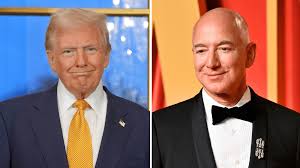
Washington Post layoffs and Jeff Bezos’s role in dismantling the newsroom, and how this aligns with the erosion of the First Amendment and appeasement of Donald Trump
The news industry this week witnessed a seismic shift that threatens the very foundation of American democracy. The Washington Post, a nearly 150-year-old institution and a pillar of the democratic system, began a fresh wave of mass layoffs. Under the ownership of billionaire Jeff Bezos and the stewardship of publisher Will Lewis, the paper is closing its Sports department, gutting its International and Metro desks, and ending its signature podcast.
While management frames these cuts as a necessary business realignment, a closer examination reveals a more troubling narrative. These layoffs represent a systematic dismantling of the Fourth Estate’s ability to hold power accountable. When viewed alongside Bezos’s history of appeasing Donald Trump and his interference in editorial independence, it becomes clear that these cuts are not just financial—they are a direct threat to the First Amendment.
The Erosion of Institutional Integrity
The Washington Post has long been synonymous with investigative journalism, most famously exposing the Watergate scandal. However, under Jeff Bezos’s ownership, the paper has pivoted away from its role as a public watchdog toward a model that prioritizes business interests over journalistic missions.
According to a statement released by the Washington Post Guild, “Continuing to eliminate workers only stands to weaken the newspaper, drive away readers and undercut The Post’s mission.” This is not hyperbole; it is a factual assessment of the current trajectory. By decimating the Metro desk and closing the Books section, the Post is severing its connection to the local community and intellectual discourse—areas essential for a well-informed citizenry.
The human cost of these decisions is staggering. As reported by The Guardian, laid-off journalists took to social media to voice their anger. The former Cairo bureau chief revealed she was laid off alongside the “entire roster” of Middle East correspondents, while a Ukraine-based correspondent lamented losing her job “in the middle of a warzone.” When a major news outlet abandons on-the-ground reporting in conflict zones, it creates an information vacuum that authoritarianism thrives in.
Bezos, Trump, and the Politics of Appeasement
To understand the First Amendment implications of these layoffs, one must look at the broader context of Jeff Bezos’s behavior over the last two years. There is a growing trend in American media, as identified by media critics, where “media companies and other key institutions of civil society responding to Donald Trump’s efforts to bully and intimidate them by knuckling under, sucking up, and appeasing him.”
Jeff Bezos has emerged as a chief practitioner of this appeasement.
In a move that broke with decades of tradition, the Post announced it would not endorse a presidential candidate for the 2024 election—a decision made directly by Bezos. As noted by NPR, this decision resulted in the swift loss of tens of thousands of subscribers. This was not a neutral act; it was a strategic maneuver to protect Bezos’s vast business empire, including Amazon and Blue Origin, from potential retribution should Donald Trump return to power.
Furthermore, Bezos’s interference extends to the editorial pages. He previously forced the opinion section to pivot toward “personal liberties and free markets,” a move that prompted the section’s editor to resign. This editorial meddling signals to readers that the paper’s content is subject to the whims of a billionaire rather than the principles of journalistic integrity.
The Financial Fallacy and the “Puff Piece” Paradox
Critics argue that the layoffs are a response to financial struggles, yet the Post’s decline in subscribers correlates directly with Bezos’s political decisions, not a lack of demand for news. In fact, competitors like The New York Times have thrived. As reported by The New York Times itself, the paper added approximately 450,000 digital-only subscribers in the last quarter of 2025 alone. The difference? The Times continues to invest in its newsroom while the Post is slashing it.
The contradiction in Bezos’s strategy is glaring. While he cuts essential reporting staff, reports have surfaced regarding massive spending on non-journalistic projects. Critics point to the investment of tens of millions in a documentary about the First Lady—a project that serves as a “puff piece” rather than hard news. This allocation of resources suggests that Bezos is more interested in curating a favorable public image than in funding the investigative reporting that defines the Washington Post.
The First Amendment in Peril
The First Amendment guarantees freedom of the press, but that freedom is meaningless without the infrastructure to support it. A free press requires funding, staff, and the independence to report without fear of billionaire reprisal.
By gutting the International and Metro departments, Bezos is effectively shrinking the scope of information available to the American public. A democracy relies on a press that can cover local city hall meetings just as much as it covers international conflicts. When those layers of coverage are stripped away, the public is left with a superficial understanding of the world, making them more susceptible to disinformation and authoritarian rhetoric.
As former Washington Post executive editor Marcus Brauchli once noted, the paper’s value lies in its ability to provide “indispensable” coverage. If Bezos continues to view the Post solely as a financial asset to be liquidated for parts rather than a civic institution, the paper may not survive the decade.
A Call for Responsible Stewardship
The layoffs at The Washington Post are not merely a business restructuring; they are a symptom of a larger disease in American media—the consolidation of power in the hands of billionaires who prioritize self-preservation over public service.
Jeff Bezos has the wealth to sustain the Washington Post for decades, investing in the next generation of reporters and expanding coverage. Instead, he has chosen a path of austerity that weakens the paper’s ability to function as a check on power. By silencing foreign correspondents and dismantling local desks, he is aiding the efforts of those who wish to diminish the free press.
If Bezos is unwilling to be a steward of this beloved institution, he should heed the advice of critics and consider selling the Washington Post to owners who value the First Amendment over personal gain. Until then, the slow death of the Washington Post serves as a chilling warning: the freedom of the press is only as strong as the will of those who own it.
WASHINGTON — A federal judge has once again ruled against the Trump administration’s efforts to restrict congressional oversight of immigration detention centers, finding that the policy likely violates existing federal law ensuring lawmakers’ access to those facilities.
U.S. District Judge Jia Cobb, appointed by President Biden, issued the decision Monday, halting a Department of Homeland Security (DHS) directive that would have required members of Congress to provide seven days’ notice before conducting visits to Immigration and Customs Enforcement (ICE) centers. The rule, reinstated last month by DHS Secretary Kristi Noem, applied to facilities funded under the so-called “Big Beautiful Bill,” a Republican-backed spending package enacted last summer that omitted a long-standing access provision.
This ruling marks the second time Judge Cobb has sided with a group of Democratic lawmakers who filed suit to preserve their ability to conduct unannounced inspections. In December, Cobb previously found that the Trump administration violated a congressional “rider” attached to DHS’s annual appropriations bill — a provision guaranteeing lawmakers the right to visit detention sites without advance notice.
In her latest opinion, Cobb criticized the administration’s argument that it could feasibly separate funding streams to determine which facilities were covered by the rider and which were not. “Defendants’ declarant provides almost no details or specifics as to how DHS and ICE would accomplish this task in the face of the practical challenges raised by Plaintiffs,” Cobb wrote.
Legal experts note that the decision reaffirms Congress’s constitutional oversight powers and underscores the judiciary’s role in upholding legislative intent. The ruling effectively prevents DHS from enforcing the notice requirement while the lawsuit proceeds.
Understanding Appropriations Riders and Congressional Oversight
Appropriations riders are provisions in spending bills that direct or limit the use of federal funds. Congress has often used these riders to oversee executive agencies, particularly in sensitive areas like immigration enforcement, environmental regulation, and defense spending.
According to the Congressional Research Service, riders have been used since the early 20th century to ensure compliance with congressional mandates, such as requiring public reporting on detainee conditions and restricting the transfer of Guantánamo Bay prisoners.
Judge Cobb’s ruling reinforces that these riders carry the force of law and cannot be sidestepped by administrative reinterpretation or selective funding designations.
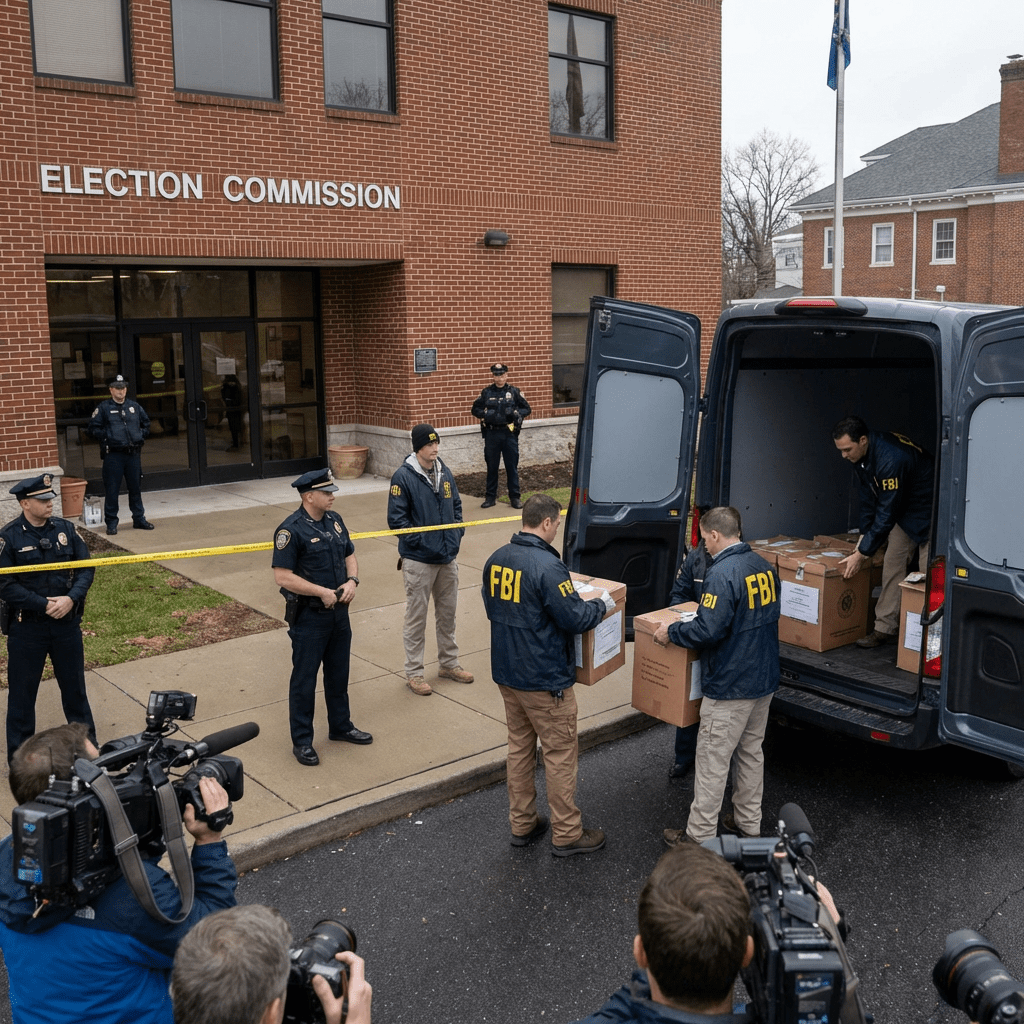
The FBI’s unprecedented seizure of Georgia’s 2020 ballots raises critical questions about federal overreach, Trump’s lingering influence, and the fragile chain of custody that underpins American democracy.
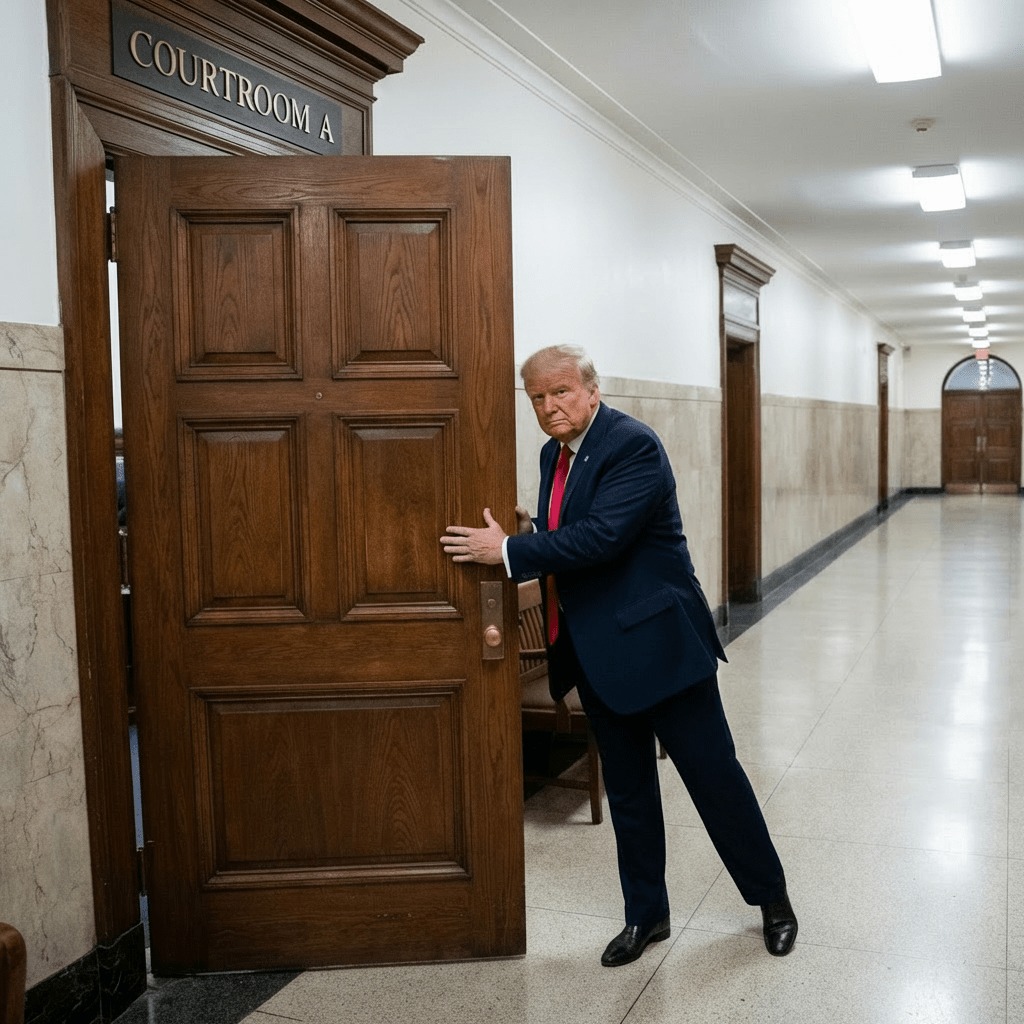
Blue Press Journal – When news broke of an FBI raid at Fulton County’s central election facility in Georgia, it barely registered in the national conversation. Yet, for many observers, the January 28 operation—reportedly involving the seizure of more than 700 boxes of 2020 election materials—raises troubling questions about federal overreach and political motives behind revisiting an election that courts and recounts have already settled.
According to The New York Times and Reuters, the raid was conducted under the pretext of “protecting election integrity.” But the optics are hard to ignore. Why would federal agents intervene in a state-controlled election process nearly four years after Donald Trump lost Georgia, a defeat confirmed by multiple recounts and upheld in more than 60 court cases nationwide?
A Chain of Custody—or a Chain of Command?
Legal experts and state officials have voiced concern about the lack of transparency surrounding the operation. Fulton County election staff say they were given little explanation for the seizure, and no clear chain of custody documentation has been made public. Election law analysts note that such actions could undermine faith in the very institutions charged with safeguarding democracy.
Maine’s Secretary of State, Shenna Bellows, summed up the unease in a statement to The Associated Press:
“We maintain strict control over our ballots. If the federal government can simply seize them without explanation, it sets a dangerous precedent.”
Trump’s Shadow Over the Investigation
Trump’s continued insistence that the 2020 election was “rigged”—despite bipartisan certification and judicial rejection of fraud claims—looms over this latest development. His public comments following the raid, amplified on Truth Social, again alleged wrongdoing in Fulton County, echoing disproven narratives from his post-election campaign.
CNN and FactCheck.org have repeatedly debunked these claims, noting that Georgia conducted both a hand recount and an audit, confirming Joe Biden’s victory. Still, the former president has expressed regret that he “didn’t order the National Guard to seize voting machines,” a statement that blurs the line between political rhetoric and authoritarian impulse.
Election Integrity or Political Intimidation?
The presence of senior intelligence officials, reportedly including the Director of National Intelligence, raises another question: is this truly about election security—or about sending a message to local election workers? As one Fulton County official anonymously told The Washington Post,
“This feels like intimidation. It’s meant to make officials think twice before standing up to federal power.”
Critics argue that actions like this risk chilling effect on election staff and voters alike, particularly in diverse, high-turnout counties such as Fulton—where turnout was key to Biden’s 2020 win.
Democracy Under Scrutiny
While Trump’s allies claim the raid is part of a legitimate transparency effort, the broader context suggests a deeper pattern: using federal agencies to re-litigate political defeats. The FBI, the Department of Justice, and intelligence agencies now find themselves caught between protecting electoral systems and appearing complicit in partisan agendas.
Minneapolis Mayor Jacob Frey condemns a federal court ruling allowing Trump-era immigration raids in Minnesota, calling it an invasion undermining safety and local authority.
Blue Press Journal – Minneapolis Mayor Jacob Frey condemns a federal court ruling allowing Trump-era immigration raids in Minnesota, calling it an invasion undermining safety and local authority.
Minneapolis Mayor Jacob Frey and Minnesota officials are vowing to continue their fight against the Trump administration’s aggressive escalation of federal immigration enforcement in the Twin Cities — even after a federal judge rejected the state’s request to halt the operation.
The decision, handed down by U.S. District Judge Katherine Menendez, denied an injunction against what locals have described as an “invasion” of federal immigration officers under Operation Metro Surge. This initiative, launched during Trump’s presidency, has sent waves of heavily armed Immigration and Customs Enforcement (ICE) and Customs and Border Protection (CBP) agents into Minneapolis neighborhoods.
Mayor Frey: “This Has Brought Fear, Not Safety”
Mayor Frey issued a strong rebuke following the ruling, stating that the surge has disrupted communities, instilled fear among residents, and undermined public safety. “This decision doesn’t change the lived reality here — fear, disruption, and harm caused by a federal operation that never belonged in Minneapolis in the first place,” Frey said.
He emphasized that Minneapolis’s sanctuary city policies are designed to protect immigrant communities, fostering trust between residents and local law enforcement. Critics argue that Trump’s immigration crackdowns — often targeting sanctuary jurisdictions — were politically motivated, aiming to punish cities that refused to cooperate with federal deportation efforts.
Tragic Consequences of Federal Overreach
The lawsuit, filed by Minnesota Attorney General Keith Ellison and Twin Cities officials, gained urgency after two local residents — ICU nurse Alex Pretti and Renee Good — were killed in incidents tied to federal immigration actions. These deaths have intensified calls for accountability and raised questions about the safety and necessity of such operations in urban areas far from the border.
Researchers and immigration advocacy groups note that deploying militarized federal agents in sanctuary cities is not only legally contentious under the Tenth Amendment’s anti-commandeering doctrine, but also socially destabilizing. It can discourage crime victims from seeking help and erode trust in public institutions.
Sanctuary Cities Under Siege
Under Trump’s leadership, sanctuary cities like Minneapolis, New York, and San Francisco repeatedly faced threats of funding cuts, public shaming, and targeted enforcement surges. The administration claimed such measures upheld federal law, but critics, including the American Civil Liberties Union (ACLU), warned they were designed to intimidate immigrant communities and score political points rather than improve safety.
Mayor Frey has made it clear that Minneapolis will not serve as an arm of federal immigration enforcement. “Undocumented residents should be able to call 911 without fearing deportation,” he said, reaffirming the city’s commitment to being a “welcoming, inclusive place for all.”
Despite the setback in court, Minneapolis officials are appealing the decision, determined to hold the Trump administration accountable. The broader legal battle touches on fundamental questions about states’ rights, local autonomy, and the limits of federal power in immigration enforcement.
Blue Press Journal – January 26, 2026 – The ongoing clash between Minnesota state officials and the federal government over Immigration and Customs Enforcement (ICE) operations reached a critical juncture this week, as U.S. District Judge Kate Menendez weighed whether the Trump administration’s deployment of nearly 4,000 ICE agents to the state violates constitutional principles.
At the heart of the case is theTenth Amendment, which reserves to the states or the people any powers not explicitly granted to the federal government. Minnesota’s legal team, led by Assistant Attorney General Brian Carter, argues that “Operation Metro Surge” — the mass influx of federal immigration agents — represents a coercive overreach that undermines state sovereignty and erodes public trust in the republic.
A Constitutional Flashpoint
Judge Menendez acknowledged the “enormous evidentiary record” detailing the fallout from ICE’s aggressive tactics in Minnesota. This includes the fatal shootings of Renee Good and Alex Pretti, incidents that have intensified public outrage and raised urgent questions about accountability.
Carter underscored the gravity of the situation:
“If this is not stopped right here, right now, I don’t think anybody who is seriously looking at this problem can have much faith in how our republic is going to go in the future.”
According to the American Civil Liberties Union (ACLU) and investigative reports from ProPublica, ICE under the Trump administration frequently targeted individuals without serious criminal records, contradicting claims that enforcement is focused on “the worst of the worst.”
Accountability Gaps and Body Cameras
The White House has refused to commit to releasing body camera footage from the federal agent killing of Alex Pretti. Press Secretary Karoline Leavitt sidestepped questions about whether ICE agents should be required to wear body cameras — a standard increasingly adopted by local police departments nationwide for transparency and public trust.
The Government Accountability Office (GAO) has repeatedly reported that ICE’s internal oversight mechanisms are inadequate, with insufficient transparency in use-of-force incidents.
Local Leaders Sound the Alarm
Minneapolis City Attorney Sara Lathrop stressed that before the Trump administration’s escalation, Minnesota had just 80 ICE agents — who still managed thousands of arrests. The new surge, she argued, is unnecessary and producing “toxic and lifelong harms” to immigrant communities, where fear of detention now dictates daily life.
Lathrop urged Menendez to impose an immediate pause on ICE’s expanded operations, warning that without judicial intervention, constitutional rights will continue to be “trampled on.”
What’s at Stake
This case is more than a dispute over immigration enforcement numbers — it’s a test of how far a presidential administration can push federal power into state jurisdictions without consent. If Judge Menendez sides with Minnesota, it could set a precedent limiting future federal overreach in immigration matters.
For now, the decision rests with the court. But one thing is clear: unchecked federal enforcement, lacking transparency and accountability, risks deepening mistrust between communities and the government — a danger to both constitutional balance and public safety.



 Blue Press Journal