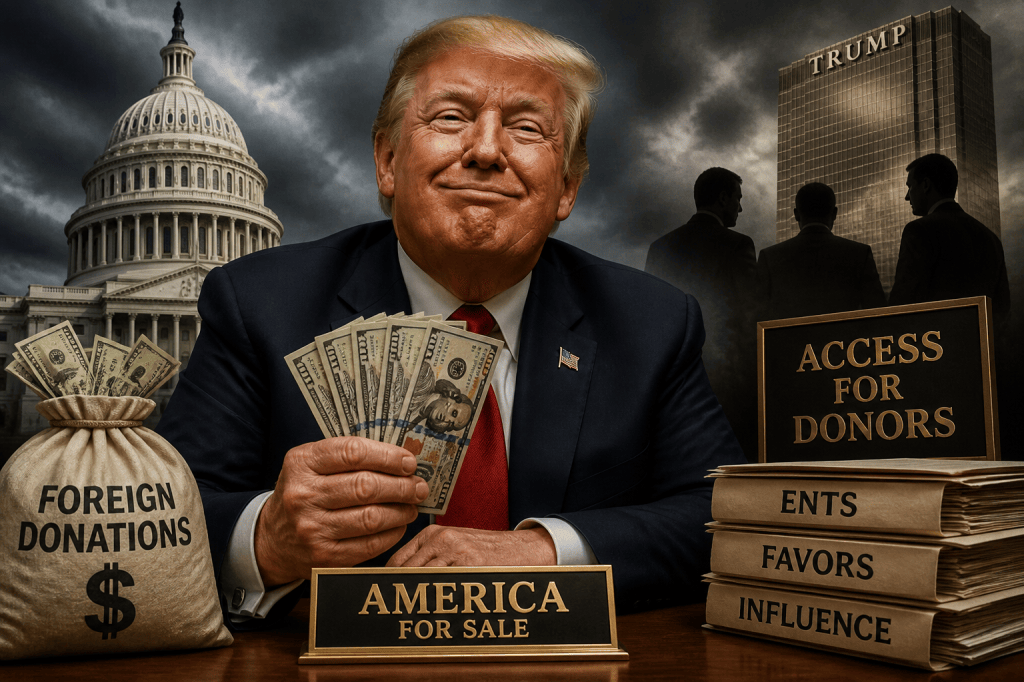
A new ProPublica report details a potentially explosive source of controversy in the re-election bid of Sen. Susan Collins (R-Maine) , shifting Democratic criticism of the senator away from her legislative voting record and towards allegations of significant political corruption.
The report follows up on an investigative trail beginning with Martin Kao, the former CEO of defense contractor Navatek, a Hawaii-based company. At the time of the 2022 campaign finance indictment, Kao was cooperating with federal authorities and met with Scott Reed, who headed a super PAC that had been associated with Collins. Kao allegedly offered to provide a $500,000 donation to the super PAC, which would have circumvented contributions from government contractors to get around bans on donations from government contractors in order to secure dozens of millions of federal naval contracts for Navatek. Reed supposedly assured Kao that the senator would be aware of where the money came from, and internal emails later suggested that Collins was committed to obtaining $32 million in contracts.
FBI agents had investigated the possibility of a bribery investigation connected to these allegations, but the probe died out after the new election cycle began, and federal law enforcement purges, particularly those orchestrated by the Trump administration, that undermined public corruption investigations. An FBI spokesperson said that the bureau ultimately found nothing implicating Collins or her campaign.
Collins’ office and campaign have strongly rebutted the allegations, describing Kao’s statements as “outlandish” and noting that the campaign was never a target of FBI investigation, cooperating fully with authorities.
Despite these denials, the report threatens to derail the final weeks of the Maine Senate race, with Collins’ Democratic rival, Troy Jackson, quickly capitalizing on the story, claiming the allegations represented “corruption of the highest order” and calling for full transparency, which is sure to be a major issue for voters ahead of election day.
President Donald Trump has intensified economic pressure on Iran with new sanctions and blockades, claiming it will strengthen the United States. Instead, record diesel prices are fueling backlash from farm and energy interests, pushing Republican lawmakers from rural states to consider a diesel export ban that cuts against his own policy.
Mr. Trump’s war with Iran has reduced Iranian oil exports and triggered a blockade of the Strait of Hormuz, creating a shortage in European and Asian markets. With diesel demand still high, prices have hit record levels, hammering the agricultural sector and driving up the cost of goods and services. As the 2026 midterm elections approach, Republicans risk losing farm voters who blame the President and his party for surging inflation.
Many Republicans in Congress refuse to budge because they rely on big oil money from companies like Exxon and Chevron, which profit when diesel prices soar. Their lobbying power drowns out farmers who are being squeezed by high fuel costs. This GOP loyalty to oil giants over rural voters exposes a blatant hypocrisy that could cost them crucial farm‑state electoral support.
Critics say the President’s Iran policy is less about security and more about staging a confrontation with Tehran to distract voters. They argue his hardline moves have failed to explain to voters why Iran was a looming threat, but a political tactic to distract from stubbornly high prices for everyday goods and services because of this tariffs.
For farmers and American’s, it means that prices of commodities and services are about to rise again. The President’s and Republican’s current course of action will be detrimental for the country, we need change!
When I first read about the changes to the 2030 census proposed by the Trump administration, I knew it would make national headlines and turn into a political scandal. The provisions under consideration would exclude millions of people from being counted, change the funding formula, and favor redistricting that benefits Republicans.
I want to discuss what the changes mean and explain why they have caused such a stir in Washington, DC.
The Substance of the 2030 Census Changes
The provisions that the Trump administration wants to see in the 2030 census report are of a radical nature. Here are some key changes that the government wants to make:
Redefining “usual residence” as the place of “primary physical presence” during the year of the census. The administration would use income-tax filings and W-2 tax forms to determine a person’s “primary physical presence”
Excluding undocumented immigrants and legal residents who do not have residency on April 1, 2030, from the count. The 2020 census count included all foreigners, legal and illegal. The reasoning behind this provision is that it is an unconstitutional interpretation of “whole number of persons”
Removing questions on race, ethnicity, and sexual orientation. The rationale is that it is outside the constitutional powers of the federal government to collect this information.
To justify excluding non-citizens from the count, the administration has interpreted “whole number of persons” to mean “inhabitants” that have a “qualified” relationship with the political system. It is worth noting that many of these policies have been advocated by President Trump and the Heritage Foundation in Project 2025, a document outlining policies that a Republican administration would implement through executive orders.
Reaction to the Trump Census Proposal
Not surprisingly, the proposals have been met with derision and outright condemnation from Democrats and civil libertarians.
The argument that only “qualified” persons should be counted is an assault on the equal sovereignty of every American citizen that goes against the spirit and intent of the Constitution.
Letitia James, the attorney general of New York, called the proposals “a radical revision of the US Census” and said that she was considering taking legal action to block the changes because of their “unpatriotic” nature.
In the past, Ms. James has successfully sued to block similar changes to the census, and she will undoubtedly take similar actions in the future. Ms. James stated, “The Constitution says what the Constitution says. Every person who is present in the United States should be counted, period,”
Mr. Roberts of the Center for American Progress reacted to the proposal by saying that it was “a blatant attack on our democracy and a means to gerrymander our way to victory at the expense of minorities and public policy.”
Mr. Roberts added that he expected litigation to challenge the new changes and that the Court would eventually rule on whether the changes were constitutional or not.
He concluded, “Congress is the only body that can decide if this change is appropriate or not. Nevertheless, the public will have thirty days to respond to the request for comments and express their opinions on the issue.”
September 8, 2026 – According to a survey conducted by the Navigator Research Project, an influential Democratic poll, 60% of voters believe that Mr. Trump exacerbates corruption in the nation’s capital, while only 40% believe that he helps to eradicate it. This is a dramatic reversal of the opinion of Trump’s first campaign, which promised to “drain the swamp” and purge Washington of its corruption and special interests.
This figure represents a significant shift from the beginning of his presidential campaign, when Navigator registered only a 2 percent difference between those who thought Trump was a “source of corruption” and those who thought he would “help to eradicate it.”
“Trump has had a major shift in how people are viewing him in relation to corruption. A growing number of people see him as a source of corruption,” Ms. Tang said. “This trend was evident across different voter segments.”
Nevertheless, this is a change that has been building for sometime, prompted by recent disclosures regarding his family’s crypto enterprises, his acceptance of a new jet from the Qatari royal family, and his latest business endeavor, Truth Social, which includes a paywall. Democrats have long struggled to depict Trump as anything other than a self-seeking billionaire willing to sacrifice the government for his own gain. Nevertheless, it has proven to be a slippery slope for the anti-Trump forces.
The timing is significant because Navigator found that one-third of all voters and 40% of independents identified battling corruption as one of their top five issues. It does not take precedence over healthcare or inflation, which are of greater concern to voters, but it does rank above immigration, housing, and crime.
Most voters have a generally negative perception of corruption. By a wide margin, approximately one-third (33%) of voters and 40% of independents claim to believe that “virtually all” or “most” politicians are corrupt. This perception is consistent with recent polls that have found a record-high 89% of Americans believe there is rampant corruption in the federal government.
When asked to choose between the major political parties, respondents had a more negative opinion of the Republican Party, especially when it came to Trump. When asked whether they believed “Trump and the GOP are more corrupt or that Democrats are more corrupt,” 51% answered yes to the former and 32% to the latter. On the other hand, when Trump was not mentioned, 46% felt that the GOP was more corrupt than the Democrats, and 34% felt the same about the Democrats.
How a Needless Conflict Is Crushing American Family Budgets
By Winston Wendell
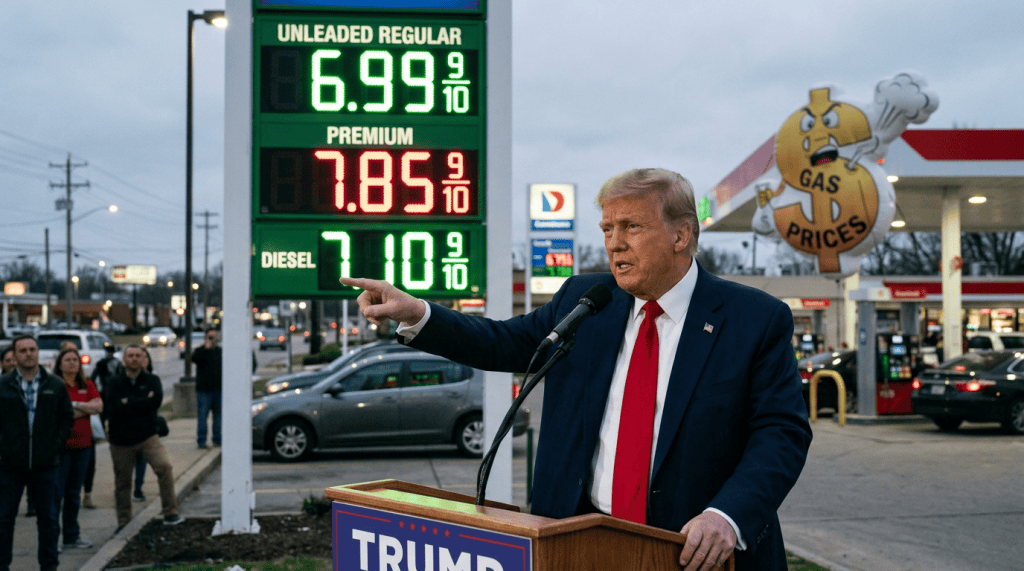
Gas prices in America have once again reached a breaking point. For many families, the prospect of filling up their cars is an unbearable prospect. Energy prices directly impact the global economy, and its repercussions are being felt by ordinary families. As an essential good, increases in its price effectively act as a tax on all other goods and services.
The devastating impact of this development is felt most strongly by middle-class families. Yet, what many people fail to understand is that this crisis is a direct result of an avoidable conflict engineered by Donald Trump.
During the 2024 election campaign, US president Donald Trump courted working-class voters by promising to ease the rising costs of living. Voters were promised that a Trump administration would be good for the economy and energy prices would plummet. Many were drawn to his populist rhetoric and pledged their vote to the former president, hoping that he would deliver on his promises.
They delivered their votes, but not much else.
With little provocation, the President decided to embark on a geopolitical and military adventure in Iran. By fueling a senseless war, Trump pushed global oil prices to a record high, devastating families that trusted him to restore stability to the economy.
This development is an unforgivable betrayal of the middle-class voters that placed their trust in him. Ordinary Americans that believed in his populism are now faced with the ugly reality of Trump’s presidency. With every visit to a gas station and a grocery store, they are reminded that their president is responsible for their financial struggles.
These people know that they were misled and their trust betrayed. They understand that the America First rhetoric masked Trump’s recklessness and irresponsibility as a leader.
For the American middle class, there is no justice. For everyone else, there is at least some form of redemption.
During the 2024 campaign, commentators, economists, and analysts warned of the potential economic ramifications of Trump’s presidency. They spoke of skyrocketing energy prices and a possible inflation crisis. Throughout the election race, they were dismissed as irresponsible and unworthy of attention.
Now, as the damage is being tallied, these commentators can finally take a deep breath and say: “we told you so”.
American families deserve better leadership than what they have been offered during the 2024 campaign. They deserve better than a foreign policy fueled by ego and a domestic policy of perpetual war and division.
The price for Trump’s vanity and incompetence will be paid in higher gas prices and unbearable costs of living. It is only fitting that those that promoted this vision of America, MAGA, are held accountable. Voters must understand that a vote for a Trump and Republicans are a vote for higher taxes and budget deficits. The electorate needs to hold the president and his Republican Party enablers in Congress responsible for the manufactured crisis at home and abroad.
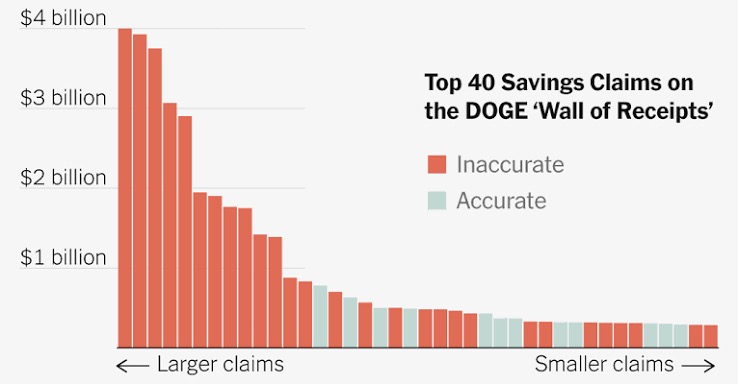
According to a report released on Thursday, the Department of Government Efficiency, better known as DOGE, led by Elon Musk himself, was making up figures about the amount of money it was saving the country. The report was requested by Democratic senators Gary Peters of Michigan and Richard Blumenthal of Connecticut and was conducted by the Government Accountability Office.
DOGE was found to have used “misleading practices” when it came to canceled leases and active government contracts. Additionally, the audit found that the department provided insufficient evidence for the methods used in 96 percent of the canceled grants.
The Department of Government Efficiency was also found to have failed to follow their own formulas when it came to calculating figures for canceled leases and contracts, and in the cases where they did follow their formulas, they either missed out on the details or did not disclose them when they should have. When they did follow their own procedures, the Government Accountability Office found that they overlooked the complexities of government contracts, including liabilities and penalties that come with breaking a contract before the due date.
“The report shows that the Trump administration’s cost-saving mission was conducted in a misleading fashion, achieving little apart from putting at risk taxpayer data and key programs,” said Senator Peters.
“President Trump and his allies in the Senate and House have been using DOGE as a fig leaf to hide tax-cut giveaways to the wealthy and large corporations while pretending to save the deficit,” said Senator Blumenthal.
Many people have responded to the report, including Jessica Tillipman, associate dean of the GWU School of Law, who specializes in government procurement. Tillipman cited several errors she found on the social media accounts of DOGE, one of which being a claim that the department had saved $28 million reduction in expenditures for an Air Force agreement, whereas the actual financial relief amounted to roughly $600,000 from a canceled lease. “That figure doesn’t account for the present value of future lease payments, which would reduce the supposed $3.7 million savings,” Tillipman said.
“DOGE’s fiscal wins were mostly fictional,” write Reason editor-in-chief Eric Boehm, who covered the story for the libertarian magazine. “According to a new report from the Government Accountability Office, the Trump administration’s claims about savings from slashing federal spending were often based on faulty math.”
“DOGE may soon start spending more taxpayer money, but at least the government watchdogs are forcing Musk’s agency to be more open about how it spends our money when it comes to cutting back federal services,” concluded Senator Blumenthal.
How Trump’s “Bold” Moves Turned a Working Iran Deal Into a Self-Inflicted Crisis
by Winston Wendell
Wars don’t always begin with explosions. Sometimes you lose before a single shot—when your rivals grow stronger, your network of allies weakens, and your own choices hurt more than help. That’s what happened after Trump tore up the Iran nuclear deal, the JCPOA, and started his so-called “maximum pressure” campaign. Looking back now, it’s clear: all that posturing did more harm than good.
Let’s break down how we got here—how the tough talk just made things messier, gas prices spiked, markets stumbled, and even America’s best friends started doubting us.
Grandstanding Isn’t the Same as Getting Results
Trump loved making a scene. He’d throw out fiery tweets, trash the Iran deal at every rally, and promise something “better.” He called the JCPOA weak, claiming it caved to Tehran and left America empty-handed.
But reality didn’t match the rhetoric. The facts were plain: the JCPOA was working. Iran cut its enriched uranium stockpile by 98%, dismantled thousands of centrifuges, and opened up its nuclear sites to unprecedented inspections from the IAEA. The deal put hard limits in place.
Still, the Trump administration never came up with a better alternative. All “maximum pressure” really meant was punishing sanctions, hoping Iran would fold and come crawling back. Of course, that didn’t happen. Instead, Iran held its ground, which is pretty much what history teaches us about relying on pressure without a backup plan.
Walking Away From Progress
The Decision
In May 2018, Trump yanked America out of the JCPOA and hit Iran with sanctions again. I remember thinking: why break something that’s actually working? The real answer wasn’t about better policy. It was politics.
Immediate Fallout
Iran didn’t just shrug and take it. They cranked up uranium enrichment, ignoring the deal’s strict limits. Suddenly, the path to building a bomb got a lot shorter.
Diplomatic ties started unraveling. The negotiating group shrank, with the U.S. out and Europe struggling to shield Iran from American sanctions. Everyone’s bargaining power sagged without U.S. support.
America’s allies noticed. When one country tears up a major deal, trust dries up fast. It’s not easy earning that back.
Leaving the JCPOA handed Iran a whole new set of advantages: the freedom to enrich more uranium, the chance to play the victim, and a divided bunch of opponents.
The Economic Domino Effect: Oil, Markets, Wallets
Oil Prices Spike
Sanctions knocked 2–3 million barrels of Iranian oil a day off the world market. Saudi Arabia and Russia tried to cover the slack, but oil prices still jumped from $70 a barrel to nearly $85 in a few months.
We felt it, our weekly gas bill jumped about 15%. Drivers everywhere noticed, along with businesses shipping goods or running trucks.
Markets Wobble
Investors hate not knowing what’s next. Trump’s moves spread uncertainty all over:
Stock markets bounced around, especially for energy companies and businesses with a Middle East footprint. Countries like India, China, and South Korea scrambled to find new oil suppliers. Their budgets felt the hit and so did the cost of goods at home.
These numbers weren’t just for headlines. Groceries cost more, energy bills crept up, and even retirement savings got dinged if they were tied to the markets. Decisions in Washington rippled straight to regular people.
Leaving Allies Out to Dry
Europe on the Spot
Europe tried to save the JCPOA with a workaround, INSTEX, but without U.S. backing, European companies ran for cover. I remember German and French leaders sounding pretty frustrated, caught between supporting the deal and avoiding U.S. penalties.
Asia’s Dilemma
Japan and South Korea got a few short-term waivers to keep buying Iranian oil. But every few months, diplomats scrambled to figure out what Washington would do next. It was exhausting for everyone involved.
Trust Gets Shaky
When the rules keep changing, allies grow suspicious. NATO wasn’t thrilled. Neither were old partners, watching America toss aside another agreement. Doubt crept into military exercises, intelligence sharing, and every future negotiation. And that kind of mistrust is hard to reverse.
Why “Maximum Pressure” Missed the Mark
The biggest mistake? Betting it all on sanctions without leaving room for real negotiation. Iran’s leaders just doubled down, ramped up their nuclear work, and kept stirring up trouble in the region. More pressure just meant less cooperation, not more.
So what did the U.S. get? A dead inspection program, an Iran with more nuclear options, shaky world markets, and cooler alliances all around. Everyday Americans ended up paying for it.
Honestly, a smarter move would’ve been to stick with JCPOA inspections and use them as leverage to fix the deal’s flaws on missiles, on regional actions. Not trashing the whole thing.
Lessons for Next Time
Here’s what I take away:
If something’s working, don’t destroy it, improve it. Check if it’s actually hitting its goals, then build on that. Sanctions only work if there’s an exit. Just squeezing harder makes the other side push back.
Stay tight with partners. America’s strongest when its friends trust and cooperate. Go it alone, and you end up isolated and less effective.
When Showmanship Wins, Everyone Pays
I watched the fallout from one attention-grabbing decision echo all the way from the UN to my local pump. Trump’s bold moves made for good TV but wrecked progress and ordinary people picked up the bill.
The Iran deal wasn’t perfect, but it did the job. Scrapping it gave Iran new momentum, touched off economic pain, strained alliances, and made life harder for regular folks.
If we want to avoid repeating this, we need to stick with what works, trust the facts, and focus on steady, smart partnerships. Real strength isn’t just about big talk. It’s about reliable leadership that others (and the world) can count on.
If this breakdown made sense to you, pass it on or subscribe for more straight-shooting analysis on politics, economics, and global security.
Every time I look at Washington, D.C., I can’t help but shake my head at the tricks politicians pull. But this PROMISE Act sitting on my desk? That’s next-level. It’s political cynicism at its finest, and I won’t stay quiet about it—Americans deserve better than to have their most basic safety net tampered with behind closed doors.
Let’s talk about what’s really in this bill, because it’s wild.
The PROMISE Act hands control to four unelected members of the Social Security Advisory Board. They’d have just one month to come up with a fifty-year plan to fund Social Security. If they agree on something, Congress has to hold an immediate vote—right after an election, when we’re in that gray “lame-duck” zone before new members are sworn in. If the panel can’t agree? Then any single member of Congress can throw their own plan straight onto the House floor—no committees, no amendments, no real debate, nothing.
Stop and think about that. They want to fundamentally change Social Security—the backbone for millions of retirees, people with disabilities, and survivors—at a moment when politicians who are leaving office have nothing to lose. They’re basically insulated from any backlash.
For me and for millions of folks working hard everyday, that’s the exact opposite of democracy.
And who’s behind this? A “bipartisan” group of senators: Bill Cassidy, Dick Durbin, Thom Tillis, Tim Kaine, John Cornyn, Angus King, and Alan Armstrong. Now look closer: five out of these seven are either retiring or already lost their next election. They don’t have to answer to anybody. They won’t stand behind cuts or a higher retirement age. They can just pull the trigger and walk away, leaving the rest of us to deal with the fallout.
I’m not the only one calling this out. Advocacy groups are furious, as they should be. The AARP fired off a letter to Cassidy and Durbin, ripping them for trying to rush these changes without real public input. Max Richtman, he runs the National Committee to Preserve Social Security and Medicare—put it bluntly: lawmakers who aren’t facing another election have no business messing with people’s earned benefits. That’s basic accountability.
Now, I’m not denying there’s a real problem. The Social Security Board of Trustees said back in June: if Congress does nothing, the trust funds only cover 78% of promised benefits starting in 2032. We need to fix that.
But the folks pushing the PROMISE Act want to fix it on the backs of ordinary workers—with cuts, stingier cost-of-living raises, or hiking the retirement age.
There’s a straightforward, fair solution that doesn’t hurt seniors or vulnerable people. The proposal is simple: make the wealthiest pay what regular folks already do. If you make more than $250,000, you’d pay payroll taxes on every dollar, just like everybody else.
This isn’t just about keeping Social Security alive for 75 years—it’s about making it stronger. The plan actually increases yearly benefits by $2,400 for people. And voters agree. Eight out of ten support this, according to a Data for Progress poll.
Still, Senate Republicans blocked my bill. Why? Because protecting the ultra-wealthy from paying taxes is practically a team sport in Washington.
My message the whole Democratic Party: draw a bright line, no raising the retirement age, no benefit cuts, no watered-down cost-of-living hikes, no privatization, and no backroom deals in the
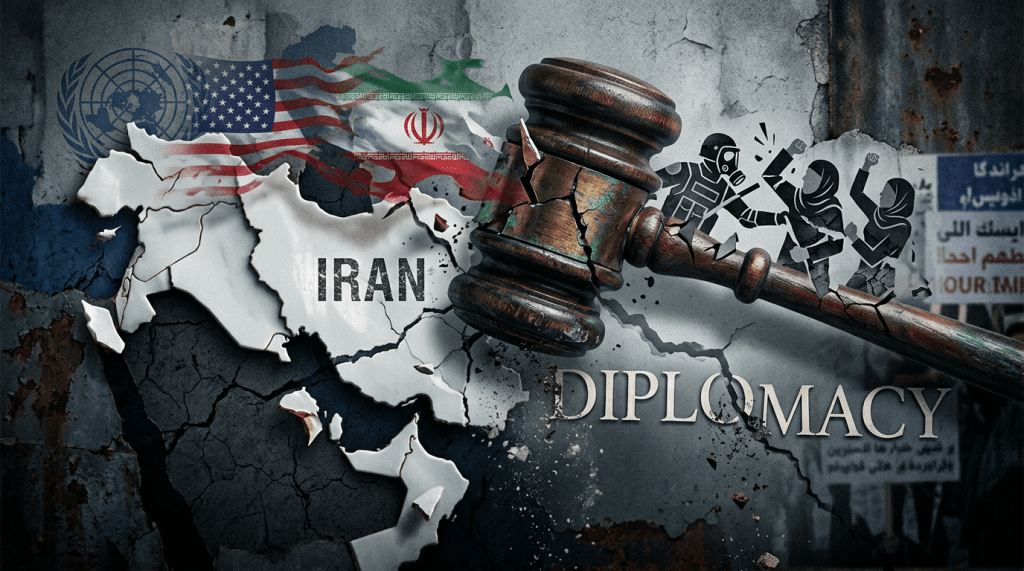
President Barack Obama defended the Joint Comprehensive Plan of Action (JCPOA) with a blunt warning: “The choice we face is ultimately between diplomacy or some form of war.”
Now, years later, I watch that warning turn painfully real. When Donald Trump pulled the United States out of a nuclear deal that had kept Tehran’s nuclear ambitions in check, his administration threw the country into a disaster of its own making.
On the military front, this war’s a failure from every angle. Targeted strikes came and went, and the Iranian government endures, now with even tougher hardliners from the Islamic Revolutionary Guard Corps in charge. Iran still holds most of its missile stock, its mobile launchers, its underground bunkers. Drone and missile factories keep running. Worst of all, Tehran’s grip on the Strait of Hormuz—is even tighter. Those photos of commercial ships stuck near Larak Island say it all. Washington’s shortsighted choices gave our adversaries control of some of the world’s most important economic lifelines.
The cost? It’s staggering, both in dollars and lives. We burned through about $25 billion at the start, and the spending hasn’t stopped. At home, Americans feel it everywhere, gas prices, groceries, you name it. But it’s the human cost that hurts most. U.S. service members have died, and hundreds cope with wounds they’ll never shake, all for a conflict with no clear end, no real transparency, and not a word of congressional approval. Like millions of others, I feel deep frustration. This is a war with no purpose, no strategy, and no exit.
Trump’s aggressive reversal left America boxed in with terrible options. If Washington caves to Tehran—giving up huge sums of money or control over the Strait of Hormuz—we abandon the basic principle of free maritime navigation. Global commerce depends on that. An emboldened Iranian regime, flush with cash, will just buy new air defenses, load up on missiles, and use the Strait for leverage as long as it wants.
No one wins here. There’s only the bitter fallout of a war we never needed, a conflict that put America’s security at risk, bled our economy, and left the world less stable than ever.
American politics doesn’t usually give you a transformation as sharp, or as revealing as Lindsey Graham’s. Watching him shift in Washington has become almost surreal. The man bends with the wind, sure, but the cost of that flexibility has been his integrity.
Just look at his record. Over the years, Graham has mostly acted like his main goal is just to hang on to his seat. He went from bashing Trump at every turn to openly praising him. If you need a case study in plain old political opportunism, this is it.
Remember the 2016 Republican primaries? Graham didn’t pull any punches. He called Trump a “race-baiting, xenophobic, religious bigot.” He sounded like someone who actually believed what he was saying. Then, almost instantly, once Trump became the nominee, Graham dropped the act and threw in his lot with Trump. That wasn’t some sudden epiphany, it was survival mode, pure calculation.
The shift was impossible to miss during the Brett Kavanaugh hearings in 2018. After Dr. Christine Blasey Ford’s testimony, the Senate was in chaos. Graham could have played the role of the rational adult in the room, but he didn’t. He went full throttle with a fiery defense of Kavanaugh, turning the hearings into political theater. In doing so, he shored up his spot in Trump’s camp, tossing aside the usual committee rules for a shot at the spotlight.
Fast forward to 2020, and Graham’s credibility took another hit. After Justice Ruth Bader Ginsburg died, the same man who’d argued in 2016 that Supreme Court picks should wait until after the election did an immediate about-face. He fast-tracked Amy Coney Barrett’s nomination, just weeks before voters went to the polls. It wasn’t just a flip-flop, it was proof that his stated principles didn’t mean much when power was at stake.
So, when does a politician stop serving the public and start just playing the angles? With Graham, it was obvious: keeping his place at the table matters more than sticking to his beliefs. He changed course whenever it suited him, and yes, it’s helped him stay in power, but at the expense of his credibility.
Graham’s story serves as a cautionary tale. When individuals abandon their convictions to maintain relevance, they risk losing the very respect that initially earned them admiration. Politicians who remain apolitical will eventually succumb to any political pressure. Moreover, if you support someone whose principles fluctuate with the political climate, what can you truly rely on during challenging times?
In the wake of his passing, it is customary for Washington to offer a eulogy extolling his virtues. While he was undoubtedly a remarkable individual when collaborating with John McCain, it is imperative that we draw lessons from his tenure in office. Was his primary motivation the nation and the Constitution, or was it driven by political gain and the pursuit of power?