Tag: President Nicolás Maduro

  • A Dangerous Precedent: The U.S. Strike on Venezuela and the Capture of Nicolás Maduro

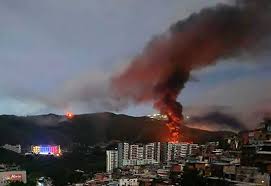
    BLUE PRESS JOURNAL (DC) – In an extraordinary and deeply troubling escalation, the United States launched a series of strikes on Venezuela last night, culminating in the capture and removal of President Nicolás Maduro. According to administration statements, Maduro was flown out of the country in what U.S. officials described as a “decisive operation.” But behind the dramatic headlines lies a disturbing question about legality, precedent, and the moral cost of such unilateral actions.

    The Trump administration’s decision to forcibly remove a sitting foreign leader without congressional authorization or clear international mandate marks one of the most audacious U.S. interventions in Latin America in decades. Not since the 1989 invasion of Panama — which ended with the seizure of Manuel Noriega — has Washington so overtly used military force to change a government in the Western Hemisphere. Then, as now, the justification was murky and the fallout unpredictable.

    The legal authority for this attack remains unclear. Reports indicate that neither the Armed Services Committees nor the broader Congress were notified in advance, an omission that starkly violates the principles of civilian oversight of the military. The War Powers Resolution exists precisely to prevent presidents from waging undeclared wars, and yet it seems to have been ignored once again.

    Beyond legalities, the moral and geopolitical implications are staggering. By unilaterally abducting a sitting president, the U.S. risks reigniting a long and painful history of interventionism in Latin America — a history that has often bred instability, resentment, and violence rather than democracy. The Venezuelan government has already called the attack an “imperialist assault,” urging citizens into the streets. Civilian and military casualties have been reported, deepening the country’s suffering at a moment when its economy and institutions are already fragile.

    President Trump’s comment that the U.S. will be “very much involved” in Venezuela’s future only compounds the concern. What does “involvement” mean in this context — occupation, trusteeship, regime installation? Whatever the answer, the precedent is perilous. If the world’s leading democracy can seize foreign leaders at will, the international order built on sovereignty and law begins to crack.

  • US Seizes Oil Tanker Off Venezuelan Coast: A Breach of International Law?

    Blue Press Journal – In a bold and unprecedented move, the United States has seized an oil tanker off the coast of Venezuela, according to President Donald Trump. The incident has sparked controversy and raised questions about the legality of the action under international law. As tensions between the US and Venezuela continue to escalate, the move has been met with scrutiny from lawmakers and legal experts.

    The seizure, which was carried out by US forces, is seen as the Trump administration’s latest effort to pressure Venezuelan President Nicolás Maduro, who has been charged with narcoterrorism in the US. The US has been building up its military presence in the region, and has launched a series of deadly strikes on alleged drug-smuggling boats in the Caribbean Sea and eastern Pacific Ocean.

    But was the seizure of the oil tanker a legitimate act, or does it constitute piracy on the high seas? The International Maritime Organization (IMO) defines piracy as “any illegal acts of violence or detention, or any act of depredation, committed for private ends by the crew or the passengers of a private ship or a private aircraft” against a ship or aircraft on the high seas.

    In this case, the US Navy’s seizure of the oil tanker appears to be a state-sponsored act, rather than a private act of piracy. However, the question remains as to whether the action was lawful under international law. The United Nations Convention on the Law of the Sea (UNCLOS) governs the use of force at sea, and permits the use of naval force in certain circumstances, such as self-defense or with the consent of the flag state.

    In this instance, it is unclear whether the US had the consent of the flag state or whether the seizure was justified as an act of self-defense. Trump’s comment that “we keep it, I guess” when asked what would happen to the oil aboard the tanker, has raised further questions about the motivations behind the seizure.

    Sen. Chris Van Hollen, a member of the Senate Foreign Relations Committee, has expressed concerns that the seizure casts doubt on the administration’s stated reasons for the military buildup and boat strikes in the region. “This action raises more questions than answers,” Van Hollen said.

    Some legal experts have also questioned the legality of the seizure, arguing that it may have violated the laws governing the use of deadly military force. The use of force at sea is subject to strict rules and regulations, and any action that is deemed to be unlawful could have serious consequences under international law.

    The seizure of the oil tanker is a significant escalation of the US’s campaign to pressure Maduro’s government, and has raised the stakes in the region. Venezuela is a major oil producer, and the state-owned oil company sells most of its output to refiners in China. The US sanctions have locked the country out of global oil markets, and the seizure of the tanker is likely to exacerbate the situation.

    As the situation unfolds, it remains to be seen if the US will face consequences under international law. The seizure of the oil tanker has added complexity to US-Venezuela relations and raised important questions about state power on the high seas.