Tag: Protectionism

  • Trump’s Tariff Recalibration: Legal Setback Ignored, Consumers Still Face the Bill

    Blue Press Journal – A recent Supreme Court decision has delivered a significant legal setback to former President Donald Trump’s trade agenda, curtailing his ability to unilaterally impose tariffs under the International Emergency Economic Powers Act (IEEPA). However, this judicial review appears to be little more than a momentary speed bump for an administration determined to reconstitute its protectionist apparatus, with grave implications for American consumers and businesses.

    The 6-3 ruling, issued Friday, clarified that while IEEPA grants the president power to regulate trade for national security in emergencies, it does not extend to levying tariffs – a power reserved exclusively for Congress. This decision validates the concerns of thousands of businesses, potentially opening avenues for tariff refunds. Yet, Trump, undeterred, quickly announced his intent to employ alternative legal frameworks, vowing “much higher” tariffs for any nation perceived to be challenging his trade policies.

    Economists like Diane Swonk of KPMG suggest the White House anticipated this outcome, noting the administration has been “preparing for this” by identifying other levers. Trump’s immediate response included moving to impose a 10 percent universal tariff via Section 122 of the Trade Act of 1974, ostensibly to address balance of payments issues – a justification many experts find dubious. More enduringly, the administration is now pivoting towards Section 301 of the Trade Act of 1974 and Section 232 of the Trade Expansion Act of 1962.

    Section 301 empowers the president to impose tariffs in response to a foreign country’s unfair trade practices. This provision has a lengthy history, notably used by Trump against China during his first term. Its established precedent makes it a formidable tool, with experts like Edward Alden of the Council on Foreign Relations believing courts are unlikely to second-guess executive judgment under this authority.

    Meanwhile, Section 232 grants expansive power to impose tariffs on products deemed a threat to national security. Trump previously applied this to steel and aluminum imports, later extending it to goods like autos, lumber, and even furniture, often with questionable national security justifications. While some applications of Section 232 appear tenuous, courts historically defer to presidential assessments of national security, making challenges difficult.

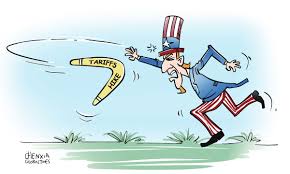
    Crucially, regardless of the legal mechanism, tariffs are not paid by foreign governments or producers; they are a tax levied on domestic importers, which is then passed directly to American consumers in the form of higher prices. This hidden tax reduces purchasing power and stifles economic growth. As Goldman Sachs analysts Alec Phillips, Elsie Peng, and David Mericle warn, this constant recalibration of trade policy introduces significant volatility, disrupting global supply chains and creating uncertainty for businesses. The Supreme Court may have pruned one branch of Trump’s tariff strategy, but the root system remains deeply entrenched, promising continued turbulence and higher costs for ordinary Americans.

  • Trump’s New Tariffs: Another Costly Tax on American Families

    Blue Press Journal – In a move that has once again ignited concerns across the economic landscape, the Trump administration has announced a sweeping 10% tariff on goods imported to the U.S. from across the globe. This comes hot on the heels of a Supreme Court ruling on Friday, which deemed the administration’s previous use of the International Emergency Economic Powers Act (IEEPA) for issuing tariffs as unjustified. Despite this judicial setback, the President quickly pivoted, citing Section 122 of the 1974 Trade Act to impose these new levies, which are set to take effect on February 24th.

    While the administration touts these “import taxes” as a strategy to address “large and serious” trade deficits, the overwhelming consensus among economists and trade experts is clear: tariffs are not paid by foreign producers; they are a tax paid by American consumers and businesses.

    The Illusion of Protection: Who Really Pays?

    The notion that tariffs are a punitive measure exclusively against foreign nations is a dangerous misconception that has plagued Trump’s economic policy. In reality, when a tariff is imposed, it’s the American importer—a company, large or small, that brings goods into the country—who pays that tax to the U.S. Treasury. To recoup these costs, importers typically do one of two things:

    1. Raise Prices: They pass the increased cost directly onto consumers through higher retail prices.
    2. Absorb Costs: They absorb the cost, leading to reduced profits, which can translate into lower wages for employees, less investment in their businesses, or even job cuts.

    A comprehensive analysis by the National Bureau of Economic Research (NBER), for instance, found that “U.S. tariffs were almost entirely borne by U.S. domestic consumers and importers.” This sentiment is echoed by the Peterson Institute for International Economics (PIIE), which concluded that the burden of previous Trump administration tariffs fell “almost entirely on American consumers and firms.” These aren’t abstract economic theories; they are concrete realities felt in every American household.The Hidden Costs of Tariffs for American Households

    Impact CategoryDescription
    **Higher Consumer Prices**Increased costs for everyday goods, from clothing and electronics to household appliances, directly reducing purchasing power.
    **Reduced Business Investment**Companies face uncertainty and higher input costs, leading to less investment in expansion, innovation, and job creation.
    **Slower Wage Growth**As profits are squeezed, businesses have less capacity to offer competitive wages or bonuses.
    **Supply Chain Disruptions**Forced reshuffling of global supply chains can lead to inefficiencies, product shortages, and further price hikes.
    **Retaliatory Tariffs**Other countries often impose their own tariffs on U.S. exports, harming American farmers and manufacturers who rely on international markets.

    A Familiar, Flawed Playbook

    This latest round of tariffs, while excluding agricultural products, pharmaceuticals, electronics, certain vital minerals and metals, and goods from Canada and Mexico (due to a 2020 trade agreement), still casts a wide net over the global economy. It’s a return to the same protectionist policies that characterized the administration’s first term, often leading to costly “trade wars” that hurt American industries and consumers alike.

    The economic consequences of such policies are often multifaceted:

    • Inflationary Pressures: Tariffs contribute to rising prices across the board, fueling inflation and eroding the value of American wages.
    • Supply Chain Instability: Businesses struggle to plan and maintain efficient supply chains, leading to higher operational costs and potential product shortages.
    • Reduced Competitiveness: American companies that rely on imported components become less competitive globally.

    Facing Domestic Opposition

    Even within his own party, the President’s tariff strategy is facing significant pushback. Rep. Don Bacon (R-Neb.) was quick to signal that these tariffs will likely “be defeated” in Congress. As he told CNN in an interview, “It may not have a veto-proof majority, but it will have a majority that will go against that 10 percent global tariff, so I think the president is making a mistake here.”

    This confidence stems from the foundational principle that under the 16th Amendment, lawmakers hold broad authority over federal taxes, including tariffs. The legislative branch has the power to reject what many view as an economically damaging policy being unilaterally imposed.

    The True Cost of Protectionism

    The evidence is overwhelming: tariffs are a self-inflicted wound. They masquerade as a solution to trade imbalances but function as a regressive tax on hardworking American families and a burden on businesses. Instead of fostering economic growth, they invite retaliatory measures, disrupt supply chains, and ultimately make everyday life more expensive for millions.

    It’s time to move past the misleading rhetoric and embrace policies that truly strengthen the American economy through open markets, fair trade, and genuine competitiveness, rather than punishing our own citizens with higher taxes disguised as patriotism.


  • GOP Tariff Shield Crumbles: What This Means for Your Wallet

    Trump’s Tariff Gambit Backfires: GOP Revolt Exposes Rising Consumer Costs

    Blue Press Journal D.C. — A significant political maneuver on Capitol Hill this week has thrown President Trump’s favored trade weapon, tariffs, back into the spotlight, exposing deep divisions within the Republican Party and rekindling critical debate about their economic impact on American consumers. House Speaker Mike Johnson’s attempt to block future votes on Trump-era tariffs failed dramatically on Tuesday, signaling a growing bipartisan unease with protectionist trade policies.

    In a rare display of internal dissent, three Republican lawmakers – Thomas Massie of Kentucky, Kevin Kiley of California, and Don Bacon of Nebraska – joined forces with Democrats to defeat a crucial procedural measure by a slim 217-214 margin. This unexpected revolt clears the path for the House to consider resolutions disapproving of President Trump’s 25% duties on Canadian goods, and potentially others.

    For nearly a year, House Republican leadership had shielded its members from politically difficult votes on these tariffs, a strategy that crumbled on Tuesday. The procedural block, last extended in September, allowed members to avoid taking a stand on duties that have fomented uncertainty and drawn criticism from various economic sectors. Rep. Kiley, speaking after his “no” vote, emphasized the importance of institutional integrity, stating, “I don’t think that the House should be limiting the authority of members and enlarging the power of leadership at the expense of our members.”

    The Hidden Cost: Tariffs and Your Pocketbook

    While often framed as tools to protect domestic industries, economic analyses, including those from organizations like the Tax Foundation and reports cited by outlets such as The Wall Street Journal, have consistently demonstrated that tariffs act as a direct tax on American consumers and businesses. These import duties inevitably drive up costs for manufacturers and retailers, ultimately leading to higher prices on store shelves for everything from imported components to finished goods. Consumers, often unknowingly, bear the burden of these added expenses, seeing their purchasing power eroded.

    Indeed, the long-term imposition of Trump’s “reciprocal” tariffs on a multitude of countries has generated economic headwinds, stifling competition and adding significant overhead for companies across various sectors.

    With the shield now gone, Democrats are poised to force votes, even if largely symbolic given potential presidential vetoes. Their goal is clear: to put House Republicans on record regarding their support for these controversial duties. As the Supreme Court weighs the legality of the President’s authority to impose such sweeping tariffs, the renewed congressional focus underscores a critical question: At what cost do these protectionist policies come, and who ultimately pays the price?