Tag: republican budget bill

  • The Republican Federal Government Shutdown: A Crisis of Priorities

    Blue Press Journal – The federal government shutdown enters its second month, a new Washington Post/ABC poll reveals that 45% of surveyed Americans place the blame squarely on the shoulders of Republican lawmakers and President Trump. Meanwhile, 33% of respondents attribute the shutdown to Democrats, and 22% remain undecided. But what’s behind this partisan standoff, and what are the stakes for the American people?

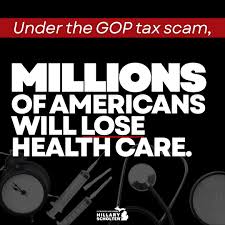
    At the heart of the shutdown lies a contentious Republican budget bill, passed by party line vote earlier this year, that prioritizes massive tax breaks for millionaires and billionaires over critical healthcare funding. The bill’s provisions striped away vital safeguards for health insurance, leaving millions of Americans vulnerable to skyrocketing premiums and reduced access to care. Democrats, on the other hand, have sought to reinstate these safeguards, only to be met with resistance and a government shutdown from Trump and the Republican leadership.

    The Consequences of Inaction

    The expiration of the Affordable Care Act’s (ACA) enhanced premium tax credits would have devastating consequences for millions of Americans. If Congress fails to extend these tax credits, premiums would more than double on average for the roughly 20 million Americans who rely on them. The impact would be particularly severe for middle-class families and seniors.

    DemographicCurrent PremiumProjected Premium Increase
    Family of four (earning $85,000/year)$10,000/year$18,000/year (80% increase)
    60-year-old couple (earning $85,000/year)$15,000/year$30,000/year (100% increase)

    A Crisis of Priorities

    The shutdown is, in part, a reflection of the Republican Party’s priorities. By choosing to award massive tax breaks to their wealthy donors, they are effectively sacrificing the healthcare needs of millions of Americans. As Senator Chuck Schumer (D-NY) remarks, “The Republican budget bill is a blatant attempt to redistribute wealth from the middle class to the wealthy elite. It’s a morally reprehensible decision that will have far-reaching consequences for our nation’s health and economic security.”

    The numbers are stark. If the enhanced premium tax credits are not extended, nearly 4 million people could become uninsured by 2034 due to the increased costs. This would not only have a devastating impact on individuals and families but also on the broader economy.

    It’s essential that Americans hold their elected representatives accountable for their actions. We must demand that our leaders prioritize the needs of the many over the interests of the few. The fate of the Affordable Care Act and the healthcare of millions of Americans hangs in the balance.

    The federal government shutdown is a crisis of priorities, and it’s time for our leaders to get their priorities straight. The health and well-being of the American people must come first.

  • Public Broadcasting Cuts by Republicans End Emergency Alert Program, Endangering Rural Communities

    Blue Press Journal (DC)  – Proposed deep cuts to public broadcasting are no longer a hypothetical threat. The Corporation for Public Broadcasting (CPB) announced this week it can no longer manage the Next Generation Warning System (NGWS), a vital federal grant program that equips local stations to issue severe weather and emergency alerts. The decision is a direct consequence of the Trump administration’s persistent efforts to defund public media, a move that ironically places many of his own supporters in rural America at greater risk.

    The CPB, which managed the warning system with FEMA, cited financial uncertainty from the administration’s budget proposals for ending the program. This decision reveals a policy contradiction, as Trump aims to cut FEMA’s budget by billions, even though the agency supports the vital role of broadcasting networks in emergency preparedness.

    “This is one more example of rescission consequences impacting local public media stations and the communities they serve,” said Patricia Harrison, CPB President and CEO, in a statement. She warned that the decision is “weakening the capacity of local public media stations to support the safety and preparedness of their communities.”

    Nowhere is that impact felt more acutely than in remote, rural areas that rely heavily on public stations for life-saving information. In Sand Point, Alaska, station KSDP depends on federal grants for 70% of its budget. “The loss of federal funding is truly seismic for us,” General Manager Austin Roof told The Guardian.

    Further west, KUCB in the Aleutian Islands, which recently worked to warn listeners of a potential tsunami, receives 40% of its funding from the CPB. In a recent post, the station called the federal cuts not just “an assault on the free press,” but “an assault on public safety, especially in rural areas like Unalaska.”

    While conservative think tanks like the Heritage Foundation recognize the importance of emergency broadcasts, their solutions seem problematic. They proposed transferring these duties to the National Oceanic and Atmospheric Administration (NOAA), but the Trump administration’s 2026 budget cuts NOAA’s funding by over $1.5 billion, leaving communities without clear options. This ideological war on public media is dismantling the infrastructure meant to protect vulnerable constituents.

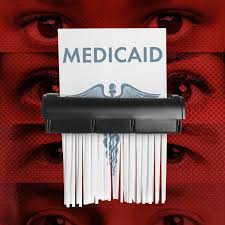
  • Medicaid Cuts in Republican Budget Law Inflict Financial Strain on Hospitals and State Governments

    The Result of the Republican Tax Break for Millionaires and Billionaires

    Blue Press Journal: The recently passed Republican budget law has introduced significant cuts to Medicaid, impacting millions of low-income individuals and families. These reductions are affecting multiple states, with local hospitals and state governments struggling to fill funding gaps. Healthcare providers warn they may have to stop accepting Medicaid patients due to the unsustainable nature of continued care.

    In North Carolina, the Department of Health and Human Services (NCDHHS) has announced plans to cut Medicaid spending by $319 million, effective October 1. This reduction will result in a 3% rate cut for all medical providers, as well as deeper cuts of 8-10% for inpatient and residential services and 10% for behavioral therapy and analysis for patients with autism. The NCDHHS spokesperson expressed concern about the potential consequences of these cuts, stating that “these reductions may cause some providers to stop accepting Medicaid patients, as the lowered rates could make it financially unsustainable to continue offering care.”

    The impact of these cuts will affect various healthcare services, including hospice care, behavioral health, long-term care, and nursing homes. Reimbursement cuts are expected to exceed 3%, placing a greater burden on providers already operating on thin margins. Consequently, many Medicaid patients may lose access to essential services, worsening health disparities and perpetuating a cycle of poverty and poor health outcomes.

    The situation in North Carolina is not unique, as other states are also grappling with the consequences of Medicaid cuts. Local hospitals, which often rely heavily on Medicaid funding, are facing significant financial strain as they struggle to absorb the reduced reimbursement rates. This could lead to a decrease in the quality of care, as hospitals are forced to cut costs and reduce staff to stay afloat.

    The Medicaid cuts in the Republican budget law exemplify the human cost of ideological politics. By prioritizing tax cuts over the well-being of vulnerable populations, lawmakers are jeopardizing the lives of millions of Americans. It is crucial for policymakers to act quickly to restore funding to Medicaid and ensure access to essential healthcare services for all individuals.

  • The Gutless Party: How Republicans Abandoned Their Principles to Appease Donald Trump

    The Republican Party has long been known for its values of fiscal responsibility and limited government intervention. However, recent events have exposed a stark reality: the party has lost all credibility and has become a mere puppet of Donald Trump. The latest example of this is the passage of the, “Big Beautiful Bill”, that increases the national debt and cuts vital social programs, despite numerous Republican lawmakers expressing strong opposition to it beforehand.

    In the days leading up to the vote, several prominent Republicans spoke out against the bill, citing concerns over its impact on the nation’s finances and vulnerable populations. Senator Ron Johnson (R-Wis.) warned that the bill would “steal from our children and grandchildren” by adding to the $37 trillion national debt. Senator Josh Hawley (R-Mo.) vowed not to support the bill due to its “real Medicaid benefit cuts,” which he deemed unacceptable for any Republican. Representatives Chip Roy (R-Texas) and Keith Self (R-Texas) also expressed strong reservations, with Roy calling the bill a “travesty” and Self emphasizing the need to avoid saddling future generations with an exploding national debt.

    Moreover, Representative Ralph Norman (R-S.C.) was adamant in his opposition, stating that he would vote against the bill on the floor. These statements suggest that many Republicans were deeply troubled by the bill’s provisions and were willing to take a stand against it.

    However, when it came time to cast their votes, many of these same lawmakers caved to pressure and supported the bill. The most notable example is Senator Lisa Murkowski (R-Alaska), who provided the tie-breaking vote in favor of the bill. This is particularly egregious given that Alaska is one of the most rural states in the country, and the cuts to Medicaid, Medicare, and SNAP (Supplemental Nutrition Assistance Program) will disproportionately harm its residents.

    So, why did Murkowski and other Republicans who had previously spoken out against the bill ultimately vote for it? The answer is simple: gutlessness. They prioritized their loyalty to Donald Trump and the party leadership over their principles and the well-being of their constituents.

    This lack of backbone is not limited to Murkowski. The fact that so many Republicans who had expressed strong reservations about the bill ultimately voted for it suggests that the party has become beholden to Trump’s demands, rather than standing up for their own values and constituents.

    The implications of this are far-reaching. If Republicans are willing to abandon their principles and ignore the needs of their constituents to appease Trump, then they have lost all credibility as a party. They can no longer claim to be the champions of fiscal responsibility, limited government, and social conservatism. Instead, they have become a party of sycophants, willing to do whatever it takes to maintain power and appease their leader.

    As the country moves forward, it is essential to recognize the Republican Party for what it has become: a gutless party that prioritizes loyalty to Trump over all else. The American people deserve better than a party that is willing to sacrifice its principles and values for the sake of political expediency. It is time for Republicans to take a stand and reclaim their party from the grip of Trump’s authoritarianism. Until then, they will remain a party without credibility or conscience.

  • GOP Tax Cut Legislation Threatens to Upend America’s Healthcare System

    The recent passage of massive tax cut legislation by the House and Senate has sent shockwaves through the American healthcare system. While the bill’s proponents claim it will boost economic growth, the reality is that it poses a significant threat to the stability of rural and safety-net hospitals, and ultimately, the patients who rely on them.

    At the heart of the issue is a provision that alters state-levied provider taxes, resulting in a substantial reduction in spending – to the tune of nearly $191 billion over the next decade, according to estimates from the Congressional Budget Office (CBO). An analysis by the National Rural Health Association and Manatt Health found that an earlier version of the bill introduced in the Senate would have resulted in a staggering $58 billion in Medicaid cuts over the next 10 years for rural hospitals.

    The final bill that passed includes a five-year, $50 billion rural health relief fund, but provider groups argue that this is merely a Band-Aid solution compared to the overall cost of the cuts. In reality, this temporary fix is unlikely to mitigate the long-term damage caused by the legislation.

    As a direct consequence of the bill’s provisions, hospitals are poised to experience an alarming surge in uncompensated care and an overwhelming influx of patients flooding emergency rooms. This crisis will unfold as millions of American families are pushed to the brink, losing their essential healthcare coverage due to the draconian Medicaid work requirements and the heartless eligibility alterations embedded in this legislation. The repercussions will be catastrophic, leaving our hospitals grappling desperately to provide the care that every patient and community so profoundly deserves.

    “We are in a crisis,” said Bruce Siegel, president and CEO of America’s Essential Hospitals, a group that represents hospitals serving primarily low-income patients. “Widespread coverage losses plus weakened hospitals is a recipe for disaster, and patients will pay the price.”

    The impact on rural hospitals will be particularly severe, as they are often the lifeline for communities with limited access to healthcare services. The loss of funding will exacerbate existing challenges, such as staffing shortages and outdated infrastructure, making it even more difficult for these hospitals to provide essential care to their patients.

    While the tax cut legislation may have been touted as a economic stimulus, its true impact will be felt in the healthcare sector, where it threatens to destabilize rural and safety-net hospitals.

  • Republicans are Undermining Government Accountability in Pursuit of Tax Cuts for the Wealthy

    Congressional Republicans have consistently voiced their commitment to a more efficient, cost-effective, and accountable federal government. However, a closer look at their proposed budget cuts reveals a potential contradiction that could ultimately harm American taxpayers. 

    As part of the FY2026 Legislative Branch funding bill, Republicans are pushing for a dramatic $396 million cut to the Government Accountability Office (GAO), the independent investigative arm of Congress. This represents a staggering 49% reduction in the GAO’s budget, potentially leading to the elimination of over 2,200 of its roughly 3,500 employees.

    This proposed cut raises serious questions about the true intent behind Republican rhetoric on government accountability. The GAO plays a crucial role in identifying waste, fraud, and abuse within federal agencies. By conducting rigorous, non-partisan audits and investigations, the GAO helps Congress and the public understand how taxpayer dollars are being spent and identify areas for improvement.

    Democrats argue that decimating the GAO’s workforce would leave only “skeletal staffing,” severely hindering its ability to effectively monitor government spending. This could result in federal taxpayers losing out on potentially tens or hundreds of billions of dollars in savings, which the GAO routinely identifies through its investigations.

    The proposed cuts have sparked accusations that Republicans are prioritizing tax cuts for wealthy individuals at the expense of average American taxpayers. By weakening the GAO, they argue, Republicans are essentially removing a key watchdog that helps ensure responsible use of taxpayer money. This lack of oversight could lead to increased waste and mismanagement, ultimately burdening American families with higher costs and fewer essential services.

    It remains to be seen whether these proposed cuts will ultimately be enacted. However, the debate surrounding the GAO’s funding highlights a fundamental tension between Republican promises of fiscal responsibility and their willingness to potentially undermine a crucial institution dedicated to promoting government accountability. As the budget process moves forward, it is vital for lawmakers to carefully consider the potential consequences of these cuts and prioritize the responsible stewardship of taxpayer dollars.

  • A Budget That Favors the Few: How the Republican Plan Could Strain Average Taxpayers and Vital Programs

    A recently proposed Senate Republican budget bill is facing scrutiny, with critics arguing that its core provisions disproportionately benefit the wealthy while potentially placing a heavier burden on average American taxpayers and essential social programs. At the heart of the debate is a plan to extend existing tax cuts, a move estimated to cost a staggering $2.4 trillion through 2030.

    The concern for many is not just the sheer cost of these extensions, but how Republicans intend to finance them. Reports suggest that a significant portion of the funding might be sought through deep cuts to vital programs like Medicaid and federal food assistance, commonly known as SNAP. This approach raises a critical question: will the benefits of extended tax cuts for the highest earners come at the expense of those who rely on these safety net programs to survive?

    For average taxpayers, the implications are multifaceted. If the proposed cuts to social programs materialize, it could lead to a reduction in essential services that millions of Americans depend on for healthcare, nutrition, and overall well-being. This, combined with the continued preferential tax treatment for the well-off, could exacerbate existing economic inequalities. All this without any real tax relief for the average American.

    The current tax cuts, largely characterized by their reduction of rates for corporations and high-income earners, are slated to expire. The Republican proposal aims to make these reductions permanent, not just extending them into the next decade but ensuring they remain in place for the foreseeable future. This indefinite extension for the wealthiest individuals and corporations means a sustained lower tax liability for those at the top of the economic ladder.

    Democrats argue that failing to allow these tax cuts to expire, especially when paired with proposed cuts to social programs, represents a fiscally irresponsible approach that prioritizes the financial well-being of a select few over the broader needs of the nation. The argument is that by permanently lowering taxes for the wealthy, the government foregoes significant revenue that could be used to strengthen programs that support working families, invest in infrastructure, or reduce the national debt in a more equitable manner.

    As the debate over the Republican budget bill continues, the focus remains on its distributional impact. Will this budget truly serve the interests of all Americans, or will it further cement a system where the benefits accrue to the top, while the burden of fiscal adjustments falls disproportionately on those who can least afford it? The answer, for many, lies in whether the proposed extensions are truly sustainable and equitable for the average taxpayer and the future of crucial social support systems.

  • How the Republican Bill will Add $2.3 Trillion to the Deficit

    The Republican House bill’s potential impact on the national deficit is drawing scrutiny, with final cost estimates from the Congressional Budget Office (CBO) pending. Preliminary projections suggest the bill could increase the deficit by approximately $2.3 trillion. The Committee for a Responsible Federal Budget, a non-profit organization, estimates a higher figure, exceeding $3 trillion.

    While budget-conscious lawmakers successfully pushed for over $1.5 trillion in spending reductions across agriculture, education, and energy and commerce programs, these cuts come at a cost. According to the CBO, these changes would likely result in roughly 3 million people losing food stamp benefits and 9 million individuals losing health insurance coverage.

    The tax cuts, disproportionately benefiting high-income earners, are projected to total $3.8 trillion over the next nine years and are likely to surpass $4 trillion over the next decade. This disparity raises concerns about the bill’s overall fiscal impact and its distributional effects.

    Beyond the bill’s direct financial implications, potential trade policies proposed by President Trump add another layer of economic uncertainty. He has suggested a 50% tariff on the European Union as trade negotiations continue and a 25% tariff on Apple if the company does not relocate iPhone production to the United States. These potential tariffs could have significant repercussions for international trade and the U.S. economy.

    Taking into account both the Republican budget bill and Trump Tariffs by the end of the year could force the US economy into a rescission.