Tag: Rural America

  • Democrats See Rural Opportunity in Trump’s Policies Ahead of 2026 Midterms

    BLUE PRESS JOURNAL – For years, rural America has been a political stronghold for Republicans — and especially for President Donald Trump, who won over farming communities with populist rhetoric and promises of economic revival. But as the 2026 midterm elections approach, Democrats see a shifting landscape — one shaped not by party rhetoric, but by the real-world consequences of Trump’s policies. 

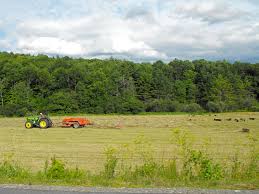
    For years, the Democratic Party has had a tough time making headway in rural areas. But now, with current policies hitting hard, farmers are getting more and more frustrated. Trump’s bold tariff moves, which were supposed to protect American businesses, have actually hurt those in agriculture. Farmers growing soybeans, corn, and wheat are seeing foreign markets dry up and prices drop, all while their costs are still sky-high thanks to ongoing inflation.
    Meanwhile, rural residents are grappling with a healthcare crisis. The closure of more than 120 rural health centers since 2025 — a direct result of federal funding cuts in the Republican’s Big Beautiful Bill (BBB) — has left many communities without access to basic medical care. Emergency wait times have spiked, and recruiting doctors to understaffed areas has become nearly impossible. 

    Even public lands programs, once bipartisan priorities, have seen steep reductions. Programs that supported conservation, wildfire prevention, and outdoor recreation — vital economic drivers in rural regions — have been gutted, alienating not just environmentalists but also hunters, anglers, and small-town business owners. 
    Democrats believe these issues present a rare opening. “We’re not asking rural Americans to abandon their values,” said Rep. Maya Thompson (D-Minn.), who recently toured struggling farming communities in the Midwest. “We’re asking them to see how current policies are undermining their livelihoods — and to consider a different path.” 

    The party is rolling out a new rural outreach initiative focused on affordable healthcare, sustainable agriculture, and investment in rural infrastructure. It’s a long-term play, but one grounded in listening — and in offering concrete alternatives (DemocracyDocket.com, October 2026). 

    While the road to rural support remains steep, Democrats are hopeful that substance — not slogans — might finally shift the tide.

  • Rural America Bears the Brunt of Trump’s Medicaid Cuts, But Supporters Remain in Denial

    A health clinic in McCook, Nebraska, a small town with a population of 7,446, has become the latest casualty of President Donald Trump’s budget cuts to Medicaid. The clinic’s closure has sent shockwaves through the community, leaving many without access to vital healthcare services. However, despite the devastating impact on rural America, many of Trump’s fervent supporters continue to refuse to accept the reality of the situation.

    The Medicaid cuts, championed by Trump and the Republican Party, have been sold to rural white voters as a necessary measure to prevent benefits from being squandered on “undeserving” individuals, such as immigrants, city dwellers, and people of color. This narrative has been perpetuated despite being thoroughly debunked, and has proven to be a potent tool in rallying support for the cuts.

    However, the consequences of these cuts are now being felt in communities like McCook, where the health clinic’s closure will leave a significant gap in healthcare services. The clinic’s demise is a stark reminder that the Medicaid cuts are not just affecting “illegals” or “freeloaders,” as some right-wing message boards would have you believe, but are instead harming hard-working, rural Americans who are in dire need of healthcare services.

    Despite the evidence, many of Trump’s supporters remain in denial, insisting that the cuts are only affecting those who do not deserve healthcare. Social media platforms are filled with comments from individuals who claim that the cuts are necessary to prevent abuse of the system, and that the only people being hurt are those who are not truly in need.

    The stark reality on the ground unveils a grave predicament. Rural America, long besieged by a lack of adequate healthcare services, is facing a devastating blow from the recent Medicaid cuts. Alarmingly, experts predict that these drastic reductions to Medicaid will resonate throughout nearly every state, with the terrifying forecast showing that more than 25% of hospitals could face closure. In 11 states, the situation is even more dire, as up to 50% or more of hospitals stand on the brink of shutting down, leaving vulnerable communities in a perilous state.

    The shutdown of the health clinic in McCook serves as a stark reminder of the human cost of the Medicaid cuts, and the need for republicans to reconsider the impact of their decisions on rural America.

  • The Irony of Red Counties: How Rural America Relies on the Government They Love to Hate

    Rural America, often a bastion of conservative values and Republican strongholds, has a surprising secret: they rely heavily on government support. Despite their vocal disdain for government intervention, rural counties receive a significant portion of their personal income from government transfers, including Social Security, Medicare, and Medicaid. This phenomenon is particularly pronounced in the South, where rural areas appear to be almost entirely dependent on government assistance.

    The demographics of rural America play a significant role in this trend. With younger people fleeing to urban areas for better job opportunities, rural regions have a higher proportion of older residents. As a result, these areas have a larger share of individuals drawing Social Security and Medicare benefits. Additionally, rural areas are more dependent on Medicaid, which provides healthcare coverage to low-income individuals and families.

    In contrast, metropolitan areas around major cities like Boston, Chicago, Dallas, Houston, Los Angeles, New York, Philadelphia, and San Francisco show minimal to moderate reliance on government transfers, with less than 25% of personal income coming from these sources. This disparity highlights the stark difference in economic realities between urban and rural America.

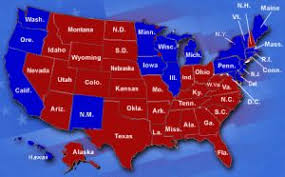
    The political implications of this trend are striking. Rural areas, which tend to lean heavily Republican, voted overwhelmingly for Donald Trump in the 2016 election, with farming-dependent counties supporting him at an average of 78%. This raises questions about the motivations behind their voting behavior. Were they genuinely interested in reducing government intervention, or were they swayed by other factors, such as social issues or perceived moral superiority?

    It’s ironic that rural Republican voters, who often espouse self-reliance and limited government, are actually more dependent on government support than their urban counterparts. Meanwhile, the wealthy elite, like Elon Musk, continue to receive tax cuts and other benefits, perpetuating the notion that the system is rigged in favor of the wealthy and powerful.