Tag: Senate Buget

  • Democrats Signal Surrender in Shutdown Fight, Sacrificing Health Benefits for Millions

    Blue Press Journal

    WASHINGTON D.C. — As the government shutdown inflicts mounting pain on American families, Senate Democrats are reportedly poised to accept a deal that abandons key protections for millions, signaling a stunning retreat in the high-stakes standoff with Republicans. The potential agreement would end the shutdown without securing an extension of critical health care benefits, a concession experts warn will inevitably trigger higher insurance rates for everyone.

    The move is being blasted by critics as accepting a “wooden nickel of a deal,” especially in the wake of recent elections where voters seemingly gave Democrats a mandate to stand firm against Republican hardline tactics. While former President Trump and his party continue to be blamed for initiating the shutdown, the perception of “weak-kneed” Democrats willing to fold under pressure is growing.

    This political capitulation in Washington stands in stark contrast to the ongoing festivities at former President Trump’s Mar-a-Lago resort in Florida. As 1 in 8 Americans lost access to federal SNAP food benefits, guests at the exclusive club were treated to a lavish dinner of filet and scallops. The scene mirrored another recent event at the resort—a “Great Gatsby” themed party held under the banner, “A Little Party Never Killed Anyone,” which took place just hours before the initial food aid cuts took effect.

    The human cost of the political gridlock is undeniable. The shutdown has exacerbated the economic strain on households already grappling with skyrocketing inflation and soaring grocery prices that have marked the Trump era. A recent Supreme Court ruling allowed the full funding for the SNAP program to lapse during the shutdown, leaving a massive gap in the nation’s food security net.

    The image of opulent parties set against a backdrop of widespread economic anxiety and political failure captures the deep disconnect between the country’s leadership and the citizens they serve. As Democrats prepare to end the fight with little to show for it, millions are left to face the consequences.
  • The “Big Bad Bill” is bad for America: Take Action!!

    Highlights of The Senate Bill

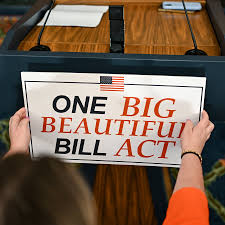
    The Senate Republican legislative package, referred to by its proponents as a “big, beautiful bill,” passed Tuesday the Senate by the slimmest of margins – a single vote. This contentious outcome reflects the deeply divisive nature of the bill’s provisions and its projected far-reaching consequences for various segments of the American population. Democrats argue the bill disproportionately benefits the wealthiest Americans while significantly curtailing vital social safety nets, impacting healthcare, education, environmental initiatives, and immigration policies. Even Elon Musk was against it!

    The nearly 900-page bill, fast-tracked through the Senate, saw Republican leadership making last-minute adjustments, reportedly to secure the minimum votes for passage. This legislative effort is criticized for its fundamental financial reordering: a substantial portion of its funding comes from drastic cuts to federal programs, particularly Medicaid, which faces over $1 trillion in reductions. Concurrently, it allocates an estimated $975 billion in tax breaks, primarily benefiting the wealthiest 1% of the country, with little direct benefit for average taxpayers.

    Impacts on Healthcare and Social Safety Nets

    The bill’s sweeping cuts to Medicaid are projected to remove nearly 12 million people from their health insurance coverage. Beyond individual impact, this has severe implications for healthcare infrastructure: an analysis by Families USA indicates 55 independent rural hospitals, already part of 380 at-risk facilities nationwide, face new and serious threats of closure. Similarly, researchers at Brown University’s School of Public Health estimate that nearly 600 nursing homes across the country are at high risk of shutting down due to these Medicaid reductions, potentially “throwing grandma out.”

    Further impacting vulnerable populations, the bill also proposes a $285 billion cut to food assistance programs for low-income individuals and children.

    Economic and Educational Consequences

    Economically, the legislation is expected to result in significant job losses. An analysis by George Washington University and the Commonwealth Fund projects approximately 477,000 healthcare workers could lose their jobs over the next decade due to Medicaid cuts.

    In the clean energy sector, the immediate elimination of federal tax credits for wind and solar energy projects is anticipated to halt billions of dollars in private investment, leading to hundreds of thousands of job losses, according to the League of Conservation Voters.

    Education access is also affected. The bill reportedly redesigns federal student loan programs, making it more challenging for low- and middle-income borrowers to qualify for and afford loans. New borrowers would primarily rely on a new “Repayment Assistance Program” (RAP), which could require 30 years of payments, in contrast to existing programs (like SAVE) offering debt relief in 10-25 years.

    Immigration Enforcement and Family Unity

    Regarding immigration enforcement, the bill allocates nearly $30 billion to Immigration and Customs Enforcement (ICE). This funding not only supports increased agents and upgraded facilities but also explicitly directs ICE to use resources for “promoting family unity by detaining alien parents with their children,” a provision that has drawn significant criticism for its approach to family separation and detention.

    Conclusion

    The legislative package, passed by the narrowest of margins, represents a significant policy shift. Democrats contend its primary effect is a substantial transfer of wealth to the nation’s wealthiest through tax breaks, financed by extensive cuts to critical social programs. This approach, they argue, has far-reaching negative consequences for healthcare access, educational affordability, job security, and the well-being of vulnerable populations, explaining the Republican limiting debate of the bill during the holiday weekend.

    Next call/email your congressperson and tell them not to support the bill when it returns to the congress here.

  • The Republican Budget Dilemma: Why Are They Hurting Their Own Voters?

    The current struggle among Senate Republicans this week to pass a budget proposal, which is unpopular, reveals a deep internal conflict, one that goes beyond typical political disagreements. According to some analysis, the core difficulty lies in a stark reality: a significant number of Republican lawmakers understand that the very people most likely to be negatively impacted by the proposed cuts are their own constituents – the Republican voters.

    Under discussion is a plan described by some as potentially adding a significant $2.8 trillion to the national debt by 2035. Yet, despite this substantial increase in borrowing, the plan reportedly includes deep cuts to vital social programs like Medicaid and Obamacare. These cuts are projected to be severe enough that an estimated 11.8 million people could lose their health insurance coverage. Beyond healthcare, millions more Americans would likely lose access to other essential services upon which they rely.

    Analysis indicates that these reductions would have a significant and disproportionate impact on residents of “red states,” which are integral to the Republican constituency. This consequence would predominantly affect Republican voters, a group that notably includes many individuals from the MAGA demographic.

    This situation presents a peculiar political paradox. If the proposed plan simultaneously increases the national debt by trillions and inflicts significant pain on the party’s own voters, why would Republicans push for it? Specifically, if they are already willing to go $2.8 trillion deeper into debt, why wouldn’t they allocate an additional amount – say, the $930 billion mentioned in one calculation – to mitigate the damage and protect their constituents’ healthcare and services? If debt is acceptable, why not use a fraction more to shield their base from harm?

    The answer, according to the perspective offered here, points towards a fundamental shift in the dynamics of the Republican Party. It suggests that the party’s actions and priorities are no longer driven purely by traditional calculations of representing constituent interests or adhering strictly to fiscal conservatism. Instead, this viewpoint posits that the party has transformed, now operating less as a conventional political organization and more as something resembling a “Trump’s cult.”

    From this perspective, the audacity to harm their own supporters while recklessly escalating the national debt transcends mere policy or political maneuvering; it reveals a troubling allegiance to a non-traditional agenda dictated by the party’s powerful figurehead, Trump. This profound analysis uncovers that the ongoing budget impasse is far more than a dispute over legislative minutiae; it is a glaring symptom of a party whose very identity and motivations have undergone a dramatic transformation and no longer represents the American public. .

    The polls:

    Fox News poll found that 38% of registered voters support the “One Big Beautiful Bill” based on what they know about it, while 59% oppose it.

    The survey found that the legislation is unpopular across demographic, age and income groups. It is opposed 22%-73% by independents, and 43%-53% among white men without a college degree, the heart of Trump’s base.

    Quinnipiac University poll found that 27% of registered voters support the bill, while 53% oppose it. Another 20% had no opinion. Among independents, 20% said they support it and 57% said they oppose it.

    KFF poll found that 35% of adults have a favorable view when asked about the “One Big Beautiful Bill Act,” while 64% have an unfavorable view. Just 27% of independents said they hold a favorable view of it.

    A survey from Pew Research Center found that 29% of adults favor the bill, while 49% oppose it. (Another 21% said they weren’t sure.) Asked what impact it would have on the country, 54% said “a mostly negative effect,” 30% said “a mostly positive effect” and 12% said “not much of an effect.”

    A poll by The Washington Post and Ipsos found that 23% of adults support “the budget bill changing tax, spending and Medicaid policies,” while 42% oppose it. Another 34% had no opinion.

  • Trump’s ‘One Big Beautiful Bill’: Unmasking the Truth That Even Republicans Find Ugly

    President Donald Trump often champions his legislative initiatives with grand, optimistic titles. Among them, the “One Big Beautiful Bill” stands out – a flagship package of proposed tax and spending cuts currently being debated by his party in the Senate. Yet, beneath the veneer of its aspirational name, a stark reality is emerging: when ordinary Republican voters are given the unvarnished details of what this bill entails, they often find it anything but beautiful.

    In its current form, this monumental legislative proposal aims to slash spending on vital social safety net programs like Medicaid and food stamps. Simultaneously, it projects an estimated addition of a staggering $2.8 trillion to the national deficit. The stated goal for proponents is to streamline government and stimulate the economy. However, the anticipated impact on American families paints a very different picture.

    The “One Big Beautiful Bill” is designed to be passed without Democratic input, leveraging a parliamentary manoeuvre known as “reconciliation” to bypass the filibuster threat. Despite this strategic legislative pathway, the bill has been consistently polling poorly. As noted by political scientists Jacob Hacker and Paul Pierson in a recent op-ed, “Americans have yet to fully understand the special alchemy of inegalitarianism that defines it.”

    This “alchemy” refers to the bill’s profound redistribution of wealth. While proponents often speak in broad strokes about economic growth, a closer examination reveals that the proposed cuts and changes would disproportionately benefit the nation’s wealthiest households, potentially at the significant expense of the poor and middle class.

    And this is where the disconnect truly becomes apparent. When Trump’s die-hard supporters are presented with a clear, factual breakdown of how the bill’s provisions would affect the finances of the nation’s richest and poorest households – including their own potential loss of critical services or increased economic strain – their initial enthusiasm often dissolves into apprehension, if not outright dismay. The vision of a universally beneficial “beautiful bill” quickly gives way to the unsettling truth of its highly partisan and unequal consequences.

    This shift in sentiment among the Republican base highlights a critical information gap. While the bill is debated in the halls of power, and its merits are extolled on certain media platforms, the specific, granular details of its impact often remain obscured. For many of Trump’s most fervent supporters, the full scope of the bill’s “inegalitarian” nature – the way it could exacerbate economic disparities – is simply not part of the narrative they typically encounter, particularly not through sources like Fox News, which often provides a carefully curated perspective on the administration’s policies.

    The “One Big Beautiful Bill” thus serves as a potent example of the chasm that can exist between political rhetoric and tangible reality. When the lofty promises are stripped away, and the specific financial implications for ordinary families are laid bare, even those within the President’s core constituency are forced to confront an uncomfortable truth: beauty, in this case, truly is in the eye of the informed beholder, and for many, that informed glance reveals very little to admire.

  • Republicans are Undermining Government Accountability in Pursuit of Tax Cuts for the Wealthy

    Congressional Republicans have consistently voiced their commitment to a more efficient, cost-effective, and accountable federal government. However, a closer look at their proposed budget cuts reveals a potential contradiction that could ultimately harm American taxpayers. 

    As part of the FY2026 Legislative Branch funding bill, Republicans are pushing for a dramatic $396 million cut to the Government Accountability Office (GAO), the independent investigative arm of Congress. This represents a staggering 49% reduction in the GAO’s budget, potentially leading to the elimination of over 2,200 of its roughly 3,500 employees.

    This proposed cut raises serious questions about the true intent behind Republican rhetoric on government accountability. The GAO plays a crucial role in identifying waste, fraud, and abuse within federal agencies. By conducting rigorous, non-partisan audits and investigations, the GAO helps Congress and the public understand how taxpayer dollars are being spent and identify areas for improvement.

    Democrats argue that decimating the GAO’s workforce would leave only “skeletal staffing,” severely hindering its ability to effectively monitor government spending. This could result in federal taxpayers losing out on potentially tens or hundreds of billions of dollars in savings, which the GAO routinely identifies through its investigations.

    The proposed cuts have sparked accusations that Republicans are prioritizing tax cuts for wealthy individuals at the expense of average American taxpayers. By weakening the GAO, they argue, Republicans are essentially removing a key watchdog that helps ensure responsible use of taxpayer money. This lack of oversight could lead to increased waste and mismanagement, ultimately burdening American families with higher costs and fewer essential services.

    It remains to be seen whether these proposed cuts will ultimately be enacted. However, the debate surrounding the GAO’s funding highlights a fundamental tension between Republican promises of fiscal responsibility and their willingness to potentially undermine a crucial institution dedicated to promoting government accountability. As the budget process moves forward, it is vital for lawmakers to carefully consider the potential consequences of these cuts and prioritize the responsible stewardship of taxpayer dollars.

  • A Budget That Favors the Few: How the Republican Plan Could Strain Average Taxpayers and Vital Programs

    A recently proposed Senate Republican budget bill is facing scrutiny, with critics arguing that its core provisions disproportionately benefit the wealthy while potentially placing a heavier burden on average American taxpayers and essential social programs. At the heart of the debate is a plan to extend existing tax cuts, a move estimated to cost a staggering $2.4 trillion through 2030.

    The concern for many is not just the sheer cost of these extensions, but how Republicans intend to finance them. Reports suggest that a significant portion of the funding might be sought through deep cuts to vital programs like Medicaid and federal food assistance, commonly known as SNAP. This approach raises a critical question: will the benefits of extended tax cuts for the highest earners come at the expense of those who rely on these safety net programs to survive?

    For average taxpayers, the implications are multifaceted. If the proposed cuts to social programs materialize, it could lead to a reduction in essential services that millions of Americans depend on for healthcare, nutrition, and overall well-being. This, combined with the continued preferential tax treatment for the well-off, could exacerbate existing economic inequalities. All this without any real tax relief for the average American.

    The current tax cuts, largely characterized by their reduction of rates for corporations and high-income earners, are slated to expire. The Republican proposal aims to make these reductions permanent, not just extending them into the next decade but ensuring they remain in place for the foreseeable future. This indefinite extension for the wealthiest individuals and corporations means a sustained lower tax liability for those at the top of the economic ladder.

    Democrats argue that failing to allow these tax cuts to expire, especially when paired with proposed cuts to social programs, represents a fiscally irresponsible approach that prioritizes the financial well-being of a select few over the broader needs of the nation. The argument is that by permanently lowering taxes for the wealthy, the government foregoes significant revenue that could be used to strengthen programs that support working families, invest in infrastructure, or reduce the national debt in a more equitable manner.

    As the debate over the Republican budget bill continues, the focus remains on its distributional impact. Will this budget truly serve the interests of all Americans, or will it further cement a system where the benefits accrue to the top, while the burden of fiscal adjustments falls disproportionately on those who can least afford it? The answer, for many, lies in whether the proposed extensions are truly sustainable and equitable for the average taxpayer and the future of crucial social support systems.

  • GOP’s Deceptive Budget Tactics Exposed

    The recently unveiled GOP Senate budget resolution reveals the Republican leadership’s audacious plan to use a dubious “budget gimmick” to solidify parts of the 2017 Trump tax cuts. This maneuver involves concocting their own numbers and cost estimates to fit the “current policy baseline,” effectively erasing the nearly $4 trillion price tag of their tax cuts and falsely claiming that the extension will be cost-free.

    This sleight of hand allows Republicans to evade the harsh reality of the substantial costs taxpayers will inevitably bear over time due to the Trump tax cuts. By employing this tactic, they aim to sidestep a Senate rule that prohibits increases to the deficit beyond the 10-year budget window.

    “They’re engaged in trickery,” remarked Warnock, a member of the Senate Finance Committee.

    Budget and tax experts agree that the math is clear-cut. Regardless of the Republicans’ assertions, the tax cuts will escalate the deficit in the long run and will undoubtedly impact the country’s economy.

    While the 2017 tax cuts did result in lower taxes for most Americans, they predominantly favored the wealthy individuals earning $400,000 or more annually. The manipulation of numbers by Republicans to assert that the tax cuts will not contribute to the country’s debt is a calculated political maneuver. By painting a picture of minimal deficit increase, the Republican leadership can downplay the actual impact, appeasing the concerns of many hardliners in Congress.

    The Republican agenda will ultimately “deprive hard-working Americans of essential services and balloon the deficit with a second wave of Trump tax handouts to the wealthy.”

    The GOP may try to evade accountability, but their flawed political math simply does not add up. The day of reckoning is fast approaching, and they cannot escape the consequences of their deceitful tactics.