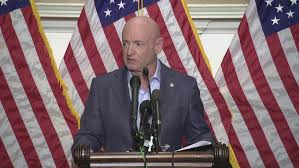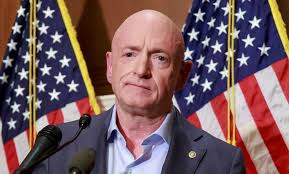
Tag: Senator Mark Kelly

  • Protecting Our Freedoms: A Landmark Ruling Upholds Senator Kelly’s First Amendment Rights

    Blue Press Journal – In a pivotal decision safeguarding constitutional liberties, a federal judge has decisively blocked attempts by Defense Secretary Pete Hegseth to censure and demote Senator Mark Kelly. This ruling underscores the critical importance of free speech, especially for those who have dedicated their lives to defending our nation.

    The controversy arose after Senator Kelly, a distinguished retired combat veteran, appeared in a video advocating that service members should not follow unlawful orders. This action drew the ire of President Donald Trump, who accused the participating lawmakers of “seditious behavior,” leading to aggressive attempts by the administration to punish them.

    A Victory for Constitutional Principles

    District Judge Richard Leon, appointed by President George W. Bush, issued a scathing opinion rejecting the Defense Department’s efforts. (read the fill option here) While acknowledging the well-established doctrine that active-duty military personnel have less vigorous First Amendment protections, Judge Leon firmly declared that these principles do not extend to retired servicemembers, “much less a retired servicemember serving in Congress and exercising oversight responsibility over the military.” See: ACLU on Military Free Speech Rights for context on speech limitations for active military personnel and the historical precedent.

    Judge Leon condemned the administration’s argument that military decisions are exempt from judicial review, stating, “Defendants have trampled on Senator Kelly’s First Amendment freedoms and threatened the constitutional liberties of millions of military retirees.” His ruling is a powerful affirmation that constitutional checks and balances remain vital, even when challenged by executive power.

    The Indispensable Role of the First Amendment

    This case highlights why the First Amendment is not merely a legal clause but the bedrock of American democracy. It guarantees the freedom of speech, religion, press, assembly, and petition, empowering citizens – including retired military personnel – to hold their government accountable and engage in public discourse without fear of reprisal. For veterans like Senator Kelly, who have sacrificed to protect these very freedoms, the ability to speak out on matters of national importance is paramount. As Judge Leon eloquently stated, the administration should “reflect and be grateful for the wisdom and expertise that retired servicemembers have brought to public discussions and debate on military matters.” Further reading on the importance of free speech in a democratic society can be found via the National Constitution Center.

    Senator Kelly rightly asserted that this fight was never just about him, but about sending a message to millions of veterans that their constitutional rights are not diminished upon retirement. This ruling ensures that the voices of experience and integrity, crucial for robust public debate, continue to enrich our nation’s dialogue.


  • Pete Hegseth’s Unprecedented Attack on Sen. Mark Kelly: A Dangerous Abuse of Power

    Pete Hegseth vs. Mark Kelly: Unprecedented Military Free Speech Controversy

    Blue Press Journal – In a move that has stunned legal experts and rattled military veterans, Defense Secretary Pete Hegseth has launched an extraordinary and highly questionable administrative action against Senator Mark Kelly (D-Ariz.), a retired Navy captain and decorated combat veteran. Rather than pursuing the court-martial he initially threatened — a route that would require due process, evidence, and public scrutiny — Hegseth has opted for a behind-closed-doors tactic to reduce Kelly’s retirement rank and military pension. 

    This is not just unusual. According to military law experts, it’s virtually unheard of. 


    Why This Matters — and Why It’s Unprecedented

    Retired officers are rarely, if ever, targeted for alleged misconduct occurring after their service. The statute Hegseth is invoking — 10 U.S. Code § 1370(f) — is designed to review retirement grades only under very limited conditions, almost always tied to conduct during active duty. 

    Rachel VanLandingham, a retired Air Force lieutenant colonel and former judge advocate, has been unequivocal: “It’s just never been done.” She points out that the “good cause” provision in the law must be read in line with the rest of the statute, meaning it applies to active-duty conduct — not political speech years after retirement. 

    Hegseth’s move takes Kelly into “uncharted legal waters,” bypassing established safeguards and, in the words of VanLandingham, making “a mockery of the procedures and the rules and due process.” 


    The Backstory: Free Speech vs. Political Retaliation

    The conflict began after Kelly, along with five other Democratic lawmakers who are military or intelligence veterans, released a November video reminding service members that they are obligated to refuse illegal orders. Kelly’s statement was clear and rooted in military law: “Our laws are clear. You can refuse illegal orders.”

    President Trump, incensed by the video, publicly accused the group of “seditious behavior” and even suggested execution — an extreme and inflammatory response. Within a week, Hegseth announced a Pentagon investigation into Kelly, framing his comments as a threat to military discipline. 

    Now, instead of testing those claims in a transparent court-martial process, Hegseth is relying on an administrative path that concentrates decision-making power in the hands of Navy Secretary John Phelan — a Trump loyalist with no military experience who donated over $800,000 to Trump’s campaign. 


    Stacking the Deck: Politics Over Justice

    Military law experts say the process Hegseth is using is rife with conflicts. Under §1370(f), Phelan alone will decide whether “good cause” exists to reopen Kelly’s retirement grade — without the oversight of a formal board and without the evidentiary safeguards of a court-martial. 

    Phelan’s rapid politicization of the Navy since his appointment — replacing career civil servants with political appointees — raises serious concerns about impartiality. This is not a neutral process; it’s a political maneuver with a predetermined target. 

    Todd Huntley, a retired Navy captain and former judge advocate, notes that “good cause” is meant for cases involving fraud, calculation errors, or newly discovered evidence tied to active-duty service. Kelly’s post-retirement political speech does not meet that threshold. 


    Kelly’s Service Record and the Bigger Threat

    Mark Kelly’s 25-year Navy career included combat missions and even journeys into space. He retired honorably in 2011 as a captain. To reopen his retirement status over political speech is not only a personal attack — it sends a chilling message to every retired service member: speak out against the administration, and you could lose your rank and pension. 

    Kelly himself has called out the intimidation tactic: “Pete Hegseth wants to send the message to every single retired service member that if they say something he or Donald Trump doesn’t like, they will come after them the same way. It’s outrageous, and it is wrong. There is nothing more un-American than that.”


    Why This Should Alarm Everyone

    This is more than a dispute between two public figures. It’s a test of whether political power can override legal precedent, due process, and free speech protections for retired military officers. 

    The decision to sidestep a court-martial and instead use an opaque administrative process strips away transparency, lowers the burden of proof, and concentrates authority in politically aligned hands. If successful, it could create a dangerous blueprint for punishing political opponents — even decorated veterans — without fair trial standards. 


    The Road Ahead

    Kelly has 30 days to respond to the Pentagon’s proceedings and is considering filing a federal lawsuit. The outcome will set a precedent not just for him, but for thousands of retired service members who believed their honorable discharge protected them from politically motivated retaliation. 

    In the words of VanLandingham: “This is about intimidation… They have so much power to get the result that they want, which is exactly what they’re doing.”

    The question now is whether Americans — military and civilian alike — will allow this erosion of rights to stand.

  • Sen. Mark Kelly Defends His Honor: Legal Rights and the Fight Against Unjust Demotion

    Blue Press Journal – In a striking escalation, Defense Secretary Pete Hegseth has moved to demote Sen. Mark Kelly (D-Ariz.) from his retired Navy rank following comments Kelly made in a November video encouraging service members to refuse unlawful orders. Kelly, a decorated Navy combat veteran who served more than 20 years and completed multiple deployments, has vowed to “fight this with everything I’ve got.” 

    This is more than a dispute between two men — it’s a test of constitutional principles and the rights of those who serve. 

    Constitutional Protections at Stake

    One of the most powerful legal shields available to Sen. Kelly is the Speech or Debate Clause of the U.S. Constitution (Article I, Section 6, Clause 1). This provision protects Members of Congress from being questioned in any other place for any speech or debate conducted in their legislative role. Courts have consistently interpreted this to safeguard lawmakers from retaliation for expressing political views related to their official duties. 

    If Kelly’s statements were made in connection with his role as a sitting senator — particularly on matters of military legality and oversight — they fall squarely within the zone of protected legislative speech. 

    First Amendment and Military Law

    Moreover, as a retired officer, Kelly retains his constitutional right to free speech under the First Amendment, so long as his statements do not disclose classified information or directly violate the Uniform Code of Military Justice. His comments — urging adherence to lawful orders — actually reinforce military law, which requires service members to disobey unlawful commands. This principle is enshrined in the Law of Armed Conflict and precedents from the Nuremberg Trials, reaffirming that following illegal orders is itself unlawful. 

    Why This Fight Matters

    Attempting to reduce Kelly’s retirement grade for protected speech sets a dangerous precedent. It risks sending a chilling message to active and retired service members: speak out on matters of legality and you may face personal retaliation. 

    Sen. Mark Kelly has spent his career defending the Constitution — first in uniform, now in the Senate. In standing up to this action, he’s not only defending his own honor, but also the rights and principles every American service member swears to protect.