Tag: Stephen Miller

  • Behind the Curtain: Unsettling Questions About Who’s Really Running the White House

    Blue Press Journal

    In the American system of government, the buck is supposed to stop at the President’s desk. The person in the Oval Office is the ultimate decision-maker, the commander-in-chief, and the individual accountable to the public for the actions of the executive branch. But what happens when the public sees moments that cast doubt on that individual’s engagement? Recent observations have ignited a serious and necessary conversation about the operational structure of the current White House and the fundamental question of who is truly at the helm.

    These concerns were brought into sharp relief by recent footage that appeared to show the President asleep during a public event. For political commentator Symone Sanders, this wasn’t just an isolated, embarrassing moment. It was a catalyst for a much deeper inquiry into the chain of command. “It brought up the questions again about what the actual apparatus at this White House is and who is actually in charge here,” Sanders said. “Because that can’t be the first time the president fell asleep…So when that happens, who is making the decisions?”

    This is not a trivial question. It strikes at the heart of executive function. If the principal decision-maker is disengaged, even temporarily, a power vacuum is created. The critical question then becomes: who fills it? Is it the Vice President? The Chief of Staff? Or is it unelected advisors and policy architects operating without a direct public mandate?

    The issue extends beyond moments of apparent fatigue. Former Homeland Security Advisor Fran Townsend pointed to a pattern of behavior that suggests a potential disconnect between the President and the policies he enacts. She raised concerns about public bill-signing ceremonies where the President seemed to be learning the details of the documents for the first time. “When the president was doing these public signings of these executive orders, and they come in and they explain to him what the executive order is and he’s like, ‘Oh, okay. Yeah.’ I wonder, is that the first time you heard this?”

    This observation is profoundly unsettling. Executive orders are powerful instruments that can have sweeping impacts on national policy, the economy, and the lives of millions of Americans. The suggestion that a president might be unfamiliar with the contents of an order he is about to sign into law raises serious questions about his level of involvement in the policy-making process. Is the President reviewing, debating, and shaping these policies, or is he merely serving as the final stamp of approval on decisions made by others?

    Townsend drove this point home by naming a specific, influential advisor and posing a direct challenge. “And so we’re using ‘I’ statements? Are you the one making the decision, Stephen Miller, about these strike force teams?” she asked. “How much aware is the president of what is going on? These are questions I think they deserve to be asked.”
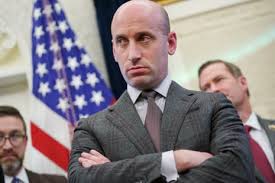
    This is the crux of the matter. The American people elect a president, not their advisors. While every administration relies on a team of experts and aides, that team is meant to inform and execute the president’s vision, not supplant it. When questions arise about whether senior staff are making pivotal decisions with limited presidential oversight, it becomes a matter of democratic accountability.

    These are not partisan attacks; they are fundamental questions of governance. The public has a right to trust that the person they chose to lead the country is actively and knowingly doing so. When credible observers from across the political spectrum express concern about the President’s awareness and engagement, it is a signal that we need more transparency, not less. The questions have been asked. The American people deserve the answers.

  • The Rise of Autocracy: How Stephen Miller is Emboldening Trump’s Power Grab

    Blue Press Journal – As the United States grapples with the implications of an increasingly powerful executive branch, a top aide to President Donald Trump has emerged as a key figure in the administration’s push for autocrat-like powers. Stephen Miller, a senior advisor to the President, has been making headlines with his inflammatory rhetoric and blatant misrepresentations of the law. His statements have sparked concerns about the erosion of democratic norms and the concentration of power in the hands of the President.

    Miller’s recent comments have been particularly striking. He has accused federal judges, including those appointed by Republican presidents, of participating in a “judicial coup.” He has also labeled the opposition Democratic Party a “domestic extremist organization” and protesters in U.S. cities “terrorists.” These statements are not only incendiary but also demonstrate a profound disregard for the principles of democracy and the rule of law.

    According to a former Heritage Foundation staffer, Miller’s comments are part of a larger plan to consolidate power and undermine checks and balances. “Project 2025 was, at its core, an aspiration to provide Trump plenary power to gut checks and balances, consolidate control over all aspects of the federal government and entrench power for the long term,” she said. “It was written on paper and Stephen Miller is saying it out loud.”

    Miller’s claims about the law are often at odds with reality. For example, he has repeatedly misstated federal asylum law, claiming that asylum seekers must seek safety in the first country they visit after leaving their home country. This is not true. U.S. law permits asylum seekers to seek sanctuary upon arrival, regardless of how they arrived or the countries they passed through.

    Moreover, Miller has a tendency to distort facts to suit his narrative. After the U.S. Supreme Court unanimously ruled against Trump’s unlawful deportation of a migrant to a prison in El Salvador where torture is common, Miller claimed that the decision was actually in Trump’s favor. “That’s what the Supreme Court held, by the way,” he lied. “We won a case 9-0.” This blatant misrepresentation of the truth is a stark example of the administration’s willingness to manipulate facts to justify its actions.

    Miller has also falsely claimed that Trump won the last presidential election in a “colossal landslide.” In fact, Trump failed to win a majority of the votes cast and defeated his opponent by just 1.5%, one of the smallest popular vote margins in modern times. This distortion of reality is a clear attempt to create a false narrative about the President’s mandate and popularity.

    As the administration continues to push the boundaries of executive power, Miller’s comments and actions have become increasingly concerning. His rhetoric has emboldened Trump to take more aggressive actions, including summary killings of individuals in the Caribbean, which he and Miller have designated as “terrorists.”

    In a democratic system, the rule of law and the separation of powers are essential checks on the abuse of power. However, with Miller by his side, Trump seems determined to undermine these principles and consolidate his power. As the former Heritage Foundation staffer noted, “It was written on paper and Stephen Miller is saying it out loud.” The implications of this are chilling, and it is essential that Americans remain vigilant and demand that their leaders respect the Constitution and the principles of democracy.

    As Miller’s comments highlight, the threat to democracy involves not just Trump’s actions but also the underlying ideology and rhetoric. Inflammatory language, distorted facts, and contempt for the law indicate an authoritarian mindset. Americans must recognize this danger and demand that leaders uphold democracy and the rule of law.

    Stephen Miller’s comments and actions remind us of the threat to democracy from the Trump administration. His inflammatory rhetoric and disregard for the law are part of a plan to consolidate power and undermine checks and balances. We must remain vigilant and demand respect for the Constitution and democratic principles, as the future of our democracy depends on it.