Tag: Strait of Hormuz crisis

  • Trump’s Iran Ceasefire: Strategic Stalemate Masquerading as Diplomatic Victory

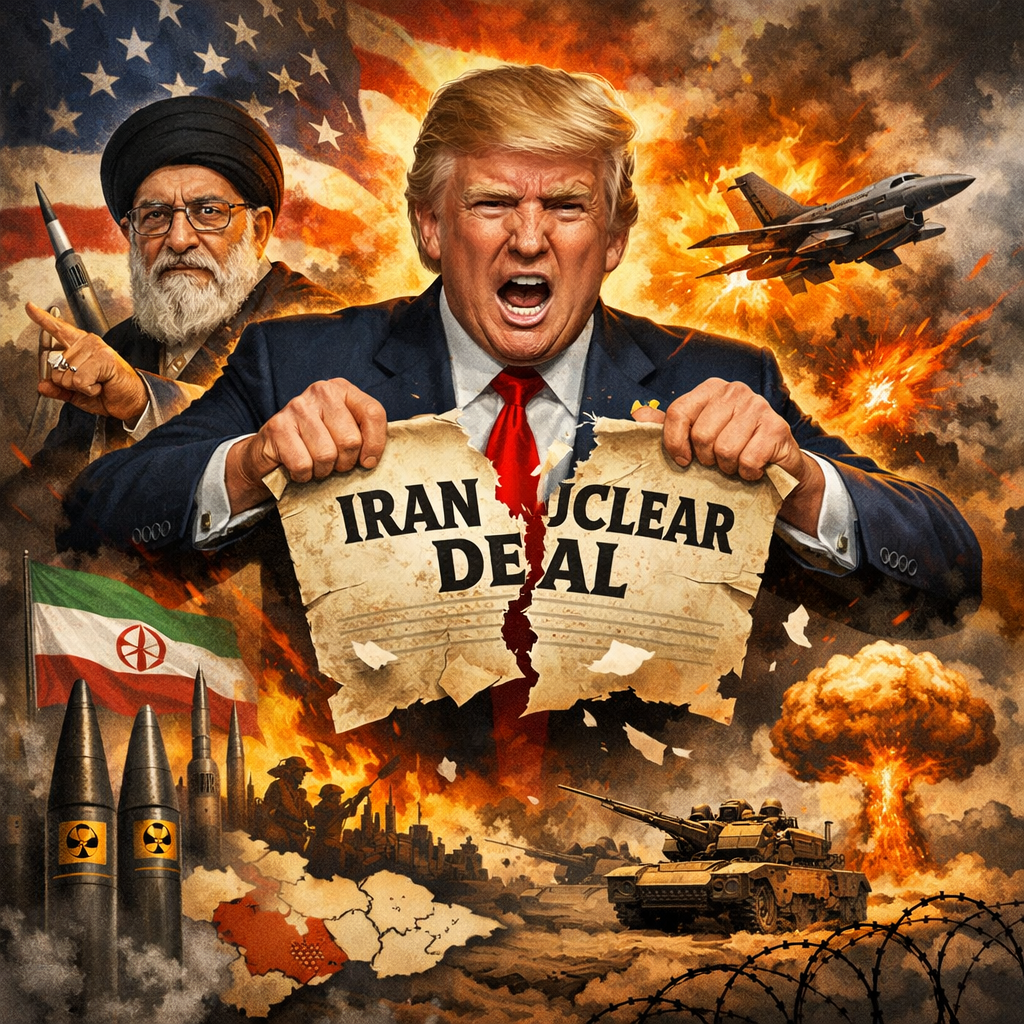
    Man tearing a paper labeled Iran nuclear deal with conflict and political imagery in the background

    Blue Press Journal – The Trump administration’s declaration of victory following recent hostilities with Tehran rings hollow against a backdrop of unresolved crises and diplomatic retreat. What officials characterize as a successful military campaign reveals, upon closer inspection, a strategy that has left Iran’s nuclear ambitions intact and its regional influence largely undiminished.

    The fragility of the announced ceasefire became immediately apparent when Iranian parliamentary speaker Mohammad Bagher Qalibaf accused Washington of negotiating in bad faith. As Reuters reported, the agreement’s explicit exclusion of the ongoing Israeli military operations in southern Lebanon—a conflict that has claimed over 1,500 lives and displaced more than one million civilians according to United Nations estimates—undermined Tehran’s willingness to engage in further bilateral talks. White House confirmation that Lebanon remained outside the ceasefire’s scope has validated Iranian accusations of American duplicity.

    Secretary of Defense Pete Hegseth’s claims of degrading Iran’s conventional capabilities ignore the reality of asymmetric warfare that Tehran has mastered. While the administration celebrates tactical gains, Iran’s effective blockade of the Strait of Hormuz sent global oil markets spiraling, demonstrating economic leverage that military strikes cannot neutralize. Bloomberg analysis indicates this pressure directly inflated American energy costs, forcing President Trump to contemplate unprecedented “joint venture” arrangements that would effectively cede partial control of this vital artery to Tehran—far from the decisive dominance initially promised.

    The administration’s nuclear containment strategy appears equally untenable. Despite Hegseth’s assertions regarding Iran’s 970-pound stockpile of highly enriched uranium, The Washington Post notes there remains no credible mechanism compelling Tehran to voluntarily surrender its ultimate survival deterrent. The regime’s survival—cemented by the seamless succession from Ayatollah Ali Khamenei to his son Mojtaba, as documented by The New York Times—belies administration assumptions that military pressure would catalyze domestic collapse.

    Ultimately, Iran has achieved its primary strategic objective: endurance. The Islamic Republic has weathered American bombardment while retaining the capacity to destabilize regional energy flows. Rather than securing a decisive victory, the Trump administration has engineered a precarious stalemate that leaves the United States negotiating from a position of diminished leverage.
  • Trump’s Iran Gamble Backfires as Approval Craters to Historic Lows

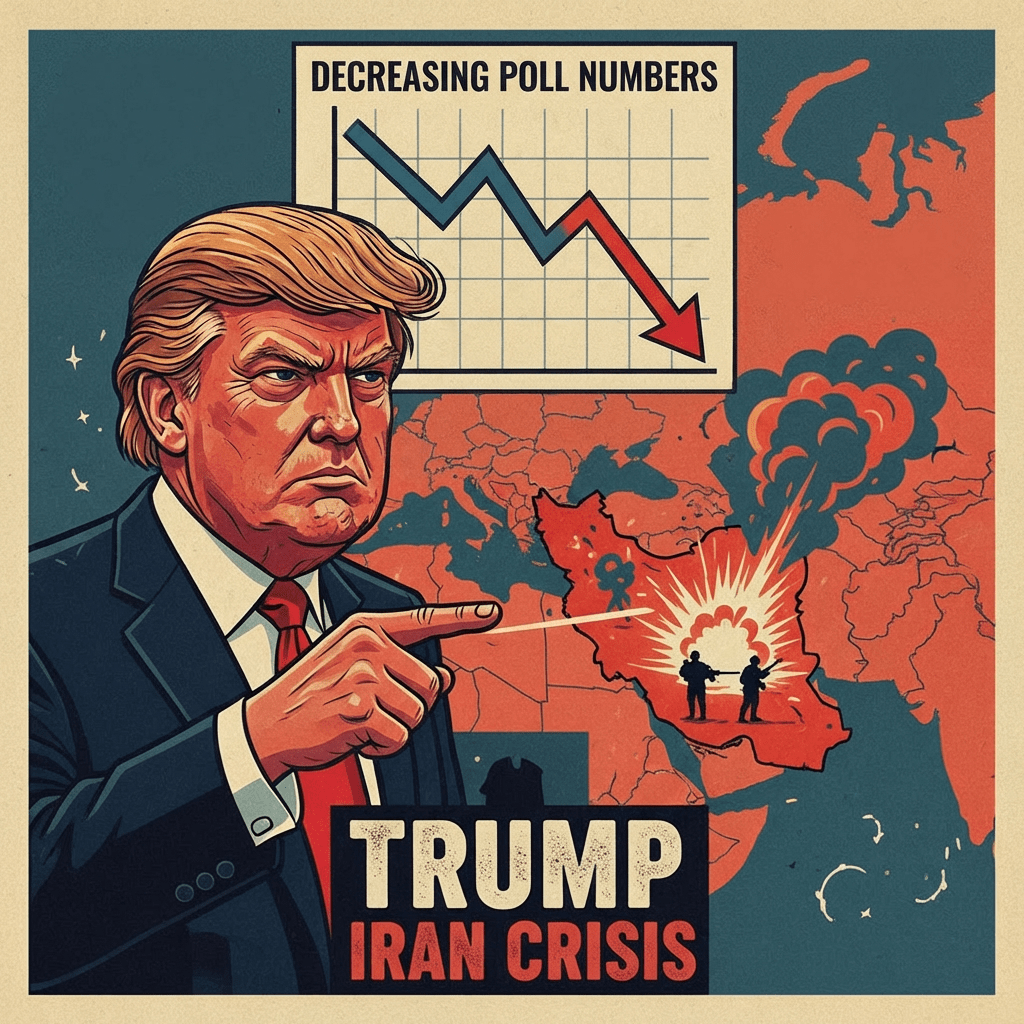
    Illustration of Donald Trump pointing to an explosion in Iran with text TRUMP IRAN CRISIS.

    Blue Press Journal – President Donald Trump’s political Teflon may finally be peeling off. After surviving impeachments, criminal indictments, and market-rattling tariff wars, his unauthorized military campaign against Iran has triggered a collapse in public support that analysts say could define his second term—and end his legislative agenda.

    According to data from the poll aggregator FiftyPlusOne, Trump’s net approval has plunged to negative 21.4%, dipping below 40% for the first time since his January inauguration. Writing for Strength In Numbers, pollster G. Elliott Morris noted that Trump’s ratings now represent “the lowest of any president at this point in their term, going back to FDR.”

    The catalyst is a war with no apparent exit strategy. During a Wednesday address to the nation, Trump offered no clear plan to reopen the Strait of Hormuz—through which roughly 20% of global oil flows—instead telling European and Asian allies to “grab and cherish” responsibility for the crisis he created. Markets immediately punished the uncertainty, with oil prices spiking and equities tumbling as traders absorbed the economic shock.

    The contradiction is politically toxic. Trump campaigned in 2024 on lowering household costs, yet his Iran war has compounded inflationary pressures already exacerbated by chaotic tariff policies. Energy analyst Rory Johnston warned listeners on the Commodity Context podcast that futures markets are exhibiting “irrational optimism,” adding that “futures markets are grievously underpricing” the sustained energy crisis.

    Demographically, the erosion is sweeping. A recent CNN survey found that 80% of voters aged 18-34 now disapprove of his handling of the presidency, along with 73% of independents. Research from the Center for Working-Class Politics indicates that working-class Black and Latino voters—critical to Trump’s 2024 popular vote victory—are rapidly retreating from the GOP, a shift already visible in 2025’s off-year gubernatorial races in New Jersey and Virginia.

    With midterm elections just seven months away, Republicans face the prospect of losing the House, which would effectively halt Trump’s agenda and potentially subject his final two years to investigation and gridlock. By simultaneously replicating Jimmy Carter’s energy shock, George W. Bush’s catastrophic Middle East war, and Joe Biden’s inflation woes—all within a single term—Trump may have finally constructed a scandal too vast to escape.

  • Trump’s Iran War Threatens Catastrophic Oil Crisis as Aramco Warns of Global Market Collapse

    Trump’s Iran Escalation Threatens Catastrophic Oil Crisis for American Consumers

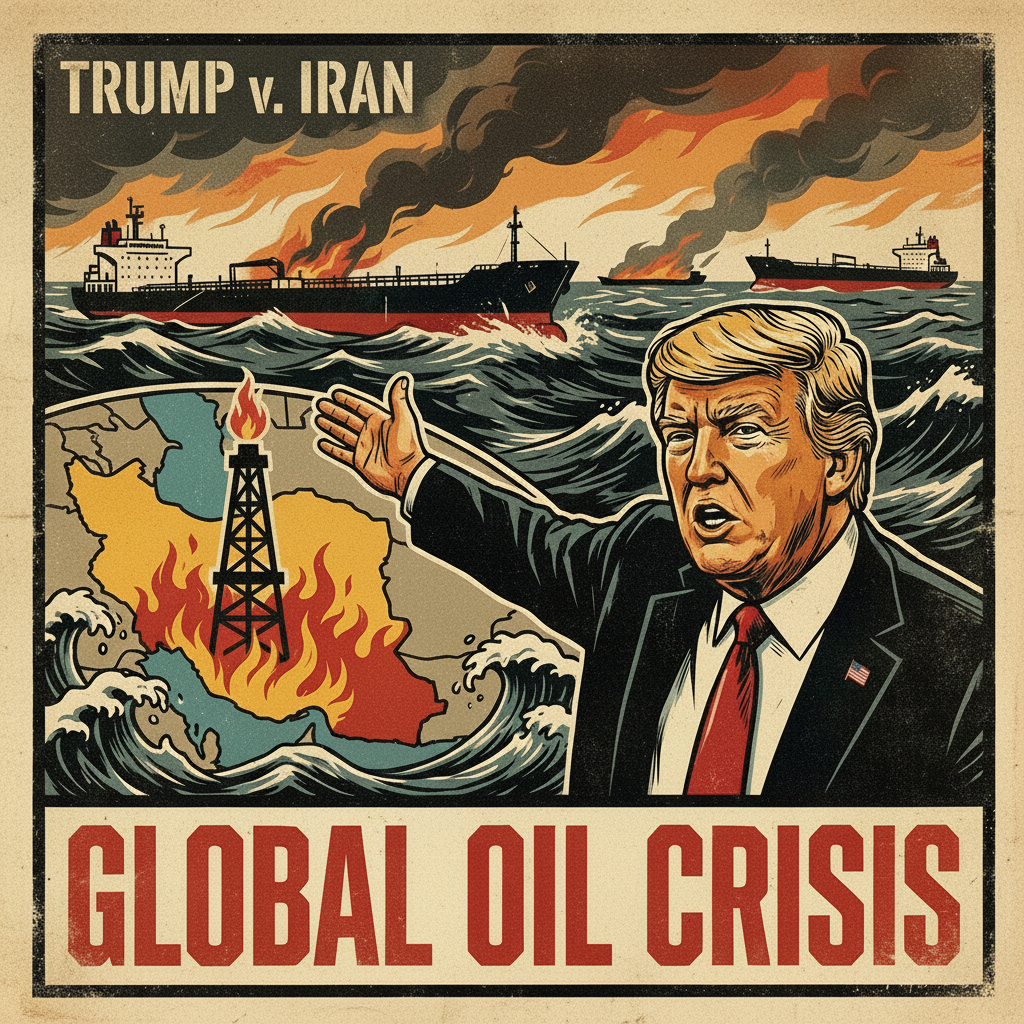
    Poster TRUMP v. IRAN GLOBAL OIL CRISIS showing Trump gesturing towards a burning map of Iran.

    Blue Press Journal – As working Americans face mounting costs at the pump, Saudi Aramco’s CEO has issued a stark warning that President Donald Trump’s escalating conflict with Iran could trigger “catastrophic consequences” for global oil markets. Amin Nasser told reporters Tuesday that blocking the Strait of Hormuz—through which roughly 20% of global oil shipments flow—represents “the biggest crisis the region’s oil and gas industry has faced” (Reuters). 

    The Iranian Revolutionary Guards have vowed to halt “one litre of oil” from passing if U.S. attacks persist, already choking shipments through the vital artery. Despite Brent crude surging to three-year highs near $120 per barrel, Trump has doubled down on aggression, threatening “much harder” strikes while proposing an unrealistic naval escort plan that energy officials dismiss as insufficient (Bloomberg). 

    With global inventories at five-year lows and Aramco suspending Gulf exports entirely—removing 350 million barrels from the market—Trump’s brinkmanship directly threatens American consumers with sustained price spikes across aviation, agriculture, and transportation sectors. As one Gulf energy official noted to CNBC (2026), only stopping the war—not escalating it—can reopen these critical shipping lanes.

    Chart: Brent Crude Price Surge During Iran Crisis

    DatePrice (USD)Event
    Pre-Escalation$70Baseline pricing
    Week 1$85Initial Hormuz tensions
    Current Peak$118-120Iran blocks shipping threats

    Source: Market data via Bloomberg/New York Mercantile Exchange