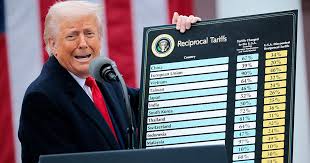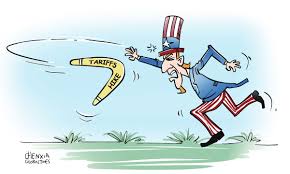
Tag: tariffs

  • The Economic Crisis in Rural America: A Political Wake-Up Call for the GOP

    Trump Economic Policies Hurting Rural America

    Blue Press Journal – As the midterm elections approach, the deepening financial turmoil experienced by American farmers has morphed into a significant political dilemma for the Republican Party. According to former Republican strategist Rick Wilson, the fallout from President Donald Trump’s economic policies is manifesting in a way that could reshape the political landscape in rural America.

    In a recent Substack post, Wilson, co-founder of the anti-Trump organization The Lincoln Project, articulated a stark reality: many of Trump’s staunchest supporters are now grappling with a harsh economic truth. He stated, “Welcome to the ‘Find Out’ phase of the most expensive political experiment in American history. As we head into 2026, rural America is discovering that you can’t eat ‘owning the libs,’ and you can’t pay a mortgage with Facebook memes.”

    In the 2024 election, rural Americans did more than just support Trump; they made a perilous commitment to his policies. In the nation’s 444 farming-dependent counties, Trump garnered nearly 78% of the vote. Now, these areas are witnessing the catastrophic effects of what Wilson terms “MAGA-nomics,” as multi-generational family farms face unprecedented challenges. The metaphor of “Leopards Eating People’s Faces” epitomizes the irony of voters suffering from the very policies they championed.

    The Impact of Tariffs on Farmers

    The Trump administration’s imposition of sweeping tariffs has severely impacted farmers’ incomes. Wilson describes the consequences succinctly: “For farmers, this wasn’t ‘winning’—it was a state-sponsored execution.” China, which once accounted for half of all U.S. soybean exports, has largely ceased buying American agricultural products. By 2026, major crop revenues faced staggering declines: corn fell by $169 per acre, soybeans by $114, and cotton nearly $400. According to projections, net farm income is expected to plummet by $41 billion this year—a staggering 23% decrease, marking one of the sharpest declines seen in decades (U.S. Department of Agriculture, 2023).

    The Labor Crisis Intensified by Immigration Policies

    The plight of farmers has been further exacerbated by the Trump administration’s aggressive immigration policies. As Wilson aptly noted, “If tariffs were the heart attack, immigration policy was the stroke.” The push for mass deportations resulted in a labor crisis that farmers could not ignore. With roughly 70% of farmworkers being foreign-born, the labor force rapidly dwindled. In states like New Jersey and California, crops were left to rot in the fields, and one grower reported a staggering loss of $5 million due to a lack of available labor to harvest.

    Political Ramifications for the GOP

    The financial fallout from these policies has transformed into a political liability for the GOP. Wilson warns, “For Republicans running in 2026, this is a slow-motion catastrophe. They’re chained to an incumbent who is bankrupting his most loyal voters.” The irony is profound: the very individuals who rallied behind Trump’s trade wars and immigration policies are now suffering the consequences. Experts had predicted these outcomes, yet the farmers who built Trump’s support base are now paying the price.

    As rural America grapples with an economic crisis ignited by misguided policies, the political fallout for the GOP could be catastrophic. With the 2026 elections looming, uncertainty reigns over whether the party can extricate itself from the devastating consequences of Trump’s economic blunders or if they will be shackled to a disillusioned base that is growing ever more despondent.

  • Trump’s Tariff Threat Against Canada: Bad Economics, Worse for American Consumers

    President Trump’s latest 100% tariff threat against Canada will hurt American consumers, damage U.S. industries, and strain vital trade relationships. Learn why Trump’s trade war is bad economics and worse policy.


    Blue Press Journal – President Donald Trump’s recent threat Satruday to impose a 100% tariff on Canadian imports has sent shockwaves through North American trade circles. The move, aimed at punishing Canada for its newly negotiated trade concessions with China, reflects the same protectionist instincts that have defined Trump’s economic agenda since his first term. But beyond the political theater, tariffs like these come with a steep price — one paid directly by American consumers, businesses, and workers.


    The Canada-China Trade Context

    Earlier this month, Canadian Prime Minister Mark Carney announced a deal with China to lower tariffs on Chinese electric vehicles in exchange for reduced import taxes on Canadian agricultural products. While Canada maintains no free-trade agreement with China, the arrangement was crafted to support Canadian farmers and diversify trade relationships amid global tensions.

    Trump initially praised the deal, but quickly reversed course, accusing Canada of becoming a “drop-off port” for Chinese goods destined for the U.S. His retaliation? Threatening a 100% import tax on Canadian goods if Ottawa proceeds — a move that would affect everything from steel to agricultural products to critical minerals.


    Why Tariffs Hurt Americans More Than They Help

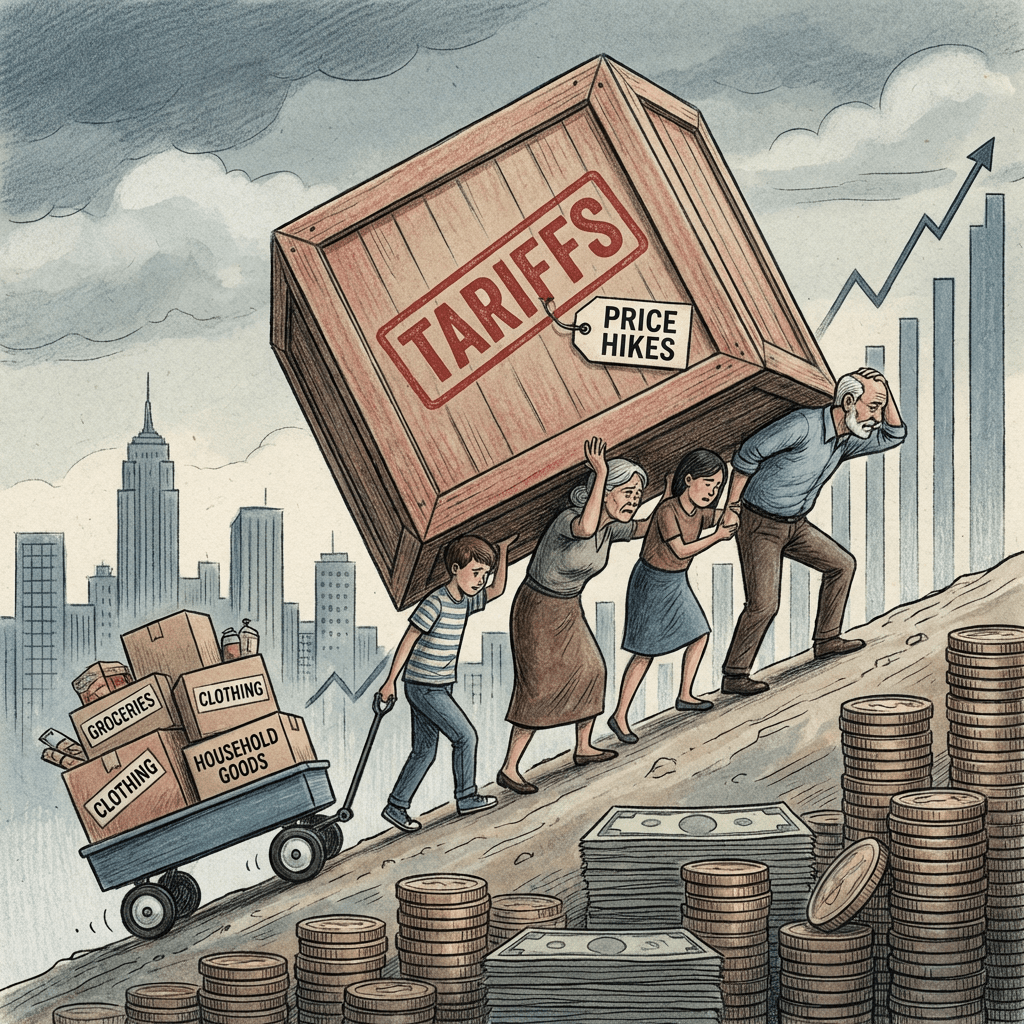
    Tariffs are often sold to voters as a way to protect domestic industries, but the reality is that tariffs operate as a hidden tax on U.S. consumers. When the U.S. imposes tariffs, importers pay higher costs, which are then passed along to businesses and consumers in the form of higher prices.

    According to a 2019 study by the Federal Reserve Bank of New York, U.S. tariffs during the Trump administration’s first trade war with China led to $1.4 billion in additional costs per month for American consumers. Similarly, research from the Peterson Institute for International Economics found that the average U.S. household paid $800 more per year due to tariff-driven price increases.

    For context:

    • Canada is the largest export destination for 36 U.S. states.
    • Nearly $2.7 billion USD in goods and services cross the Canada-U.S. border daily.
    • Canada supplies 60% of U.S. crude oil imports and 85% of U.S. electricity imports.
    • It is also a key supplier of steel, aluminum, uranium, and critical minerals essential for the auto industry, defense and technology.

    Imposing a 100% tariff on these imports would cause instant price spikes in energy, manufacturing, and consumer goods — directly hitting U.S. households and industries.


    Economic Fallout of Trump’s Tariff Threat

    If enacted, Trump’s proposed tariffs would:

    1. Raise Costs for Energy and Manufacturing – U.S. industries dependent on Canadian oil, electricity, and metals would face supply shortages and higher costs.
    2. Damage Cross-Border Supply Chains – The deeply integrated Canada-U.S. manufacturing sector, especially in automotive and aerospace, would be disrupted.
    3. Invite Retaliation from Canada – Ottawa could respond with its own tariffs on U.S. exports, hurting American farmers, particularly in states that rely on agricultural trade with Canada.
    4. Undermine NATO and Western Alliances – Trump’s antagonistic stance toward Canada, paired with his push to acquire Greenland and social media provocations, risks alienating a key ally.

    Political Theater vs. Economic Reality

    Trump’s rhetoric — including calling Carney “Governor Carney” and posting altered maps showing Canada as part of U.S. territory — may play well to a certain political base. But such antics undermine serious diplomatic relationships and erode trust among allies.

    Carney’s speech at the World Economic Forum in Davos, urging “middle powers” to unite against coercive tactics by great powers, clearly struck a nerve with Trump. As Carney’s popularity rises on the world stage, Trump’s trade threats appear less about protecting American workers and more about retaliating against political rivals.


    The Consumer’s Perspective

    For the average American, tariffs mean:

    • Higher grocery bills (due to increased costs on Canadian agricultural imports).
    • More expensive cars and electronics (Canadian manufacturing is a key part of U.S. supply chains).
    • Higher energy costs (Canadian oil, electricity, and uranium are essential to U.S. energy security).

    In short: Tariffs punish consumers first, industries second, and political rivals last.


    So What Does it Mean

    President Trump’s threat of a 100% tariff on Canadian goods is more than a diplomatic provocation — it’s an economic self-inflicted wound. Canada is one of America’s most important trading partners, and disrupting that relationship will raise prices, strain industries, and weaken alliances. 

    If history is any guide, Trump’s tariffs will not force Canada to change course with China. Instead, they will drive up costs for American families, hurt U.S. competitiveness, and isolate the United States in a world where cooperation — not coercion — is the key to economic success.


  • Trump’s Economic Policies Are Costing American Families Thousands – The Numbers Don’t Lie

    In Response to todays Trump News Conference

    Blue Press Journal – While former President Donald Trump made headlines with bizarre distractions like his public musings about buying Greenland, the real story for American households was happening in their wallets. A new congressional analysis reveals that under Trump’s leadership, U.S. families faced sharp increases in the cost of living, directly tied to his economic agenda and trade strategies. 

    According to a recent report from the Joint Economic Committee (JEC), the average U.S. household paid $1,625 more in 2025 for everyday essentials. These rising costs were not random — they were the result of Trump’s tariffs, housing market pressures, and broader economic mismanagement (Joint Economic Committee, 2025). 

    The Real Impact: Higher Prices for Housing, Transportation, and Groceries

    Breaking down the numbers, the JEC found that housing expenses rose by an average of $323 per family, transportation costs climbed by $241, and grocery bills surged across the country. For residents of states like Alaska, Connecticut, Massachusetts, and New York, the hit was even harder — more than $2,000 in additional annual costs. 

    The cause? Trump’s tariff-heavy trade policy, which he claimed would punish foreign exporters but in practice acted as a hidden tax on American consumers. Independent economic analyses, including research from the Center for American Progress, confirm that U.S. businesses and families bore nearly the entire cost of these tariffs (CAP, 2025). 

    The Inflation Reality Check

    Trump has repeatedly boasted that he “ended inflation” and claimed prices are falling. The data tells a different story. In December 2025, inflation was still running at 2.7% year-over-year, with prices continuing to climb month to month (CNN Fact Check). For working families, this meant that paychecks stretched less, and basic necessities became more expensive — despite the White House’s rosy rhetoric. 

    Economic Uncertainty Hurts Families

    Economists warn that tariffs not only raise consumer prices but also create uncertainty for businesses, slowing investment and job growth. This uncertainty compounds the financial strain on households, particularly in industries reliant on global supply chains. 

    Senator Maggie Hassan (D-NH) criticized the administration’s “reckless” economic approach, pointing out that tariffs, higher healthcare costs, and policy unpredictability have all contributed to the squeeze on American families. 

    The Takeaway: The “Greatest Economy” Myth

    Trump’s claims of delivering “the greatest first year in history” simply don’t match the lived reality of American families. The hard truth is that his economic policies functioned as a tax on the middle class, without delivering the promised benefits. 

  • Transatlantic Rift Deepens as Trump’s Greenland Tariffs Ignite Calls for EU ‘Trade Bazooka’

    Donald Trump’s punitive tariffs on European nations supporting Greenland security have sparked unprecedented EU retaliation talks, risking a historic breakdown in transatlantic relations.

    Blue Press Journal – The fragile fabric of transatlantic relations is fraying at an alarming pace, as U.S. President Donald Trump’s decision to impose tariffs on European nations involved in Greenland security exercises triggers outrage across the European Union. What began as a geopolitical skirmish over the Arctic has rapidly escalated into a confrontation that EU leaders say could fundamentally reshape the balance of power between Washington and Brussels. 

    At the heart of the crisis is Trump’s move to punish countries — including France, Germany, Sweden, Finland, Norway, and the Netherlands — that deployed troops to participate in a Danish-led military exercise in Greenland. The exercise, part of a broader European effort to secure the Arctic amid rising Russian and Chinese activity, was described by participating governments as entirely defensive and non-provocative. Yet Trump’s administration framed the deployments as a direct affront to U.S. interests, slapping punitive tariffs in a move critics say is both reckless and diplomatically corrosive. 

    Europe’s Retaliatory Options: From Restraint to Confrontation

    For months, EU leaders have tolerated Trump’s unpredictable foreign policy in the hope of preserving NATO unity. They have weathered his wavering support for Ukraine, his pressure for lopsided trade agreements, and his demands for massive defense spending increases. But the Greenland tariffs appear to have crossed a line. 

    French President Emmanuel Macron has emerged as one of the loudest voices demanding a robust response, calling for the activation of the EU’s Anti-Coercion Instrument — a powerful trade retaliation tool originally designed to counter China’s economic intimidation. Deploying it against the United States would be unprecedented, signaling a profound shift in the EU’s willingness to confront Washington head-on. 

    “The EU must resist humiliation and economic vassalization,” said Jérémie Gallon, a former French diplomat now based in Washington. His sentiment echoes a growing consensus among centrist and left-leaning EU lawmakers who argue that Europe must assert itself as a geopolitical actor rather than simply react to U.S. pressure. 

    Diplomatic Fallout and Strategic Calculations

    Even leaders with warmer ties to Trump, such as Italian Prime Minister Giorgia Meloni, have acknowledged the severity of the rift. While urging dialogue to avoid escalation, Meloni conceded that tariffs on NATO allies “are a mistake” and risk undermining shared security goals. 

    The European Parliament is already signaling its readiness to derail ratification of a recently negotiated EU-U.S. trade deal — a move that would have been unthinkable only months ago. Blocking the agreement would be a symbolic yet potent act, but triggering the Anti-Coercion Instrument would represent a direct economic counterstrike. 

    The Bigger Picture: Europe’s Geopolitical Awakening

    This crisis coincides with the EU’s broader push for strategic autonomy. European Commission President Ursula von der Leyen has announced a new security framework, while plans to bolster cybersecurity are set to be unveiled imminently. The Greenland standoff may accelerate this trajectory, forcing Europe to invest in defense and economic resilience without relying on U.S. goodwill. 

    The fact that Trump’s tariffs came just days after the EU signed a major trade deal with Latin America adds insult to injury, deepening perceptions that the U.S. is willing to use economic coercion to undermine Europe’s global aspirations. 

    As EU leaders return from Latin America to Brussels for emergency talks, the stakes could not be higher. The decision they face — whether to retaliate against their most powerful ally — may define Europe’s role on the world stage for decades. 

  • President Trump’s Greenland Tariffs and Military Threat: A Strategic Misstep That Risks NATO Unity

    Trump Risks to NATO and Global Stability

    Blue Press Journal – President Donald Trump’s recent announcement of a 10 percent tariff on Denmark and key European allies — paired with hints at possible military action to acquire Greenland — has sparked outrage across the political spectrum. Criticism has poured in not only from Democrats but also from prominent Republican senators like Thom Tillis (R-N.C.) and Lisa Murkowski (R-Alaska), who warn that these moves could fracture the NATO alliance, damage U.S. businesses, and hand geopolitical advantages to adversaries such as Russia and China.


    The Tariff Announcement

    On Saturday, Trump announced that 10 percent import taxes would be applied to Denmark, Norway, Sweden, France, Germany, the United Kingdom, the Netherlands, and Finland starting February 1, with rates rising to 25 percent by June 1. This sweeping measure targets some of America’s closest allies — nations that form the backbone of the North Atlantic Treaty Organization (NATO).

    The timing was no accident. Just days earlier, troops from several European countries arrived in Greenland to participate in joint military exercises led by Denmark. Rather than view this as a sign of allied cooperation, Trump framed it as a challenge to U.S. ambitions to control Greenland — ambitions he has been vocal about since 2019, when he publicly expressed interest in buying the territory.


    Greenland: Strategic Importance and Diplomatic Tensions

    Greenland’s location in the Arctic makes it strategically vital for defense and trade routes, especially as melting ice opens new shipping lanes. The U.S. already maintains a presence at Thule Air Base, but Trump’s suggestion of outright acquisition — and now the threat of military force — represents a sharp escalation.

    According to Danish officials, Greenland is not for sale. Denmark’s Prime Minister Mette Frederiksen famously called Trump’s proposal “absurd” in 2019, a remark that reportedly prompted Trump to cancel a state visit. That diplomatic rift has never fully healed, and the new tariffs risk deepening the divide.


    Republican Pushback

    While Trump often enjoys unified support from his party, this issue has triggered rare public dissent. Senator Thom Tillis criticized the idea of seizing territory from a NATO ally as “beyond stupid,” warning that it undermines Trump’s own stated goal of strengthening NATO.

    Lisa Murkowski echoed these concerns, calling the tariffs “unnecessary, punitive, and a profound mistake.” She stressed that such actions push European allies further away while offering zero tangible benefit to U.S. national security.

    Their warnings align with polling data showing that Americans overwhelmingly oppose military action to acquire Greenland. The notion of using force against an ally has alarmed foreign policy experts, who argue that it sets a dangerous precedent and erodes trust.


    Risks to NATO and Global Stability

    NATO’s strength lies in unity and mutual defense commitments. By imposing punitive tariffs on member states and suggesting military intervention against one of them, Trump risks splintering the alliance. This plays directly into the hands of leaders like Vladimir Putin, who have long sought to weaken NATO from within.

    The Danish-led exercises in Greenland were intended to bolster Arctic security against potential Russian expansion. Trump’s hostile response undermines that effort, forcing allies to divert resources toward defending against a hypothetical U.S. incursion rather than focusing on shared threats.


    Economic Consequences

    Beyond geopolitical fallout, Trump’s tariffs will likely hurt American businesses and consumers. Denmark and other targeted allies export high-quality goods — from pharmaceuticals to renewable energy technology — that support U.S. industries. Tariffs will raise costs, reduce competition, and strain supply chains at a time when global markets are already volatile.

    Trade wars have historically led to retaliatory measures. European nations could respond with tariffs of their own, further escalating tensions and harming sectors like agriculture, manufacturing, and technology.


    A Path Toward Diplomacy, Not Division

    President Trump’s aggressive stance toward Greenland — combining economic punishment with the possibility of military force — represents a high-stakes gamble that could damage U.S. credibility, weaken NATO, and aid rival powers. The bipartisan criticism from Senators Tillis and Murkowski underscores that this is not a partisan issue, but a matter of national interest and international stability.

    Rather than pursuing coercive tactics, the United States should focus on collaborative Arctic strategies with Denmark and its allies. Diplomacy, joint security initiatives, and respect for sovereignty are far more likely to strengthen America’s position in the Arctic than tariffs or threats.

  • Rising Costs Show Trump Administration’s Failure to Deliver Affordability for Americans

    Rising Food & Housing Costs Under Trump: Americans Struggle as Prices Climb

    Blue Press Journal – The Trump administration has repeatedly promised to put “America First” and make life more affordable for working families. Yet the latest data from the Bureau of Labor Statistics paints a starkly different picture: Americans are paying more for food, housing, and essential services, while wages have not kept pace with rising costs. 

    In December, food prices jumped 0.7% in just one month and are now 3.1% higher than a year ago. The food at home index rose 2.4% year-over-year, while food away from home skyrocketed 4.1%. For many households, this means weekly grocery bills have surged, straining budgets already stretched thin. Meats, poultry, and fish are up a staggering 6.9% compared to last year, hitting families who rely on protein staples. 

    Even though egg prices fell by 20.9% due to easing supply shortages, the overall food inflation trend reveals a troubling reality: under Trump’s leadership, the cost of feeding a family has gone up substantially. Fruits and vegetables climbed 0.5% both monthly and annually, further eroding affordability for healthy diets. 

    Housing and Energy Costs Continue to Rise

    Housing — the largest monthly expense for most Americans — increased 0.4% in December and is now 3.2% higher than last year. The shelter index was the single biggest driver of December’s overall CPI increase. Tenants’ and household insurance costs rose 1% in December and have soared 8.2% over the past year, adding to the burden on renters and homeowners alike. 

    Energy prices also moved higher, up 0.3% for the month and 2.3% year-over-year. Gas prices fell slightly in December, but electricity costs have surged 6.7% in the past year, making utilities more expensive for households already dealing with rising rents and food bills. 

    Trump’s Ford Plant Visit Highlights Misplaced Priorities

    While Americans are struggling to afford everyday necessities, President Trump chose to visit a Ford manufacturing plant today — a trip heavy on political optics but light on solutions for skyrocketing consumer costs. Instead of addressing the immediate economic pain caused by rising food, housing, and utility prices, the administration continues to focus on photo opportunities and corporate relationships. 

    For families facing higher grocery bills, mounting rent, and growing insurance costs, these visits do little to address the underlying affordability crisis. The Ford plant trip underscores a broader pattern: prioritizing headlines over policies that actually reduce costs for everyday Americans. 

    The Bottom Line

    The latest inflation data confirms what many households already feel — under the Trump administration, the cost of living continues to climb while relief remains out of reach. From the kitchen table to utility bills and rent payments, Americans are paying more and getting less. 

    Real leadership requires more than speeches and factory tours; it demands concrete measures to bring down prices and make life affordable. Until the administration shifts its focus from corporate showcases to the needs of ordinary citizens, the affordability gap will continue to widen.

  • Trump’s 2025 Tariffs: “Liberation Day” For Jobs… If You Mean Liberating Them Out of Existence

    BLUE PRESS JOURNAL – Remember when President Trump announced his so-called “Liberation Day” tariffs back in April 2025? He promised they’d be a shot in the arm for American workers — especially in manufacturing. The message was simple: slap big taxes on most imports, force companies to “buy American,” and watch U.S. factories roar back to life. 

    Well, fast-forward to today, and the “roaring” sounds you’re hearing are more like the groans of laid-off workers. 

    The Job Numbers Tell the Story

    Let’s start with the cold, hard math: Since the tariffs went into effect, the U.S. economy has been adding jobs at one-tenth the pace it did under President Biden. According to the Bureau of Labor Statistics (BLS), Biden’s term saw an average of around 400,000 jobs per month in 2021–2022 (BLS Jobs Data). Under Trump’s post-tariff economy in 2025, that’s closer to 40,000 per month — a stunning slowdown for a country not in a recession. 

    And manufacturing? The very sector Trump claimed he was rescuing? It’s been shrinking. Every single month since the tariffs were announced in April 2025, manufacturing employment has ticked downward. The most recent BLS data shows 67,000 fewer manufacturing jobs now than when the tariffs began (BLS Manufacturing Employment). 

    Why Tariffs Backfire

    Economists have been warning for years that tariffs don’t work the way politicians promise. Sure, they make imported goods more expensive, but they also raise costs for U.S. businesses that depend on imported parts and materials. That means higher prices for consumers and squeezed profit margins for manufacturers — the very people you’re supposedly helping. 

    Back in 2018, during Trump’s first term, the Peterson Institute for International Economics estimated that his steel and aluminum tariffs actually cost more manufacturing jobs than they preserved (PIIE Analysis). The same pattern seems to be repeating in 2025. 

    The Domino Effect on the Economy

    When manufacturers cut jobs, it doesn’t just hurt factory towns. It ripples out to suppliers, shipping companies, local restaurants, and pretty much any business that depends on those workers’ paychecks. Even sectors not directly tied to imports can get caught in the drag because tariffs slow overall economic activity. 

    And let’s not forget — these tariffs function like a tax increase on everyday Americans. When the cost of imported goods goes up, so do the prices on store shelves. That’s inflationary pressure at a time when many families are still trying to get their budgets under control. 

    The Political Spin vs. Economic Reality

    Of course, the White House is spinning this as “short-term pain for long-term gain.” The problem is, we’ve heard that before. In 2018 and 2019, Trump’s trade war with China was supposed to bring manufacturing roaring back. Instead, U.S. manufacturing output fell and job growth slowed (Federal Reserve Industrial Production Data). 

    Now in 2025, history is repeating itself — only the tariffs are broader, the job losses faster, and the excuses flimsier. You can call it “Liberation Day” if you want, but for tens of thousands of American workers, it feels more like eviction day. 

    Bottom Line

    Tariffs make for great political theater. They let a president look “tough” on trade without having to pass complicated legislation. But the economic reality is that they’re a blunt instrument — and when you swing a blunt instrument, you often hurt the very people you claim to be protecting. 

    If the goal was to “liberate” Americans, the 2025 tariffs have certainly done that — they’ve liberated them from their jobs, from stable paychecks, and in some cases, from their ability to keep the lights on.

  • Consumer Confidence Slips to Its Lowest Level Since Trump’s Tariffs Began

    BLUE PRESS JOURNAL – After a strong rally in November, U.S. consumer confidence lost steam in December, dropping to its lowest point since President Donald Trump first imposed sweeping tariffs on major trading partners. According to The Conference Board’s latest report, the consumer confidence index fell 3.8 points—sliding from a revised 92.9 in November to 89.1 last month. That reading is perilously close to the 85.7 level recorded back in April, when the administration unveiled tariffs on steel, aluminum and a host of imported goods.

    What’s behind this renewed slump in confidence? Consumers’ write-in responses to the survey shed light on two persistent worries: rising prices and inflation, and the economic fallout from trade tensions. In short, Americans are feeling squeezed by day-to-day costs even as they fret over the prospect of higher import taxes driving prices further upward.

    Although overall confidence dipped, the survey’s so-called “expectations” component—gauging short-term outlooks for income, business conditions and the job market—remained unchanged at 70.7. While stability may sound positive, the figure still sits well below the 80-point threshold many economists consider a yellow flag for an impending recession. In fact, this marks the 11th consecutive month that consumers’ expectations have lingered below that critical 80-point mark.

  • President Trump’s Speech: A Rambling, Fact-Free Diatribe that Ignores the Real Issues

    Blue Press Journal – On Wednesday, President Trump took to the stage to deliver a speech that was more akin to a campaign rally than a presidential address. The speech was a meandering, fact-free diatribe that failed to address the real issues facing the country. Instead, it was a laundry list of self-congratulation, exaggeration, and outright lies.

    One of the most glaring omissions from Trump’s speech was any discussion of the real issue with his economic policies: their cost. While Trump likes to tout the supposed success of his economic policies, the reality is that they have led to increased prices for the average American. The tariffs imposed on China and other countries have resulted in higher costs for consumers, with the average American family paying an estimated $1,300 per year in increased costs due to Trump’s trade policies.

    Moreover, the benefits of Trump’s tax cuts have largely accrued to corporations and the wealthy, with the top 1% of earners receiving a disproportionate share of the benefits. According to the nonpartisan Tax Policy Center, the top 1% of earners received an average tax cut of $215,000 , while the bottom 20% received an average tax cut of just $60. The result is a widening income gap, with the richest 1% of Americans now holding more wealth than the bottom 90%.

    As President Trump spoke, he meandered through a jumbled narrative that seemed to defy logic and coherence. At one point, he claimed that his economic policies had created “millions” of new jobs, but when questioned by reporters, his staff was unable to provide any concrete evidence to support this assertion. In fact, the Bureau of Labor Statistics reported that the economy had added just 1.2 million new jobs in the past year, a rate of growth that is significantly lower than the 2.5% average under the previous administration.

    Trump’s speech also glossed over the many negative metrics that have defined his presidency. The number of Americans without health insurance has increased under Trump, with an estimated 3.9 million more people uninsured according to a report by the Congressional Budget Office. Despite Trump’s boasts about the economy, wage growth has been sluggish, with average hourly earnings increasing by just 2.8% over the past year, according to the Bureau of Labor Statistics.

    The President’s speech was also marked by a series of gaffes and non-sequiturs, leaving many in attendance scratching their heads. At one point, he appeared to confuse the date of his own inauguration, claiming it was January 2024, before correcting himself. Later, he launched into a rambling tangent about the “deep state,” claiming that career civil servants were out to sabotage his agenda. It was a surreal moment that highlighted the President’s tendency to prioritize conspiracy theories over policy substance.

    Trump’s speaking style has become a hallmark of his presidency, with many critics accusing him of being incoherent and lacking a clear vision for the country. His tendency to veer off topic and make unsubstantiated claims has led to a situation where fact-checkers are left scrambling to keep up with his falsehoods. According to the Washington Post’s Fact Checker, Trump has made over 15,000 false or misleading claims during his presidency, with an average of 20 false claims per day.

    Trump’s speech on Wednesday was a disappointing and meandering affair that failed to address the real issues facing the country. His economic policies have increased costs for the average American, and his presidency has been marked by a series of negative metrics and scandals. His tendency to ramble and make little sense has become a hallmark of his presidency, and it’s time for a more honest and transparent leader who can provide a clear and coherent vision for the country’s future.

    Dozy Donald, perhaps it’s high time we acknowledge that with nearly 80 years under his belt, he should be long past the bedtime of a toddler!

  • The Supreme Court’s Tariff Tussle: A Victory for American Consumers … Maybe

    Blue Press Journal – The fate of the Trump administration’s tariff regime is currently being weighed by the Supreme Court, and President Donald Trump is anxiously awaiting the outcome. However, regardless of the court’s decision, one thing is clear: tariffs are bad news for American consumers.

    The tariffs imposed by the Trump administration have been touted as a means to protect American industries and reduce the trade deficit. However, the reality is that these tariffs have resulted in increased costs for American businesses and consumers. By imposing tariffs on imported goods, the administration has essentially levied a tax on American consumers, who are forced to pay higher prices for everyday products.

    The Unintended Consequences of Tariffs

    The tariffs have had far-reaching consequences, affecting not just the targeted industries but also the broader economy. American companies that rely on imported goods have seen their costs rise, leading to higher prices for consumers and reduced competitiveness in the global market. Moreover, the tariffs have sparked retaliatory measures from other countries, harming American exporters and farmers.

    A Victory for Consumers

    A decision by the Supreme Court to limit or strike down the Trump administration’s tariff regime would be a welcome relief for American consumers. It would help to reduce the costs of goods and services, boost economic growth, and promote free trade. On the other hand, if the court upholds the tariffs, it would perpetuate a trade policy that has been detrimental to American consumers.

    As the Supreme Court weighs the fate of the Trump administration’s tariff regime, American consumers should be hoping for a decision that prioritizes their interests and promotes a more open and free trading system.