Tag: trade war

  • Trump’s Tariff Threat Against Canada: Bad Economics, Worse for American Consumers

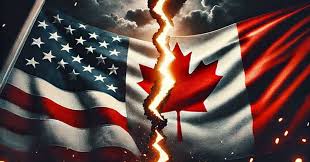
    President Trump’s latest 100% tariff threat against Canada will hurt American consumers, damage U.S. industries, and strain vital trade relationships. Learn why Trump’s trade war is bad economics and worse policy.


    Blue Press Journal – President Donald Trump’s recent threat Satruday to impose a 100% tariff on Canadian imports has sent shockwaves through North American trade circles. The move, aimed at punishing Canada for its newly negotiated trade concessions with China, reflects the same protectionist instincts that have defined Trump’s economic agenda since his first term. But beyond the political theater, tariffs like these come with a steep price — one paid directly by American consumers, businesses, and workers.


    The Canada-China Trade Context

    Earlier this month, Canadian Prime Minister Mark Carney announced a deal with China to lower tariffs on Chinese electric vehicles in exchange for reduced import taxes on Canadian agricultural products. While Canada maintains no free-trade agreement with China, the arrangement was crafted to support Canadian farmers and diversify trade relationships amid global tensions.

    Trump initially praised the deal, but quickly reversed course, accusing Canada of becoming a “drop-off port” for Chinese goods destined for the U.S. His retaliation? Threatening a 100% import tax on Canadian goods if Ottawa proceeds — a move that would affect everything from steel to agricultural products to critical minerals.


    Why Tariffs Hurt Americans More Than They Help

    Tariffs are often sold to voters as a way to protect domestic industries, but the reality is that tariffs operate as a hidden tax on U.S. consumers. When the U.S. imposes tariffs, importers pay higher costs, which are then passed along to businesses and consumers in the form of higher prices.

    According to a 2019 study by the Federal Reserve Bank of New York, U.S. tariffs during the Trump administration’s first trade war with China led to $1.4 billion in additional costs per month for American consumers. Similarly, research from the Peterson Institute for International Economics found that the average U.S. household paid $800 more per year due to tariff-driven price increases.

    For context:

    • Canada is the largest export destination for 36 U.S. states.
    • Nearly $2.7 billion USD in goods and services cross the Canada-U.S. border daily.
    • Canada supplies 60% of U.S. crude oil imports and 85% of U.S. electricity imports.
    • It is also a key supplier of steel, aluminum, uranium, and critical minerals essential for the auto industry, defense and technology.

    Imposing a 100% tariff on these imports would cause instant price spikes in energy, manufacturing, and consumer goods — directly hitting U.S. households and industries.


    Economic Fallout of Trump’s Tariff Threat

    If enacted, Trump’s proposed tariffs would:

    1. Raise Costs for Energy and Manufacturing – U.S. industries dependent on Canadian oil, electricity, and metals would face supply shortages and higher costs.
    2. Damage Cross-Border Supply Chains – The deeply integrated Canada-U.S. manufacturing sector, especially in automotive and aerospace, would be disrupted.
    3. Invite Retaliation from Canada – Ottawa could respond with its own tariffs on U.S. exports, hurting American farmers, particularly in states that rely on agricultural trade with Canada.
    4. Undermine NATO and Western Alliances – Trump’s antagonistic stance toward Canada, paired with his push to acquire Greenland and social media provocations, risks alienating a key ally.

    Political Theater vs. Economic Reality

    Trump’s rhetoric — including calling Carney “Governor Carney” and posting altered maps showing Canada as part of U.S. territory — may play well to a certain political base. But such antics undermine serious diplomatic relationships and erode trust among allies.

    Carney’s speech at the World Economic Forum in Davos, urging “middle powers” to unite against coercive tactics by great powers, clearly struck a nerve with Trump. As Carney’s popularity rises on the world stage, Trump’s trade threats appear less about protecting American workers and more about retaliating against political rivals.


    The Consumer’s Perspective

    For the average American, tariffs mean:

    • Higher grocery bills (due to increased costs on Canadian agricultural imports).
    • More expensive cars and electronics (Canadian manufacturing is a key part of U.S. supply chains).
    • Higher energy costs (Canadian oil, electricity, and uranium are essential to U.S. energy security).

    In short: Tariffs punish consumers first, industries second, and political rivals last.


    So What Does it Mean

    President Trump’s threat of a 100% tariff on Canadian goods is more than a diplomatic provocation — it’s an economic self-inflicted wound. Canada is one of America’s most important trading partners, and disrupting that relationship will raise prices, strain industries, and weaken alliances. 

    If history is any guide, Trump’s tariffs will not force Canada to change course with China. Instead, they will drive up costs for American families, hurt U.S. competitiveness, and isolate the United States in a world where cooperation — not coercion — is the key to economic success.


  • The $12 Billion Farm Bailout: A Symptom of Trump’s Trade War

    Blue Press Journal (DC) – As the Trump administration prepares to announce a $12 billion farm aid package on Monday, it’s clear that the president’s trade war with China has taken a devastating toll on American farmers. The aid, which will be doled out to farmers who grow crops such as corn, soybeans, and wheat, is a tacit admission that Trump’s economic policies have failed.

    The trade dispute with China has been particularly brutal for soybean and sorghum farmers, who rely heavily on exports to China. With more than half of their crops shipped overseas each year, the imposition of tariffs has effectively shut off their biggest market. It’s no surprise, then, that these farmers are being targeted for relief.

    But here’s the rub: this bailout is not just a necessary evil to help struggling farmers; it’s also a symptom of a broader problem. The Trump administration’s aggressive trade policies have created uncertainty and chaos in the agricultural sector, and now taxpayers are being asked to foot the bill.

    As a nation, we’re being told that this is the price we must pay for Trump’s “America First” agenda. But is it really worth it? By subsidizing one group of Americans over others, we’re abandoning the free market principles that have made our economy great. In a true free market, businesses that can’t compete go out of business. It’s the way the system is supposed to work.

    But under Trump’s administration, it seems we’re moving towards a more socialist model, where the government picks winners and losers. It’s a disturbing trend, and one that Republicans should be particularly concerned about. After all, the GOP has long been the party of small government and free enterprise.

    The fact that Trump’s farm bailout is being framed as a reward for farmers who supported his tariffs is even more galling. It’s a brazen attempt to buy off a key constituency, rather than addressing the underlying issues that are driving the agricultural sector’s woes.

    As the administration prepares to announce this massive bailout, it’s worth asking: what’s next? Will we see more handouts for other industries that are struggling as a result of Trump’s policies? The answer, unfortunately, is likely yes.

    For now, American taxpayers will be forced to foot the bill for Trump’s trade war. It’s a costly experiment, and one that we’re all being forced to pay for. As we watch the $12 billion farm bailout unfold, it’s clear that the real losers here are not just the farmers, but the American people as a whole.

  • Ontario Premier Doug Ford Yields to Trump’s Pressure, Pulls Anti-Tariff Ad

    Blue Press Journal – In a surprising move, Ontario Premier Doug Ford has announced that he will pause an anti-tariff advertising campaign featuring former US President Ronald Reagan, following a heated reaction from President Donald Trump. The campaign, which Trump dismissed as “fake,” showcased excerpts from a speech by Reagan, in which he denounced tariffs and advocated for free trade.

    The 60-second ad, which debuted on major US networks last week, was funded by Ford’s provincial government. However, after Trump halted trade negotiations with Canada, Ford has decided to pull the ad, citing a desire to resume trade talks. The ad will air a few more times during the World Series, which starts on Friday, before being taken down on Monday.

    Ford stated that the goal of the campaign was to “initiate a conversation about the kind of economy that Americans want to build and the impact of tariffs on workers and businesses.” He claimed that this goal had been achieved, as the ad had reached high levels of the US government. The decision to pull the ad was made after a discussion with the Prime Minister, with the aim of restarting trade negotiations.

    It’s evident that Donald Trump isn’t driven by facts or what’s best for America when it comes to trade decisions; instead, he operates on the whims of his own inflated ego. In short, he comes across as nothing more than a petulant man-child.

  • Yes, we are still in the midst of a trade war: Tell it like it is Main Stream Media!

    Yes, we are still in the midst of a trade war. The world is currently facing a 10% tariff on all goods, with Canada experiencing a 25% tariff on major items. Despite what the mainstream media may be saying, it is clear that the White House is dictating the narrative. President Trump’s lack of understanding and unclear end game is evident in his actions.

    The tariff battle between the world’s top two economies has escalated, with President Trump now targeting China directly. Despite fears of a recession, Trump has increased tariffs on China to a staggering 125%. This move has intensified the standoff between the two nations, putting their economies and global interests at risk. The competition between the U.S. and China spans various sectors, from artificial intelligence to monetary policy, heightening the stakes.

    Following Beijing’s response to Trump’s tariffs with equal measures, Trump raised the tariffs even further, only to be met with a similar response from China. The escalating tariffs have now reached 84% on U.S. products going to China. In a bold but stupid move, Trump has announced that Chinese imports to the U.S. will face a 125% tariff, citing China’s lack of respect for global markets.

    The situation leaves little room for negotiation, as both sides refuse to back down. The mainstream media’s portrayal of the situation as less severe is misleading. The EU, Canada, and China are all engaged in a trade war with the U.S., with significant consequences for consumers. It won’t be long before the impact is felt, with prices of goods likely to skyrocket. The reality of this trade war is far from what is being portrayed.

  • Stock markets react negatively today to Trump’s trade war

    As Trump prepared to impose tariffs on Canada, Mexico, and China, U.S. stock markets plummeted at the opening on Monday.

    The S&P 500 fell by 1.7% in early trading, while The Dow Jones Industrial Average dropped 557 points, according to AP. The Nasdaq composite was down by 2.1% at the opening bell.

    This sharp decline indicates that the markets are skeptical of the president’s plan to implement a series of import taxes starting tomorrow.

    Tariffs of 25% will be imposed on Mexico and Canada, while Chinese products will face duties of 10%.

    Trump acknowledged over the weekend that his trade war could result in “a little pain” for American families.  It seems the markets don’t agree!

    The uncertainty surrounding these tariffs has clearly rattled investors, leading to a significant downturn in the stock markets. It remains to be seen how this trade war will impact the economy in the long run.

  • TRUMPS TRADE WAR ON !

    The White House announced on Saturday that the imposition of tariffs was deemed necessary in order to hold China, Mexico, and Canada accountable for their commitments to stop the influx of harmful drugs into the United States.

    Trump slapped tariffs on our friendly neighbors to the north and south, Canada and Mexico, at a whopping 25 percent. However, he was feeling a bit more generous towards Canadian energy, only hitting them with a 10 percent tariff.  That’s still going to raise the price of gas at your pump!

    However, Prime Minister Trudeau refuted the notion that the shared border posed a security threat, stating that less than 1% of fentanyl entering the US originates from Canada. He also pointed out that less than 1% of illegal migrants cross the border into the US, emphasizing that tariffs are not the most effective means of collaboration to protect lives.

    Economists are expressing considerable concern regarding the potential disruptions these tariffs may create for the U.S. economy. President Trump’s request for the Federal Reserve to reduce interest rates may be complicated by the turmoil induced by these tariffs. Financial markets are expected to be unstable, akin to a house of cards in a windstorm, despite the administration’s assertions of being fundamentally pro-business.

    American business groups are not thrilled about these tariffs, with the U.S. Chamber of Commerce calling them a “recipe for decline.” Canada wasted no time in retaliating, slapping their own tariffs on American goods. Prime Minister Justin Trudeau is playing hardball, hitting American beer, wine, bourbon, and even household appliances with a 25% tariff. Looks like the trade war has officially begun between these two friendly neighbors.

    In a move that is sure to make everyone’s lives more complicated, Canada is also considering levies on lumber, plastics, and even non-tariff measures related to critical minerals and procurement. Because who doesn’t love a good trade war, right?