by Winston Wendell
There are certain lines that even the President of the United States should not cross. And today, it seems, Donald Trump has once again done something that only the most desensitized and uncultured among us could regard as excusable. For the President of the United States to casually advocate the deaths of millions of Americans in a political rally, and as a way of justifying fuel prices, represents an absolute low point in presidential history and a serious violation of the oath he took upon being inaugurated.
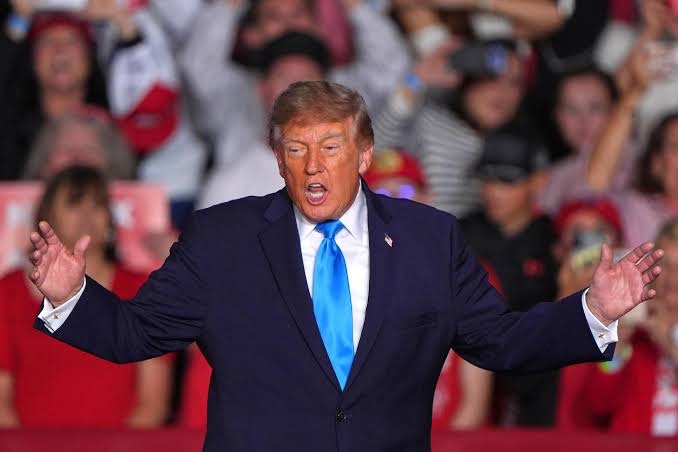
On Monday, at a campaign rally in Nebraska, the president spoke about fuel prices, which have risen sharply under his presidency, partly as a consequence of his open and combative rhetoric towards Iran.
Trump claimed that the prices people are paying for gasoline are not a big deal, “It’s a small price to pay for keeping the world safe, keeping our country safe. They could take out a city. Let them take out Los Angeles. Let them take out San Diego.”
Los Angeles. San Diego. Two of America’s largest cities, each with nearly 20 million residents, are cities filled with people who want nothing more than to live in peace, go to work, maybe see their kids grow up, and retire comfortably.
When Words Are Used Not to Unite, but to Divide
In the United States today, political discourse has become increasingly extreme and detached from traditional norms and Trump is the main reason. Such statements would likely prompt prolonged debate over whether Trump’s remarks could be considered treason.
Does it even matter? Does it matter that people who serve this country, die for this country, and make this country great, live in these cities, and yet the president casually mentions their potential destruction as a means of appeasing the base?
This is an immoral thing to say from the man who is supposed to represent all of America. No wonder people are so divided in their opinions on the president. Everyone knows what he said, and whether or not one interprets it as treason, it is certainly not the language of patriotism.
The Question of Treason
There is no doubt that the word treason is a strong word. Treason against the United States is defined by the Constitution as “levying war against the United States, or adhering to its enemies, giving them aid and comfort.”
I am inclined to believe that what Trump said at that campaign rally might not be recognized legally as treason, but it is UnAmerican.
Treason is not confined to bombs or open violence; it often hides in quieter, more insidious acts. It is still, at its core, a betrayal of a free nation by one of its own. To call for, endorse, or even flirt rhetorically with the death and destruction of Americans and American cities is to commit an act of treason against the United States and its people.
We cannot allow ourselves to become desensitized to the point where we can think that this is a perfectly normal thing for a presidential candidate to say on the campaign trail. It’s an attack on the very idea of America because we are no longer united in any meaningful sense of the word. We cannot unite under a single flag after hearing things from our president that are clearly divisive and disrespectful of the sacrifice and dedication of our military and veterans.
If someone says that the American people need to make the sacrifice of having their cities destroyed in order to achieve political goals, then that is not a patriotic thing to say; that is an anti-American thing to say.