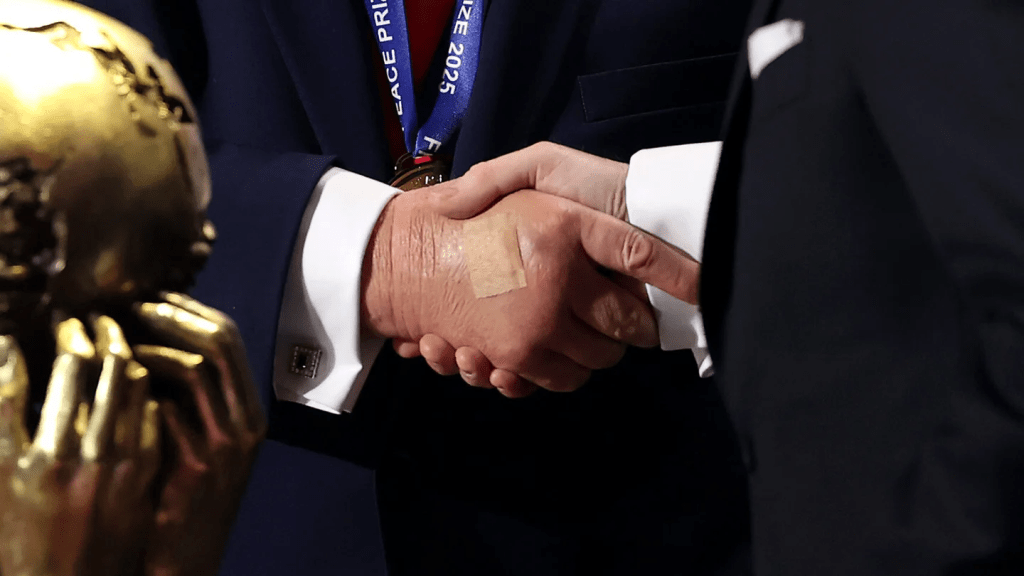
Blue Press Journal – President Donald Trump’s recurring hand injury is once again in the public spotlight, prompting renewed questions about his health and the White House’s transparency. The latest incident occurred during the 2026 FIFA World Cup draw on Friday, where Trump, while accepting a symbolic “peace prize” alongside FIFA President Gianni Infantino, extended his right hand for a handshake. Cameras captured what appeared to be a swollen, bandaged hand with a pronounced bruise — an injury that now seems more severe than earlier reports had suggested.
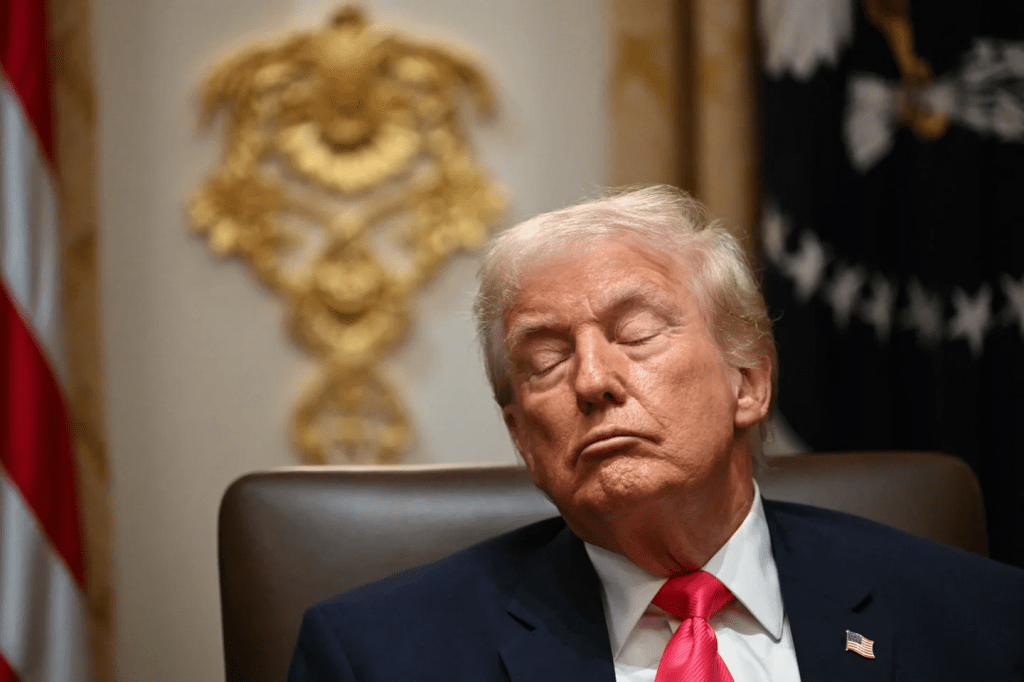
This is far from the first time the president’s hand condition has made headlines. Earlier this week, during a Cabinet meeting, observers noticed two large Band-Aids on his right hand. According to attendees, the president appeared visibly fatigued and even nodded off briefly during the proceedings. Combined with the latest images from the FIFA event, these instances are fueling speculation not only about the hand injury itself but about Trump’s overall health and stamina at age 79.
The White House has desperately tried to sweep this issue under the rug. In February, Press Secretary Karoline Leavitt condescendingly dismissed the visible injuries as mere consequences of the president’s “demanding schedule and frequent handshakes,” claiming, “The president’s commitment to engaging with the public is unmatched, and occasional strain from handshaking is simply a reflection of that dedication.” While such an excuse might have sounded believable at first, the ongoing visibility of the swelling and the repeated injuries have many raising their eyebrows. Two CT scans in the past year that yielded no clear explanation only intensify the suspicions.
Medical experts contacted by several outlets note that repeated bruising, swelling, or bandaging in the same area could indicate underlying issues that extend beyond superficial strain. While speculation without confirmation is risky, the seriousness of the concern lies in the president’s ability to perform the rigorous duties of his office. As one political analyst put it, “A leader’s health is not a private matter when it potentially affects national governance. Transparency must outweigh optics.”
Public trust hinges on the openness of the administration in addressing these concerns. Historically, health disclosures about presidents have ranged from detailed medical reports to carefully managed statements intended to reassure the public. In Trump’s case, the visual evidence of the injury — now documented at multiple high-profile events — challenges the narrative that it is merely a side effect of a busy handshake schedule.
Ultimately, whether the president’s hand injury is minor or indicative of a more significant health condition, the political stakes are considerable. With international commitments, domestic policy battles, and an ever-demanding public schedule, any impairment can have real consequences. The White House’s next steps — whether offering a more comprehensive explanation or providing medical documentation — will be crucial in shaping public perception.
 Blue Press Journal