Blue Press Journal – The national conversation is dominated by breaking news—President Trump’s proposed ICE raids on blue cities, speculation over a Greenland purchase, escalating tariffs on Canada, and his stance on Venezuela. While these stories grab attention, they risk overshadowing a critical matter: the Epstein files release.
These files contain potentially explosive information about networks of abuse and accountability at the highest levels. Public focus must stay fixed on ensuring full disclosure, rather than shifting to every new political headline. Diversions—whether through immigration crackdowns, trade disputes, or international real estate ambitions—should not derail efforts to demand transparency.
The Epstein case is not just another news cycle—it’s a test of the public’s will to hold power accountable. Stay informed, speak out, and keep the pressure on for the release of the Epstein files.
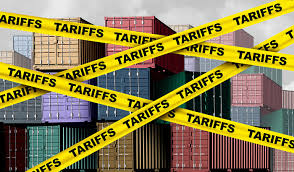
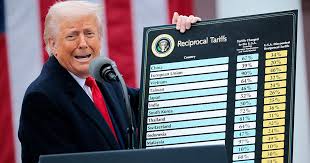
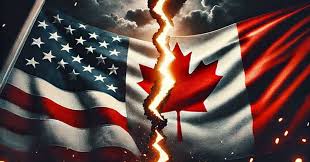
President Trump’s latest 100% tariff threat against Canada will hurt American consumers, damage U.S. industries, and strain vital trade relationships. Learn why Trump’s trade war is bad economics and worse policy.
Blue Press Journal – President Donald Trump’s recent threat Satruday to impose a 100% tariff on Canadian imports has sent shockwaves through North American trade circles. The move, aimed at punishing Canada for its newly negotiated trade concessions with China, reflects the same protectionist instincts that have defined Trump’s economic agenda since his first term. But beyond the political theater, tariffs like these come with a steep price — one paid directly by American consumers, businesses, and workers.
The Canada-China Trade Context
Earlier this month, Canadian Prime Minister Mark Carney announced a deal with China to lower tariffs on Chinese electric vehicles in exchange for reduced import taxes on Canadian agricultural products. While Canada maintains no free-trade agreement with China, the arrangement was crafted to support Canadian farmers and diversify trade relationships amid global tensions.
Trump initially praised the deal, but quickly reversed course, accusing Canada of becoming a “drop-off port” for Chinese goods destined for the U.S. His retaliation? Threatening a 100% import tax on Canadian goods if Ottawa proceeds — a move that would affect everything from steel to agricultural products to critical minerals.
Why Tariffs Hurt Americans More Than They Help
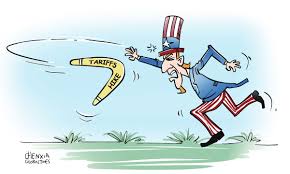
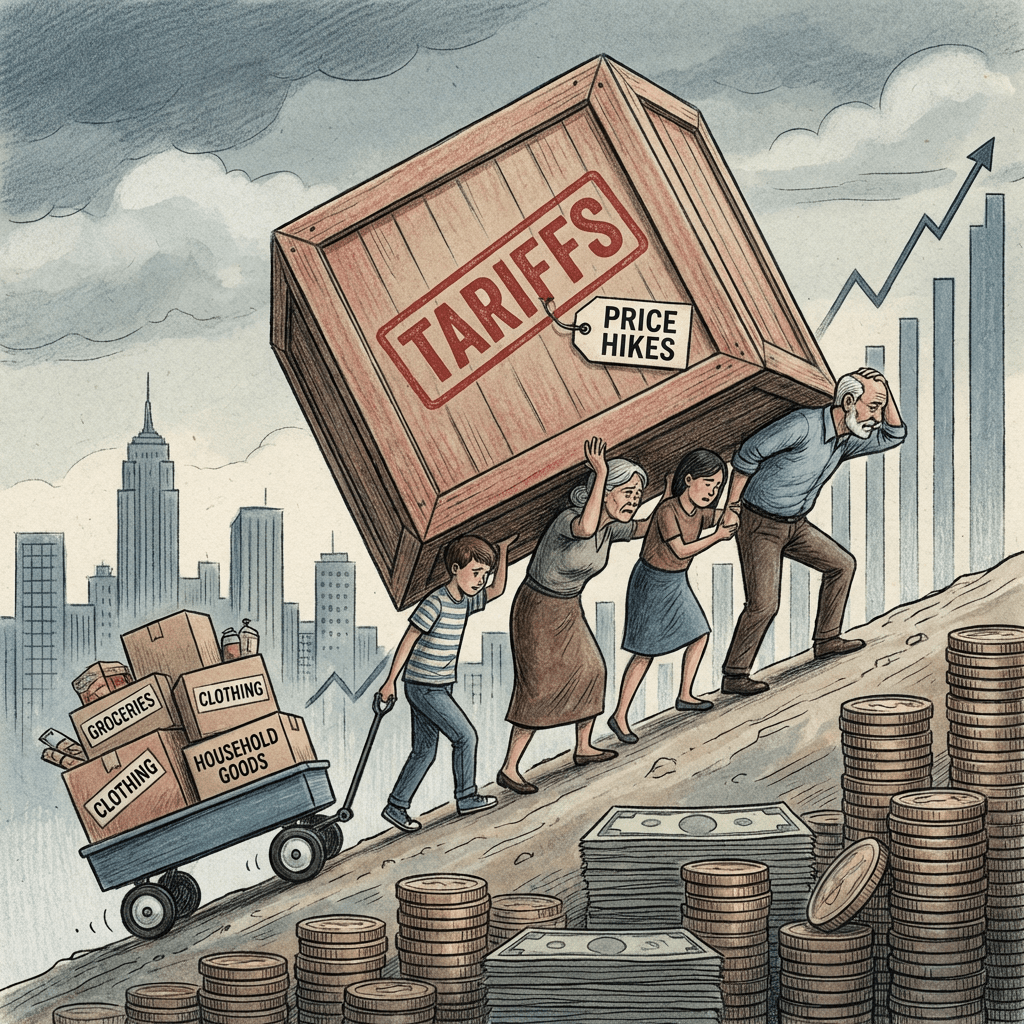
Tariffs are often sold to voters as a way to protect domestic industries, but the reality is that tariffs operate as a hidden tax on U.S. consumers. When the U.S. imposes tariffs, importers pay higher costs, which are then passed along to businesses and consumers in the form of higher prices.
According to a 2019 study by the Federal Reserve Bank of New York, U.S. tariffs during the Trump administration’s first trade war with China led to $1.4 billion in additional costs per month for American consumers. Similarly, research from the Peterson Institute for International Economics found that the average U.S. household paid $800 more per year due to tariff-driven price increases.
For context:
Canada is the largest export destination for 36 U.S. states.
Nearly $2.7 billion USD in goods and services cross the Canada-U.S. border daily.
Canada supplies 60% of U.S. crude oil imports and 85% of U.S. electricity imports.
It is also a key supplier of steel, aluminum, uranium, and critical minerals essential for the auto industry, defense and technology.
Imposing a 100% tariff on these imports would cause instant price spikes in energy, manufacturing, and consumer goods — directly hitting U.S. households and industries.
Economic Fallout of Trump’s Tariff Threat
If enacted, Trump’s proposed tariffs would:
Raise Costs for Energy and Manufacturing – U.S. industries dependent on Canadian oil, electricity, and metals would face supply shortages and higher costs.
Damage Cross-Border Supply Chains – The deeply integrated Canada-U.S. manufacturing sector, especially in automotive and aerospace, would be disrupted.
Invite Retaliation from Canada – Ottawa could respond with its own tariffs on U.S. exports, hurting American farmers, particularly in states that rely on agricultural trade with Canada.
Undermine NATO and Western Alliances – Trump’s antagonistic stance toward Canada, paired with his push to acquire Greenland and social media provocations, risks alienating a key ally.
Political Theater vs. Economic Reality
Trump’s rhetoric — including calling Carney “Governor Carney” and posting altered maps showing Canada as part of U.S. territory — may play well to a certain political base. But such antics undermine serious diplomatic relationships and erode trust among allies.
Carney’s speech at the World Economic Forum in Davos, urging “middle powers” to unite against coercive tactics by great powers, clearly struck a nerve with Trump. As Carney’s popularity rises on the world stage, Trump’s trade threats appear less about protecting American workers and more about retaliating against political rivals.
The Consumer’s Perspective
For the average American, tariffs mean:
Higher grocery bills (due to increased costs on Canadian agricultural imports).
More expensive cars and electronics (Canadian manufacturing is a key part of U.S. supply chains).
Higher energy costs (Canadian oil, electricity, and uranium are essential to U.S. energy security).
In short: Tariffs punish consumers first, industries second, and political rivals last.
So What Does it Mean
President Trump’s threat of a 100% tariff on Canadian goods is more than a diplomatic provocation — it’s an economic self-inflicted wound. Canada is one of America’s most important trading partners, and disrupting that relationship will raise prices, strain industries, and weaken alliances.
If history is any guide, Trump’s tariffs will not force Canada to change course with China. Instead, they will drive up costs for American families, hurt U.S. competitiveness, and isolate the United States in a world where cooperation — not coercion — is the key to economic success.
Donald Trump reignited his Greenland takeover idea at the World Economic Forum in Davos, misrepresented NATO’s history, and repeated false 2020 election claims
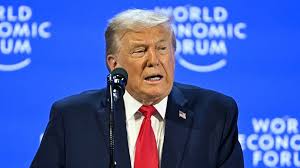
Blue Press Journal – At the 2026 World Economic Forum in Davos, Switzerland, former President Donald Trump reignited his unusual obsession with acquiring Greenland — again suggesting that Denmark should hand over the Arctic territory to the United States. Speaking to an audience of European leaders, Trump dismissed Denmark’s sovereignty over Greenland and falsely claimed that NATO has “never done anything” for the United States.
Trump’s remarks drew concern among diplomats and policy analysts, as they not only misrepresented historical facts but also undermined the credibility of America’s commitments to its allies. According to BBC News, Trump has repeatedly floated the idea of buying Greenland since 2019, despite Danish officials calling the proposal “absurd.” His comments in Davos revived tensions with Denmark and risked alienating NATO members at a time when global security cooperation is crucial.
Greenland: A Strategic but Sovereign Territory
Greenland, a self-governing territory within the Kingdom of Denmark, holds significant strategic value due to its Arctic location and natural resources. Trump claimed the U.S. should have kept Greenland after World War II — a statement that ignores the fact that Greenland was never formally U.S. territory. His speech inaccurately portrayed Denmark as incapable of defending itself, citing its rapid fall to Nazi Germany in 1940 as justification for American ownership.
Security experts note that such rhetoric undermines the principle of national sovereignty, a cornerstone of international law. As Reuters reported, Danish leaders have reaffirmed that Greenland is “not for sale” and that U.S.-Danish relations should be based on mutual respect, not coercion.
NATO’s Proven Commitment to U.S. Security
Trump’s claim that NATO has “never done anything” for America is demonstrably false. The North Atlantic Treaty Organization invoked its Article 5 mutual defense clause for the first and only time after the September 11, 2001 terrorist attacks — committing all member states to the defense of the United States.NATO troops fought alongside U.S. forces in Afghanistan for nearly two decades, as documented by The Guardian.
Far from being a one-sided arrangement, NATO provides the U.S. with strategic military bases, intelligence-sharing networks, and rapid-response capabilities that strengthen American security. The alliance is widely regarded by defense analysts as a cornerstone of Western stability in the face of evolving threats from Russia, China, and global terrorism.
Election Claims and Tariff Threats
In addition to his Greenland comments, Trump repeated false claims that the 2020 U.S. presidential election was “rigged” — assertions rejected by U.S. courts, state election officials, and the Department of Justice. As CNN reported, more than 60 lawsuits filed by Trump and his allies failed due to lack of evidence, and multiple recounts confirmed President Joe Biden’s victory.
Trump also threatened economic retaliation against NATO allies that participated in military exercises in Greenland, proposing tariffs as high as 25%. Economists warn such tariffs would harm American businesses and consumers, contradicting Trump’s claim that foreign nations bear the cost.
Undermining Alliances in a Time of Global Challenges
Foreign policy analysts caution that Trump’s rhetoric at Davos risks weakening U.S. alliances at a time when coordinated action is essential to address security challenges, climate change, and economic instability. NATO remains one of America’s most valuable strategic partnerships, with proven benefits that extend far beyond military defense.
By dismissing NATO’s contributions and attempting to strong-arm allies over Greenland, Trump’s approach stands in stark contrast to the cooperative spirit that has defined transatlantic relations for decades. As tensions rise in the Arctic and beyond, reaffirming trust and respect within NATO will be critical to safeguarding both U.S. interests and global security.
Blue Press Journal – While former President Donald Trump made headlines with bizarre distractions like his public musings about buying Greenland, the real story for American households was happening in their wallets. A new congressional analysis reveals that under Trump’s leadership, U.S. families faced sharp increases in the cost of living, directly tied to his economic agenda and trade strategies.
According to a recent report from the Joint Economic Committee (JEC), the average U.S. household paid $1,625 more in 2025 for everyday essentials. These rising costs were not random — they were the result of Trump’s tariffs, housing market pressures, and broader economic mismanagement (Joint Economic Committee, 2025).
The Real Impact: Higher Prices for Housing, Transportation, and Groceries
Breaking down the numbers, the JEC found that housing expenses rose by an average of $323 per family, transportation costs climbed by $241, and grocery bills surged across the country. For residents of states like Alaska, Connecticut, Massachusetts, and New York, the hit was even harder — more than $2,000 in additional annual costs.
The cause? Trump’s tariff-heavy trade policy, which he claimed would punish foreign exporters but in practice acted as a hidden tax on American consumers. Independent economic analyses, including research from the Center for American Progress, confirm that U.S. businesses and families bore nearly the entire cost of these tariffs (CAP, 2025).
The Inflation Reality Check
Trump has repeatedly boasted that he “ended inflation” and claimed prices are falling. The data tells a different story. In December 2025, inflation was still running at 2.7% year-over-year, with prices continuing to climb month to month (CNN Fact Check). For working families, this meant that paychecks stretched less, and basic necessities became more expensive — despite the White House’s rosy rhetoric.
Economic Uncertainty Hurts Families
Economists warn that tariffs not only raise consumer prices but also create uncertainty for businesses, slowing investment and job growth. This uncertainty compounds the financial strain on households, particularly in industries reliant on global supply chains.
Senator Maggie Hassan (D-NH) criticized the administration’s “reckless” economic approach, pointing out that tariffs, higher healthcare costs, and policy unpredictability have all contributed to the squeeze on American families.
The Takeaway: The “Greatest Economy” Myth
Trump’s claims of delivering “the greatest first year in history” simply don’t match the lived reality of American families. The hard truth is that his economic policies functioned as a tax on the middle class, without delivering the promised benefits.
Some farmers are beginning to reconsider their support for Trump. However, it’s important to remember that they elected him fully aware of the damage he caused during his first term—a period when American taxpayers had to step in and provide bailouts to struggling farmers. Now, similar challenges are arising once again.
In the past, Republicans have eagerly cited rising trade deficit figures during the Biden administration to criticize Biden officials for not doing enough to support U.S. farm exports. Yet, it remains uncertain if or when the Trump administration will release the full written analysis of its own report. This silence persists months after Trump declared, “our farmers are going to have a field day right now” thanks to his international trade policies.
Clearly, Trump lacks a firm grasp on agricultural economics, and the consequences are evident. American farmers made their choice, and now they must face the results.
Economists are sounding the alarm, cautioning that tariffs will pose a significant financial burden for homeowners and the real estate industry. This is due to the fact that the U.S. heavily relies on Canada for building materials.
The impact of these tariffs is not limited to homeowners and the real estate sector; American farmers are also feeling the squeeze. A recent story in the Syracuse sheds light on this issue. According to Syracuse.com reporter Geoff Herbert, a dairy farmer named Gilbert, who owns Adon Farms in Potsdam, New York, found himself facing a hefty bill for livestock feed imported from Ontario, Canada. The recent tariff resulted in Gilbert having to pay an extra $2200 for his feed order.
Despite President Trump’s claims, tariffs are actually paid by domestic importers, not foreign exporters. Gilbert, like many other farmers, is now grappling with the added costs imposed by these tariffs. The situation is further complicated for Adon Farms as the price of the milk they sell is determined by a local co-op, and there are no nearby U.S. suppliers for their feed.
Additionally, other significant challenges have been pointed out by Garry Douglas, President of the North Country Chamber of Commerce, indicating that several businesses are facing difficulties as well. A local manufacturing company anticipates an increase of $16 million due to rising raw material costs from Canada, while a paper mill is experiencing distress as the specific type of wood required for production is exclusively sourced from northern regions.
One must wonder, where is Congresswoman Elise Stefanik? The staunch Trump supporter appears to have neglected her voters during a time of urgent need, failing to take decisive action on tariffs and the devastating consequences they have wrought.
As if things weren’t tough enough, the prospect of levies on fertilizer or farm equipment looms on the horizon. It seems that MAGA land, where Adon Farms is located, is now facing the real-world consequences of Trump’s policies. How do MAGA voters feel about these developments? It’s a question worth pondering as the impact of tariffs hits close to home.