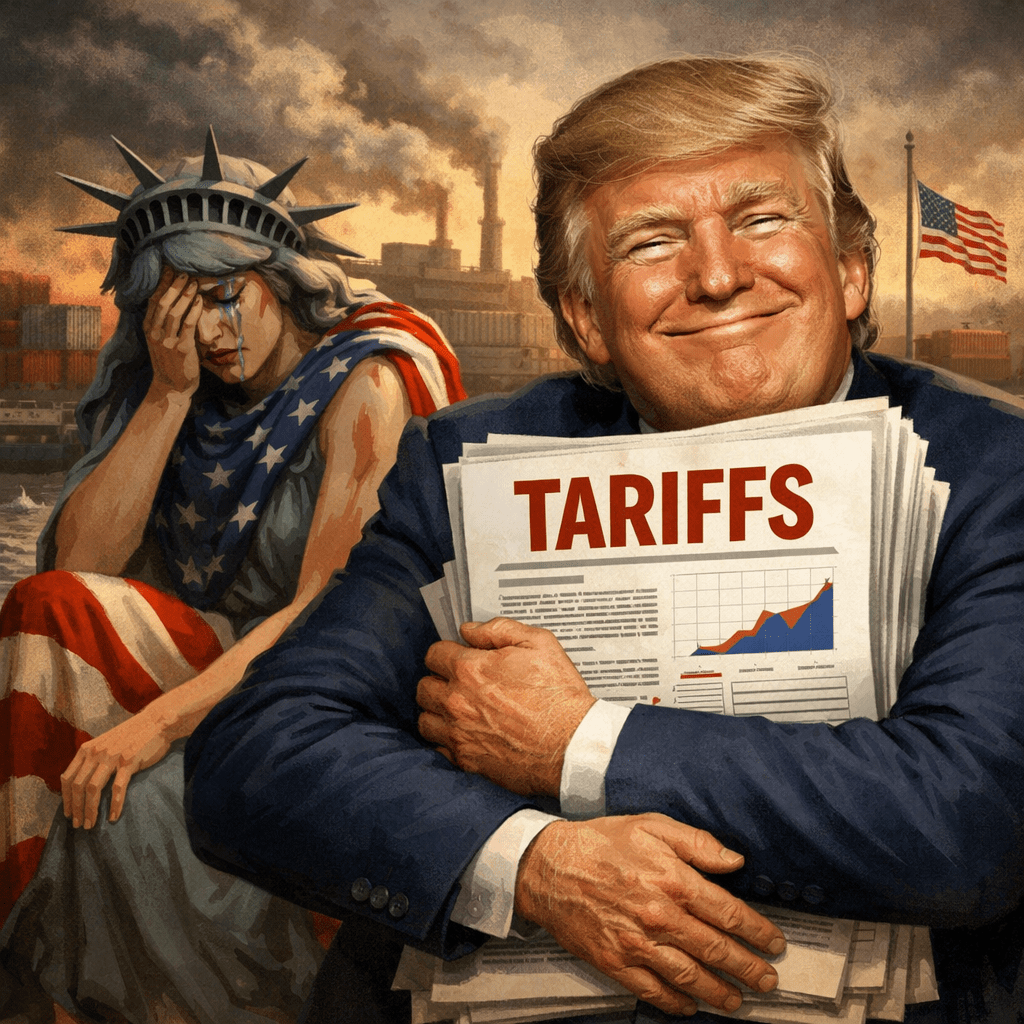
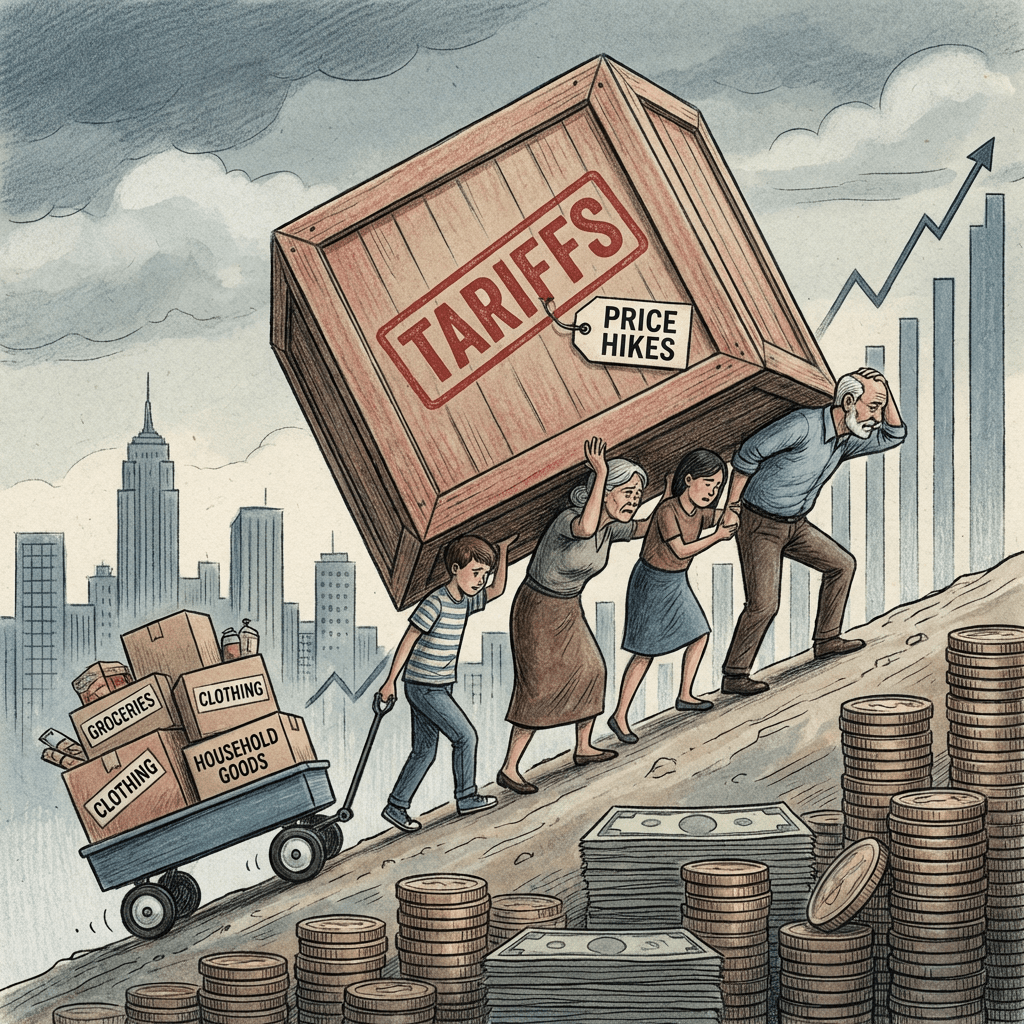
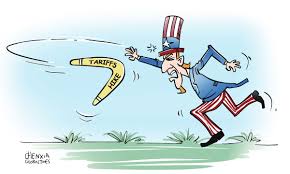
Tariffs, escalating conflicts, and soaring closures reveal a painful economic reality for American agriculture.
by Winston Wendell
In the 2024 presidential election, farmers in America voted overwheming for Donald Trump, betting that the president would stand by their interests. However, an objective review of Trump’s activity as a president demonstrates that his policies have diverged significantly from the interests of the rural population. The president’s support for free trade undermined the position of farmers, resulting in substantial losses.
His foreign policy, which started a war against Iran, contributed to the current panic in the world markets. Causing oil to skyrocket. The Trump administration has pursued a policy of imposing high tariffs on imports, which have led to the loss of foreign markets for many farmers. Clearly the president’s policies do not support farmers’. For example, family-owned farms are disappearing as enterprises with vast resources swallow up small players or they just go bankrupt.
Trump’s high tariffs resulted in billions of dollars in payments to farmers by the Treasury Department from our tax dollars increasing the national debt. His foreign policy has also affected agricultural production in the country, as Canada is a leading producer of fertilizers in north America have now been tariffed.
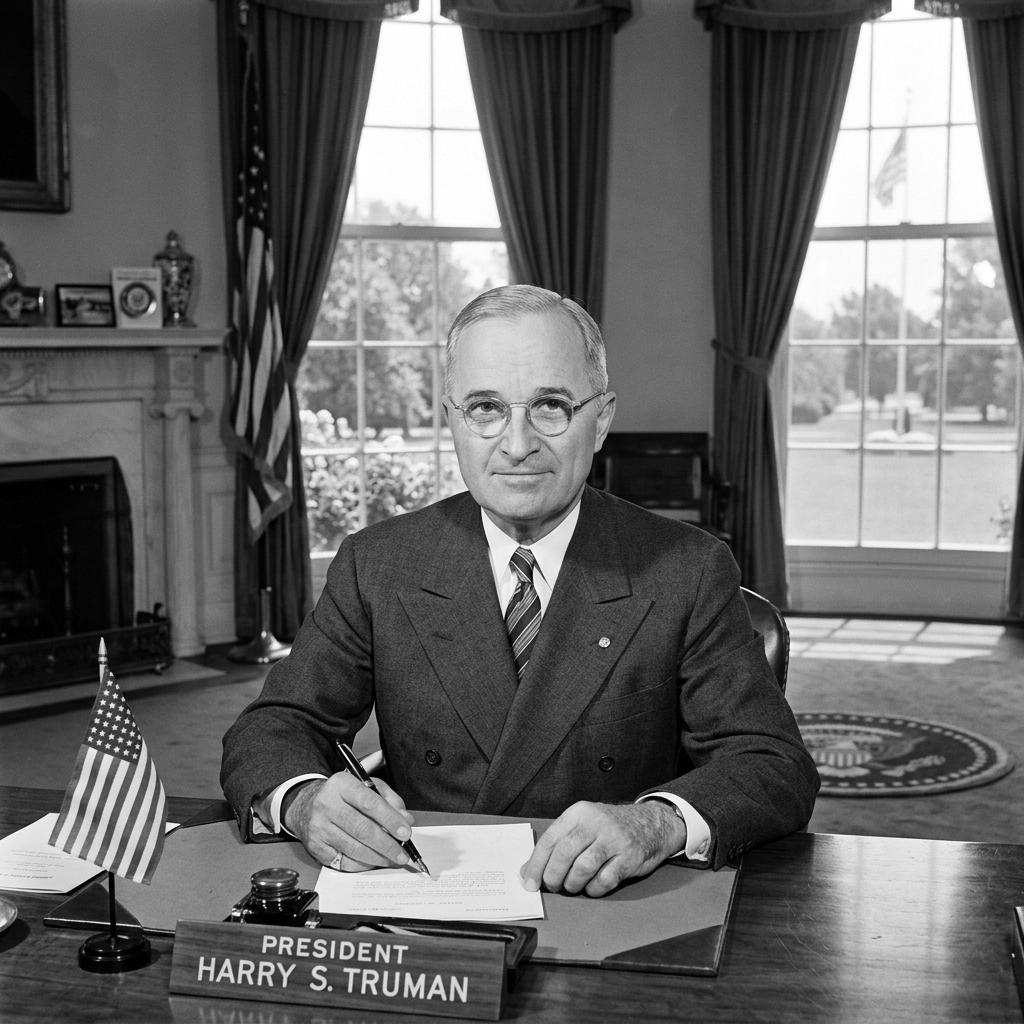
In the 1948 presidential race, Harry S. Truman warned voters not to back populist candidates in the West.
Truman warned farmers that Republicans are trying to “put a pitchfork in the farmer’s back.” The presidential candidate emphasized that he would fight to protect the integrity of free enterprise against monopolies and tariffs. Thus, Trump’s actions in the direction of protectionism and provocative foreign policy destroyed the positions of farmers, family-owned farms in particular.
Farmers who voted for Trump in the hope of improving the situation in the their lives were clearly deceived by Donald Trump, and it is clear that they have not learned the lesson of history.
I’ve watched the White House do the same thing over and over: grab a tariff, call it “targeted,” and insist it’ll only hurt foreign rivals. But now, they’re rolling out up to 50% tariffs on $20 billion of Canadian goods and threatening a 100% duty on generic pharmaceuticals starting in 2028. It’s familiar, sure except the risks are bigger and the fallout is faster. As someone who wants economic policy to help regular people, not steamroll them, I see this as a costly mistake. It’ll drive up prices, mess up supply chains, and chip away at the Republican Party’s standing with the voters it claims are its top priority.
A Costly Bet on a Tired Storyline
Trump’s obsession with tariffs really took off during the China fight in 2018 and 2019. He pitched those tariffs as “tough love,” meant to bring jobs home. Now it’s the same formula: slap a 50% tariff on Canadian goods like hockey equipment, lumber, alcohol plus a 100% duty on generic drug ingredients set to hit in 2028. This time, tariffs on Canada start August 19, 2026, while the drug measure waits two more years.
Officials claim the grace period gives businesses time to “brace for impact” and that consumers won’t feel the squeeze. But history is pretty clear. Back in 2018, a Peterson Institute study showed about half the cost of U.S. tariffs winds up in consumer prices. So, when that burden lands on working families, the same folks Republicans are eyeing for November it’s more than just a broken promise; it’s downright cruel.
Consumers Can’t Dodge the Fallout, Even with Exemptions
The White House points out that groceries, energy, and other basic goods aren’t on the list, arguing inflation’s about housing and gas not hockey sticks. Still, thinking tariffs on “signature” Canadian goods won’t ripple out is just wishful thinking. Canada sends $383 billion in goods to the U.S. each year, and the $20 billion targeted for tariffs is baked right into our supply chains.
Canadian softwood lumber is a textbook example, it’s crucial to construction and furniture in the States. A 50% duty squeezes supply, making homes and rent pricier something voters in states like Michigan, New York, and Pennsylvania are already upset about. Bloomberg says a lumber tariff could add costs to a new Midwestern home. That’s not just a number; it’s real money for families trying to secure a roof.
Now look at the 100% threat on generic drugs. This isn’t about everyday aspirin, it’s the bulk pharmaceutical ingredients manufacturers need. When costs jump, the price hike rolls right down to patients. Reuters reports a common generic heart medication shot up 12% in the past year, more so as the White House added new duties in 2024. For seniors and low-income Americans who rely on affordable generics, the chance of prices doubling is alarming.
The Political Math Just Doesn’t Work
Republican strategists hope tariffs will feel too abstract for voters to notice. But every poll says the opposite. Quinnipiac’s June 2026 survey showed 57% of likely mid-term voters worried about inflation, 22% specifically troubled by prescription drug costs. Gallup found 61% of Americans now see trade policy as crucial, a sharp change from 2016 when hardly anyone cared.
Even a senior White House aide quietly admitted, “Any talk about more tariffs, unless it’s about cutting them, spells trouble for Republicans.” Yet the administration keeps going, banking on a tough image to rally the base. Trouble is, that base isn’t so uniform; a lot of those folks are already stretching to handle the higher costs from Trump’s old trade battles. When the impact finally lands at the pharmacy or lumberyard, the political math flips against the GOP.
Canada Fights Back and So Does U.S. Industry
Canada isn’t just watching. Officials warn of big consequences on both sides. If the U.S. wins concessions, like getting American liquor back in Canadian stores there’s no guarantee Canadians will actually buy it. Canada’s trade ministry expects a 50% tariff could cut U.S. imports of Canadian wood, paper, and farm goods by around 30% in two years.
That means trouble for local economies built on cross-border trade. Maine’s paper mills and Michigan’s auto-parts suppliers are barely hanging on. Patrick Woodcock, Maine’s Chamber of Commerce chief, didn’t mince words: hundreds of local businesses are reconsidering operations and getting ready for shocks that threaten jobs. When tariffs disrupt material flow, the hurt spreads farther than just importers, it hits manufacturers, transport, and workers.
Tariffs Are a Blunt Tool, Not a Strategy
Trump’s heavy reliance on tariffs doesn’t get much love from economists. The IMF’s 2024 report warned that hiking tariffs by yourself, especially over and over, just drives up domestic costs without any of the promised leverage. Legally, there’s not much support either. The Supreme Court ruled 6–3 on February 20, 2026, that President Trump overstepped his authority by using the 1977 International Emergency Economic Powers Act (IEEPA) to impose sweeping global and reciprocal import tariffs. That ruling casts a shadow over every new tariff the administration tries.
The Bottom Line
I see Trump’s latest tariff threats as political moves dressed up as strategy, ignoring clear evidence. Higher prices hit consumers, supply chains get backed up, and the GOP’s “average American” story rings hollow. Delays and carve-outs won’t stop the fallout, expect inflation in home materials, medicine, and more.
Blue Press Journal (DC) – American households are on track to endure an unprecedented financial hit this year, with combined costs from import duties totaling an estimated $330 billion. This colossal sum, translating to over $2,500 for the average family, underscores the severe economic strain inflicted by President Donald Trump’s aggressive trade policies. A recent report from the Democratic minority on the Joint Economic Committee (JEC) as reported by news outlets like Reuters, paints a stark picture of these escalating expenses, a considerable jump from the $1,700 Americans reportedly paid in 2025.
Despite a Supreme Court ruling last month that invalidated Trump’s use of emergency powers for imposing widespread tariffs, the administration appears undeterred. US Treasury Secretary Scott Bessent has projected “virtually unchanged tariff revenue in 2026,” suggesting a continued reliance on these trade taxes through different legal avenues to circumvent the high court’s decision. This persistent strategy means continued pressure on consumer wallets.
The burden of these customs charges falls disproportionately on everyday Americans. Independent analysis from the nonpartisan Congressional Budget Office (CBO) detailed in reports by organizations like the Associated Press, revealed that foreign entities bear only about 5% of tariff expenses. Domestic companies absorb roughly 30%, but a staggering 65% is ultimately shouldered by consumers through higher prices on goods and services.
A Tale of Two Refunds: Businesses Get Relief, Families Don’t
While American families grapple with surging costs, businesses impacted by what were deemed unlawful duties are poised for substantial relief. The US Court of International Trade (CIT) recently mandated that the Treasury Department and Customs and Border Protection must reimburse approximately 330,000 importers a staggering $166 billion for duties collected under the invalidated tariffs a development covered by outlets such as The Wall Street Journal. Customs officials indicate that a system for processing these refund requests for over 53 million entries could be operational as early as mid-April.
However, a stark disparity remains for ordinary citizens. Senator Maggie Hassan (D-NH), a ranking member of the Joint Economic Committee, sharply criticized this imbalance. She lamented that while businesses are set to receive reimbursements with interest, “the Trump administration refuses to provide relief for families” and is instead “choosing to institute new tariffs that will push prices even higher.”
Senator Heinrich emphasized the measure’s intent: “This is money that belongs to working families—not to CEOs of big corporations.” He criticized the administration’s rhetoric, stating, “The president may call the affordability crisis a ‘hoax,’ but working people feel it every time they pay for essentials. This bill will return the money lost to Trump’s tariffs back to those who paid the price.”
Public sentiment reflects growing dissatisfaction with economic policies. An NBC News poll showed that 55% of voters believe trade taxes have harmed the economy, while only 33% view them as beneficial. With 62% disapproving of the administration’s handling of inflation and living costs, the financial strain on American families is clear. Heinrich’s bill includes a provision to prevent the president from labeling rebate checks with his name, acknowledging previous political optics around stimulus payments.
Blue Press Journal – In a stunning rebuke to executive overreach, the Supreme Court ruled 6-3 in February that the Trump administration illegally collected over $133 billion in tariffs, yet the White House is now maneuvering to prevent that money from returning to the American businesses and consumers who paid it (Politico). Rather than complying with the court’s directive to issue refunds, administration officials are reportedly constructing legal barriers to delay, dilute, or outright deny repayment—treating tariff revenue as a federal windfall rather than what it truly is: borrowed capital extracted from the wallets of ordinary Americans.
Here is the reality the administration hopes to obscure: tariffs are not paid by foreign exporters, as President Trump has repeatedly claimed. They are passed directly to U.S. importers, who then pass them to consumers through inflated prices at the checkout counter (The Wall Street Journal, Economic Research). Every dollar collected under these now-illegal duties came from American companies and, ultimately, American families. It was never Trump’s money to hoard; it belongs to the businesses and taxpayers who financed the president’s trade war.
Yet the White House appears determined to keep the cash. Justice Department filings from 2025 explicitly promised refunds with interest if the government lost the case, according to court records reviewed by legal analysts (Reuters, July 2025). Now, with the loss finalized, Treasury Secretary Scott Bessent has publicly disparaged refunds as “ultimate corporate welfare” on Fox News, while administration lawyers explore tactics to discourage claims or force companies to forfeit portions of their refunds in exchange for faster processing (Politico). These strategies reek of bad faith, transforming the Court of International Trade’s refund process into a bureaucratic maze designed to outlast the statute of limitations.
The fiscal hypocrisy is equally brazen. The administration used projected tariff revenue to offset the cost of last year’s tax cut package; without it, the legislation balloons the national debt by $3.4 trillion (Congressional Budget Office, July 2025). Having used consumer dollars to balance the budget on paper, Trump now resists returning those funds to their rightful owners. FedEx filed suit this week demanding immediate repayment, joining over 1,000 cases before the Court of International Trade (CNBC), but the administration’s delay tactics suggest years of litigation await.
The message is clear: when courts rule against him, the president prefers to tie American businesses in legal knots rather than admit the money was never his to spend. For consumers who paid the price of tariffs at the register, justice delayed is justice denied—and the bill, sadly, remains theirs to pay. Remember the phrase affordability.
Blue Press Journal – A recent Supreme Court decision has delivered a significant legal setback to former President Donald Trump’s trade agenda, curtailing his ability to unilaterally impose tariffs under the International Emergency Economic Powers Act (IEEPA). However, this judicial review appears to be little more than a momentary speed bump for an administration determined to reconstitute its protectionist apparatus, with grave implications for American consumers and businesses.
The 6-3 ruling, issued Friday, clarified that while IEEPA grants the president power to regulate trade for national security in emergencies, it does not extend to levying tariffs – a power reserved exclusively for Congress. This decision validates the concerns of thousands of businesses, potentially opening avenues for tariff refunds. Yet, Trump, undeterred, quickly announced his intent to employ alternative legal frameworks, vowing “much higher” tariffs for any nation perceived to be challenging his trade policies.
Economists like Diane Swonk of KPMG suggest the White House anticipated this outcome, noting the administration has been “preparing for this” by identifying other levers. Trump’s immediate response included moving to impose a 10 percent universal tariff via Section 122 of the Trade Act of 1974, ostensibly to address balance of payments issues – a justification many experts find dubious. More enduringly, the administration is now pivoting towards Section 301 of the Trade Act of 1974 and Section 232 of the Trade Expansion Act of 1962.
Section 301 empowers the president to impose tariffs in response to a foreign country’s unfair trade practices. This provision has a lengthy history, notably used by Trump against China during his first term. Its established precedent makes it a formidable tool, with experts like Edward Alden of the Council on Foreign Relations believing courts are unlikely to second-guess executive judgment under this authority.
Meanwhile, Section 232 grants expansive power to impose tariffs on products deemed a threat to national security. Trump previously applied this to steel and aluminum imports, later extending it to goods like autos, lumber, and even furniture, often with questionable national security justifications. While some applications of Section 232 appear tenuous, courts historically defer to presidential assessments of national security, making challenges difficult.
Crucially, regardless of the legal mechanism, tariffs are not paid by foreign governments or producers; they are a tax levied on domestic importers, which is then passed directly to American consumers in the form of higher prices. This hidden tax reduces purchasing power and stifles economic growth. As Goldman Sachs analysts Alec Phillips, Elsie Peng, and David Mericle warn, this constant recalibration of trade policy introduces significant volatility, disrupting global supply chains and creating uncertainty for businesses. The Supreme Court may have pruned one branch of Trump’s tariff strategy, but the root system remains deeply entrenched, promising continued turbulence and higher costs for ordinary Americans.
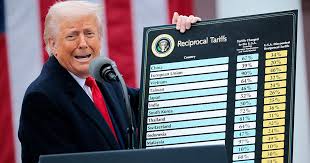
Blue Press Journal – In a move that has once again ignited concerns across the economic landscape, the Trump administration has announced a sweeping 10% tariff on goods imported to the U.S. from across the globe. This comes hot on the heels of a Supreme Court ruling on Friday, which deemed the administration’s previous use of the International Emergency Economic Powers Act (IEEPA) for issuing tariffs as unjustified. Despite this judicial setback, the President quickly pivoted, citing Section 122 of the 1974 Trade Act to impose these new levies, which are set to take effect on February 24th.
While the administration touts these “import taxes” as a strategy to address “large and serious” trade deficits, the overwhelming consensus among economists and trade experts is clear: tariffs are not paid by foreign producers; they are a tax paid by American consumers and businesses.
The Illusion of Protection: Who Really Pays?
The notion that tariffs are a punitive measure exclusively against foreign nations is a dangerous misconception that has plagued Trump’s economic policy. In reality, when a tariff is imposed, it’s the American importer—a company, large or small, that brings goods into the country—who pays that tax to the U.S. Treasury. To recoup these costs, importers typically do one of two things:
Raise Prices: They pass the increased cost directly onto consumers through higher retail prices.
Absorb Costs: They absorb the cost, leading to reduced profits, which can translate into lower wages for employees, less investment in their businesses, or even job cuts.
A comprehensive analysis by the National Bureau of Economic Research (NBER), for instance, found that “U.S. tariffs were almost entirely borne by U.S. domestic consumers and importers.” This sentiment is echoed by the Peterson Institute for International Economics (PIIE), which concluded that the burden of previous Trump administration tariffs fell “almost entirely on American consumers and firms.” These aren’t abstract economic theories; they are concrete realities felt in every American household.The Hidden Costs of Tariffs for American Households
Impact Category
Description
**Higher Consumer Prices**
Increased costs for everyday goods, from clothing and electronics to household appliances, directly reducing purchasing power.
**Reduced Business Investment**
Companies face uncertainty and higher input costs, leading to less investment in expansion, innovation, and job creation.
**Slower Wage Growth**
As profits are squeezed, businesses have less capacity to offer competitive wages or bonuses.
**Supply Chain Disruptions**
Forced reshuffling of global supply chains can lead to inefficiencies, product shortages, and further price hikes.
**Retaliatory Tariffs**
Other countries often impose their own tariffs on U.S. exports, harming American farmers and manufacturers who rely on international markets.
A Familiar, Flawed Playbook
This latest round of tariffs, while excluding agricultural products, pharmaceuticals, electronics, certain vital minerals and metals, and goods from Canada and Mexico (due to a 2020 trade agreement), still casts a wide net over the global economy. It’s a return to the same protectionist policies that characterized the administration’s first term, often leading to costly “trade wars” that hurt American industries and consumers alike.
The economic consequences of such policies are often multifaceted:
Inflationary Pressures: Tariffs contribute to rising prices across the board, fueling inflation and eroding the value of American wages.
Supply Chain Instability: Businesses struggle to plan and maintain efficient supply chains, leading to higher operational costs and potential product shortages.
Reduced Competitiveness: American companies that rely on imported components become less competitive globally.
Facing Domestic Opposition
Even within his own party, the President’s tariff strategy is facing significant pushback. Rep. Don Bacon (R-Neb.) was quick to signal that these tariffs will likely “be defeated” in Congress. As he told CNN in an interview, “It may not have a veto-proof majority, but it will have a majority that will go against that 10 percent global tariff, so I think the president is making a mistake here.”
This confidence stems from the foundational principle that under the 16th Amendment, lawmakers hold broad authority over federal taxes, including tariffs. The legislative branch has the power to reject what many view as an economically damaging policy being unilaterally imposed.
The True Cost of Protectionism
The evidence is overwhelming: tariffs are a self-inflicted wound. They masquerade as a solution to trade imbalances but function as a regressive tax on hardworking American families and a burden on businesses. Instead of fostering economic growth, they invite retaliatory measures, disrupt supply chains, and ultimately make everyday life more expensive for millions.
It’s time to move past the misleading rhetoric and embrace policies that truly strengthen the American economy through open markets, fair trade, and genuine competitiveness, rather than punishing our own citizens with higher taxes disguised as patriotism.
Blue Press Journal, D.C. – In a decisive 6‑3 ruling, the United States Supreme Court invalidated President Donald Trump’s reliance on the International Emergency Economic Powers Act (IEEPA) to levy a broad set of tariffs that were central to his “America First” trade agenda. The decision marks the first time a president has attempted to use this emergency statute for tariff enforcement, and the Court’s rebuke represents a major legal setback for the administration.
The Vote and Its Significance
Chief Justice John Roberts, along with Justices Neil Gorsuch and Amy Coney Barrett— all President Trump’s conservative appointees—joined the Court’s liberal bloc to overturn the bulk of the tariffs. Justice Brett Kavanaugh authored a dissent that Trump praised as “genius,” while Justice Gorsuch’s concurring opinion warned that bypassing Congress undermines the legislative process.
Market Reaction
Wall Street experienced heightened volatility throughout the day, but the major indexes closed with modest gains after the ruling, suggesting investor relief despite the lack of a dramatic rally. Companies most exposed to the contested duties, such as Mattel and Crocs, posted the strongest upward moves, reflecting expectations of lower import costs.
Trump’s Next Move
Unwilling to abandon his trade strategy, the President signaled that he will turn to other statutory authorities—Section 232 of the Trade Expansion Act and Sections 122 and 301 of the Trade Act of 1974—to impose “even stronger” tariffs. This approach re‑emphasizes the administration’s intent to act unilaterally, a stance Gorsuch subtly rebuked in his concurrence.
Unresolved Tariff Revenue
The ruling leaves billions of dollars in already‑collected tariff revenue in legal limbo. Neither the Court nor the administration has offered guidance on whether refunds will be required, an outcome Justice Barrett warned could become a “mess.” Businesses and the Treasury Department now face potential litigation over the disposition of those funds.
What This Means for Trade Policy
The decision underscores the Court’s willingness to enforce statutory limits on executive power, reaffirming Congress’s role in shaping U.S. trade policy. As the administration explores alternative legal pathways, stakeholders should monitor forthcoming regulatory actions and potential congressional responses.
BLUE PRESS JOURNAL (D.C) – In a landmark decision, the Supreme Court delivered a significant blow to President Donald Trump’s trade policies, ruling 6-3 on Friday to invalidate certain “emergency” tariffs imposed during his administration. The high court’s verdict decisively reasserts Congress’s constitutional authority over taxation, curtailing unchecked executive power in international trade.
The ruling centered on the International Emergency Economic Powers Act (IEEPA), which the Court determined did not authorize the President to unilaterally impose tariffs. Chief Justice John Roberts, writing for the majority, critically observed that the expansive interpretation of IEEPA by the administration to levy broad tariffs was unsustainable. “Those words cannot bear such weight,” Roberts stated, referring to the Act’s language.
This decision marks a rebuke of Trump’s trade war tactics, which often bypassed congressional oversight, and suggests a costly reckoning. A U.S. appeals court had previously ruled many “reciprocal” tariffs unlawful, pausing refund processes until the Supreme Court weighed in [Source: Reuters, “U.S. appeals court says Trump’s China tariffs unlawful,” e.g., August 2023 report]. While small businesses that sued stand to gain refunds, the path ahead for others seeking redress is still being clarified. This ruling underscores the critical importance of democratic checks and balances against executive overreach in economic policy, potentially paving the way for substantial financial implications for the government.
Blue Press Journal D.C. — A significant political maneuver on Capitol Hill this week has thrown President Trump’s favored trade weapon, tariffs, back into the spotlight, exposing deep divisions within the Republican Party and rekindling critical debate about their economic impact on American consumers. House Speaker Mike Johnson’s attempt to block future votes on Trump-era tariffs failed dramatically on Tuesday, signaling a growing bipartisan unease with protectionist trade policies.
In a rare display of internal dissent, three Republican lawmakers – Thomas Massie of Kentucky, Kevin Kiley of California, and Don Bacon of Nebraska – joined forces with Democrats to defeat a crucial procedural measure by a slim 217-214 margin. This unexpected revolt clears the path for the House to consider resolutions disapproving of President Trump’s 25% duties on Canadian goods, and potentially others.
For nearly a year, House Republican leadership had shielded its members from politically difficult votes on these tariffs, a strategy that crumbled on Tuesday. The procedural block, last extended in September, allowed members to avoid taking a stand on duties that have fomented uncertainty and drawn criticism from various economic sectors. Rep. Kiley, speaking after his “no” vote, emphasized the importance of institutional integrity, stating, “I don’t think that the House should be limiting the authority of members and enlarging the power of leadership at the expense of our members.”
The Hidden Cost: Tariffs and Your Pocketbook
While often framed as tools to protect domestic industries, economic analyses, including those from organizations like the Tax Foundation and reports cited by outlets such as The Wall Street Journal, have consistently demonstrated that tariffs act as a direct tax on American consumers and businesses. These import duties inevitably drive up costs for manufacturers and retailers, ultimately leading to higher prices on store shelves for everything from imported components to finished goods. Consumers, often unknowingly, bear the burden of these added expenses, seeing their purchasing power eroded.
Indeed, the long-term imposition of Trump’s “reciprocal” tariffs on a multitude of countries has generated economic headwinds, stifling competition and adding significant overhead for companies across various sectors.
With the shield now gone, Democrats are poised to force votes, even if largely symbolic given potential presidential vetoes. Their goal is clear: to put House Republicans on record regarding their support for these controversial duties. As the Supreme Court weighs the legality of the President’s authority to impose such sweeping tariffs, the renewed congressional focus underscores a critical question: At what cost do these protectionist policies come, and who ultimately pays the price?
Blue Press Journal – The national conversation is dominated by breaking news—President Trump’s proposed ICE raids on blue cities, speculation over a Greenland purchase, escalating tariffs on Canada, and his stance on Venezuela. While these stories grab attention, they risk overshadowing a critical matter: the Epstein files release.
These files contain potentially explosive information about networks of abuse and accountability at the highest levels. Public focus must stay fixed on ensuring full disclosure, rather than shifting to every new political headline. Diversions—whether through immigration crackdowns, trade disputes, or international real estate ambitions—should not derail efforts to demand transparency.
The Epstein case is not just another news cycle—it’s a test of the public’s will to hold power accountable. Stay informed, speak out, and keep the pressure on for the release of the Epstein files.