Beyond IEEPA: Trump’s New Tariff Plans and the Cost to Americans
BLUE PRESS JOURNAL – In a significant rebuke to executive overreach, the U.S. Supreme Court has emphatically rejected Donald Trump’s expansive use of emergency powers to impose tariffs, marking a pivotal moment for American trade policy and constitutional checks and balances. The 6-3 ruling underscores the Court’s commitment to the rule of law, affirming that the power to tax, even through tariffs, rests firmly with Congress, not the Oval Office.
The Court’s Decisive Ruling Against Executive Overreach
On Friday, the Supreme Court struck down many of Trump’s tariffs imposed under the International Emergency Economic Powers Act (IEEPA). This 1970s statute allows the president to “regulate” imports in response to “unusual and extraordinary” national security threats. However, the Court clarified that this authority does not extend to imposing import taxes. Trump had, shortly after beginning his second term, applied tariffs on Canada, Mexico, and China, asserting they posed a national security threat by failing to control fentanyl trafficking.
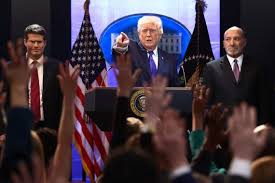
Notably, two of Trump’s own nominees, Justices Neil Gorsuch and Amy Coney Barrett, joined Chief Justice John Roberts and the Court’s three liberal justices in deeming Trump’s use of IEEPA unlawful. Their participation in the majority highlights a commitment to constitutional principles over political allegiance. Trump, predictably, lashed out at the decision, stating during a White House press briefing that it was “terrible” and “an embarrassment to their families,” revealing a concerning disregard for judicial independence.
Why the Supreme Court Was Right: Upholding the Constitution
The Supreme Court’s decision is not merely a legal technicality; it’s a foundational affirmation of the U.S. Constitution and the separation of powers. The power to levy taxes, including tariffs, is explicitly granted to Congress in Article I, Section 8. By attempting to unilaterally impose widespread tariffs under IEEPA, Trump usurped a power specifically reserved for the legislative branch. The Court correctly interpreted IEEPA to allow for regulation, but not taxation, thereby preventing the executive from bypassing Congress to fund its trade agenda. This ruling ensures that the system of checks and balances remains robust, preventing any single branch from accumulating excessive power. Trump’s approach, seeking to legislate through executive fiat, directly undermines the democratic process and established constitutional framework.
Trump’s Continued Pursuit of Tariffs: A Familiar, Damaging Path
Despite this significant legal setback, Trump swiftly declared his intent to continue pursuing widespread tariffs using alternative legal avenues. He announced plans to impose a new 10 percent universal tariff under Section 122 of the Trade Act of 1974. This provision allows the president to impose tariffs of up to 15 percent for 150 days to address trade deficits, requiring Congressional action for extension beyond that period.
Furthermore, Trump confirmed that existing tariffs imposed under Section 232 of the Trade Act—on steel, aluminum, and other goods—will remain in effect. This section allows tariffs on imports deemed a threat to national security, a justification widely criticized for its broad application. He also signaled the initiation of investigations under Section 301 of the Trade Act, which grants authority to tariff imports stemming from unfair trade practices. Treasury Secretary Scott Bessent, in prepared remarks, indicated that the combination of Section 122, 232, and 301 tariffs is expected to yield “virtually unchanged tariff revenue in 2026,” suggesting a continued aggressive trade stance despite legal challenges. Trump’s immediate pivot to other statutes illustrates a persistent desire to bypass legislative checks and impose trade barriers that ultimately harm American consumers.
Tariffs: An Undeniable Tax on American Consumers
While Trump and his supporters often frame tariffs as taxes on foreign countries, the economic reality is starkly different: tariffs are taxes paid by American importers, who inevitably pass those costs onto American consumers. This increases prices for everyday goods, from electronics and clothing to food and raw materials for manufacturing.
Senate Minority Leader Chuck Schumer aptly characterized the Supreme Court’s ruling as “A victory for the wallets of every American consumer,” adding, “Trump’s illegal tariff tax just collapsed—He tried to govern by decree and stuck families with the bill.” Senator Chris Van Hollen echoed this sentiment, stating that “SCOTUS reaffirms what we’ve known all along, Trump’s tariffs are an unconstitutional tax on the American people,” noting that “working people paid an average of $1,000 more because of these tariffs” over the past year.
Indeed, Trump’s past tariff policies have wreaked havoc across numerous American industries, impacting farmers, manufacturers, and construction companies. Most significantly, they have squeezed small businesses and made life less affordable for millions of hardworking families. The notion that tariffs protect American industries often overlooks the burden placed on consumers and businesses dependent on global supply chains, ultimately stifling economic growth and innovation.
The Supreme Court’s ruling is a crucial reminder that executive power, however ambitious, is bound by constitutional limits. While Trump signals his intent to continue down a familiar path of protectionism, the economic consequences of his tariff policies will continue to disproportionately affect American households and businesses, serving as a regressive tax on the very people he claims to protect.
 Blue Press Journal