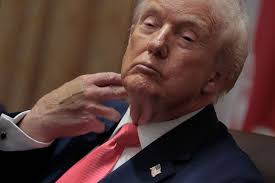
Blue Press Journal – When President Donald Trump boasts about “acing” a cognitive exam for the third straight time, it raises more questions than it answers. Cognitive tests are not intelligence contests; they’re simple screening tools doctors use to evaluate memory, attention, and problem-solving skills—often in patients showing signs of cognitive decline. So why does Trump keep taking them, and why does he feel the need to advertise the results?
A standard cognitive test, such as the Montreal Cognitive Assessment (MoCA), might ask someone to identify animals from pictures, recall five words after a few minutes, or draw a clock showing a certain time. Scoring well doesn’t prove genius—it simply indicates that basic cognitive functions are intact. Most adults without impairment would easily “ace” it. That’s why medical experts find Trump’s repeated emphasis on his performance puzzling, even concerning.
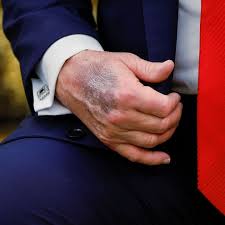
Trump’s latest Truth Social post, insisting that anyone running for high office should undergo a “strong, meaningful” cognitive exam, feels less like a policy suggestion and more like projection. If he’s indeed taken the test three times, it suggests that either his doctors or his team are monitoring potential issues—or that he wants to preempt speculation about his health by loudly proclaiming his mental sharpness. The bruises spotted on his hands and his occasional slurred speech have only fueled public curiosity.
Critics argue that Trump’s obsession with “acing” a basic screening betrays insecurity rather than strength. Instead of reassuring voters, it highlights how defensive he becomes over any hint of vulnerability. After all, a healthy, confident leader doesn’t need to brag about remembering five words or drawing a clock correctly.
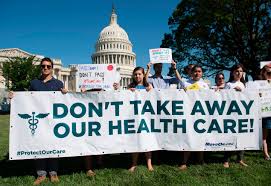
Blue Press Journal – Health care costs in the United States are climbing at an alarming rate — and millions of Americans are feeling the financial strain. According to DCCC Chair Suzan DelBene (D-Wash.), the responsibility lies squarely with House Republicans.
DelBene points out that instead of addressing spiking health care costs with meaningful solutions, House Republicans prioritized massive tax breaks for the wealthiest Americans. Even more concerning, they blocked a floor vote that could have preserved vital health care tax credits, that expired on January 1, 2026.
For families already struggling with medical bills, the expiration of these credits could mean higher premiums, reduced access to care, and increased economic hardship. As the deadline approaches, the debate over who benefits from policy decisions — and who pays the price — is intensifying.
The American public is wide awake and watching! The pivotal question is whether voters will rise up in 2026 to hand control over to Democrats who steadfastly champion the interests of everyday Americans, not the wealthy elite of billionaires and millionaires.
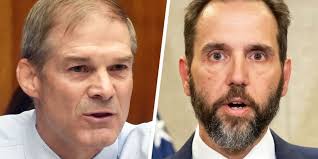
BLUE PRESS JOURNAL – The latest revelations from former Special Counsel Jack Smith’s closed-door interview with the House Judiciary Committee offer a sobering reminder of how far Donald Trump and his allies were willing to go to hold onto power after losing the 2020 election. While the session was held behind closed doors, reports of what was said inside make clear why some Republican lawmakers, including Committee Chair Jim Jordan, had no interest in making the testimony public.
Smith’s investigation—now dismissed—had sought to determine the extent of Trump’s direct involvement in efforts to overturn the election and his mishandling of classified documents after leaving the White House. What’s emerging from this new account is not just a picture of political hardball, but of a deliberate campaign built on lies that even Trump’s closest associates didn’t believe.
One of the most striking details involves Rudy Giuliani, Trump’s personal lawyer and architect of his post-election legal strategy. Smith’s inquiry reveals Giuliani admitted he didn’t believe the conspiracy theories he promoted—and neither did Donald Trump. This confession undermines the “Stop the Steal” narrative: it was not based on genuine grievance, but a calculated deception to inflame supporters and delegitimize a lawful election.
If Trump and Giuliani both knew their claims were false, then the entire post-election chaos—from the flood of lawsuits to the violence of January 6th—was built on a conscious lie. This undermines any argument that Trump was simply misled or acting out of misguided conviction. It paints a portrait of a leader willing to endanger democracy itself for personal gain.
The Republicans who sought to limit public access to Smith’s testimony likely understood how damaging such revelations could be. A clear-eyed look at the evidence doesn’t just implicate Trump; it also raises uncomfortable questions about those in Congress who continue to defend him, even as the factual record grows darker.
Trump’s defenders often dismiss these investigations as partisan witch hunts, but Smith’s work reveals a graver truth: a former president, aware of his loss, attempted to weaponize the government and his followers to maintain power. This behavior is not that of a patriot—it’s someone who views democracy as expendable.
As more details come to light, the question is no longer whether Trump believed his own lies. It’s whether the country is prepared to hold him accountable for them.
Blue Press Journal – President Trump’s recent revelation that he’s doubling down on aspirin therapy to “thin” his blood has once again exposed a confusing blend of self-diagnosis and bedside intuition—and it drew swift rebuttal from experts. In an interview with the Wall Street Journal, the 79-year-old commander in chief explained, “I don’t want thick blood pouring through my heart. I want nice, thin blood pouring through my heart. Does that make sense?”
Dr. Jonathan Reiner, a respected cardiologist who treated former Vice President Dick Cheney, didn’t mince words when asked about Trump’s unconventional regimen on CNN’s The Lead. “That actually makes no sense,” Reiner declared. “When we use anticoagulant medications to prevent clotting, they don’t ‘thin’ the blood like changing gumbo to chicken soup. They simply reduce the chance of clot formation.” In other words, the president’s catchy metaphor has no basis in medical reality.
Beyond the semantics, Trump’s high-dose aspirin use carries risks. The American Heart Association warns that people over 70 using aspirin to prevent a first heart attack or stroke may face more harm than benefit due to increased bleeding risk. Self-medicating at that age is a gamble with serious consequences.
Trump, who has dismissed health concerns, favors his instincts over medical advice. At a time when cardiovascular vigilance is crucial, his cavalier attitude and reliance on pseudo-medical explanations highlight a troubling trend: expertise is overlooked when it conflicts with his gut feelings or media soundbites.
Health Care Premium Hike in 2026: and Republicans Refuse to Act
Blue Press Journal – On January 1, 2026, millions of Americans will face a painful spike in health insurance premiums. This surge is directly tied to the scheduled expiration of the enhanced subsidies under the Affordable Care Act (ACA) — subsidies first expanded under the American Rescue Plan in 2021 and extended through 2025 by the Inflation Reduction Act.
If Congress fails to extend these subsidies, health care costs will rise sharply — and the Republican Party, led by Donald Trump, has made it clear they have no intention of renewing them.
How Much Will Premiums Rise?
According to the Congressional Budget Office and Kaiser Family Foundation analysis, without the enhanced ACA subsidies:
Middle-income families (earning $50,000–$75,000/year) will see average annual premiums increase by $1,200–$2,400 per household.
Older enrollees in their early 60s could see premiums jump by $4,000–$6,000 annually in some states.
Nationally, the average premium for a benchmark silver plan could rise up to 53% for those losing subsidy eligibility.
The number of uninsured Americans could increase by 3–4 million in 2026 alone.
Projected Annual Premium Increases by Income Bracket (when subsidies lapse)
Annual Income (Family of 3)
Avg. Premium Increase (National)
Example State Impact
$35,000 (150% FPL)
$0–$500 (still eligible for some subsidy)
CA: +$300
$55,000 (250% FPL)
+$1,800
TX: +$2,200
$85,000 (400% FPL)
+$4,500
FL: +$5,000
$120,000 (550% FPL)
+$6,600
WY: +$7,200
(FPL = Federal Poverty Level; figures based on KFF and CBO modeling)
Why Enhanced ACA Subsidies Lower Premiums for Everyone
The enhanced subsidies don’t just help those who qualify — they stabilize the entire ACA marketplace:
Risk Pool Balance – More healthy people can afford coverage, which spreads risk and keeps average premiums lower for all enrollees.
Market Competition – Stable enrollment encourages insurers to participate in more counties, increasing competition and slowing price hikes.
Reduced Uncompensated Care – Hospitals face fewer unpaid bills, which indirectly lowers costs for insured patients.
Without these subsidies, healthier middle-income Americans are more likely to drop coverage, leaving sicker, costlier patients in the pool — triggering a premium spiral.
The Republican Stance and Trump’s Position
Despite the clear evidence of harm, Republicans in Congress have opposed making the enhanced subsidies permanent. Donald Trump and GOP lawmakers have repeatedly called for dismantling the ACA framework entirely, reviving repeal rhetoric from 2017. Rather than offering a plan to prevent the 2026 premium spike, many Republicans have characterized the subsidies as “government handouts,” ignoring the reality that they function as a cost-control measure for the entire insured population.
The Bottom Line
The enhanced ACA subsidies are not just a safety net for the poor; they are a brake on runaway premiums for everyone.
The refusal by Republican leadership and Donald Trump to extend them is, in effect, a decision to let costs soar.
Blue Press Journal – Two senior Democratic senators have launched a formal inquiry into Susie Wiles, a top adviser to President-elect Donald Trump, over her admitted access to “the Epstein file,” raising serious questions about the handling of sensitive documents related to the Jeffrey Epstein case.
In a letter sent to Wiles, Senate Judiciary Committee Ranking Member Dick Durbin (D-Ill.) and Sen. Sheldon Whitehouse (D-R.I.) are demanding a detailed accounting of her access to the materials, her purpose for reviewing them, and whether any information was shared with the President.
The inquiry stems from a recent two-part Vanity Fairseries featuring interviews with Trump’s inner circle, including Wiles. In her interview, Wiles mentioned reviewing materials from “the Epstein file,” a comment that has now triggered a formal request for information from Capitol Hill.
The senators have requested Wiles’ response by January 5, asking her to address the following key points:
What was in the file? The senators want to know the contents of the materials Wiles reviewed. Crucially, they ask if any of the information had been presented to a grand jury, indicating their concern over the potential release of sensitive, pre-indictment, or classified information.
Why and when did she have access? They are seeking a timeline of her access—when it began and the schedule of her review—and the specific purpose for her reviewing such sensitive documents.
What was her role in the process? The senators press for details on her actions concerning the file. Did she share any of its contents with President Trump? What was her involvement in any process to review, redact, withhold, or release material from the file? And critically, were the Department of Justice or the Federal Bureau of Investigation involved in any such process?
The Democratic senators are signaling their intent to hold the new administration accountable for the handling of sensitive government materials, drawing parallels to past controversies involving the storage and dissemination of classified information.
The questions posed to Susie Wiles are direct and demanding. Her response will be closely watched as an early indicator of how the Trump administration will approach congressional oversight and transparency on matters of significant public interest and national security.
Blue Press Journal – President Donald Trump’s recent veto of a bipartisan measure to secure clean drinking water for thousands of Colorado residents has ignited a firestorm of controversy—particularly from within his own party. Rep. Lauren Boebert, a staunch MAGA ally, is publicly questioning whether the President’s decision constitutes “political retaliation” against her.
The bill in question, the Finish the Arkansas Valley Conduit Act, aimed to fund a critical pipeline delivering clean water to roughly 50,000 people in the Arkansas River Valley. Despite Boebert’s sponsorship and the bill’s bipartisan support, the President rejected the measure.
While Boebert has consistently championed Trump’s “America First” agenda, she recently broke ranks over the administration’s handling of the Jeffrey Epstein files. The Congresswoman has been vocal in demanding full transparency regarding the late child predator, who once referred to Trump as his “closest friend.”
In a statement released on X, Boebert expressed her dismay: “I sincerely hope this veto has nothing to do with political retaliation for calling out corruption and demanding accountability.” She emphasized that the American people deserve leadership that prioritizes essential needs over partisan squabbles.
This clash highlights a rare fracture in the Republican front. As constituents in Colorado await access to clean water, the situation raises uncomfortable questions about the cost of dissent and whether the White House is prioritizing personal grievances over the public good. For Boebert, the veto serves as a stark reminder that even loyal allies can find themselves at odds with the President when seeking accountability.
Blue Press Journal – The oldest person ever sworn in as president is facing renewed scrutiny over his fitness for office, as reports surface that his own aides have felt compelled to counsel him on the basic act of staying awake in public.
According to a new report from The Wall Street Journal, White House aides have “counseled him to try to keep his eyes open during public events, fearing the optics of his appearing to fall asleep.” The revelation comes amidst a troubling pattern of public behavior from Donald Trump, whose advanced age has become an increasingly difficult topic for his administration to ignore.
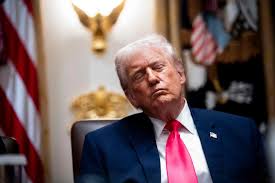
In recent weeks, observers have noted multiple instances where the President appeared to doze off while on camera. Whether sitting in a courtroom or attending a memorial service, Trump has been seen with his eyes closed and posture slack, seemingly disengaged from the events unfolding around him.
When confronted by The Wall Street Journal regarding these embarrassing episodes, Trump offered a defense that many may find less than convincing.
“I’ll just close [my eyes]. It’s very relaxing to me,” Trump told the outlet. “Sometimes they’ll take a picture of me blinking, blinking, and they’ll catch me with the blink.”
The President’s explanation stands in stark contrast to the concerns reportedly held by his own staff. The fact that West Wing aides feel the need to explicitly coach the Commander-in-Chief on maintaining alertness underscores the severity of the situation. It suggests a leadership style increasingly hindered by physical limitations, raising uncomfortable questions about who is truly managing the optics—and perhaps the substance—of the presidency.
As Trump continues to be the oldest individual to hold the highest office in the land, these incidents are no longer mere “fake news” or media exaggeration, but visible evidence of a potential decline. If the President requires prompting just to keep his eyes open during official duties, the American public has a right to wonder how much of the job he is actually conscious enough to perform.
Blue Press Journal’s Year End Review of the Trump Administration
As the 2025 calendar years in, Donald Trump’s return to the Oval Office has reignited concerns over the fragility of American democracy. While the former president’s tenure was marked by unprecedented attacks on norms and institutions, his recent return his actions in 2025 suggest a patterned effort to consolidate power and weaken democratic checks. Here are five troubling examples of how Trump’s administration has allegedly advanced policies and rhetoric that threaten foundational democratic principles.
1. Exploiting Federal Agencies to Criminalize Dissent In 2025, the Department of Justice has reportedly prioritized prosecuting journalists and activists critical of the administration under vague “domestic terrorism” definitions. Trump’s Justice Department, led by allies, has allegedly revisited FISA warrants and surveillance practices to target political opponents, echoing his 2016 campaign’s baseless claims of “witch hunts.” Such actions blur the line between legitimate dissent and criminality, chilling free speech.
2. Weaponizing Foreign Policy for Personal Gain Trump’s 2025 State Department has been criticized for sidelining career diplomats in favor of wealthy donors and henchmen, reportedly brokering deals with foreign leaders to exchange favors for financial rewards. A $1.5 billion real estate project in Vietnam involving the Trump Organization was approved shortly before trade negotiations began between the U.S. and Vietnam.
3. Suppressing Mail-In Voting to Rig Elections 2025 has seen renewed efforts to undermine public trust in voting infrastructure. Trump’s Justice Department has sued to limit mail-in ballot access in key states, citing unproven fraud claims, while his allies in Congress have pushed to penalize counties with high voter turnout. This echoes his 2020 claims of election fraud and undermines faith in electoral fairness.
4. Co-opting the Military for Political Power Trump’s 2025 National Security Council reportedly instructed the Pentagon to prepare for “rapid deployment” of troops to polling stations during elections, raising alarms about militarizing domestic affairs. Military leaders have privately warned that such moves risk normalizing the use of force to legitimize politically motivated outcomes—a direct threat to civilian control of the armed forces.
5. Stifling Dissent in Federal Employment In 2025, the Trump administration has allegedly pressured federal agencies to purge employees who publicly disagree with White House policies. For example, the EPA reportedly retaliated against scientists who opposed rolling back climate regulations, while the IRS has been accused of targeting “liberal” charities. This reflects a broader pattern of treating federal jobs as political spoils, eroding merit-based governance.
A Democracy in Peril Trump’s 2025 actions reveal a consistent strategy of weakening democratic institutions—courts, media, elections, and civil service—to entrench his power. As history shows, democratic norms can erode quickly under determined autocrats. The onus on citizens, media, and institutions to hold power accountable has never been clearer. Without vigilance, the U.S. risks becoming a “republic in name only.”
Blue Press Journal’s Year End Review of the Trump Administration
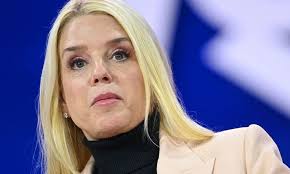
When Pam Bondi was sworn in as Attorney General in 2025, she promised to restore “law and order” to a system she viewed as broken. However, as the year draws to a close, it is clear that her tenure has not restored order so much as it has dismantled the guardrails of impartial justice. By weaponizing the Department of Justice (DOJ) for political ends and dismantling civil rights protections, Bondi has left the American justice system more fragile and partisan than it has been in decades.
Here are the five most damaging actions taken by Attorney General Bondi in 2025 that have hurt America’s justice system.
1. The Politicization of the DOJ’s Civil Rights Division One of Bondi’s first acts was to issue a directive fundamentally shifting the mission of the Civil Rights Division. Rather than protecting minority groups and voters from suppression, she reoriented the division to focus on what she termed “reverse discrimination” and “religious liberty” cases targeting LGBTQ+ protections. By effectively halting investigations into police brutality and voter suppression in key states, she stripped the DOJ of its role as a shield for the marginalized, turning it into a sword for conservative culture wars.
2. Halting Federal Prosecutions of Election Interference In a move that alarmed election law experts, Bondi ordered a freeze on all federal indictments related to attempts to overturn local election results, provided the defendants were “patriots acting in good faith.” This vague standard effectively granted immunity to operatives who intimidated election workers or submitted false slates of electors in 2024. By refusing to enforce federal election laws, she has signaled that political violence and subversion will go unpunished if it serves the right agenda, inviting chaos into future elections.
3. The “Federal Sentencing Equality” Directive Bondi rescinded the Obama-era guidance that recommended prosecutors avoid mandatory minimums for non-violent drug offenses. Under her new “Sentencing Equality” directive, federal prosecutors are ordered to seek the maximum possible penalties regardless of context. This has resulted in a surge of the federal prison population and reversed years of bipartisan progress on criminal justice reform. Critics argue this policy is designed to feed the private prison lobby rather than reduce crime, disproportionately harming minority communities.
4. Weaponizing the Bureau of Political Investigations Perhaps the most chilling development was Bondi’s restructuring of the FBI’s investigative priorities. She established a new “Public Corruption Task Force” that specifically targeted journalists, non-profit organizations, and universities that criticized the administration. By using the FBI to harass political opponents under the guise of “national security,” Bondi has blurred the line between the White House and the independent judiciary, turning the nation’s premier law enforcement agency into a tool of intimidation.
5. The “Total Transparency” Ban on Police Misconduct Data Finally, in a move of bureaucratic cruelty, Bondi dissolved the National Use-of-Force Database. She argued that compiling data on police shootings was “demoralizing to law enforcement.” By removing the requirement for federal agencies to report use-of-force statistics, she has blinded the public and Congress to patterns of abuse. Without data, accountability is impossible, ensuring that systemic police violence remains hidden from public scrutiny.
Conclusion In just one year, Pam Bondi has proven that the Attorney General does not merely enforce the law; they define the nation’s moral compass. By prioritizing political loyalty over legal neutrality, she has dismantled the institutional trust that underpins the American justice system. Repairing this damage will take years, but the cost of 2025 will be felt for a generation.

 Blue Press Journal