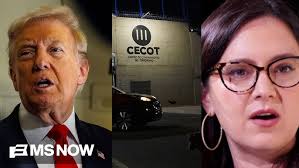
BLUE PRESS JOURNAL – In a stunning turn of events, a banned “60 Minutes” segment exposing El Salvador’s notorious CECOT prison made it to air in Canada before being yanked by CBS News chief Bari Weiss. The exposé, which detailed the horrific treatment of Venezuelans deported by the Trump administration, accidentally surfaced on the Global-TV app in Canada.
Jason Paris in Canada, who spotted the mistake, recorded about 13 minutes of the segment before it was taken down. HuffPost subsequently obtained and viewed the footage, which featured Venezuelans recounting inhumane conditions at CECOT, including violent security handling. Human Rights Watch confirmed most of the detainees had no criminal records, having sought asylum in the U.S.
The unfinished segment ended with “60 Minutes” stating that the Department of Homeland Security declined their interview requests and referred all questions to El Salvador’s unresponsive government. Weiss claimed the piece wasn’t ready due to the lack of administration commentary. The incident has sparked controversy and questions about censorship, highlighting the global reach and power of social media to bypass traditional broadcasting constraints.
The esteemed reputation of “60 Minutes,” long a bastion of investigative journalism, is under scrutiny following reports of a segment on El Salvador’s notorious CECOT prison being abruptly pulled. The incident, as described by the program’s own executive producer, Tanya Simon, has ignited concerns about editorial independence and the potential for political influence dictating what stories reach the public at CBS News. While the specific incident doesn’t directly involve former President Donald Trump, the opaque nature of the decision-making process feeds into the very criticisms of media bias and “playing politics” that Trump and his allies frequently leverage against mainstream news organizations.
According to a transcript of a staff meeting obtained by The Washington Post, Tanya Simon informed her colleagues that she “had to comply” with a last-minute decision from CBS News’s editor-in-chief to scrap the CECOT prison segment. Simon reportedly explained, “In the end, our editor-in-chief had a different vision for how the piece should be, and it came late in the process, and we were not in a position to address the notes… We pushed back, we defended our story, but she wanted changes, and I ultimately had to comply.”
This candid admission from an executive producer tasked with upholding the journalistic standards of “60 Minutes” is deeply troubling. It paints a picture of a story, thoroughly researched and defended by its creators, being sidelined at a late stage by a higher authority with a “different vision.” Such an intervention, especially when the reasons are not clearly articulated, raises a spectrum of questions: What was so objectionable about the piece that it couldn’t be aired? Why did this “different vision” emerge so late in the production cycle? And crucially, what kind of pressure or agenda informs such a powerful, last-minute veto?
It is imperative to address a significant factual error presented in the initial premise: independent journalist Bari Weiss is not the editor-in-chief of CBS News. However, the core concern remains profound: a senior executive at CBS News reportedly exercised last-minute veto power over a prepared “60 Minutes” segment, forcing its withdrawal despite the production team’s vigorous defense. This highlights a power dynamic where the journalistic integrity and efforts of a dedicated team can be overridden, leaving observers to wonder about the true motivations behind the decision.
The Specter of “Playing Politics”
While the pulled CECOT prison segment ostensibly focuses on human rights and conditions in El Salvador—topics far removed from the direct political theater involving Donald Trump—the manner in which it was sidelined plays directly into the broader narrative of media organizations “playing politics.” Trump and his supporters have long accused mainstream media of having an agenda, of curating narratives, and of suppressing stories that don’t align with a particular ideological viewpoint. When a prestigious program like “60 Minutes” has a segment pulled for vague reasons, it inevitably fuels these suspicions.
Critics could argue that such executive interference diminishes public trust by suggesting that editorial decisions are not solely based on journalistic merit, but perhaps on considerations of optics, political sensitivity, or an unspoken editorial line. In the highly polarized media landscape, where every journalistic action is scrutinized for potential bias, incidents like this lend credence to accusations that major networks are not impartial arbiters of truth but rather active participants in the political arena.
The lack of transparency around the “different vision” that led to the segment’s cancellation exacerbates concerns. Without a clear explanation for why a seemingly ready piece on a significant global issue was deemed unfit for broadcast, speculation arises, often leaning towards assumptions of political or corporate maneuvering rather than journalistic judgment. To skeptics of media fairness, such actions are seen not as editorial rigor but as attempts to control information, thus “playing politics” by shaping public discourse.
Eroding Trust and the Path Forward
The “60 Minutes” controversy serves as a stark reminder of the delicate balance between executive oversight and journalistic independence. When a program’s executive producer feels compelled to “comply” despite having “pushed back” and “defended our story,” it signals a breakdown in that vital equilibrium. This kind of heavy-handed intervention, shrouded in ambiguity, erodes the very trust that news organizations depend on.
For CBS News, if it wishes to counter the persistent criticisms of political bias—often articulated forcefully by figures like Donald Trump—it must embrace transparency and defend its journalistic integrity. Allowing segments developed by experienced producers to be pulled without rigorous, public justification only adds fuel to the fire of those who believe the media is not merely reporting the news, but actively shaping it to a particular end.
BLUE PRESS JOURNAL – In a brazen display of dishonesty, White House Deputy Press Secretary Abigail Jackson and the Trump administration have faced scathing criticism from social media for their flagrant manipulation of photographs from the recently released Jeffrey Epstein files. The disturbing incident demonstrates an utter disregard for truth and integrity, further eroding the already shaky trust in the government’s words.
As part of the Justice Department’s reluctant disclosure of documents, images, and recordings related to the convicted sex offender, the administration saw an opportunity to mislead the public. By inserting a photo featuring Bill Clinton, Michael Jackson, and Diana Ross, they falsely suggested that the trio was present with Epstein’s victims, likely to deflect scrutiny from Clinton’s own controversial association with the alleged pedophile.
This heinous act of photo editing has sparked widespread outrage, with many deeming it a deliberate attempt to deceive and distract from the true nature of the Epstein scandal. The decision to doctor the images, coupled with the heavy redactions in the released documents, leaves the public with an unsettling impression: that nothing emanating from the White House or the Department of Justice can be relied upon to uncover the truth.
Abigail Jackson, as a high-ranking government official, has a responsibility to uphold transparency and honesty in her communication. By participating in this egregious deception, she has let her constituents down and tarnished her own reputation. It raises serious questions about her capability to serve in such a critical role.
As the Epstein saga continues to unfold, one thing is clear: the Trump admininstration handling of the scandal has been marred by incompetence and dishonesty. With officials like Abigail Jackson perpetuating false narratives, it’s no wonder the public’s faith in Trump is at a historic low.
BLUE PRESS JOURNAL – In a disturbing turn of events, the Department of Justice (DOJ) has removed at least 16 files from its Jeffrey Epstein documents webpage, leaving the public with more questions than answers. The abrupt disappearance of these files is a stark reminder of the DOJ’s lack of transparency and accountability, particularly under the Trump administration.
The removed files were already heavily redacted, which raises suspicions about the true extent of the information being withheld. The DOJ has offered no explanation for the removal, sparking outrage and frustration among those seeking justice and truth in the Epstein case. The victims and their families deserve better than this blatant disregard for transparency.
It’s particularly egregious that this development comes after Congress passed a law requiring the full release of these documents. The law, which was meant to ensure that the public has access to all relevant information related to Epstein’s crimes, has been effectively circumvented by the DOJ’s actions. This is a clear example of the Trump administration’s disregard for the rule of law and its willingness to prioritize secrecy over transparency.
The Jeffrey Epstein case exposes the sinister nexus of power and privilege lurking in America’s shadows. It’s an outrageous affront that a serial sex offender managed to thrive unchecked, buoyed by a network of influential accomplices. The DOJ’s shameful mishandling of this case, particularly the erasure of critical files, only reinforces the ghastly truth: the justice system is not just broken, it’s rigged to protect the elite and well-connected.
While the claim that former President Donald Trump orchestrated the disappearance of at least 16 files related to the Jeffrey Epstein case remains unsubstantiated, it raises serious concerns about transparency and accountability in sensitive investigations. Epstein, a convicted sex offender with ties to powerful figures, became central to debates about corruption. Allegations that key officials, including those close to Trump, mishandled or suppressed evidence have fueled public distrust, particularly given Trump’s history of deflecting scrutiny. Critics argue that his administration often obstructed investigations intersecting with personal interests, as seen in the 2016 FBI probe into Hillary Clinton’s emails. While the Epstein files’ disappearance may not directly implicate Trump, it casts doubt on his administration’s accountability, compounded by his praise of Epstein and refusal to clarify their relationship. Until concrete evidence clarifies the matter, critics will demand answers about how such critical files were lost—and who benefited from their absence.
BLUE PRESS JOURNAL – In a stunning display of selective reasoning, MAGA media figures and Trump sycophants are hailing the recent Consumer Price Index (CPI) inflation report as a victory for President Donald Trump’s economic policies. The November 2025 report showed a slightly lower than expected annualized inflation reading of 2.7%, prompting celebratory commentary on Fox and other right-wing outlets. However, this jubilation is not only premature but also grossly misleading.
Economists have been quick to point out that the report is distorted due to the recent government shutdown, which artificially suppressed certain price indices. This shutdown, caused by the GOP’s own legislative gridlock, has had a ripple effect on the economy, making it difficult to accurately gauge the true state of inflation. Nevertheless, Trump’s media allies are choosing to ignore these caveats and instead are using the report as a propaganda tool to justify the president’s economic agenda.
The irony of this situation is striking. The 2.7% inflation rate being touted as a success is virtually identical to the inflation rate in November 2024, when high and persistent inflation was a major concern nationwide. At that time, Trump and his supporters were quick to capitalize on the issue, using it to criticize their opponents and pledge to bring inflation under control. Fast forward to the present, and it seems that the president’s media cheerleaders have conveniently forgotten their previous concerns about inflation.
This selective amnesia is a hallmark of the GOP’s approach to economic policy under Trump. The party has consistently prioritized short-term political gains over long-term economic stability, pursuing a series of policies that have contributed to a stumbling economy this year. The tax cuts, trade wars, and deregulation have all taken a toll on the economy, and the recent government shutdown has only added to the uncertainty.
The MAGA media’s celebration of the distorted inflation report is a classic example of “alternative facts” in action. By cherry-picking data and ignoring the broader economic context, Trump’s supporters are attempting to create a narrative that vindicates the president’s policies, regardless of the actual outcome. This approach not only undermines the integrity of economic reporting but also perpetuates a false sense of optimism among the American public.
As the economy struggles, it’s crucial to separate fact from fiction and hold the GOP and President Trump accountable for their policies. The November 2025 CPI report serves as a reminder of the challenges ahead. Policymakers must address the issues driving inflation and promote sustainable economic growth, as anything less betrays the trust of the American people.
BLUE PRESS JOURNAL – In a stark sign of his dwindling popularity, President Donald Trump has hit a record high in disapproval ratings in the crucial swing state of North Carolina, according to a recent poll. With only 35% of respondents in the key state expressing approval, the 2026 midterm elections are poised to become a major test for Trump and his GOP allies.
The Elon University and YouGov survey, conducted from November 19 to December 1, paints a bleak picture for Trump, with 51% of North Carolinians voicing disapproval of his job performance. This alarming number is compounded by an additional 14% of undecided voters, a demographic that often proves decisive in close elections. The data suggests Trump’s toxic approval ratings are not only damaging his own re-election prospects but also posing significant challenges for Republicans looking to retain control of Congress.
North Carolina’s status as a traditional swing state makes these findings particularly concerning for the GOP. Recent voter registration figures from the North Carolina State Board of Elections show a razor-thin margin between the two major parties, with Democrats holding a mere 1,200 voter advantage. This slim margin underscores the state’s impact on national electoral outcomes and underscores the importance of Trump’s performance in the region.
Trump’s struggles in North Carolina are reflective of his broader national decline in popularity. As the President’s controversial policies and persona continue to polarize the country, many Americans are growing increasingly disaffected with his leadership. His inability to appeal to a broader cross-section of voters in key battleground states like North Carolina raises serious questions about his ability to lead a unified country and effectively represent the diverse interests of the American people.
With the 2026 midterms fast approaching, the implications of Trump’s plummeting approval ratings in North Carolina are far-reaching and potentially disastrous for the Republican Party. If the President’s unfavorable ratings continue to soar, it could lead to a significant erosion of Republican support among key voter demographics, creating an uphill battle for the party to retain control of Congress.
Trump’s staggering disapproval ratings in North Carolina act as a glaring alarm bell for the GOP as they gear up for the 2026 midterms. With his divisive presence continuing to redefine the political terrain, his inability to charm swing state voters like those in North Carolina could spell disaster for the Republican Party’s electoral prospects. Time is running out for Trump and his allies to reverse the tide of public sentiment, or they might just find themselves staring down the barrel of a humiliating defeat at the polls.
BLUE PRESS JOURNAL – WASHINGTON — The Department of Justice, under the Trump administration, is poised to violate federal law by failing to meet a congressionally mandated deadline to release records related to the Jeffrey Epstein investigation, drawing sharp condemnation from lawmakers and accusations of a cover-up.
Congress passed legislation last month, co-sponsored by an unusual bipartisan duo of Rep. Thomas Massie (R-Ky.) and Rep. Ro Khanna (D-Calif.), giving the administration 30 days to create a public, searchable, and downloadable database of documents concerning Epstein’s international sex trafficking ring. After initially fighting the bill for months, President Trump signed it into law once its passage became inevitable.
The president has publicly dismissed demands for the files’ release as a Democratic “hoax.” His administration’s reluctance to comply with the law he signed aligns with this rhetoric, despite the bill’s specific provisions.
The legislation begrudgingly permits a few redactions to shield ongoing federal investigations or prosecutions. Yet, it bluntly declares that “no record shall be withheld, delayed, or redacted on the basis of embarrassment, reputational harm, or political sensitivity, including to any government official, public figure, or foreign dignitary.” In other words, no one gets a free pass to hide behind their status or feelings!
This blatant non-compliance is a powder keg ready to explode into a major legal showdown. The administration’s refusal to release the records by the deadline fuels speculation about hidden motives and the explosive information regarding high-profile individuals linked to the late financier. Lawmakers are preparing for an imminent court battle to hold the administration accountable and uphold the law.
Blue Press Journal – The John F. Kennedy Center for the Performing Arts, a iconic cultural institution in Washington, D.C., was established by an act of Congress in 1964 to honor the late President John F. Kennedy and his family’s legacy. Recently, former President Donald Trump’s proposal to rename the center after himself has sparked legal and political controversy, with experts affirming that the move is not only highly improbable but technically illegal. Here’s why.
1. Congressional Legislation and Legal Protections The Kennedy Center’s name is enshrined in federal law, as it was created by an act of Congress. Renaming a federal building or institution requires legislative action under the Federal Property and Administrative Services Act of 1949 (40 U.S.C. § 5343), which mandates that significant name changes must be approved by Congress and signed into law by the president. Since the Kennedy Center’s establishment was codified by statute, altering its name would demand a new act of Congress—a process outside the president’s unilateral authority.
2. Restrictions on Honoring Living Individuals Federal policy, including the Antidefamation League’s (ADL) Guidelines for Naming Federal Properties, prohibits naming publicly funded institutions after living individuals, including current or former heads of state, without extraordinary justification. This policy aims to preserve the neutrality and historical integrity of federal landmarks. Proposing to name the Kennedy Center after a sitting president like Trump directly conflicts with these principles, as does the idea of honoring a living person in a structure tied to arts and culture.
3. Precedent and Political Unlikelihood The Kennedy Center is a longstanding tribute to a U.S. president and a symbol of American artistry. Congress has repeatedly reaffirmed its name, and no precedent exists for renaming such an institution to honor a contemporary political figure. Even if Congress theoretically supported Trump’s request (which is politically untenable), the process would require bipartisan agreement and legislative action—highly improbable in the current climate.
4. Government Speech and Legal Precedents The Supreme Court’s 2015 ruling in Walker v. Texas Division, Sons of Confederate Veterans clarified that the government may regulate the use of its name in official contexts, including monuments and buildings, to maintain neutrality and public trust. Renaming the Kennedy Center after a partisan figure would risk violating these principles, potentially infringing on constitutional rights tied to government speech.
Conclusion While Trump’s suggestion highlights the divisiveness of modern politics, the legal reality is clear: renaming the Kennedy Center requires Congressional approval, which is nonexistent, and violates federal policies protecting the integrity of historic institutions. For now, the Kennedy Center’s name remains legally protected—a lasting tribute to its namesake and the arts community it serves. Trump’s request, though emblematic of his “America First” rhetoric, cannot override the constitutional and legislative safeguards that preserve the nation’s cultural heritage.
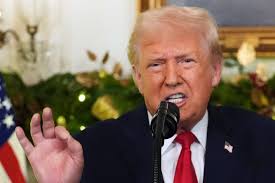
Blue Press Journal – On Wednesday, President Trump took to the stage to deliver a speech that was more akin to a campaign rally than a presidential address. The speech was a meandering, fact-free diatribe that failed to address the real issues facing the country. Instead, it was a laundry list of self-congratulation, exaggeration, and outright lies.
One of the most glaring omissions from Trump’s speech was any discussion of the real issue with his economic policies: their cost. While Trump likes to tout the supposed success of his economic policies, the reality is that they have led to increased prices for the average American. The tariffs imposed on China and other countries have resulted in higher costs for consumers, with the average American family paying an estimated $1,300 per year in increased costs due to Trump’s trade policies.
Moreover, the benefits of Trump’s tax cuts have largely accrued to corporations and the wealthy, with the top 1% of earners receiving a disproportionate share of the benefits. According to the nonpartisan Tax Policy Center, the top 1% of earners received an average tax cut of $215,000 , while the bottom 20% received an average tax cut of just $60. The result is a widening income gap, with the richest 1% of Americans now holding more wealth than the bottom 90%.
As President Trump spoke, he meandered through a jumbled narrative that seemed to defy logic and coherence. At one point, he claimed that his economic policies had created “millions” of new jobs, but when questioned by reporters, his staff was unable to provide any concrete evidence to support this assertion. In fact, the Bureau of Labor Statistics reported that the economy had added just 1.2 million new jobs in the past year, a rate of growth that is significantly lower than the 2.5% average under the previous administration.
Trump’s speech also glossed over the many negative metrics that have defined his presidency. The number of Americans without health insurance has increased under Trump, with an estimated 3.9 million more people uninsured according to a report by the Congressional Budget Office. Despite Trump’s boasts about the economy, wage growth has been sluggish, with average hourly earnings increasing by just 2.8% over the past year, according to the Bureau of Labor Statistics.
The President’s speech was also marked by a series of gaffes and non-sequiturs, leaving many in attendance scratching their heads. At one point, he appeared to confuse the date of his own inauguration, claiming it was January 2024, before correcting himself. Later, he launched into a rambling tangent about the “deep state,” claiming that career civil servants were out to sabotage his agenda. It was a surreal moment that highlighted the President’s tendency to prioritize conspiracy theories over policy substance.
Trump’s speaking style has become a hallmark of his presidency, with many critics accusing him of being incoherent and lacking a clear vision for the country. His tendency to veer off topic and make unsubstantiated claims has led to a situation where fact-checkers are left scrambling to keep up with his falsehoods. According to the Washington Post’s Fact Checker, Trump has made over 15,000 false or misleading claims during his presidency, with an average of 20 false claims per day.
Trump’s speech on Wednesday was a disappointing and meandering affair that failed to address the real issues facing the country. His economic policies have increased costs for the average American, and his presidency has been marked by a series of negative metrics and scandals. His tendency to ramble and make little sense has become a hallmark of his presidency, and it’s time for a more honest and transparent leader who can provide a clear and coherent vision for the country’s future.
Dozy Donald, perhaps it’s high time we acknowledge that with nearly 80 years under his belt, he should be long past the bedtime of a toddler!
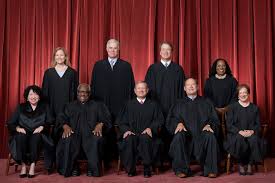
Blue Press Journal – The fate of the Trump administration’s tariff regime is currently being weighed by the Supreme Court, and President Donald Trump is anxiously awaiting the outcome. However, regardless of the court’s decision, one thing is clear: tariffs are bad news for American consumers.
The tariffs imposed by the Trump administration have been touted as a means to protect American industries and reduce the trade deficit. However, the reality is that these tariffs have resulted in increased costs for American businesses and consumers. By imposing tariffs on imported goods, the administration has essentially levied a tax on American consumers, who are forced to pay higher prices for everyday products.
The Unintended Consequences of Tariffs
The tariffs have had far-reaching consequences, affecting not just the targeted industries but also the broader economy. American companies that rely on imported goods have seen their costs rise, leading to higher prices for consumers and reduced competitiveness in the global market. Moreover, the tariffs have sparked retaliatory measures from other countries, harming American exporters and farmers.
A Victory for Consumers
A decision by the Supreme Court to limit or strike down the Trump administration’s tariff regime would be a welcome relief for American consumers. It would help to reduce the costs of goods and services, boost economic growth, and promote free trade. On the other hand, if the court upholds the tariffs, it would perpetuate a trade policy that has been detrimental to American consumers.
As the Supreme Court weighs the fate of the Trump administration’s tariff regime, American consumers should be hoping for a decision that prioritizes their interests and promotes a more open and free trading system.







 Blue Press Journal