Blue Press Journal – Apothecary Chocolates, a specialty chocolate company based in Colton, NY, has closed its doors due to the uncertainty surrounding tariffs and their impact on the global cocoa market. The company’s owner, Shelby Connelly, cited the fear of impending tariffs as a major factor in her decision to shutter the business.
Connelly founded Apothecary Chocolates in 2017, using European chocolate product Callebaut to create unique chocolate bars and truffles. However, the cost of Callebaut skyrocketed from $90 per 22-pound bag in 2017 to $250 per bag this spring, following President Trump’s announcement of tariffs on cocoa-bean producing countries. Despite efforts to find alternative suppliers, Connelly was unable to mitigate the price increases, which ultimately made it impossible for the business to operate.
The price hikes were not only caused by tariffs, but also by market uncertainty and fear. Suppliers hesitated to produce and distribute cocoa beans, leading to shortages and price increases, which were too much for the small business to overcome.
Connelly is quick to acknowledge that other factors, such as COVID-19-related price hikes and increasing packaging costs, also contributed to the company’s demise. However, the tariff-induced panic was the final nail in the coffin. The fact that the issue was not related to cocoa bean production, but rather a global trade situation, made it particularly difficult for Connelly to accept.
The closure of Apothecary Chocolates has not only affected Connelly but also her three full-time chocolatiers, who have lost their jobs. Connelly, who also works as an acupuncturist, is particularly concerned about the impact on her former employees, who relied on the company as their sole source of income.
Conducted from September 19-21 among 1,019 Americans with a margin of error of 3 percentage points, the survey shines a spotlight on an evolving economic outlook among the populace. A significant 54 percent of respondents expressed that the nation’s economy is currently on the wrong track. This figure represents a slight increase from August’s 53 percent and a more notable rise from July’s 52 percent, suggesting a growing apprehension about the economic trajectory. The trend indicates a consistent uptick in skepticism over the past few months.
When it comes to the President’s direct handling of economic matters, approval numbers remain relatively low. Just over a third of respondents, 35 percent, approved of President Trump’s approach to the economy. Even more telling is the public’s perception of his administration’s efforts to address the cost of living – a direct and tangible concern for many households. Less than three-in-ten Americans, specifically 28 percent, approved of President Trump’s handling of this crucial issue.
Further complicating the economic picture is the recent fluctuation in employment figures. The unemployment rate, a key indicator of economic health, saw an increase last month, rising to 4.3 percent.
These findings suggest a population uneasy about the nation’s economic course. The rise in those feeling the economy is on the wrong track, paired with low approval for the President’s economic management, signals potential “buyers remorse” among voters, indicating that the Trump’s administration struggles to convince most Americans of its effectiveness in managing economic challenges.
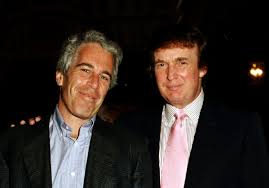
Blue Press Journal – In a significant development, the House of Representatives has finally garnered the necessary support to demand the release of documents related to the late financier and convicted sex offender, Jeffrey Epstein. The momentum shift came after Democrat Adelita Grijalva’s victory in the special election for Arizona’s 7th District on Tuesday. Grijalva’s win is expected to tip the scales in favor of transparency, as she has pledged to sign a petition calling for the Department of Justice (DOJ) to unseal the Epstein files.
The petition, which now boasts 218 signatures, crosses party lines, with a handful of Republicans joining their Democratic counterparts in demanding accountability. The magic number of 218 signatures is crucial, as it triggers a vote on the matter. While it is uncertain whether President Donald Trump’s DOJ will comply with the request, the mounting pressure from lawmakers may ultimately lead to the release of the long-sought documents.
Epstein, a onetime close friend of President Trump, was embroiled in a high-profile sex trafficking scandal before his death in August 2019. The DOJ’s handling of the case has been shrouded in controversy, with many questioning the circumstances surrounding Epstein’s death and the extent of his connections to powerful figures.
Blue Press Journal – The Trump administration’s latest antics have drawn eerie parallels to the dark days of McCarthyism, a period in American history when Senator Joseph McCarthy’s witch hunt for communists led to a chilling assault on free speech and dissent. The country survived that era, but the question remains: will it survive the onslaught of Donald Trump’s authoritarian tendencies?
US President Donald Trump has signed an executive order labeling Antifa as a “domestic terrorist organization,” condemning it for allegedly recruiting and radicalizing young Americans for political violence. Antifa, a loosely organized movement against far-right, racist, and fascist entities, has consistently drawn Trump’s ire. Studies indicate that historically, more political violence in the US has been linked to right-wing ideologies than to left-wing ones.
As Trump himself once promised, “We’re going to open up our libel laws so when they write purposely negative and horrible and false articles, we can sue them and win lots of money.” This thinly veiled threat to the free press has been followed by a series of actions that undermine the very fabric of democracy. The labeling of the press as “the enemy of the American people” is a stark reminder of the dangers of a government that seeks to silence dissenting voices. As Noam Chomsky aptly put it, “If we don’t believe in freedom of expression for people we despise, we don’t believe in it at all.”
The recent targeting of Antifa, a loose network of anti-fascist groups, is a case in point. By attempting to designate Antifa as a terrorist organization, the Trump administration is engaging in a blatant attack on political dissent and free speech. As journalist Glenn Greenwald noted, “The purpose of this rhetoric is to criminalize dissent, to make it a crime to oppose the policies of the government.” This rhetoric is not only dangerous but also Orwellian in its scope, as it seeks to redefine the very meaning of terrorism to include peaceful protest and dissent.
The implications of this move are far-reaching and sinister. As historian Timothy Snyder warned, “The road to tyranny is always paved with the suppression of dissent.” The Trump administration’s actions are a stark reminder that the democratic left must remain vigilant in its defense of free speech and reject the creeping authoritarianism that threatens to engulf the nation.
The Trump administration’s attempts to silence dissenting voices must be met with fierce resistance and an unwavering commitment to the principles of free speech and democracy. The country’s very future depends on it. As the great journalist Edward R. Murrow once said, “We will not be driven by fear into an age of unreason.” The time to stand up against this emerging Trump dictatorship is now.
Blue Press Journal – In a shocking statement, President Donald Trump declared that Tylenol is “not good” and advised women to only take it if they “can’t tough it out.” This announcement, made without any scientific backing, has raised eyebrows and sparked widespread criticism. Trump’s remarks were made alongside Secretary of Health and Human Services Robert F. Kennedy Jr. and Dr. Mehmet Oz, a former television host and current Administrator for the Centers for Medicare & Medicaid Services.
The President’s claim that Tylenol could prolong viral illnesses among children is unsubstantiated and contradicts established medical knowledge. Acetaminophen, the active ingredient in Tylenol, is widely considered a safe and effective treatment for fever and pain in children, as long as it is taken under the guidance of a physician.
Trump’s statement also perpetuates a harmful stereotype that women are not capable of withstanding pain, implying that they should only seek medical relief if they are unable to “tough it out.” This lack of empathy and understanding has been widely criticized, with many pointing out that pain management is a critical aspect of healthcare, particularly for women who may experience menstrual cramps, childbirth, and other unique health challenges.
Furthermore, Trump’s assertion that there is no autism in Amish communities is factually inaccurate. While the Amish community may have lower reported rates of autism, this is likely due to underdiagnosis and lack of access to healthcare services, rather than any inherent difference in the prevalence of the condition.
The absence of scientific evidence to support Trump’s claims has led many to question the credibility of his advisors, including Kennedy Jr., a known vaccine skeptic. The Centers for Disease Control and Prevention (CDC) and the American Academy of Pediatrics (AAP) have repeatedly emphasized the importance of vaccine safety and efficacy, yet Trump’s team seems to be promoting unsubstantiated and misleading information.
Following Kirk’s death, President Trump has repeatedly and falsely attributed blame to “the left” and the media, leveraging the tragedy to call for increased scrutiny and action against Democratic groups. However, the latest YouGov findings suggest that this approach may not resonate favorably with a significant portion of the electorate and could alienate potential voters.
The poll, conducted by YouGov, found that a notable percentage of respondents believe weaponizing Kirk’s death for political purposes is inappropriate and could have negative consequences for the party employing such tactics.
Political analysts are closely watching the administration’s response, noting that associating a violent crime with political opponents can be a delicate maneuver. The YouGov poll suggests that the public may be wary of such political exploitation, particularly if the claims of responsibility are not substantiated.
The Trump campaign’s response remains defiant, with allies echoing the President’s rhetoric. However, YouGov data suggests this strategy may encounter internal party challenges and external public disapproval, affecting future electoral prospects. The full implications of this poll for the political landscape will unfold in the coming weeks.
In the high-stakes theater of Washington D.C., the script has been flipped. As another government funding deadline looms, the familiar narrative of a Republican faction threatening a shutdown to extract concessions has been turned on its head. This time, it’s the Democrats drawing a hard line in the sand, and the issue at the heart of their ultimatum—healthcare—has left Republican lawmakers stunned and dangerously divided.
For years, the political playbook was predictable: Republicans would leverage a government shutdown to demand cuts or policy changes, while Democrats would decry the tactic as reckless. Now, with a Continuing Resolution (CR) needed to keep the government running, it is Republicans pushing for the stopgap measure and Democrats who are refusing to cooperate without a significant policy win.
The big question, and the singular focus of Democratic lawmakers, is the future of the Affordable Care Act (ACA). Crucial subsidies that help millions of Americans afford their health insurance premiums are set to expire this year. Democrats are demanding that any spending bill include a permanent extension of these subsidies, a move they see as non-negotiable.
“We’ve been clear from the beginning: we will not vote for a spending bill that strips healthcare access from millions of Americans,” a senior Democratic aide stated on condition of anonymity. “If Republicans want to shut down the government to cause insurance premiums to skyrocket, that will be their decision, and they will own it.”
This aggressive stance is a calculated gamble, designed to exploit a deep and growing fissure within the GOP. While the Republican base and a hardline conservative faction remain committed to dismantling “Obamacare,” many moderate and politically vulnerable Republicans see the writing on the wall. They recognize that allowing ACA funding to expire just months before the critical midterm elections would be a catastrophic political own-goal. They would be blamed for rising healthcare costs, handing Democrats a powerful campaign issue.
“This is a no-win situation,” admitted one veteran Republican strategist. “We’re caught between our base, which wants to see the ACA dismantled, and the stark reality that letting these subsidies expire right before an election is political malpractice. The Democrats know it, and they’re pressing their advantage hard.”
This internal conflict is precisely the wedge Democrats hope to drive deeper. Their strategy is twofold: force Republicans to fund a law they have sworn to repeal, or force them to initiate a government shutdown that voters will pin on them and the Trump administration. Either outcome, they believe, works in their favor.
Caught in the middle is President Trump. Despite his well-documented animosity toward the Democratic party, congressional arithmetic is unforgiving. To pass a spending bill and avert a shutdown, he needs Democratic votes. His administration cannot simply strong-arm its way through this fight; it requires a level of bipartisan negotiation that has been largely absent from his presidency.
The coming days will reveal who blinks first in this high-stakes game of legislative chicken. Will Republican leadership risk a politically toxic shutdown and the ire of voters facing higher insurance bills? Or will they concede to Democratic demands, effectively shoring up the signature legislative achievement of the previous administration?
One thing is certain: the power dynamics in Washington have shifted. Democrats are no longer just playing defense; they are on the offensive, and they are willing to use the GOP’s own favorite weapon to secure their top priority.
Blue Press Journal – The White House is reportedly preparing to announce its findings on the causes of autism on Monday, with multiple reports indicating the administration will link the neurological condition to the common over-the-counter pain reliever acetaminophen. The anticipated announcement is expected to specifically connect the development of autism to pregnant women’s use of the drug, the primary ingredient in medications like Tylenol.
This expected revelation follows a directive from President Donald Trump, who made identifying the cause of autism a top priority. Health and Human Services Secretary Robert F. Kennedy Jr. has been a prominent voice in this effort, vowing earlier this year to uncover the root cause of what he terms the “autism epidemic.” Kennedy has frequently pointed to the rising rates of autism diagnoses as evidence of an artificial cause, having previously speculated on the mercury-containing vaccine preservative thimerosal, despite repeated analyses failing to establish any association.
However, the medical community is already pushing back against the unconfirmed claims linking acetaminophen to autism. The American College of Obstetricians and Gynecologists (ACOG) issued a statement asserting, “acetaminophen remains a safe, trusted option for pain relief during pregnancy.” ACOG added, “Despite recent unfounded claims, there’s no clear evidence linking prudent use to issues with fetal development.”
Major medical societies, including the Society of Maternal Fetal Medicine (SMFM), align with ACOG’s stance, advising that acetaminophen is safe for use during pregnancy, though they recommend consulting with healthcare providers before taking any medication.
Experts in the field of autism research largely attribute the increase in diagnoses not to an “epidemic” with an artificial cause, but rather to improved detection methods and broader diagnostic criteria since the first formal diagnosis in 1943. The impending White House announcement is poised to reignite a long-standing debate, placing the administration’s claims in direct contrast with established medical consensus.
Blue Press Journal – A growing number of Republican senators are criticizing Federal Communications Commission (FCC) Chair Brendan Carr’s threats to take action against Disney’s ABC and late-night TV host Jimmy Kimmel in the wake of Kimmel’s comments about the assassination of right-wing activist Charlie Kirk.
Sen. Rand Paul (R-Ky.) appeared on NBC’s “Meet the Press” Sunday, calling Carr’s threats “absolutely inappropriate.” Paul’s comments were echoed by Sen. Ted Cruz (R-Tex.), who while criticizing Kimmel’s remarks, argued that revoking his broadcasting license set a dangerous precedent for stifling free speech.
“We can disagree with the views expressed, but the FCC shouldn’t be in the business of deciding what Americans can watch or listen to,” Cruz stated.
Sens. Todd Young (R-Ind.) and Dave McCormick (R-Pa.) also voiced their support for Cruz, with Young writing on social media, “Important comments by my colleague on the Commerce Committee, Chairman Ted Cruz. As Americans, we must cherish and protect free speech.”
The editorial page of The Wall Street Journal praised Cruz and other Republicans for pushing back against Carr’s tactics, warning that such efforts to silence critics could come back to haunt the GOP in the future.
The controversy began last week when Carr threatened to revoke ABC’s broadcasting licenses after Kimmel made comments about Kirk’s death that inflamed Republicans and other right-wing figures. In response, ABC pulled “Jimmy Kimmel Live!” from the air indefinitely.
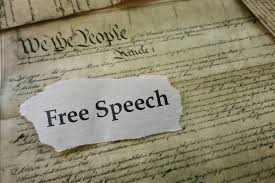
Blue Press Journal – The First Amendment to the United States Constitution enshrines one of the most fundamental rights of American citizens: the freedom of speech. This cornerstone of American democracy guarantees that individuals have the right to express their thoughts, opinions, and beliefs without fear of censorship or retribution. As the Supreme Court Justice Louis Brandeis once said, “Freedom of speech is the great bulwark against the tyranny…” In recent months, however, the Trump Administration has attempted to limit this essential right, posing a threat to the very fabric of American democracy.
The importance of free speech cannot be overstated. It allows citizens to hold their elected officials accountable, to critique government policies, and to engage in open and honest discussions about the issues that matter most. As the renowned author and intellectual, Noam Chomsky, noted, “If we don’t believe in freedom of expression for people we despise, we don’t believe in it at all.” By attempting to restrict free speech, the Trump Administration undermines the ability of citizens to participate in the democratic process, to shape public opinion, and to bring about meaningful change.
The Trump Administration’s efforts to limit free speech have taken many forms, from attacks on the media and journalists to attempts to restrict protests and demonstrations. These actions have been widely condemned by civil liberties groups, constitutional scholars, and citizens from across the political spectrum. As the American Civil Liberties Union (ACLU) has stated, “The First Amendment is a cornerstone of our democracy, and any attempt to undermine it is a threat to the very foundations of our society.”
The implications of restricting free speech are far-reaching and have serious consequences for both liberals and conservatives. When the government is allowed to dictate what can and cannot be said, it creates a chilling effect on speech, causing individuals to self-censor and refrain from expressing their opinions. This can lead to a lack of diversity in thought, a stifling of innovation, and a weakening of the democratic process. As the former President Barack Obama once said, “The free flow of information is essential to a functioning democracy.”
Free speech is the lifeblood of American democracy, and any attempts to restrict it are a threat to the rights and freedoms of all citizens. As the Supreme Court Justice William O. Douglas once said, “Restriction of free thought and free speech is the most dangerous of all subversions. It is the one un-American act that could most easily defeat us.”






 Blue Press Journal