Recent claims by Donald Trump regarding widespread support for his agenda and a supposed “historic win” are demonstrably false. Public opinion polls paint a starkly different picture, revealing a nation divided and increasingly concerned about the direction of the country.
A recent Emerson College Polling survey indicates that Trump’s approval rating is “underwater,” with 45% of respondents approving of his performance and 46% disapproving. Furthermore, a significant majority (53%) of those surveyed believe the country is on the wrong track, compared to 48% who feel it is headed in the right direction. These figures directly contradict any assertion of overwhelming support for the current administration.
The same survey also suggests a potential shift in the political landscape. On a generic congressional ballot, Democrats hold a slight lead over Republicans, receiving approximately 43% of the vote compared to 40% for the Republicans.
The implications of these findings are nothing short of monumental. As concerns swell about the future of our nation, the very real possibility of a transformation in congressional control ignites hope to return to sanity.
Congressional Republicans have consistently voiced their commitment to a more efficient, cost-effective, and accountable federal government. However, a closer look at their proposed budget cuts reveals a potential contradiction that could ultimately harm American taxpayers.
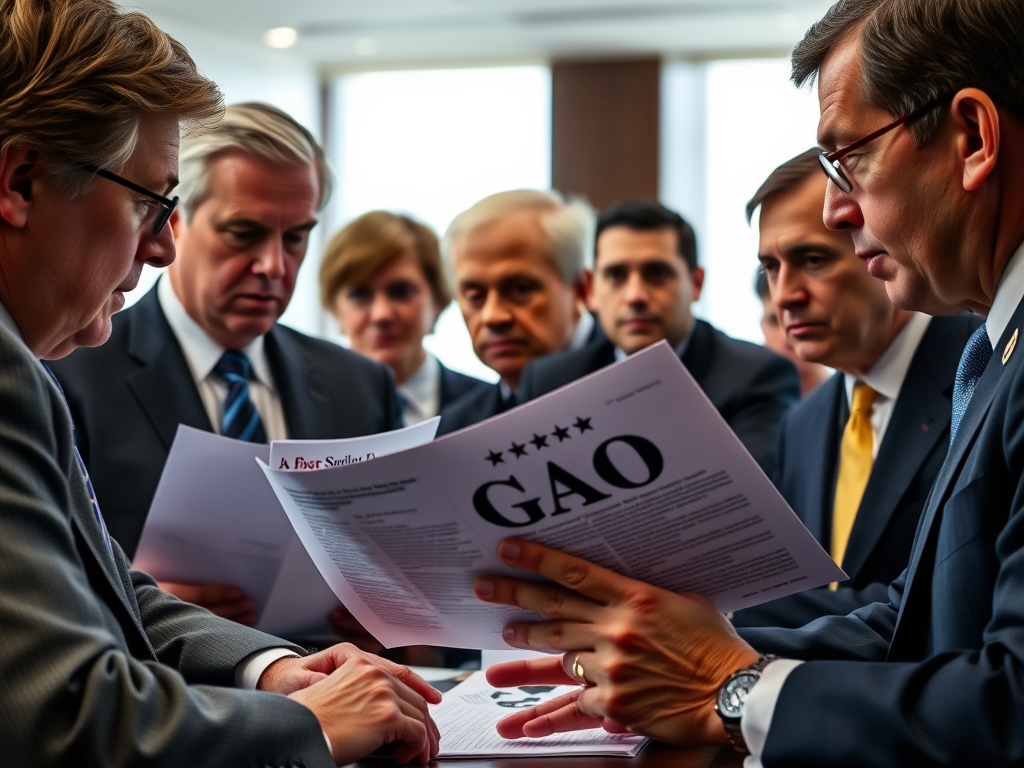
This proposed cut raises serious questions about the true intent behind Republican rhetoric on government accountability. The GAO plays a crucial role in identifying waste, fraud, and abuse within federal agencies. By conducting rigorous, non-partisan audits and investigations, the GAO helps Congress and the public understand how taxpayer dollars are being spent and identify areas for improvement.
Democrats argue that decimating the GAO’s workforce would leave only “skeletal staffing,” severely hindering its ability to effectively monitor government spending. This could result in federal taxpayers losing out on potentially tens or hundreds of billions of dollars in savings, which the GAO routinely identifies through its investigations.
The proposed cuts have sparked accusations that Republicans are prioritizing tax cuts for wealthy individuals at the expense of average American taxpayers. By weakening the GAO, they argue, Republicans are essentially removing a key watchdog that helps ensure responsible use of taxpayer money. This lack of oversight could lead to increased waste and mismanagement, ultimately burdening American families with higher costs and fewer essential services.
It remains to be seen whether these proposed cuts will ultimately be enacted. However, the debate surrounding the GAO’s funding highlights a fundamental tension between Republican promises of fiscal responsibility and their willingness to potentially undermine a crucial institution dedicated to promoting government accountability. As the budget process moves forward, it is vital for lawmakers to carefully consider the potential consequences of these cuts and prioritize the responsible stewardship of taxpayer dollars.
Across the country, armed federal immigration officers have increasingly hidden their identities while carrying out immigration raids, arresting protesters, and roughing up prominent Democratic critics. The widespread use of masks is unprecedented in U.S. law enforcement and a sign of a rapidly eroding democracy.
“Masking symbolizes the drift of law enforcement away from democratic controls,” said David Cole, the national legal director of the American Civil Liberties Union (ACLU). “It is a way of hiding their actions and escaping accountability.”
The Department of Homeland Security (DHS) has insisted that masks are necessary to protect officers’ privacy, arguing, without providing evidence, that there has been an uptick in violence against agents. However, critics argue that the use of masks undermines the legitimacy of their actions and weakens the democratic process.
“The use of masks by immigration agents highlights the illegitimacy of their actions,” said Maria Pabon Lopez, an immigration attorney. “It is a clear indication that they are trying to avoid accountability and transparency.”
The use of masks has become more common in recent years, particularly under the Trump administration, which has taken a hardline approach to immigration enforcement. This has led to an increase in raids and arrests, often targeting undocumented immigrants and their families.
In some cases, immigration agents have been accused of using excessive force and violating the rights of those they arrest. The use of masks makes it more difficult for victims to identify the agents involved and seek justice.
“When immigration agents hide their identities, it creates a climate of fear and distrust,” said Pabon Lopez. “It makes it harder for people to seek help and support when they need it.”
The use of masks also raises concerns about the militarization of law enforcement. Critics argue that the increasing use of force and secrecy is a sign that the government is prioritizing enforcement over due process and human rights.
“The use of masks by immigration agents is a symptom of a larger problem,” said Cole. “It is a sign that our democracy is under threat and that we need to take action to protect our rights and freedoms.”
As the debate over immigration continues, it is clear that the use of masks by immigration agents is a contentious issue. While the DHS argues that masks are necessary for officer safety, critics argue that they undermine the legitimacy of law enforcement and weaken our democracy. It is up to all of us to demand transparency and accountability from our government and ensure that our rights are protected.
A recently proposed Senate Republican budget bill is facing scrutiny, with critics arguing that its core provisions disproportionately benefit the wealthy while potentially placing a heavier burden on average American taxpayers and essential social programs. At the heart of the debate is a plan to extend existing tax cuts, a move estimated to cost a staggering $2.4 trillion through 2030.
The concern for many is not just the sheer cost of these extensions, but how Republicans intend to finance them. Reports suggest that a significant portion of the funding might be sought through deep cuts to vital programs like Medicaid and federal food assistance, commonly known as SNAP. This approach raises a critical question: will the benefits of extended tax cuts for the highest earners come at the expense of those who rely on these safety net programs to survive?
For average taxpayers, the implications are multifaceted. If the proposed cuts to social programs materialize, it could lead to a reduction in essential services that millions of Americans depend on for healthcare, nutrition, and overall well-being. This, combined with the continued preferential tax treatment for the well-off, could exacerbate existing economic inequalities. All this without any real tax relief for the average American.
The current tax cuts, largely characterized by their reduction of rates for corporations and high-income earners, are slated to expire. The Republican proposal aims to make these reductions permanent, not just extending them into the next decade but ensuring they remain in place for the foreseeable future. This indefinite extension for the wealthiest individuals and corporations means a sustained lower tax liability for those at the top of the economic ladder.
Democrats argue that failing to allow these tax cuts to expire, especially when paired with proposed cuts to social programs, represents a fiscally irresponsible approach that prioritizes the financial well-being of a select few over the broader needs of the nation. The argument is that by permanently lowering taxes for the wealthy, the government foregoes significant revenue that could be used to strengthen programs that support working families, invest in infrastructure, or reduce the national debt in a more equitable manner.
As the debate over the Republican budget bill continues, the focus remains on its distributional impact. Will this budget truly serve the interests of all Americans, or will it further cement a system where the benefits accrue to the top, while the burden of fiscal adjustments falls disproportionately on those who can least afford it? The answer, for many, lies in whether the proposed extensions are truly sustainable and equitable for the average taxpayer and the future of crucial social support systems.
Donald Trump manipulates reality to support his authoritarian agenda by fabricating problems for the purpose of claiming he has resolved them. A pertinent example of this is his decision to deploy troops to Los Angeles.
A decade ago, Trump famously descended an escalator, flanked by paid supporters who cheered on cue, to announce his presidential candidacy. He portrayed a grim picture of America, claiming it was a “dumping ground for everybody else’s problems.” He insisted the nation was “getting weaker” and no longer had greatness. In reality, his statements were constructed on false premises that contradicted the actual facts.
Trump has engaged in a persistent disinformation campaign, presenting the United States as a catastrophic landscape whenever it serves his twisted political interests. In the lead-up to the 2024 election, he made outrageous assertions, such as claiming that Haitian immigrants were consuming cats and dogs and that Venezuelan criminals were overtaking towns in the Midwest. These statements lacked any factual basis and were purely fabricated in his distorted mind.
Recently, he has invoked fictitious emergencies to exploit presidential power, alleging that the influx of undocumented immigrants constitutes an invasion orchestrated by a foreign entity. In response to protests in Los Angeles against his inhumane mass deportation efforts, Trump has redirected his disinformation campaign by sending troops to the city, with plans to extend this military presence to other cities to strengthen his control.
Los Angeles exemplifies Trump’s manipulation of reality for his own ends. He claimed that the protests had resulted in “a lot of death” and suggested that the city would have been “obliterated” without the intervention of National Guard troops. These statements are far from accurate; the protests were predominantly peaceful until his troops were deployed, leading to only a few minor incidents that were adequately managed and put down by local law enforcement. Trump is shamelessly fabricating a dangerous narrative that vilifies American citizens who were peacefully protesting, their consstitutional right, for his own political gain.
Many of Trump’s supporters and viewers of Fox News tend to accept his statements without question. A single photograph of three burning, driverless taxis has been repeatedly circulated to validate his actions. This pattern of misinformation resembles a game of whack-a-mole; as one falsehood is disproven, another is quickly generated to divert attention.
We are witnessing a perilous moment in America. Masked federal agents are patrolling our streets, sometimes detaining American citizens without justification and striping them of their due process rights. In a recent incident, federal agents forcibly removed and assaulted Senator Alex Padilla (D-Calif.) as he attempted to ask a question at a press conference held by Homeland Security Secretary Kristi Noem within a federal building that housed his own offices.
Trump’s trajectory leads toward authoritarianism, which some might label fascism. This is not reflective of American democracy. At its core, Trump’s disinformation campaign seeks to undermine—if not obliterate—our diverse and imperfect democracy, and his supporters are at the forefront of this assault on America’s fundamental promise.
As he ages—79 and counting—do you really think things will improve? What’s it like for your grandfather at this ripe old age? Is he the kind of guy who gets into heated debates with the TV like it’s a worthy opponent?
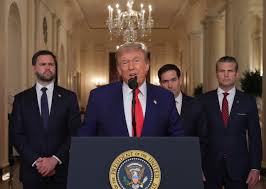
President Trump’s address last night regarding the decision to join Israel’s military action against Iran was remarkably brief – under four minutes – and offered virtually no strategic rationale. This lack of explanation is particularly perplexing given his recent claims of making progress in talks with Iran. Why, then, was this attack launched?
The strategic thinking articulated by Trump appears to contradict the views of most experts. The overwhelming consensus is that Iran will now retaliate and that prospects for a future agreement with the U.S. have significantly worsened. Adding to the concern, his short speech included explicit threats of further military action.
For what is arguably the most consequential foreign policy decision of his second term, the American public received virtually no justification or strategic insight of why he has dragged us into this conflict. While suggesting a path toward de-escalation, he provided no clarity on how this could possibly be achieved immediately after initiating an attack, or how it would encourage Iran to negotiate. His remarks at times seemed confused, weak and contradictory. The action is almost certain to provoke substantial, escalatory retaliation, not just symbolic gestures. Many states have now heightened their readiness for potential threats here in the United States.
Trump’s decision comes amidst considerable domestic disagreement over Iran policy, even fracturing his own political base. Critics warn that this approach risks entangling the United States in an unpredictable and costly regional conflict.
The question now is: what comes next? It is almost certain that Iran will leverage its resources to retaliate against the United States, initiating a conflict widely seen as lacking both strategic logic and clear necessity.
When it comes to vaccines, there are two kinds of parents coming into Dr. Megan Prior’s office in Washington, D.C., these days.
One set are parents who pepper the pediatrician with increasingly panicked questions about the future availability of vaccines and whether their children can get any shots early. Then there are the parents who feel vindicated in their decision not to vaccinate their kids, despite vaccines’ overall safety and record of disease prevention.
This contrasts sharply with the current housing market realities. Yesterday’s Census Bureau data revealed a significant drop in housing starts in May, the lowest since the 2020 pandemic. This begs the question: what role has the Trump administration played in making homeownership more expensive for the average American?
In contrast to Harris’s proactive approach, the GOP and Trump administration have offered no comprehensive plan to address the housing crisis. Their focus on tax cuts for the wealthy suggests a prioritization of the interests of billionaires and millionaires over the needs of average Americans struggling to afford a home.
The utter failure to establish a coherent housing policy under the Trump administration, combined with misguided efforts that only deepened the problems they were meant to fix, exposes a shocking reality of discordant priorities. But hey, those votes craved lower grocery prices—how’s that gamble treating us now?
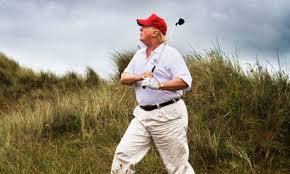
“Can you believe that, with all of the problems and difficulties facing the US, President Obama spent the day playing golf,” Trump tweeted in October 2014. “Worse than Carter.”Donald J. Trump
As global crises rage on, with headlines saturated by international conflict, domestic turmoil, and a faltering economy, Trump brazenly dashes away from the White House once more, seeking refuge in his private golf club in New Jersey for yet another weekend of indulgence.
Trump is set to leave Washington at 2:00 PM, long before the usual workday wraps up. Oh, how many of us would cherish the chance to escape the relentless grind, to walk away from our unfinished tasks and embrace a taste of freedom!
The president’s hasty exit highlights a troubling trend that critics slam as grossly misplaced priorities, prioritizing fundraising galas and comfortable getaways while neglecting the urgent responsibilities of governance.
While presidents possess significant constitutional authority to use military force, historically, both Republican and Democratic administrations have generally sought Congressional authorization – or argued that existing authorizations apply – before undertaking substantial or prolonged military engagements. This practice reflects a desire to navigate both the legal and political complexities inherent in deploying U.S. forces abroad.






 Blue Press Journal