While states are facing the aftermath of severe storms and awaiting FEMA assistance, President Trump’s schedule indicates an early departure for his golf club in New Jersey. On Friday, May 23, according to the official White House press pool daily guidance and media schedule, his only listed official event was a closed-press signing of executive orders.
This prioritization of personal leisure raises questions about his commitment to addressing the nation’s pressing issues, including economic uncertainty, legal challenges, and international instability.
The FPF argues that settling what they deem a baseless lawsuit, one that infringes upon First Amendment rights, sets a dangerous precedent that could expose other media outlets to similar frivolous legal challenges. Their letter emphasizes that corporations owning news organizations should not be in the business of placating powerful figures with settlements that undermine the freedom of the press.
The crux of the issue lies in the potential for quid pro quo. Reports suggest Paramount, is actively pushing for the settlement with the explicit intention of expediting the Skydance merger. This perceived link between the settlement and regulatory approval is what fuels accusations of bribery and potential illegality.
Furthermore, Paramount’s own executives are reportedly aware of the considerable risks involved. They have acknowledged that settling the Trump lawsuit “could expose directors and officers to liability in potential future shareholder litigation or criminal charges for bribing a public official.” The FPF’s warning adds further weight to these concerns, suggesting that settling could not only invite legal repercussions but also severely damage Paramount’s reputation and erode public trust in its news division, CBS News.
The situation raises profound questions about corporate governance, the influence of political pressures on media organizations, and the integrity of the merger review process.
President Donald Trump’s signing of executive orders, a frequent occurrence often captured on camera in the Oval Office, typically followed a set routine: a staff member would read a summary of the document, and the President would sign. These moments were closely watched, sometimes sparking speculation about his understanding of the orders’ contents, particularly as he was rarely seen reading the full texts, which could be lengthy.
This speculation was amplified by reports like one from The Daily Beast on Friday’s signing event, which described a “telling moment” that implied the President might not have known exactly what he was signing, suggesting he hadn’t read the order. Such instances fueled commentary that the signing ritual at times appeared less like informed decision-making and more like a performative act.
And then we have his so-called “word salads,” a chaotic jumble of off-topic ramblings that meander through subjects like toilets and windmills. Meanwhile, late-night tweets flood in while the rest of us are tucked away, peacefully sleeping as he indulges in his nonsensical diatribes. Is this truly a person who has it all figured out?
Is that all there is? While mindlessly signing orders he doesn’t comprehend, regurgitating scripted lines he never crafted, and playing a charade of leadership to the cameras.
J.P. Morgan Chase CEO Jamie Dimon has raised concerns about the potential for stagflation in the United States, a challenging economic scenario characterized by a confluence of high inflation, increasing unemployment, and sluggish economic growth. While not making a definitive prediction, Dimon suggested that the international tariffs previously implemented by President Donald Trump could contribute to such an outcome. “I just think there’s a chance that… you’ll have stagflation,” Dimon stated in an interview with Bloomberg during the lender’s Global China Summit. He emphasized, however, that this was a possibility, not a forecast. “I’m not saying it’s gonna happen, I don’t want the readers to say, ‘He’s predicting,’ I’m not.”
Last month, former President Trump unveiled a broad plan to impose a 10% baseline tariff on all goods imported into the United States, with even steeper duties targeting China. Trump framed the move as a necessary step to revitalize American manufacturing. However, economists have cautioned that the proposed tariffs could trigger a recession or even more severe economic repercussions.
Last month, former President Trump unveiled a broad plan to impose a 10% baseline tariff on all goods imported into the United States, with even steeper duties targeting China. Trump framed the move as a necessary step to revitalize American manufacturing. However, economists have cautioned that the proposed tariffs could trigger a recession or even more severe economic repercussions.
In a recent series of social media posts, President Trump has issued stark warnings about imposing a 50% tariff on imports from the European Union and 25% penalties on smartphones. These provocative statements highlight Trump’s capacity to influence the global economy with a few swift keystrokes, further intensifying his trade conflict with international partners.
As Republicans engaged in negotiations this week over a tax bill projected to add trillions to federal deficits, the long-term costs associated with financing the national debt surged. The U.S. government is poised to issue a significant volume of debt causing the bond market to be cautious directly affecting interest rates we pay on our debt.
A report in The New York Post, retailers are likely to raise prices in the coming weeks as a direct consequence of President Donald Trump’s tariffs. Apple’s stock took a hit after Trump threatened to impose a 25% tariff on its products unless the company relocates iPhone manufacturing to the United States. The retail sector is warning President Trump that they cannot absorb the costs of these tariffs indefinitely, and price increases are imminent.
U.S. stock markets experienced declines on Friday following Trump’s announcement of potential 50% tariffs on the European Union, which could take effect in just over a week. The S&P 500 index fell by 0.8% in morning trading, positioning it for its worst week in the past seven. The Dow Jones Industrial Average dropped 276 points, or 0.7%, by 10:25 a.m. Eastern Time, while the Nasdaq composite index decreased by 1%.
Trump made his tariff threat public before the U.S. stock market opened, stating on his Truth Social platform that trade negotiations with the European Union “were going nowhere” and that the “straight 50%” tariffs would be implemented on June 1. The European Union represents one of the United States’ largest trading partners. Markets have historically reacted negatively to abrupt policy shifts.
In the bond market, Treasury yields fluctuated before ultimately declining. The yield on the 10-year Treasury note eased to 4.51% from 4.54% late Thursday. Earlier in the week, yields had been rising, partly due to concerns that Washington’s tax-cutting efforts could exacerbate the
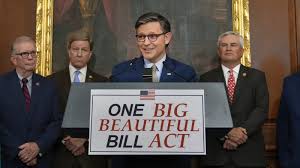
The Congressional Budget Office has yet to assess the full impact of this bill, leaving us in the dark about how many millions of Americans will be stripped of their health insurance or how many trillions the deficit will swell as a result. Cutting taxes for the affluent is already a deeply unpopular move, and slashing Medicaid—an essential lifeline for countless families—is even more so. This is precisely why House Republicans are not boldly championing the bill’s true consequences; instead, they are resorting to obfuscation, pretending that their convoluted work requirements will not result in the very disenfranchisement they are engineering. These requirements are designed to ensnare vulnerable recipients in a web of bureaucratic red tape, effectively pushing them off the program—an outcome they are counting on to generate the savings they seek.
This bill does not merely threaten to spike the deficit; it prioritizes enriching lawyers and CEOs over the well-being of everyday Americans, including fast-food workers and ride-share drivers. House Republicans have chosen to advance a measure that offers lavish tax cuts for the wealthy while ruthlessly slashing benefits for the poor and middle class, all while jeopardizing the economic health of our nation.
The recent passage of the Republican budget bill vote, passed under cover of a late night vote, has raised significant concerns about the future of U.S. debt levels, with several analyses suggesting a troubling trajectory. Over the next decade, this GOP bill could potentially cost the nation a staggering $3.8 trillion, as highlighted in a report earlier this month by the Joint Committee on Taxation. This report meticulously examined the implications of the proposed tax measures in comparison to spending cuts.
Wall Street is already feeling the tremors of these risks. On Friday, Moody’s Ratings downgraded the nation’s debt, citing the likelihood that the new bill could add an alarming $4 trillion to the federal primary deficit—excluding interest payments—over the next ten years. Economists and policy experts alike warn that this surge in debt could ultimately constrain federal spending, as the U.S. would likely face escalating interest payments. Such a scenario could jeopardize funding for essential programs like Social Security, which is already under strain as baby boomers reach retirement age. Additionally, it could hinder investments in critical infrastructure initiatives that are vital for stimulating economic growth.
While the bill does propose some spending cuts, recent analyses indicate that these reductions are insufficient to counterbalance the extensive tax breaks. The nonpartisan Bipartisan Policy Center estimated in a May 14 analysis that the tax cuts would amount to a staggering $7.7 trillion over the next decade, while the proposed spending cuts would only offset $3.9 trillion during the same period. This results in a significant shortfall of $3.8 trillion—an arithmetic reality that prompted Moody’s to downgrade its rating on U.S. debt from the highest tier of Aaa to Aa1.
Moreover, the implications of the proposed GOP bill raise significant concerns for the lowest-income Americans. According to a May 19 analysis from the Penn Wharton Budget Model, a research group at the University of Pennsylvania that evaluates the fiscal impact of public policies, the bottom 20% of earners—despite potential savings from tax cuts—will face a $1,035 reduction in 2026 when the cuts to Medicaid and other programs are taken into account, affecting middle class earners.
Just remember, Trump has sent a wave of bankruptcy crashing through several of his businesses, and now, against all odds, MAGA has handed over the country’s checkbook to him. God help us all!
On Thursday morning, the House of Representatives narrowly passed a bill with a vote of 215 to 214. In a stunning display of unity, all Democrats and two brave Republicans stood against it, while one Republican opted for the ever-mysterious “present” vote.
“This is one big, ugly bill that House Republicans are trying to jam down the throats of the American people, under the cover of darkness,” declared House Democratic leader Hakeem Jeffries (N.Y.) in a passionate speech just before the vote. “This legislation will not make life better for the American people.”
The Supreme Court has made it abundantly clear that it is fed up with the Trump administration’s blatant disregard for its orders in cases involving the Alien Enemies Act. In a decisive ruling concerning a group of Venezuelan detainees who were at imminent risk of being sent to a notorious prison in El Salvador, the Court took a strong stand against the administration’s actions.
The Court’s ruling underscores the administration’s attempts to deny due process to detained immigrants by offering only the most rudimentary notice of removal. This strategy is further undermined by their efforts to eliminate any possibility of due process altogether by sending these individuals to a foreign prison. The Court’s assertion that these detainees face “indefinite detention” highlights the severity of the situation; no one held at CECOT has ever seen a day in court, and the only known prisoner to have stepped outside its walls is a chilling testament to the lack of justice.
It is evident that the Supreme Court is deeply appalled by the administration’s blatant attempt to circumvent due process. This ruling is a resounding testament to the enduring significance of the US Constitution, and it is imperative that Trump adhere to its principles with unwavering commitment.
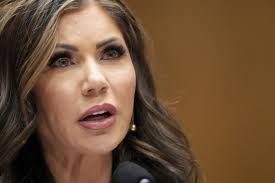
This video represents yet another instance of Trump employing dark and violent imagery in his campaign messaging, showcasing his penchant for inflammatory rhetoric. The slang term “eight-six” means to remove or eject, and let’s not forget that Donald Trump is the 47th president of the United States. In a post on May 15 on X (formerly Twitter), Noem accused Comey of promoting violence against Trump. However, critics are quick to remind her that “eight-six” does not inherently carry a violent connotation. In the restaurant industry, for instance, when workers say they need to “eight-six” an order, it simply means to cancel it. Similarly, a bar might “eighty-six” a customer who has had too much to drink.
The Guardian’s Edward Helmore notes that the number 86 has also been used by Republicans advocating for the impeachment of Joe Biden. For example, t-shirts sold on Amazon emblazoned with “8646” signal a call to impeach Biden, the 46th president. Some liberals are accusing the right of deliberately misinterpreting Comey’s intent to score political points.







 Blue Press Journal