Tag: trump

  • Dumbest’ Recession Ever: GOP Will Pay For Trump’s Tariffs

    Few Republicans are willing to defend the president’s tariffs, leaving the party vulnerable for the first time in Trump’s new term. The implementation of these tariffs marks a significant shift from the global trend of decreasing trade barriers, with economists warning that Americans could face thousands of dollars in increased prices each year, while the U.S. economy is expected to slow sharply.

    According to the Yale Budget Lab, the Trump administration’s tariffs could result in the average household facing an additional $3,800 in expenses this year. This includes a 10% universal tariff, higher tariffs on approximately 60 countries, as well as existing import taxes on steel, aluminum, and cars. Inflation is projected to soar to over 4%, up from the current 2.8%, with the economy facing minimal growth, as estimated by Nationwide Financial.

    The repercussions of these tariffs were felt on Thursday, as the S&P 500 index plummeted by 4.8%, marking its worst day since the pandemic began. The Dow Jones Industrial Average also took a hit, dropping over 1,600 points, causing the average 401 retirement account to lose over $8,000 in just one day.

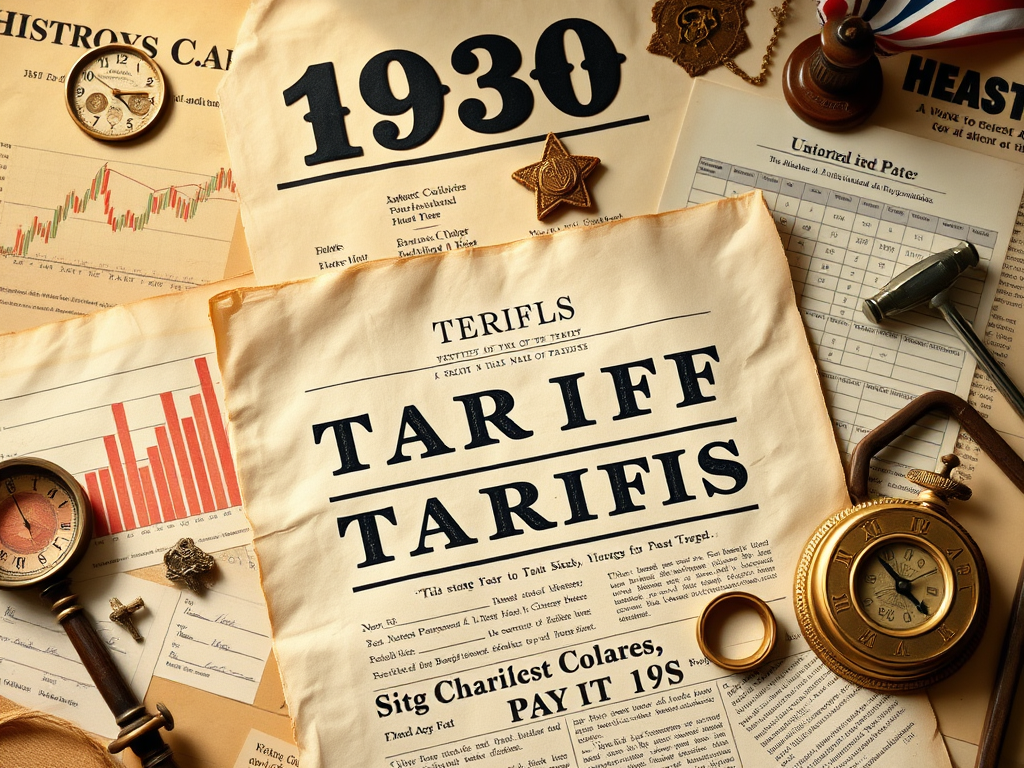
    Economists predict that the average U.S. tariff could reach nearly 25% once fully implemented on April 9, surpassing levels seen in over a century and even exceeding the infamous 1930 Smoot-Hawley tariffs, which exacerbated the Great Depression.

    The impact of these tariffs will be particularly harsh on Asian countries, with duties on Vietnamese imports rising to 46% and on Indonesia to 32%. Some Chinese imports could face tariffs as high as 79%, affecting major U.S. import sources for shoes like Nike, which produced half of its shoes and one-third of its clothing in Vietnam last year.

    Best Buy’s stock plummeted by a staggering 17.8%, a devastating blow attributed to the global production of its electronics. United Airlines also suffered a significant loss of 15.6%, as fears of a weakening global economy deterred customers from traveling for business or leisure. Target, too, experienced a sharp decline of 10.9%, with concerns mounting over the financial strain on its customers amidst persistent inflation. The once thriving giants of the retail and travel industries now find themselves teetering on the edge of uncertainty, as the world grapples with economic turmoil.

  • America’s Economic Future at Risk Amid Trump Tariff Storm

    In the wake of Donald Trump’s aggressive new tariffs, a storm is brewing in the American economy. Consumer costs are skyrocketing, and the once-solid foundation of America’s global economic relationships is crumbling before our eyes.

    Fresh off the presses from the nonpartisan Tax Foundation, a chilling report reveals that the average American household will be forced to fork over an additional $2,100 per year for goods due to these tariffs. The import tax rate is set to soar from a mere 2.5% in 2024 to a staggering 19% in 2025, marking the highest level since the dark days of the Smoot-Hawley era in the early 1930s. Brace yourselves, as Americans’ after-tax incomes are projected to plummet by an average of 2.1% this year alone.

    The impact of these tariffs will be swift and far-reaching, as a wide array of imported goods will see their prices surge. From basic necessities like food and household supplies to high-tech gadgets, no corner of the market will be left unscathed.

    Meanwhile, America’s longtime allies are shifting their trade and investment strategies, interpreting the tariffs as a clear signal that the United States is turning its back on its role as a global economic leader. As new trade alliances take shape and foreign investments dwindle, the repercussions for U.S. growth, employment, and international influence could be nothing short of catastrophic. The storm clouds are gathering, and the future looks bleak indeed.

  • Trumps Math does not Add Up!

    The Trump administration’s brilliant plan for calculating import taxes has left economists rolling on the floor with laughter. Turns out, the reciprocal tariffs were not based on any actual data from other countries, but rather on a magical formula created by the White House – a formula that has been the butt of jokes among experts.

    This formula, which assigned completely random tariffs to different countries, including some uninhabited islands, gained attention thanks to an anonymous social media user who connected the dots between the tariffs and other countries’ trade surpluses with the U.S. divided by their exports. So, in essence, the tariffs meant to combat unfair trade practices are themselves based on a completely arbitrary formula.

    The U.S. loves to buy cheap goods from other countries, and the money spent often comes back to American companies and government debt. But now, thanks to these tariffs, U.S. importers are stuck footing the bill and potentially passing on the cost to consumers.

    Economists are warning that these tariffs could lead to price inflation, slow economic growth, and maybe even push us into a recession. Bravo, Trump administration, for what could possibly be one of the biggest economic blunders in U.S. history. David Beckworth, an economist from the Mercatus Center, summed it up perfectly by calling it an “unforced economic policy error.” 

  • TRUMP: Make America Poor Again

    President Trump’s new policy seems to be “Make America Poor Again,” as he announced tariffs on imports from around the world. This decision caused Wall Street to plummet, following global markets on Thursday. Economists are now warning that the risk of recession is on the rise.

    Interestingly, Russia was absent from the list of countries that Trump plans to hit with steep tariffs, sparking accusations of favoritism towards Russian President Vladimir Putin. This move did not go unnoticed on social media, with critics quick to point out Trump’s admiration for Putin.

    After the U.S. market closed on Wednesday, Trump declared a 10% baseline tax on imports from all countries, with higher tariff rates on nations that have trade surpluses with the U.S. China will face a 34% tax, the European Union 20%, and Taiwan 32%.

    Trump announced a significant list of countries and regions that would face new tariffs, which included a number of lesser-known territories with minimal trade relations with the United States. Notably, one mention highlighted a collection of islands that were entirely uninhabited.

    Trump claims that these tariffs will make the global system fairer and bring manufacturing jobs back to the U.S. However, experts warn that these tariffs could slow down economic growth and worsen inflation, which is already above the Federal Reserve’s target.

    Stocks of major companies like Nike, Best Buy, and Dollar Tree plunged more than 11% before the opening bell on Thursday. Trump has also announced tariffs on auto imports, China, Canada, Mexico, steel, aluminum, oil from Venezuela, and plans for import taxes on pharmaceutical drugs, lumber, copper, and computer chips.

    The Wall Street Journal criticized Trump’s tariffs, listing potential repercussions that could backfire on the president and his agenda. The editorial board highlighted the risks of retaliation and the negative impact on the economy. The future seems uncertain as the world waits to see how these tariffs will play out.

  • Trump Tariffs: A Threat to Job Growth and Economic Stability

    Tariffs, which are taxes imposed on imported goods and services, are frequently touted as a straightforward solution to intricate economic issues. However, a more thorough examination reveals that tariffs can actually be harmful to the American economy, ultimately impeding growth and negatively impacting consumers and leading to a recession as it did in the 1930’s. 

    One of the most immediate and significant consequences of tariffs is the increase in prices for consumers. When tariffs are placed on imported goods, the cost of these goods rises. Instead of absorbing these costs, businesses typically pass them on to consumers through higher prices for a wide range of products, from clothing and electronics to raw materials used in manufacturing. This reduction in purchasing power leaves Americans with less money to spend on other goods and services, ultimately dampening demand across the economy.

    While tariffs may appear to be a means of safeguarding American businesses, they often have the opposite effect. Many U.S. companies rely on imported components and raw materials to produce their goods. Tariffs on these inputs drive up production costs, making American businesses less competitive in the global market. This can result in decreased sales, layoffs, and even business closures.

    Although tariffs may temporarily protect jobs in specific industries directly impacted by imports, they frequently lead to job losses in other sectors. As previously mentioned, the heightened production costs stemming from tariffs can compel businesses to reduce their workforce. Additionally, retaliatory tariffs can harm industries that rely on exports, resulting in further job losses. Numerous studies have consistently demonstrated that the overall effect of tariffs on employment tends to be negative.

    Instead of turning to the blunt tool of tariffs, policymakers should concentrate on implementing policies that foster long-term economic growth and enhance competitiveness.

  • Under Trump’s new plan, America is being made sicker

    “Under Trump’s new plan, America is being made sick. Employees within the vast U.S. Health and Human Services Department are being handed pink slips, with up to 10,000 people expected to lose their jobs. These cuts are affecting researchers, scientists, doctors, support staff, and senior leaders – essentially stripping the federal government of crucial experts who have long been instrumental in guiding decisions on medical research, drug approvals, and other critical issues.

    Last week, Kennedy unveiled a plan to revamp the department, which oversees tracking health trends, conducting medical research, monitoring food and medicine safety, and administering health insurance programs for nearly half the nation. The layoffs will reduce HHS to 62,000 positions, eliminating nearly a quarter of its workforce – a staggering 10,000 jobs lost.

    At the NIH, the cuts have already claimed at least four directors, while the FDA has seen numerous staff members who regulate drugs, food, medical devices, and tobacco products receive notices. Democratic Sen. Patty Murray of Washington has warned that these cuts will have dire consequences during natural disasters and disease outbreaks, such as the current measles epidemic.

    The CDC’s National Institute for Occupational Safety and Health has been hit particularly hard, with over 1,000 employees affected. In addition to federal health agencies, state and local health departments are also feeling the impact of HHS’s decision to retract over $11 billion in COVID-19-related funding.

    So, America, is this what you voted for Trump for? To make us all sicker and less safe? The Department of Disease seems to be a more fitting name for what is happening under this administration.”

  • Democrats need to call it like it is … on republicans!

    Introducing the “Pro-Cancer” Republicans! Any GOP politician who hasn’t had the guts to speak out against Trump’s massive NIH budget cuts, which are hindering research on life-saving treatments, deserves this lovely label. 

    And let’s not forget about the job-killing tendencies of these congressional Republicans. They’re practically besties with Musk, the guy who’s been handing out pink slips like candy and causing chaos with his business decisions. Oh, and let’s not overlook Trumpism’s blatant disregard for the Constitution. Who needs separation of powers anyway, right?

    Meanwhile, the Democrats are playing it cool, waiting for conservative voters to feel the burn of Trump’s disastrous policies. But hey, why wait when we can start hitting hard and hitting smart right now? 

    It’s time to saddle those GOP lawmakers with the consequences of Trump’s agenda using some snappy, aggressive language. Democrats of all stripes need to band together and fight for their way of life. So let’s stop twiddling our thumbs and start taking some serious action. It’s go time, people. Let’s show those Republicans what we’re made of.

  • Stock Market Plummets: Impact of Trump’s Tariffs

    The U.S. stock market experienced significant drops on Monday, following a global sell-off triggered by concerns over impending tariffs set to be implemented by President Trump on Wednesday. 

    In New York, the S&P 500 was down 0.8%, marking one of its worst losses in recent years. The index is poised to conclude the first quarter of the year with a 5.9% loss, potentially making it the worst quarter in nearly three years. The Dow Jones Industrial Average also saw a decline of 111 points, or 0.3%, as of 10:10 a.m. Eastern time, while the Nasdaq composite dropped by 1.7%.

    The primary reason for these market fluctuations is the impending Trump tariffs. Economists at Goldman Sachs anticipate that Trump will announce an average reciprocal tariff of 15%, leading them to adjust their forecasts for inflation and U.S. economic growth for the remainder of the year. They have also raised concerns about a potential 35% chance of recession within the next year, up from an earlier forecast of 20%. This shift reflects a decrease in growth projections, declining confidence, and indications from White House officials suggesting a willingness to endure economic hardships.

    The uncertainty surrounding these tariffs could prompt U.S. households and businesses to curtail their spending, thereby impacting an economy that had been performing well at the end of last year. 

    As April 2nd approaches, the markets are clearly expressing their disapproval of Trump’s economic policies. Despite his portrayal as a successful businessman, Trump’s history of multiple bankruptcies and lack of understanding of basic economics have raised doubts about his ability to navigate the complexities of the financial markets.

  • Trump ‘Couldn’t Care Less’ If Automakers Raise Prices Over Tariffs

    It seems that Trump is completely indifferent to the possibility of automakers raising prices due to tariffs. According to The Associated Press, if the full cost of tariffs is passed on to consumers, the average price of imported vehicles could skyrocket by $12,500. Not to mention, foreign auto parts would also be hit with a 25% tax, even if they are used in domestically assembled vehicles. And let’s not forget about the tariffs on aluminum, a key component in American cars, which would also see an increase in price.

    “We’re looking at much higher vehicle prices,” said economist Mary Lovely, senior fellow at the Peterson Institute for International Economics. “We’re going to see reduced choice. … These kinds of taxes fall more heavily on the middle and working class.’’

    Canadian Prime Minister Mark Carney had some choice words for Trump, calling the tariffs “unjustified” and declaring that the close economic and security relationship between Canada and the United States is officially over. Bravo, Trump, bravo. Your trade policies are truly a work of art.

  • Elon Musk’s wants to destroy Social Security … Really!

    Elon Musk, along with seven DOGE staffers made an appearance on Fox News Thursday. Musk, the de facto head of the Trump administration’s Department of Government Efficiency, faced criticism for his comments regarding Social Security recipients. Musk and his team were accused of spreading false information, lies  and baseless claims about Social Security fraud, as part of a larger Republican agenda to undermine the program.

    Nancy Altman, president of Social Security Works (SSW), debunked the claims made by Musk and his team, stating that the fraud rate for Social Security is actually extremely low at 0.00625%. Critics have condemned the Trump administration for causing chaos within the Social Security Administration (SSA) by planning layoffs, budget cuts, and other disruptive policies.

    The chaos created by DOGE has resulted in the SSA website crashing multiple times and long wait times for those trying to contact the agency. Musk and Trump have both made disparaging remarks about Social Security, with Trump calling it a scam and Musk labeling it as the biggest Ponzi scheme in history.

    It is clear that Musk and Trump cannot be trusted to protect Social Security. It is imperative that we do not allow them to dismantle the vital benefits program that millions of Americans rely on. The future of Social Security must not be jeopardized by Trump’s reckless actions.