Tag: trump

  • House Republicans Release Jack Smith Deposition Transcript: Five Key Revelations on Trump Investigations

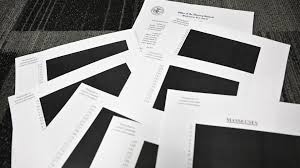
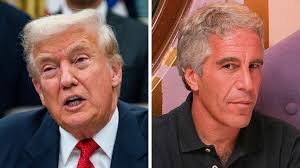
    Blue Press Journal – On New Year’s Eve, House Republicans released the long-anticipated 255-page transcript of former special counsel Jack Smith’s deposition before the House Judiciary Committee. The timing of the release has sparked debate among legal experts and journalists, with some calling it “suspicious” given its proximity to the holidays and ongoing scrutiny of President Donald Trump. The document adds fuel to the fire as the Trump administration faces mounting pressure to address the FBI’s recent unsealing of files linking Trump to disgraced financier Jeffrey Epstein. Here’s a breakdown of the most significant claims from Smith’s testimony and their broader implications. 


    1. Smith Vows to Prosecute a Former President “Regardless of Party”

    Jack Smith, the special counsel overseeing multiple investigations into Trump, asserted that the evidence against the former president and his allies is “powerful.” He emphasized that the speed and confidence of his team’s work reflect their belief that they could secure convictions at trial. When asked if he would prosecute a former president based on the same facts today, Smith replied unequivocally: “I would do so regardless of whether that President was a Republican or a Democrat.” This statement underscores the gravity of the case and signals a commitment to impartial justice. 


    2. Supreme Court’s Trump Immunity Ruling Didn’t Exonerate Jan. 6 Actions

    During the hearing, Democratic Rep. Jamie Raskin questioned Smith about the Supreme Court’s controversial 2024 decision granting Trump broad immunity. Smith rejected the notion that the ruling absolved Trump of accountability for his role in the January 6, 2021, Capitol attack. “I don’t think it was an exoneration,” he stated, reiterating that “substantial evidence” supports a criminal case against Trump. The remark highlights the legal ambiguity surrounding presidential immunity and its potential limits post-presidency. 


    3. Smith Warns of Potential Retaliation from Trump

    Smith acknowledged the risks of his work, noting that Trump has a history of targeting critics. “I am eyes wide open that this President will seek retribution against me if he can,” he said, citing examples like Trump’s litigation against New York Attorney General Letitia James and former FBI Director James Comey. The warning underscores the polarized climate surrounding these investigations and the personal stakes for those involved. 


    4. Congressional Members Were Part of Trump’s “Criminal Scheme”

    Smith revealed that Trump and his associates attempted to pressure members of Congress to overturn the 2020 election results. “President Trump and his associates tried to call Members of Congress in furtherance of their criminal scheme,” he said, clarifying that Trump, not his legal team, selected those contacted. This admission could intensify scrutiny of lawmakers’ roles in the effort to subvert the election. 


    5. Smith Denies Claims of Political Bias

    Throughout the deposition, Republicans tried to frame Smith as a partisan prosecutor. Smith pushed back, stating: “I wouldn’t stand for it, and the people who worked in my office wouldn’t stand for that either.” His defense of his integrity reinforces the credibility of the investigations and counters accusations that the probe was politically motivated. 


    Why This Deposition Matters

    Smith’s testimony occurs amid a charged political landscape. The FBI’s recently unsealed Epstein files, which detail Trump’s ties to the financier, have further complicated the former president’s legal challenges. Meanwhile, the Supreme Court’s immunity ruling and pressure on Congress to release more documents keep the spotlight on Trump’s conduct. Smith’s deposition adds a pivotal layer to these narratives, offering insights into the strength of the case against Trump and the legal principles at stake. 

    Transcript here:

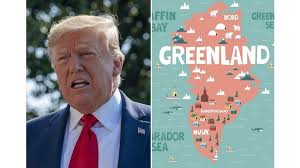
  • Why Trump’s Greenland Ambition Would Be a Diplomatic and Strategic Disaster for the U.S.

    Trump’s Greenland Plan

    Blue Press Journal (DC) – When President Donald Trump floated the idea of the United States acquiring Greenland—by purchase or, as some reports suggested, by force—the world responded with disbelief and alarm. Though the concept of territorial expansion might have belonged to the 19th century, Trump’s fixation on the Danish-controlled island in the 21st century raised serious concerns about America’s foreign policy direction, its alliances, and its credibility on the world stage.

    A Costly and Misguided Pursuit

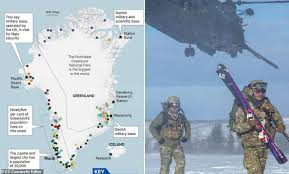
    Secretary of State Marco Rubio attempted to calm fears among lawmakers and news media, explaining that Trump’s plan was to use taxpayer dollars to buy Greenland, its mineral wealth, and its population of roughly 30,000. While the idea of purchasing land isn’t unprecedented—after all, the U.S. acquired Alaska from Russia in 1867—this modern proposal was widely seen as impractical and reckless. Greenland is not just a piece of real estate; it’s an autonomous territory of Denmark, a NATO ally. Any attempt to coerce or pressure Denmark would undermine the very principles of sovereignty that the U.S. has long defended.

    Undermining Alliances and the Global Order

    Critics, including political commentators like Joe Scarborough, emphasized that America’s true strength lies not in territorial expansion but in its alliances. As Scarborough noted, the combined GDP of the U.S. and Europe dwarfs that of rivals like Russia and China. Together, these democratic powers have historically defeated threats such as Nazism and communism. Turning against a NATO partner like Denmark would fracture this unity, sending a chilling message to friends and adversaries alike.

    The suggestion that the U.S. might seize a NATO ally’s territory shattered confidence in the post-World War II order. International reaction was swift and negative. Danish Prime Minister Mette Frederiksen called the proposal “absurd,” while European leaders have expressed concerns about the stability of U.S. foreign policy. Even within Washington, lawmakers from both parties dismissed the idea as diplomatically disastrous.

    Strategic Myopia in a Changing World

    While Trump fixated on Greenland and Venezuela, China was making rapid advances in technology, artificial intelligence, and global influence. Experts warned that such outdated, 19th-century pursuits distracted from the real 21st-century challenges—economic competition, cybersecurity, and the rise of authoritarian influence. As Scarborough pointed out, “China is eating our lunch across the globe,” while the U.S. risked chasing symbolic victories that could isolate it from its allies.

    America’s Power Lies in Partnership

    Attempting to take Greenland—whether through purchase or force—would not strengthen America. It would fracture alliances, destabilize global order, and erode trust among nations that have long stood by the U.S. In today’s interconnected world, power is measured not by the land one controls but by the partnerships one maintains. For the United States to remain a global leader, it must invest in diplomacy, innovation, and unity—not in outdated dreams of territorial conquest.

  • CBS News Faces Backlash For Jan. 6 Report: “An Outrage”

    CBS News anchor Tony Dokoupil sparks backlash for “both sides” framing in a Jan. 6 anniversary segment

    Blue Press Journal – CBS News is facing widespread criticism following a controversial segment marking the fifth anniversary of the January 6, 2021, attack on the U.S. Capitol. The report, anchored by CBS Evening News host Tony Dokoupil, has been condemned by journalists and media critics for minimizing the gravity of the event and employing a “both sides” framing that many viewed as misleading.

    A Controversial Segment and Its Fallout

    During the broadcast, Dokoupil summarized the day’s political statements with what critics describe as a false equivalence between former President Donald Trump and Democratic leaders. The segment was widely circulated on social media after a short clip appeared on X (formerly Twitter). In it, Dokoupil stated that “President Trump today accused Democrats of failing to prevent the attack on the Capitol, while House Democratic leader Hakeem Jeffries accused the president of ‘whitewashing it.’”

    Observers argue that this summary stripped away crucial historical context. The January 6 attack left five people dead and injured more than 140 police officers. The violence was incited by Trump’s repeated false claims of election fraud and his call for supporters to “fight like hell” to halt the certification of the 2020 election. By failing to highlight these facts, critics say CBS News appeared to downplay the former president’s role in the insurrection.

    Critics Demand Accountability

    Political analyst Larry Sabato called the coverage “an outrage,” urging CBS journalists to publicly condemn the segment. Sports and political commentator Keith Olbermann went further, calling for Dokoupil’s removal from the air. Their critiques underscore a growing concern among media watchers that CBS News, under new editorial leadership, may be drifting toward a dangerous form of “both sides journalism” that equates fact and falsehood in the name of balance.

    Comparing CBS to Other Networks

    Notably, CNN’s Anderson Cooper offered a sharply different approach in his own Jan. 6 coverage. Cooper described the day as a violent attack by “a mob of Trump supporters lied to by the president and his allies,emphasizing accountability and historical accuracy. The contrast between CBS’s restrained tone and CNN’s fact‑driven framing has fueled debate about the responsibilities of major networks in covering democracy‑defining events.

    The Broader Implications for CBS News

    The backlash to CBS’s Jan. 6 report raises deeper questions about the network’s editorial direction. Under editor‑in‑chief Bari Weiss, whose previous ventures have been criticized for amplifying right‑wing viewpoints, CBS appears to be recalibrating its news identity. Whether this shift reflects a deliberate strategy to appeal to conservative audiences or a broader institutional misjudgment remains to be seen. 

    Still, the reaction from journalists and viewers alike suggests that CBS risks eroding trust at a moment when public confidence in media is already fragile. For a news organization with decades of credibility, the stakes could not be higher.

  • DOJ Walks Back Trump Claim on Venezuela’s Alleged ‘Cartel de los Soles’

    BLUE PRESS JOURNAL (NYC) – In a stunning courtroom admission, the (Trump) U.S. Department of Justice (DOJ) has now acknowledged that the so-called Cartel de los Soles — once touted as the centerpiece of the Trump administration’s anti-Venezuela narrative — is not an actual criminal organization. This admission undermines years of political rhetoric, raises serious questions about U.S. foreign policy credibility, and reignites comparisons to past military interventions justified by questionable intelligence.

    From “Kingpin” to Fictional Cartel

    The Trump administration declared Venezuelan President Nicolás Maduro a “kingpin” of international drug trafficking, claiming he headed the Cartel de los Soles. The name, which translates to “Cartel of the Suns,” was presented as evidence of a sophisticated criminal syndicate. 

    However, as Latin American experts have long explained — and as the New York Times reported — Cartel de los Soles is not a literal cartel. Instead, it is a colloquial expression dating back to the 1990s, used to refer to corrupt Venezuelan military officials accused of involvement in drug smuggling. The “suns” refer to insignia worn by Venezuelan generals, much like stars worn by American officers. 

    The DEA’s own National Drug Threat Assessment has never listed Cartel de los Soles among recognized trafficking organizations. Nor has the United Nations Office on Drugs and Crime included it in its World Drug Report.

    Why the DOJ’s Admission Matters

    Following Maduro’s capture by U.S. forces, a new indictment dropped the claim that Cartel de los Solesexists. While the DOJ continues to allege Maduro’s involvement in drug trafficking, it has abandoned one of its most high-profile accusations — likely because proving the cartel’s existence in court would be impossible. 

    This reversal casts doubt on the integrity of the original charges. As Elizabeth Dickinson of the International Crisis Group told the New York Times, labeling Cartel de los Soles as a foreign terrorist organization was “far from reality.” 

    Ben Norton, editor of the Geopolitical Economy Report, argued that the abrupt change reveals “the entire US war is based on lies,” drawing a direct parallel to the false “weapons of mass destruction” narrative used to justify the 2003 Iraq invasion.

    Oil Reserves, Not Drug Boats?

    Initially, Trump’s escalation against Venezuela was framed as a mission to stop drug shipments from reaching U.S. shores. But Trump later admitted the real goal was to seize control of Venezuela’s vast oil reserves and hand them over to American companies. 

    This revelation further supports the view that the Cartel de los Soles narrative was a manufactured pretext for economic and geopolitical gain, rather than a legitimate counter-narcotics operation.

    A Pattern of Manufactured Threats

    The DOJ’s retreat on this claim is not an isolated incident. It fits a broader historical pattern in which U.S. adminstrations — have used exaggerated or false threats to justify sanctions, regime change, and even military intervention. 

    From Iraq’s alleged WMDs to Libya’s “imminent massacre,” the tactic is familiar: craft a compelling but misleading danger, rally public support, and pursue strategic objectives under the guise of humanitarian or security concerns.

    Accountability Is Overdue

    The erosion of the Cartel de los Soles narrative should serve as a wake-up call. If U.S. government agencies can promote unfounded claims to justify aggressive foreign policy, public trust is at risk — and so is the integrity of democracy itself. 

    As the DOJ’s courtroom admission shows, truth eventually surfaces. But for Venezuela, and for the American public, the cost of these fabricated narratives is measured in human lives, economic destabilization, and decades of mistrust.

  • Trump Repeats Debunked Claim That Protesters Were “Paid” Amid Rising Opposition to U.S. Actions in Venezuela

    BLUE PRESS JOURNAL (DC) – In yet another display of misinformation, President Donald Trump has revived a long-debunked conspiracy theory — that Americans protesting his policies are “paid” to do so. Speaking today to a group of Republicans at the Kennedy Center, Trump claimed that thousands who demonstrated against his administration’s recent military action in Venezuela were compensated for their activism. 

    “They will pay people, most of these people are paid,” Trump falsely asserted, pointing to the quality of protesters’ signs as supposed evidence. The comments came after widespread demonstrations erupted across the country, including a thousand-strong march in New York City where citizens chanted, “No more coups, no more wars, Venezuela’s not yours!” 

    Trump’s remarks not only dismiss the genuine outrage many Americans feel over reckless foreign interventions, but also insult the civic spirit behind peaceful protest. Suggesting that dissent can only exist if someone funds it reflects a profound misunderstanding — or rejection — of democratic values. 

    Critics argue that by repeating baseless claims, Trump seeks to delegitimize public opposition and distract from the real issues surrounding U.S. involvement abroad. Instead of addressing concerns about military overreach, he fixates on the “beautiful” printed signs, joking that he’d like their creator to work for his campaign. 

    Americans not only have the right but also the imperative to unleash their dissent against actions done in their name. To dismiss protests as mere “paid” efforts is to blatantly attack that right and tear away the very fabric of trust needed for genuine democratic dialogue. In a landscape saturated with misinformation that distorts political discourse, it’s crucial for citizens to be fiercely vigilant, armed with facts, and bold enough to challenge power head-on.

  • Trump Wants Venezuela’s Oil. Getting It Won’t Be So Simple

    Blue Press Journal: President Trump’s vision for Venezuela’s oil faces a labyrinth of geopolitical, economic, and operational challenges. We examine why extracting the country’s vast reserves may not be a boon for U.S. interests. 


    Trump out of step with reality

    President Donald Trump’s recent assurances about U.S. oil companies seizing control of Venezuela’s underutilized oil reserves sound ambitious—and possibly out of step with reality. While Venezuela boasts the world’s largest proven oil reserves, the path to unlocking them under Trump’s plan is riddled with economic, technical, and political hurdles that even the most powerful corporations may struggle to navigate. 


    Venezuela’s Oil Legacy and Its Rocky Decline

    Venezuela’s oil industry was once a global powerhouse, producing over 3 million barrels per day in the late 1990s. However, the nationalization of oil infrastructure under Hugo Chávez in the mid-1990s marked the beginning of a steep decline. By 2018, production had plummeted to just 1.3 million barrels per day, according to U.S. Energy Information Administration data. Decades of mismanagement, lack of foreign investment, and U.S. sanctions have further crippled the struggling sector, which now produces less than 7% of the United States’ own output (21.7 million barrels daily in 2023). 

    While the reserves remain vast, the ability to extract and refine them has eroded. Infrastructure decay, from aging pipelines to dilapidated drilling rigs, has turned Venezuela’s oil fields into a patchwork of unreliable assets. Even if U.S. firms could access these reserves, they would face the monumental task of rebuilding an industry that has fallen into disrepair. 


    The Market Realities: A Global Oil Oversupply and Volatility

    Trump’s plan assumes that increased Venezuelan oil production would benefit U.S. companies, but global market conditions tell a different story. In 2025—amid Trump’s renewed push—global oil prices dropped by 20%, the steepest decline since 2020. Analysts attribute this to an oversupplied market, with increased output from U.S. shale producers, OPEC+, and alternative energy transitions. 

    James Stockman, a leading energy economist, notes, “Right now the oil market’s somewhat oversupplied. That’s hurting American companies. The last thing they want is for a massive oil reserve to suddenly be opened up.” A surge in Venezuelan oil could oversaturate an already struggling market, further depressing prices and eroding profit margins for U.S. firms. At a time when energy companies are grappling with tariffs and market volatility, the prospect of pouring billions into a risky, long-term project in Venezuela is unappealing. 


    Operational Challenges: Heavy Oil and Infrastructure Collapse

    Even if U.S. companies were willing to invest, Venezuela’s oil is not a quick win. The country’s reserves are predominantly extra-heavy crude, which requires extensive and costly upgradation to transform it into lighter, transportable oil. This process—a multi-billion-dollar undertaking—demands not only capital but also stable political and economic conditions Venezuela has not seen in decades. 

    Moreover, the infrastructure required to extract and process this oil is in critical disrepair. Decades of neglect have left Venezuela’s oil fields reliant on outdated equipment, while key refineries like the 520,000-barrel-per-day Amuay facility have largely fallen into obscurity. Rebuilding this infrastructure could take a decade or more, with no guarantee of returns in a market that may shift toward renewable energy by then. 


    Political Quagmire: Who Controls Venezuela?

    The very foundation of Trump’s plan hinges on U.S. recognition of Venezuela’s new leadership, but political instability remains a wildcard. Following the contentious capture of President Nicolás Maduro, ally-turned-claimant Juan Guaidó (or another figure, as per the context) was sworn in as an interim leader. Yet, U.S. officials, including Senator Marco Rubio, have quickly backtracked, calling Guaidó’s legitimacy into question and advocating for “real elections” instead. 

    This inconsistency raises critical concerns for foreign investors. Venezuela’s oil contracts are often shrouded in legal ambiguity, and a lack of clear governance could deter companies wary of entanglement in a political showdown. “Legitimacy for their system of government will come about through a period of transition and real elections, which they have not had,” Rubio stated on This Week, underscoring the uncertain footing on which any U.S. oil venture would stand. 


    A Cautionary Tale: Why Trump’s Plan Fails the Feasibility Test

    While Trump’s rhetoric echoes the 2003 Iraq invasion—where oil was a central motive—the economic landscape is worlds apart. In 2003, oil prices were rising, and technical advancements made extraction more viable. Today, declining prices, aging infrastructure, and geopolitical uncertainty form a far more complex web. 

    For U.S. oil companies, the risks outweigh potential rewards. The required investment would run into tens of billions, with returns stretching over decades in a market that may not justify the expenditure. Additionally, the environmental and moral implications of reviving a resource-extraction economy in a country ravaged by sanctions and authoritarianism could invite corporate reputational damage. 


    President Trump’s grand vision for Venezuela’s oil is less about economics and more of a political stunt. The harsh truth of a stagnant market, decaying infrastructure, and erratic leadership proves that tapping into Venezuela’s immense reserves will likely remain an elusive fantasy for U.S. companies. Forget quick profits; the real blow may come in the form of wasted investments. The takeaway for investors is stark: even the richest resources can’t be unleashed merely through lofty ambitions—they require the right timing, genuine stability, and a market primed for opportunity.

  • The Lasting Consequences of the January 6 Capitol Attack — And the Dangerous Impact of Pardoning Rioters

    Blue Press Journal


    On January 6, 2021, the United States witnessed an unprecedented assault on its democratic institutions. As lawmakers gathered to certify the results of the 2020 presidential election, a violent mob stormed the Capitol — breaching security, assaulting law enforcement officers, and leaving millions of dollars in damage. The attack was not a spontaneous protest; it was the culmination of weeks of false claims about election fraud, amplified by Donald Trump. 

    Five years later, the events of that day remain a stark reminder of how fragile democracy can be when misinformation, political extremism, and disregard for the rule of law converge. The controversy deepened when Trump later issued full pardons to more than 1,500 individuals tied to the attack, including leaders of extremist groups such as the Proud Boys and Oath Keepers. 


    A Turning Point in American Political History

    The January 6 riot was more than just a violent disruption — it was a direct challenge to the constitutional process. It exposed vulnerabilities in Capitol security and revealed the extent to which partisan polarization could fuel political violence. 

    The bipartisan shock that followed quickly gave way to deep political division. While many Americans viewed the attack as an insurrection and an attack on democracy, others — influenced by disinformation — downplayed its severity or sought to reframe it as a legitimate protest. This divergence in perception has only intensified the nation’s political rift. 


    Pardons That Undermined Accountability

    The decision to grant pardons to those involved in the January 6 attack has raised serious concerns among legal experts, lawmakers, and the public. According to a Judiciary Committee report, at least 33 of the pardoned individuals have since been convicted of, arrested for, or charged with serious crimes — ranging from child sexual assault and kidnapping to homicide and illegal firearm possession. 

    Rep. Zoe Lofgren (D-Calif.), who served on the January 6 Committee, criticized the pardons, stating: 

    “Trump likes to say he backs the blue. That’s absurd. He just pardoned the people who attacked the police.” 

    Such actions send a troubling message: political loyalty can outweigh accountability, even when crimes involve violence against law enforcement and direct threats to democratic governance. 


    The 2022 Final Report — Evidence of Intent

    The House Select Committee’s final report in 2022 concluded that Donald Trump “purposely disseminated false allegations of fraud” to aid his effort to overturn the election. This was not a matter of misunderstanding or miscommunication; it was a deliberate strategy that fueled anger and mobilized extremist groups. 

    Groups like the Proud Boys and Oath Keepers were accused of spearheading the attack, coordinating efforts to breach the Capitol, and encouraging violence. Pardoning their leaders not only absolved them of accountability but also emboldened similar movements across the country. 


    A Continuing Threat to Democracy

    The January 6 attack stands as one of the most dangerous threats to the rule of law in America since its founding. But the danger did not end when the rioters were cleared from the Capitol steps. By pardoning those responsible and minimizing their actions, a precedent was set — one that risks normalizing political violence. 

    Republican efforts to condone or rewrite the history of January 6 magnify the threat. It is essential to remember that democracy depends on the principle that every vote counts and that disagreements must be resolved through lawful and peaceful means. 


    Lessons Learned — And the Need for Vigilance

    The attack prompted a sweeping reassessment of security across Washington, yet physical barriers alone cannot safeguard democracy. Preventing future threats requires: 

    • Accountability — Ensuring that political violence is met with legal consequences. 
    • Truth — Countering misinformation with verified facts. 
    • Civic Education — Strengthening public understanding of democratic processes. 
    • Political Leadership — Rejecting rhetoric that undermines election legitimacy.

    January 6, 2021, will forever be remembered as the day democracy came under siege from within. The violence, the pardons that followed, and the ongoing attempts to distort the truth are a warning: democracy can only survive if citizens remain vigilant, informed, and committed to the rule of law. 

    The events of that day — and the decisions made afterward — underscore a sobering reality: when leaders excuse or reward political violence, they open the door to future attacks. If we are to preserve the integrity of our democratic system, we must confront these truths directly and ensure that such an assault on our institutions can never happen again.

  • Sen. Mark Kelly Defends His Honor: Legal Rights and the Fight Against Unjust Demotion

    Blue Press Journal – In a striking escalation, Defense Secretary Pete Hegseth has moved to demote Sen. Mark Kelly (D-Ariz.) from his retired Navy rank following comments Kelly made in a November video encouraging service members to refuse unlawful orders. Kelly, a decorated Navy combat veteran who served more than 20 years and completed multiple deployments, has vowed to “fight this with everything I’ve got.” 

    This is more than a dispute between two men — it’s a test of constitutional principles and the rights of those who serve. 

    Constitutional Protections at Stake

    One of the most powerful legal shields available to Sen. Kelly is the Speech or Debate Clause of the U.S. Constitution (Article I, Section 6, Clause 1). This provision protects Members of Congress from being questioned in any other place for any speech or debate conducted in their legislative role. Courts have consistently interpreted this to safeguard lawmakers from retaliation for expressing political views related to their official duties. 

    If Kelly’s statements were made in connection with his role as a sitting senator — particularly on matters of military legality and oversight — they fall squarely within the zone of protected legislative speech. 

    First Amendment and Military Law

    Moreover, as a retired officer, Kelly retains his constitutional right to free speech under the First Amendment, so long as his statements do not disclose classified information or directly violate the Uniform Code of Military Justice. His comments — urging adherence to lawful orders — actually reinforce military law, which requires service members to disobey unlawful commands. This principle is enshrined in the Law of Armed Conflict and precedents from the Nuremberg Trials, reaffirming that following illegal orders is itself unlawful. 

    Why This Fight Matters

    Attempting to reduce Kelly’s retirement grade for protected speech sets a dangerous precedent. It risks sending a chilling message to active and retired service members: speak out on matters of legality and you may face personal retaliation. 

    Sen. Mark Kelly has spent his career defending the Constitution — first in uniform, now in the Senate. In standing up to this action, he’s not only defending his own honor, but also the rights and principles every American service member swears to protect.

  • Why Venezuela is No Panama: U.S. Intervention Risks

    Blue Press Journal – When American policymakers reflect on the past century of interventions in Latin America, one case remains prominent in Washington’s historical narrative: Operation Just Cause, the 1989 invasion of Panama. It exemplified what many would categorize as a “successful” U.S. intervention—swift, decisive, and ostensibly judicious. Within a span of less than two weeks, the United States effectively removed General Manuel Noriega, established a compliant government led by Guillermo Endara, and largely withdrew its military presence. There was no protracted insurgency, nor any humiliating deadlock. For numerous officials in Washington, this operation represented an uncommon occasion where military force achieved the precise objectives sought by the White House.

    But Venezuela is not Panama, and any attempt to treat it as such risks a catastrophic misreading of history and geography alike.


    A Different Battlefield

    When George H.W. Bush ordered troops into Panama, the United States already had a military footprint deeply embedded in the country. The U.S. Southern Command was headquartered there. More than 10,000 American troops were stationed on the ground, with full logistical networks, airfields, and intelligence infrastructure ready to act. The operation didn’t need to project power across oceans—it was already in place. American forces quickly dismantled the Panama Defense Forces, captured Noriega, and oversaw a relatively orderly transfer of power.

    None of these conditions exist in Venezuela.

    Today, U.S. forces sit offshore—aboard the USS Gerald R. Ford and the Iwo Jima Amphibious Ready Group, impressive symbols of U.S. power, but still distant from the realities of governing a nation of nearly 28 million people. A lightning strike might remove a head of state, but it cannot occupy, stabilize, or rebuild a country with deep institutional and social fissures. The challenge is not the operation itself—it’s “the day after.”


    The Problem of What Comes Next

    In Panama, the United States could install Endara because Panama’s political elite were, by and large, aligned with Washington’s interests. The country had long functioned under U.S. influence, its economy tied to the Canal Zone, its military modest and dependent.

    Venezuela, however, has evolved under an entirely different model. The Bolivarian Armed Forces (FANB)remain cohesive and loyal to the state, not fractured and demoralized like Noriega’s forces were in 1989. Defense Minister Vladimir Padrino López has already called for “massive deployment” to resist foreign troops, and Vice President Delcy Rodríguez has vowed that the government “will not yield.” Even if Nicolás Maduro is removed, the apparatus that sustains his regime will not vanish overnight. 

    The Trump Administration faced this reality as early as 2019, when it backed opposition figure Juan Guaidó. Washington assumed that diplomatic pressure, sanctions, and a show of resolve would fracture the regime. It didn’t. The military held firm. The same dynamic is likely to repeat if the U.S. attempts to enforce regime change by force.


    Geopolitics Beyond Caracas

    There’s also the matter of global reaction. Panama’s invasion occurred at the tail end of the Cold War, when the Soviet Union was collapsing and China was not yet a global power. The world’s geopolitical center of gravity allowed the U.S. to act with relative impunity.

    Venezuela, by contrast, is a strategic partner to China, which has invested billions in its oil sector, infrastructure, and digital networks. Beijing will not view an American intervention as a regional policing operation—it will see it as a direct challenge to its influence. Russia, too, has military advisers and energy interests in Venezuela. The consequences of unilateral U.S. action ripple far beyond the Caribbean.

    Regionally, the response has been equally fraught. Mexico’s government has condemned the operation, warning that any foreign military action “seriously jeopardizes regional stability.” Other Latin American nations, still wary of U.S. interventionism, are divided or outright hostile. The vision of a hemispheric coalition supporting American leadership has not materialized.


    Legitimacy and the Law

    The Trump Administration’s refusal to clarify whether it sought congressional authorization speaks volumes. The War Powers Resolution exists precisely to prevent unilateral executive military adventures, yet Washington has seen a steady erosion of those constraints. Declaring victory from the podium is easy; governing a fractured post-conflict society is not. 

    And here lies the uncomfortable truth: whatever one thinks of Maduro’s legitimacy—and few would argue he won the July 2024 election fairly—toppling an autocrat is not the same as creating a democracy. Without a credible plan for governance, reconstruction, and reconciliation, military action risks deepening chaos rather than resolving it.


    The Mirage of “Just Cause 2.0”

    Every generation of U.S. policymakers seems to search for its own “Just Cause”—the operation that proves American power can still reshape the world for the better. But history rarely repeats so neatly. Panama was small, strategically contained, and already under Washington’s thumb. Venezuela is large, complex, and enmeshed in global rivalries that make any intervention far more perilous.

    If history offers any lesson, it is this: a quick victory on the battlefield can mask a long defeat in the years that follow. Without legitimacy, without local support, and without a plan for the day after, even the most “successful” operation risks becoming another cautionary tale.


    In the end, the question is not whether Maduro deserves to stay—by most accounts, he does not—but whether the United States, acting alone and without a clear mandate, can deliver something better. Panama’s ghost still haunts Washington, whispering promises of easy triumph. But Venezuela, in all its complexity and resistance, is poised to remind America that history is a poor template for wishful thinking.

  • Trump’s Unilateral Invasion of Venezuela Is a Constitutional Crisis

    BLUE PRESS JOURNAL – Two months ago, Donald Trump’s own Chief of Staff, Susie Wiles, said something that now sounds almost prophetic. In an interview with Vanity Fair, she made it plain: if the president “were to authorize some activity on land, then it’s war, then [we’d need] Congress.” 

    She was right — and now, Trump has done exactly what she warned against. 

    Overnight, the former president ordered U.S. forces into Venezuela, capturing its embattled leader, Nicolás Maduro, without so much as a phone call to Congress. No debate. No authorization. No transparency. Just a unilateral act of war. 

    By the reasoning of his own chief of staff — and by the plain text of the Constitution — this was illegal. Trump broke the law. He violated the Constitution. And, in doing so, he upended one of the most fundamental checks on presidential power in American history. 

    This morning, standing beside Vice President J.D. Vance, Trump confirmed what many had already suspected: the operation was not merely about so-called “narco-terrorism.” It was also about oil. “We’re securing resources that rightfully belong to the free world,” he said. In other words, the U.S. military was sent into a sovereign nation, at least in part, for profit and political theater. 


    Democrats Call It “Lawless and Dangerous”

    Democrats on Capitol Hill were quick to condemn the move. Senator Elizabeth Warren called it “a lawless and dangerous abuse of power.” Representative Alexandria Ocasio-Cortez said, “This is exactly why Congress — not one man — has the power to declare war. The framers of our Constitution saw this kind of executive overreach coming.” 

    Even Democratic moderates voiced alarm. Senator Chris Murphy warned, “If we let this stand, we’re saying any president can unilaterally start a war anywhere in the world. That’s not democracy — that’s monarchy.” 

    To Democrats, this isn’t just another Trump stunt; it’s a full-blown constitutional crisis. 


    Why This Is Unconstitutional — in Plain English

    Here’s the simple version: the Constitution divides the power to make war between Congress and the President. Article I, Section 8 gives Congress the power to declare war. The President, under Article II, can direct the military only after Congress gives authorization — or in response to a direct attack on the United States. 

    Trump did neither. Venezuela did not attack the U.S., and Congress never approved military action. 

    The War Powers Resolution of 1973 was designed to prevent exactly this kind of unilateral decision-making. It says the president can send U.S. forces into combat only if (1) Congress has declared war, (2) Congress has given specific authorization, or (3) the U.S. is under imminent threat. Even then, the law requires the president to notify Congress within 48 hours and withdraw troops after 60 days if Congress does not approve the action. 

    Trump ignored all of that. He didn’t consult Congress. He didn’t meet the conditions. He simply acted — as though the law didn’t apply to him. 


    The Bigger Danger

    By discarding both the Constitution and the War Powers Resolution, Trump has done more than violate the law — he’s set a precedent that could haunt America for decades. If the U.S. can invade a sovereign nation for oil or political gain, what moral ground do we have to criticize China for threatening Taiwan, or Russia for pushing deeper into Eastern Europe? 

    As one Democratic strategist put it, “We can’t claim to defend democracy abroad when we’re dismantling it at home.” 

    Even critics of Nicolás Maduro — and there are many — understand this. Maduro’s regime has been accused of corruption, election-rigging, and brutality. But the fact that he’s an illegitimate ruler doesn’t give the American president a blank check to break our own laws. 


    The Verdict

    Trump’s invasion of Venezuela is not just a foreign policy blunder — it’s a direct assault on the American system of government. The framers designed a balance of powers precisely to stop one person from dragging the country into war for personal or political reasons. 

    By disregarding the delicate balance of power, Trump has done far more than merely deploy troops overseas; he has fundamentally destabilized the very pillars of American democracy. The actions of Congress and the courts in curbing his authority will not only shape the outcome of this military operation but could ultimately redefine the trajectory of presidential power in the United States for generations to come.