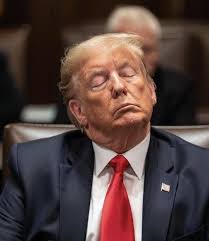
Tag: trump

  • No, Trump Did Not End Taxes on Social Security, Yet another Lie

    Blue Press Journal – In recent months, President Donald Trump and J.D. Vance have claimed that the “One Big Beautiful Bill” (OBBB), signed into law in July, eliminated taxes on Social Security benefits. However, a review of the legislation — and independent fact‑checks — show that this is not true.

    What the OBBB Actually Did:
    The bill reduced the number of seniors who pay taxes on their Social Security benefits by raising the income thresholds at which those benefits become taxable. This means some retirees with modest incomes will no longer owe taxes on their Social Security. But for millions of Americans — particularly middle class and those with higher retirement incomes — taxes still apply. 

    The History of Social Security Taxes:
    Social Security benefits were not taxed at all until 1983, when President Ronald Reagan signed bill that included taxing up to 50% of benefits for individuals earning above certain thresholds. In 1993 a law increasing the maximum taxable portion to 85% for higher‑income beneficiaries was passed. The OBBB did not repeal either of these taxation provisions; it simply adjusted the income thresholds upward.

    Expiration:
    The OBBB’s threshold increases are temporary. Unless Congress acts, they will revert to pre‑OBBB levels after the set expiration date.


    Social Security Benefit Taxation Thresholds

    Filing StatusPre‑OBBB Thresholds (1983–2024)OBBB Thresholds (2024–Expiration)Expiration Date
    Single$25,000 (up to 50% taxable), $34,000 (up to 85% taxable)$35,000 (up to 50%), $48,000 (up to 85%)12/31/2027
    Married Filing Jointly$32,000 (up to 50%), $44,000 (up to 85%)$45,000 (up to 50%), $60,000 (up to 85%)12/31/2027

    Bottom Line:
    Despite political claims, the OBBB did not eliminate taxes on Social Security. It temporarily raised the income thresholds, reducing the number of seniors affected, but millions still owe taxes on their benefits. Unless extended, the thresholds will revert after 2027, restoring the broader tax reach set by previous laws.


  • Democrats See Rural Opportunity in Trump’s Policies Ahead of 2026 Midterms

    BLUE PRESS JOURNAL – For years, rural America has been a political stronghold for Republicans — and especially for President Donald Trump, who won over farming communities with populist rhetoric and promises of economic revival. But as the 2026 midterm elections approach, Democrats see a shifting landscape — one shaped not by party rhetoric, but by the real-world consequences of Trump’s policies. 

    For years, the Democratic Party has had a tough time making headway in rural areas. But now, with current policies hitting hard, farmers are getting more and more frustrated. Trump’s bold tariff moves, which were supposed to protect American businesses, have actually hurt those in agriculture. Farmers growing soybeans, corn, and wheat are seeing foreign markets dry up and prices drop, all while their costs are still sky-high thanks to ongoing inflation.

    Meanwhile, rural residents are grappling with a healthcare crisis. The closure of more than 120 rural health centers since 2025 — a direct result of federal funding cuts in the Republican’s Big Beautiful Bill (BBB) — has left many communities without access to basic medical care. Emergency wait times have spiked, and recruiting doctors to understaffed areas has become nearly impossible. 

    Even public lands programs, once bipartisan priorities, have seen steep reductions. Programs that supported conservation, wildfire prevention, and outdoor recreation — vital economic drivers in rural regions — have been gutted, alienating not just environmentalists but also hunters, anglers, and small-town business owners. 

    Democrats believe these issues present a rare opening. “We’re not asking rural Americans to abandon their values,” said Rep. Maya Thompson (D-Minn.), who recently toured struggling farming communities in the Midwest. “We’re asking them to see how current policies are undermining their livelihoods — and to consider a different path.” 

    The party is rolling out a new rural outreach initiative focused on affordable healthcare, sustainable agriculture, and investment in rural infrastructure. It’s a long-term play, but one grounded in listening — and in offering concrete alternatives (DemocracyDocket.com, October 2026). 

    While the road to rural support remains steep, Democrats are hopeful that substance — not slogans — might finally shift the tide.

  • Flashing Signs in the White House on President Donald Trump’s Cognitive Decline

    BLUE PRESS JOURNAL – Washington, D.C. — The mood inside the executive mansion in early 2025 was unlike anything seasoned staffers had witnessed before. President Donald Trump, midway through his second term, had become the subject of intense speculation not only from political opponents but also from medical professionals observing his public appearances.

    Dr. John Gartner, a psychologist and former professor at Johns Hopkins University, was among the most vocal. “Because of his cognitive decline, [Trump] is focusing on things like the [White House] ballroom and the paper that he writes things on,” Gartner told The Daily Beast. He warned that the President was exhibiting “flashing signs” of what he described as “immense cognitive decline.”

    Inside the Beltway, aides whispered about the President’s shifting priorities and his tendency to dwell on trivial details during high‑level meetings. Earlier in the month, Trump had unleashed a furious tirade at The New York Times after it published an article suggesting he had “significantly reduced his workload” in his second term. The public saw flashes of these outbursts in press conferences, where he frequently interrupted reporters and dismissed challenging questions.

    His behavior was increasingly erratic. At one gathering with journalists, he directed a racist slur toward a foreign correspondent, prompting gasps from those present. In another instance, he cut off a female reporter with an angry monologue that left even loyalists unsettled.

    The most shocking moment came when Trump referred to the tragic murders of Rob and Michele Reiner, suggesting they were linked to what he called “Trump Derangement Syndrome.” The remark was widely condemned as “heartless” and “inexplicable,” even from members of his own party.

    Political analysts began openly discussing whether the President could complete his term, given the mounting evidence of decline. Yet his core supporters dismissed these concerns, rallying around him with chants of loyalty, framing any criticism as part of a long‑running conspiracy against him.

    In the marble halls of the White House, the question remained unspoken but ever‑present: was the leader of the free world still capable of leading? For Dr. Gartner, the signs were clear. “We’re watching this happen in real time,” he said, “and the consequences could be profound.”

  • Donald Trump’s White House Plaque: A Dangerous Precedent for Democratic Norms

    The recent controversy over a White House plaque criticizing former President Joe Biden, described by Trump as “so crazy,” underscores a troubling pattern of using public office to attack political rivals. Podcast host Joe Rogan, in an episode released on Christmas Day, condemned the move as an “attack on democratic norms,” noting that Trump’s actions undermine the integrity of the presidency itself. Rogan’s criticism—echoed by many observers—highlights how Trump has repeatedly weaponized government resources to advance personal vendettas rather than uphold the dignity and impartiality expected of the executive branch. 

    By commissioning a plaque that derides Biden’s legacy, Trump sets a dangerous precedent for future leaders. The use of taxpayer-funded platforms to disseminate partisan messaging risks normalizing the abuse of power, blurring the line between public service and political theater. This tactic is not new; Trump’s history of divisive rhetoric and baseless claims of election fraud has already eroded trust in democratic institutions. Yet the plaque incident demonstrates a new level of brazenness, turning even symbolic gestures into tools of political warfare. 

    Such behavior poses a direct threat to democratic norms. Presidents are expected to foster unity, not stoke division through calculated insults funded by the American public. Trump’s actions reflect a disregard for the ethical boundaries of leadership, prioritizing personal grievance over the collective good. As Rogan pointed out, allowing such behavior may embolden future leaders to follow suit, further destabilizing the very foundations of governance. 

    To preserve democracy, accountability for such abuses cannot be optional. Elected officials must be held to a higher standard, ensuring that public institutions remain above partisan feuds. Without it, the precedent set by Trump’s plaque could mark the beginning of a slippery slope where civility and integrity take a backseat to vitriol. 

    Source: Joe Rogan’s comments on “The Joe Rogan Experience.”

  • Trump’s 2025 Tariffs: “Liberation Day” For Jobs… If You Mean Liberating Them Out of Existence

    BLUE PRESS JOURNAL – Remember when President Trump announced his so-called “Liberation Day” tariffs back in April 2025? He promised they’d be a shot in the arm for American workers — especially in manufacturing. The message was simple: slap big taxes on most imports, force companies to “buy American,” and watch U.S. factories roar back to life. 

    Well, fast-forward to today, and the “roaring” sounds you’re hearing are more like the groans of laid-off workers. 

    The Job Numbers Tell the Story

    Let’s start with the cold, hard math: Since the tariffs went into effect, the U.S. economy has been adding jobs at one-tenth the pace it did under President Biden. According to the Bureau of Labor Statistics (BLS), Biden’s term saw an average of around 400,000 jobs per month in 2021–2022 (BLS Jobs Data). Under Trump’s post-tariff economy in 2025, that’s closer to 40,000 per month — a stunning slowdown for a country not in a recession. 

    And manufacturing? The very sector Trump claimed he was rescuing? It’s been shrinking. Every single month since the tariffs were announced in April 2025, manufacturing employment has ticked downward. The most recent BLS data shows 67,000 fewer manufacturing jobs now than when the tariffs began (BLS Manufacturing Employment). 

    Why Tariffs Backfire

    Economists have been warning for years that tariffs don’t work the way politicians promise. Sure, they make imported goods more expensive, but they also raise costs for U.S. businesses that depend on imported parts and materials. That means higher prices for consumers and squeezed profit margins for manufacturers — the very people you’re supposedly helping. 

    Back in 2018, during Trump’s first term, the Peterson Institute for International Economics estimated that his steel and aluminum tariffs actually cost more manufacturing jobs than they preserved (PIIE Analysis). The same pattern seems to be repeating in 2025. 

    The Domino Effect on the Economy

    When manufacturers cut jobs, it doesn’t just hurt factory towns. It ripples out to suppliers, shipping companies, local restaurants, and pretty much any business that depends on those workers’ paychecks. Even sectors not directly tied to imports can get caught in the drag because tariffs slow overall economic activity. 

    And let’s not forget — these tariffs function like a tax increase on everyday Americans. When the cost of imported goods goes up, so do the prices on store shelves. That’s inflationary pressure at a time when many families are still trying to get their budgets under control. 

    The Political Spin vs. Economic Reality

    Of course, the White House is spinning this as “short-term pain for long-term gain.” The problem is, we’ve heard that before. In 2018 and 2019, Trump’s trade war with China was supposed to bring manufacturing roaring back. Instead, U.S. manufacturing output fell and job growth slowed (Federal Reserve Industrial Production Data). 

    Now in 2025, history is repeating itself — only the tariffs are broader, the job losses faster, and the excuses flimsier. You can call it “Liberation Day” if you want, but for tens of thousands of American workers, it feels more like eviction day. 

    Bottom Line

    Tariffs make for great political theater. They let a president look “tough” on trade without having to pass complicated legislation. But the economic reality is that they’re a blunt instrument — and when you swing a blunt instrument, you often hurt the very people you claim to be protecting. 

    If the goal was to “liberate” Americans, the 2025 tariffs have certainly done that — they’ve liberated them from their jobs, from stable paychecks, and in some cases, from their ability to keep the lights on.

  • Trump Faces Intensified Scrutiny as New Epstein Files Emerge

    The latest document release in the long-running Jeffrey Epstein saga has sent fresh political shockwaves through the United States — and this time, the tremors have rattled Donald Trump’s orbit more forcefully than before. Nearly 30,000 new pages of court filings, deposition transcripts, and correspondence were unsealed late Monday, adding to the smaller batch made public last week. While Trump’s name had appeared in earlier disclosures, the frequency of its appearance in this tranche is noticeably higher, fueling renewed public debate over his past relationship with the disgraced financier.

    A Larger, More Damaging Release?

    The earlier release of Epstein-related documents was largely a rehash of already-public information: social connections, flight logs, and anecdotal accounts. But Monday’s release — part of ongoing litigation surrounding Epstein’s estate and accusations against his associates — contained more granular detail. Trump’s name appeared multiple times, often in the context of social events and mutual acquaintances. While nothing in the documents so far conclusively links Trump to criminal conduct, the sheer repetition of his name in proximity to Epstein has intensified media coverage and political scrutiny.

    Trump’s Past Ties to Epstein

    Donald Trump and Jeffrey Epstein were publicly known to have been social acquaintances in the 1990s and early 2000s. Photographs from the time show the two men together at Mar-a-Lago and other events. In a 2002 New York Magazine profile, Trump described Epstein as a “terrific guy” who liked women “on the younger side” — a statement that has aged poorly in light of Epstein’s later conviction and the posthumous revelations about his abuse of underage girls. 

    By the mid-2000s, Trump claims to have cut ties with Epstein, reportedly banning him from Mar-a-Lago after a dispute. Court testimony from Virginia Giuffre has named Trump, but Trump has consistently denied any sexual contact or misconduct, and no charges have been brought against him in relation to Epstein.

    Political Implications

    The timing of the latest release is politically sensitive. Trump remains the Republican frontrunner for the 2024 presidential race, and any story that ties him — even indirectly — to Epstein’s name is likely to be exploited by political opponents. The danger for Trump is not necessarily legal at this stage, but reputational. The more Epstein’s name is in the headlines alongside Trump’s, the more voters may associate the two, regardless of the facts.

    Media Framing and Public Perception

    Mainstream and independent media outlets have treated the new tranche differently. Some have focused on the legal irrelevance of the mentions, noting that the documents are filled with casual name-dropping of many public figures. Others have emphasized the optics: that Trump’s past socializing with Epstein — and his own comments — make him a more politically vulnerable target than many others named.

    The Trump camp’s response has been predictable: denounce the coverage as politically motivated, point out the lack of criminal allegations tied directly to him, and attack media outlets for bias. But the reality is that Trump’s own past words and photographs with Epstein make these stories harder to dismiss entirely.

    The Broader Lesson

    The Epstein scandal has ensnared a wide range of public figures from politics, business, and entertainment. It has also revealed the enduring power of association in the media ecosystem. In an age where public trust in institutions is low and conspiracy theories are rampant, even tangential links can have a corrosive effect on political reputations. 

    For Trump, the challenge is not just about disproving allegations — which, to date, have not been legally substantiated — but about managing the perception that he was part of an elite social circle that shielded and enabled Epstein for years. That perception, fair or not, could remain a political thorn for years to come.


    Sources & Fact-Check Notes

    1. New York Magazine, 2002 – Trump quote about Epstein: “I’ve known Jeff for 15 years. Terrific guy. He’s a lot of fun to be with. It is even said that he likes beautiful women as much as I do, and many of them are on the younger side.”
      https://nymag.com/nymetro/news/people/n_7912/
    2. Court documents in Giuffre v. Maxwell – Unsealed in 2024 and previous years. Trump’s name appears in social contexts; no evidence of sexual misconduct was substantiated.
      Example coverage: BBC News – Jeffrey Epstein court documents unsealed
    3. Flight logs & photographs – Documented in multiple outlets, including The Guardian and Miami Herald. Trump is not on Epstein’s flight logs to the private island, but was photographed with Epstein and Ghislaine Maxwell in the late 1990s.
      https://www.miamiherald.com/news/state/florida/article221997845.html
    4. Trump’s claims of banning Epstein from Mar-a-Lago – Reported by The Washington Post and Politico, though some accounts suggest the falling out was over a property dispute rather than moral outrage.
      https://www.washingtonpost.com/politics/trump-epstein/2020/07/31/
  • How Insurance Rates Will Skyrocket in 2026 Under Republican and Trump Policies: A Closer Look at the Tax Cuts and Subsidy Cuts

    Blue Press Journal – In the shadow of Donald Trump’s overpowering political clout and the latest Republican-led tax reforms, notably the infamous “Big Beautiful Bill”—decried by many as a blatant giveaway to the wealthy and corporate titans—the stage is set for an explosive upheaval in healthcare costs across America. Come January 1st, 2026, the repercussions of these policies are expected to send health insurance premiums skyrocketing for middle-class families, while the affluent and corporations bask in billions of dollars in tax cuts. Here’s how these insidious policies threaten to obliterate healthcare affordability for everyday Americans.


    The Tax Breaks: A Windfall for the Wealthy and Corporations

    The core of the Republican agenda, often labeled as a return to economic deregulation, includes expansive tax cuts for high-income earners and large corporations. These cuts, embedded in policies reminiscent of the 2017 Tax Cuts and Jobs Act (TCJA) under Trump, have effectively slashed corporate tax rates from 35% to 21% and reduced tax liabilities for households and shareholders. While proponents argue these cuts spur investment and job creation, the reality is stark: the government’s coffers are emptier. 

    With less revenue from the top 1%, the federal government has been forced to target subsidies for low- and middle-income Americans to balance budgets. The Affordable Care Act (ACA) subsidies, which helped over 20 million Americans afford health insurance, are now under threat. According to the Congressional Budget Office (CBO), these subsidy cuts could eliminate $70 billion in annual healthcare assistance, directly translating to steeper premiums for the average taxpayer. 


    The Subsidy Cuts: Who Bears the Pain?

    The Republican-led policies have deliberately dismantled critical healthcare subsidies for average Americans. For example: 

    • Advanced Care Act (ACA) Premium Tax Credits: Many middle-class families who rely on these credits to keep premiums affordable will lose eligibility. A family earning $75,000 annually common middle-class income in many states—might suddenly lose up to 80% of their monthly premium subsidy. 
    • Medicaid Affordability: Caps on insulin subsidies for seniors beneficiaries have been removed, pushing out-of-pocket costs for essential medications into the hundreds per person annually. 
    • Community Health Programs: Cuts to programs like Medicaidaid and community health centers will strain rural and underserved areas, indirectly driving up care costs as hospitals face higher uncompensated care burdens.

    The Insurance Cost Crisis: January 1st, 2026

    By 2026, the full brunt of these policies will materialize. Here’s what could happen: 

    1. Premium Increases for Families: A family of four in a mid-sized city might see their health insurance premiums jump from $1,200/month to $2,100/month. This 75% increase would eclipse wage growth, pushing many families into financial hardship. 
    2. Erosion of Cost-Sharing Reductions: Without subsidies, deductive costs and copays will skyrocket. An individual with a $20,000 annual deductible would be unable to afford routine care, let alone emergencies. 
    3. Insurance Coverage Gaps: Millions of Americans could “drop off” the system entirely. The Kaiser Family Foundation (KFF) estimates 12 million people could lose health insurance by 2026 due to affordability issues alone.

    Example: Consider the Johnson family in Ohio. In 2024, their ACA premium was $300/month with a $50 copay. By 2026, their premium could soar to $850/month, and copays might hit $500 per doctor’s visit. Without savings or employer coverage, this could force them to choose between groceries and medication. 


    The Winners and Losers

    • Winners: Corporations and the ultra-wealth. For example, a tech CEO earning $10 million in dividends might save $2 million annually in taxes, while hedge fund managers benefit from lower capital gains rates. 
    • Lovers: The middle class and working families. The average American, already grappling with inflation, now faces a healthcare crisis.

    A Call for Accountability

    As 2026 looms on the horizon, the yawning abyss between Republican policies and their catastrophic fallout can no longer be ignored. Lavish tax cuts for the wealthy have bloated Wall Street profits and fattened corporate wallets, while Main Street gasps for breath. Meanwhile, the Republicans have scampered off for an early Christmas break, conveniently turning a blind eye to the mess they’ve created. The coming year presents a crucial dilemma: Will Americans passively watch as a rigged system continues to serve the elite 1% at the grave expense of the struggling 99%?

  • Our Democracy is in Grave Danger without Trustworthy Independent Media

    When powerful figures twist the rules of journalism to fit their narratives, they turn democracy into a silent, sightless puppet.

    BLUE PRESS JOURNAL – In the pantheon of American journalism, 60 Minutes has long stood as a beacon of investigative reporting. But when a flagship media institution like CBS News begins erasing hard-earned stories under political pressure, the implications ripple far beyond the television screen. The recent removal of a segment exposing the Trump administration’s deportation of Venezuelan men to El Salvador—amid broader changes at CBS—serves as a chilling reminder: democracy cannot thrive without independent media. 

    The Case of 60 Minutes and the El Salvador Deportation Story

    Last week, 60 Minutes pulled a segment that detailed the plight of Venezuelans forcibly returned to El Salvador, a country the U.S. had long designated as a “safe third country” despite evidence of violent gangs and systemic corruption. The piece, which highlighted harrowing accounts of individuals sent to a Salvadoran prison described as “brutal,” was removed at the behest of Bari Weiss, the newly appointed editor-in-chief of CBS News. Weiss, a prominent anti-“woke” opinion journalist with no prior experience in broadcast journalism, reportedly demanded changes to the segment, citing ideological disputes. 

    This incident follows a broader restructuring at CBS under new owner David Ellison, which includes gutting Diversity, Equity, and Inclusion (DEI) policies and appointing right-wing commentator Kenneth R. Weinstein as an “ombudsman”—a role typically tasked with upholding journalistic ethics, not advancing partisan agendas. These moves signal a troubling shift: media leaders prioritizing ideological conformity over factual rigor. 

    The Historical Cost of Media Suppression

    History shows us what happens when press freedom erodes. During the rise of authoritarian regimes in the 20th century, from Nazi Germany to apartheid South Africa, state-controlled media became tools of propaganda, obscuring truths and justifying human rights abuses. In the U.S., investigative journalism has repeatedly safeguarded democracy—think The Pentagon Papers or Watergate—by holding power to account. When media entities capitulate to political pressure, they enable corruption and misinformation to fester. 

    Today, we see echoes of this danger in the Trump administration’s escalating efforts to suppress criticism, coupled with media conglomerates leaning into partisan realignment. When a network like CBS—a longstanding pillar of the Fourth Estate—starts rewriting narratives under external influence, the public loses a critical check on power. 

    The Role of Independent Media in Democracy

    Independent media isn’t a luxury; it’s a lifeline. According to a 2023 report by the Nieman Foundation for Journalism at Harvard University, public trust in the U.S. media remains alarmingly low, hovering around 30%. Yet, without trustworthy institutions that pursue accountability journalism, democracies face collapse. Media diversity—ideological, cultural, and professional—ensures multiple angles are explored, preventing groupthink and amplifying marginalized voices. 

    The gutting of DEI policies at CBS, for instance, risks narrowing the range of stories told and the sources cited. Meanwhile, the appointment of figures like Weiss and Weinstein raises concerns about editorial decisions driven by ideology over expertise. As the scholar Amanda Taub wrote in The New York Times, “Democracy depends on knowing the truth. If the dominant narrative is manufactured by the powerful, the machinery of liberty grinds to a halt.” 

    An Urgent Appeal for Action

    The removal of the 60 Minutes segment is not an isolated incident but part of a pattern: media owners and political actors increasingly weaponizing editorial control to stifle dissent. While individual shows or networks can be replaced, the erosion of a free press is far harder to reverse.

  • Consumer Confidence Slips to Its Lowest Level Since Trump’s Tariffs Began

    BLUE PRESS JOURNAL – After a strong rally in November, U.S. consumer confidence lost steam in December, dropping to its lowest point since President Donald Trump first imposed sweeping tariffs on major trading partners. According to The Conference Board’s latest report, the consumer confidence index fell 3.8 points—sliding from a revised 92.9 in November to 89.1 last month. That reading is perilously close to the 85.7 level recorded back in April, when the administration unveiled tariffs on steel, aluminum and a host of imported goods.

    What’s behind this renewed slump in confidence? Consumers’ write-in responses to the survey shed light on two persistent worries: rising prices and inflation, and the economic fallout from trade tensions. In short, Americans are feeling squeezed by day-to-day costs even as they fret over the prospect of higher import taxes driving prices further upward.

    Although overall confidence dipped, the survey’s so-called “expectations” component—gauging short-term outlooks for income, business conditions and the job market—remained unchanged at 70.7. While stability may sound positive, the figure still sits well below the 80-point threshold many economists consider a yellow flag for an impending recession. In fact, this marks the 11th consecutive month that consumers’ expectations have lingered below that critical 80-point mark.

  • Trump’s Name Surfaces Again Amid Epstein Newest Document Release 

    BLUE PRESS JOURNAL – The recent release of additional Jeffrey Epstein court documents by the Justice Department has once again thrust Donald Trump’s name into uncomfortable headlines. While the documents do not prove criminal wrongdoing by Trump, their content underscores his long‑standing social connection to Epstein — a convicted sex offender whose network of associates has faced intense public scrutiny.

    Trump has repeatedly tried to distance himself from Epstein, claiming their relationship soured years before Epstein’s 2019 arrest. Yet, photographs, public statements, and now the resurfacing of documented links, continue to challenge the narrative that he barely knew the disgraced financier. This is not an isolated incident; for decades, Trump’s personal and business circles have attracted figures of questionable repute. 

    The broader issue is not merely whether Trump broke the law in connection to Epstein — there’s no formal allegation of that in this document release — but what it says about his judgment, character, and pattern of associations. Trump’s history of mingling with ethically and legally compromised individuals should alarm voters. Leadership demands discernment, integrity, and the ability to act in the public interest — qualities at odds with the company he has kept.

    Critics argue that Trump’s dismissive responses to these associations reflect a deeper unwillingness to acknowledge or take responsibility for poor choices. In the political sphere, perception matters; repeated connections to scandal‑ridden figures erode public trust.