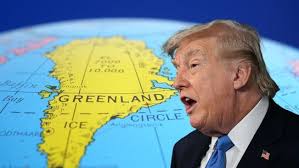
Greenland’s Prime Minister rejects U.S. annexation calls from President Trump
Blue Press Journal — In a decisive statement on Tuesday, Greenlandic Prime Minister Jens-Frederik Nielsenre affirmed his nation’s commitment to Denmark and NATO, rejecting former President Donald Trump’s renewed calls for the United States to annex the Arctic territory. “We choose Denmark. We choose NATO,” Nielsen told reporters ahead of Wednesday’s scheduled visit by U.S. Vice President J.D. Vance and Secretary of State Marco Rubio.
The remarks come amid escalating rhetoric from Trump, who has revived his controversial proposal to bring Greenland into the U.S. union — a plan he first floated during his presidency in 2019 and now again in 2026. Trump has argued that Greenland’s strategic position and natural resources make it vital to American security, going so far as to suggest that military measures could be considered if diplomatic efforts fail.
Existing U.S.–Greenland Military Agreements
While Trump has called for full political annexation, the United States already maintains a military presence on the island under longstanding agreements with Denmark. The Thule Air Base, a key U.S. Air Force installation in northwest Greenland, has operated for decades as part of NATO’s defense infrastructure. This cooperation provides the U.S. with early-warning radar capabilities and Arctic air operations — without the need to claim sovereignty over the territory.
Political Fallout in Washington
Trump’s remarks have drawn criticism not only from Democrats but also from a growing number of Senate Republicans in 2026. Several GOP lawmakers — including Senators Lisa Murkowski, have publicly condemned the idea of using military force to acquire Greenland, calling it “reckless” and “damaging to America’s reputation as a global partner.”
“Greenland is already part of our defensive network through NATO and our bilateral agreements,” said Senator Murkowski. “Annexation talk undermines trust with our allies and ignores the reality that military coercion has no support from the American people.”
Their stance reflects national polling: Only 8% of Americans favor military action to seize Greenland, while 68% oppose it outright. Political analysts note that these numbers suggest little public appetite for an aggressive policy shift in the Arctic.
Diplomatic Tensions
Danish Foreign Minister Lars Løkke Rasmussen has requested a formal meeting with Secretary of State Rubio in Copenhagen to address the growing tensions. Danish officials have emphasized that Greenland’s status as an autonomous territory within the Kingdom of Denmark is non-negotiable, and that NATO’s cooperative framework already ensures regional security.
Strategic Context
Greenland’s location between North America and Europe makes it a key asset in Arctic geopolitics. With climate change opening new shipping lanes and resource exploration opportunities, nations are reassessing their Arctic strategies. For the U.S., its existing agreements and NATO alliance already guarantee access to Greenland’s strategic advantages without the diplomatic fallout annexation would bring.
As Vice President Vance and Secretary Rubio prepare for their visit, the discussion around Greenland raises questions about America’s role in the Arctic. Greenland’s leadership has clearly stated they prefer partnerships through NATO and Denmark, not U.S. sovereignty. Amid bipartisan skepticism and public resistance to military intervention, the Trump administration faces significant political and diplomatic challenges regarding Greenland.
 Blue Press Journal