Tag: U.S. economy

  • A Nation Bleeds at Home While Washington Sign Checks for Bombs

    As hard-working Americans grapple with a relentlessly brutal economy and a cascade of “extraordinarily dire” financial warning signs, Trump has once again prioritized foreign ordnance over domestic survival.

    by Winston Wendell

    As I watch the economy spiral downwards, each day it seems as if the hardworking American citizens are faced with new and “extraordinarily dire” economic challenges. Despite the suffering of our own people, those in the Trump Administration continue to turn a blind eye towards the domestic crises and instead focus on “investing” in Israel’s military machine.
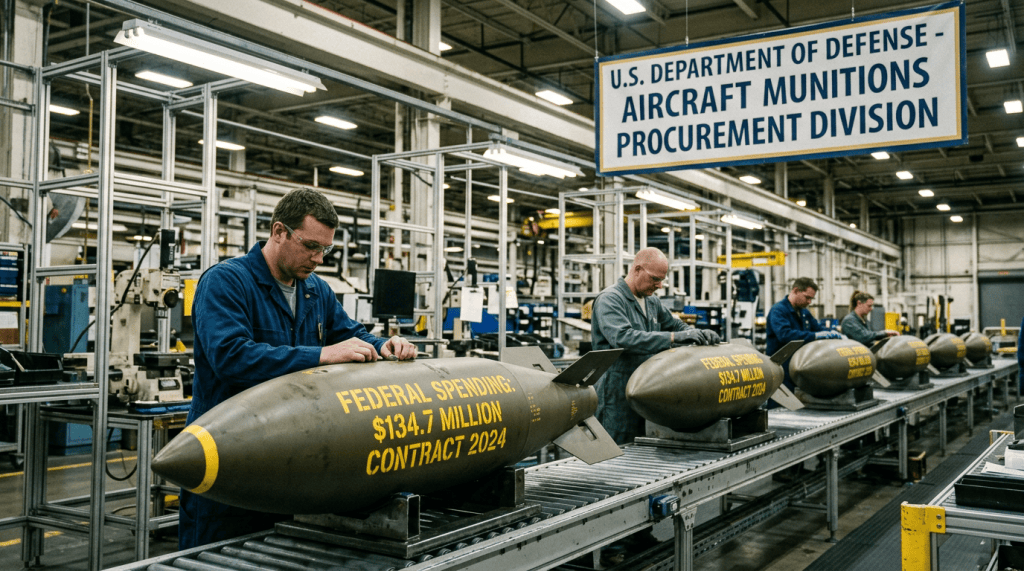
    Workers assemble bomb-shaped munitions; sign reads “U.S. Department of Defense – Aircraft Munitions Procurement Division.”

    Just recently, the administration approved a shocking sum of 2.8 billion dollars to fund a new military package for Israel that includes 40,000 2,000-pound bombs. With all the shortage of military hardware for the senseless war with Iran, shouldn’t be keeping these in our inventory?

    Despite the current state of our economy, the 2.8 billion dollar military package has been “paid for” through the Foreign Military Financing account. That’s taxpayer money!

    It is an insult to the American people when our government can only think of ways to spend taxpayer dollars on bombs and not on our home front troops who are suffering through the “greatest recession of the modern era.”

    What could the 2.8 billion dollars have done for America?

    The 2.8 billion dollars could have been used to repair America’s crumbling infrastructure, such as bridges and public transportation or fully fund America’s public education system.

    The 2.8 billion dollars could have been used to assist the veterans of our military who have sacrificed so much for our country and provide them with the healthcare that they deserve.

    Instead, the “investment” decision was made by those in Trump Administration who only seem to worry about defense spending and not the suffering of the American people.

    During these challenging times, it is an insult for the government to completely disregard the hardships of the American people and think only of ways to spend taxpayer dollars on foreign defense. Keep our money here to help Americans!
    Fediverse Reactions
  • The Great Tariff Loophole: How a Policy Meant to Help Working Americans Ended Up in Corporate Hands

    How Trump’s Illegal Trade Duties Transformed Into a Multibillion-Dollar Corporate Windfall

    by Winston Wendell

    When President Donald Trump returned to office in January 2025, he promised a new set of tariffs would fix the damage caused by his own 2017 tax cuts. He said regular folks wouldn’t notice the extra charges on imported goods, American manufacturers would see a boom, and those millions in profits that used to flow to the national elite would finally go away.

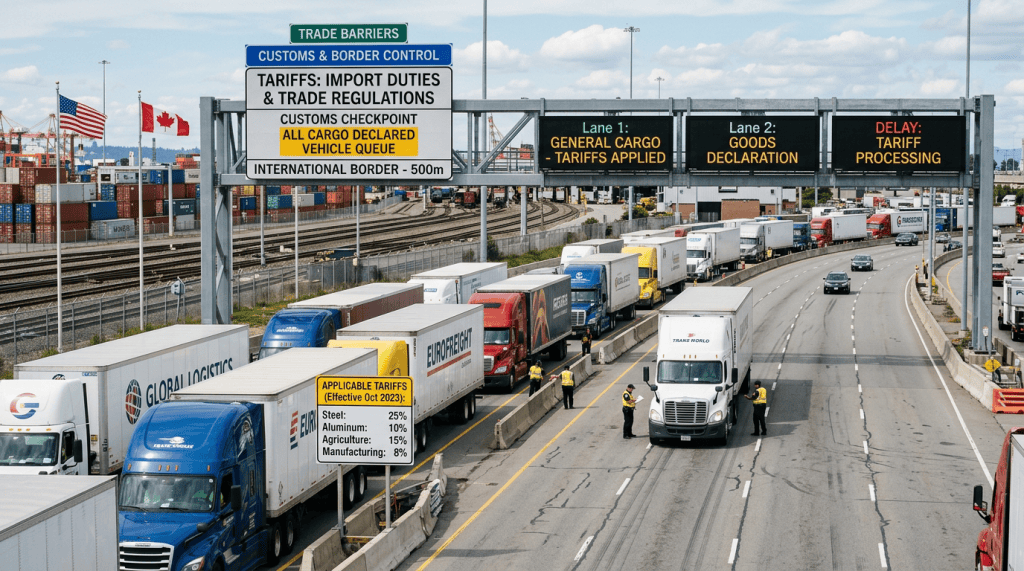
    Trucks queue beneath tariff signs at a Canada–U.S. customs checkpoint

    That’s not what happened. Instead, import duties turned into a backwards tax on the middle class, who got hit with higher prices as businesses passed the costs right along. And now, after a historic Supreme Court decision called these Trump’s tariffs illegal, billions in refunds are landing right in shareholders’ pockets.

    Tariff Refunds Go Right to Shareholders

    This giant shift of cash from regular middle class Americans to the wealthiest is all thanks to a Supreme Court ruling in February. The Court said Trump’s use of the International Emergency Economic Powers Act for tariffs was illegal.

    So the government had to pay back the businesses that shelled out $166 billion in tariffs, half that money, the Court decided, should go straight to the firms who paid it.

    But are the companies who squeezed extra billions out of Americans actually planning to refund the people they overcharged?

    Big corporations say they won’t. Even after these firms got their government refund (plus interest), they’re just using the money to make shareholders richer and further pump up profits.

    Here’s how some companies are spending their “surprise” rebate:

    Nike: In summer 2025, Nike executives said they’d cover a $1 billion tariff cost by getting creative, including strategic $5 to $10 price hikes to consumers on US goods. Fast forward, and after scoring nearly $1 billion back, Nike execs called the cash an “unplanned benefit” to bump up their profits. Meanwhile, there’s now a class-action lawsuit accusing Nike of “double-dipping”: raising prices to cover tariffs, then pocketing the refund.

    Dollar Tree: The loss cost discount retailer landed $383 million in tariff refunds, but only set aside $22 million for price cuts as part of a “tariff reinvestment initiative.” The rest? It doesn’t even compare. Dollar Tree also announced a $605 million share buyback, a move to pad shareholders’ wallets, at 27 times the size of their consumer refund gesture.

    Steve Madden: The shoe company bragged about just raising prices and letting customers pay for the tariffs. Now, they’re sitting on a $92 million rebate and say they’ll use it to pay off company debt.

    Levi Strauss: After hiking prices to offset tariff costs, Levi’s got $80 million back. Execs said they’re not sure what to do with the cash. And like Nike, Levi Strauss faces a class-action lawsuit for not paying customers back.

    Walmart, Target, and Lowe’s: These giants all made vague promises about using the rebate to lower prices or to help “fund price leadership” in their industries. Concrete numbers? Still missing. Lowe’s even changed its tune, swapping “customer-facing actions” for promises of “strong profitability” for itself and its shareholders.

    The Truth About These Refunds

    One reason companies get away with this? It’s almost impossible to figure out how to break the rebate apart for each individual shopper, since those tariff costs were part of millions of everyday items’ prices.

    Still, the bigger problem is the federal government. If these tariffs had gone through proper approval, they would’ve just been another regressive tax on middle class Americans. But slapping them in as an executive order under the IEEPA set up this jackpot in the first place.

    So, the policy, in the end, was just another regressive tax on the poor and middle class. Like the tax cuts from 2017 and 2025, this is yet another “win” for everyone except for the workers and consumers who always end up paying the bill.

  • Pointing Fingers, Missing Homes: Inside the Housing Crisis Blame Game

    Right now in American politics, the housing crisis is front and center. Vice President JD Vance recently went on The Ingraham Angle and didn’t hold back. He pinned the country’s problems with housing costs squarely on the Democrats.

    “I wish Democrats would collaborate with the administration to address housing costs, fuel prices, and other quality-of-life concerns,” Vance told Laura Ingraham.

    Bipartisanship sounds good, especially to people fed up with inaction. But if you look at what’s actually happening, the gap between what politicians say and what they do is bigger than ever. Honestly, it’s starting to feel a little hypocritical.

    Let’s talk about the 21st Century ROAD to Housing Act. The irony here is hard to ignore. This bill is supposed to help solve the homeownership crisis. It passed both chambers of Congress, overwhelmingly. The act promises to cut down on red tape for building single-family homes and, just as important, it puts up barriers for huge investment firms that have been buying up homes and jacking up rents.

    You’d think this kind of win would bring a fast photo op and a signature. Instead, the Trump administration is dragging its feet. The White House, Donald Trump, is holding up this bill, using it as a bargaining chip for the SAVE America Act.

    The SAVE America Act? That’s the push for tougher citizenship standards on voter registration and photo ID at polling stations, a move tied to the President’s persistent, but unproven, claims of widespread voter fraud. Most critics see this as tying important economic relief to a political agenda that has nothing to do with housing.

    And this isn’t just a housing thing, it’s a pattern. On the international front, the administration keeps making bold moves, which has stoked concerns about global energy. Following recent U.S. and Israeli military actions, there’s a lot of nervous talk about the Strait of Hormuz. a chokepoint for 20% of the world’s oil. Trump’s cease fire is anything but, with drone and missiles going back and forth. 

    Every time fuel prices climb, so do construction and transportation costs. That only squeezes the housing market more. Then there’s his tariffs, which across the board raised all costs including home building materials. When leadership puts foreign policy drama and voting laws ahead of the urgent issues at home, it really undercuts their claim that they care about ordinary people’s quality of life.

    Here’s the real takeaway: You can blame the other side all you want, but holding up bills that could make a difference leaves the public stuck in the middle. If the administration actually wants that “genuine bipartisan cooperation” Vice President Vance keeps talking about, it’s time to quit using economic relief as leverage.

    Until the republicans drop their political games around this issue, the blame game is just empty talk. We know who is to blame, Trump and the GOP that refuses to hold him accountable.

    Fediverse Reactions
  • Why Donald Trump’s War on Iran Was a Costly Mistake

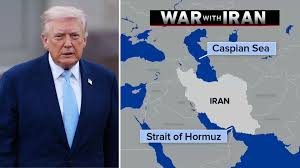
    Blue Press Journal – Donald Trump’s decision to launch a full‑scale war on Iran has already proven disastrous for the U.S. economy. By disrupting the Strait of Hormuz—through which about 20 % of global oil shipments flow—the conflict spiked crude prices by nearly 12 % in just two weeks, Reuters. Higher pump prices translate directly into elevated consumer‑price inflation, eroding purchasing power for American families already strained by lingering post‑pandemic price hikes, Bloomberg.

    Beyond the immediate fuel shock, the war has forced the Federal Reserve to confront a new inflationary spiral, prompting talks of an accelerated rate‑hike cycle that could choke off economic growth,Wall Street Journal. The longer‑term fallout is even more severe: sustained military spending drains fiscal resources, drives up the national debt, and distorts capital allocation away from productive sectors such as renewable energy and infrastructure—areas critical for long‑term competitiveness, NY Times.

    Critics argue that Trump’s reckless foreign policy ignored diplomatic alternatives and ignored expert warnings that a regional conflict would trigger a global supply‑chain crunch, AP News. The result is a distorted economy, soaring living costs, and an American public paying the price for a war that could have been avoided.