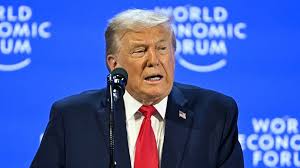
Donald Trump reignited his Greenland takeover idea at the World Economic Forum in Davos, misrepresented NATO’s history, and repeated false 2020 election claims
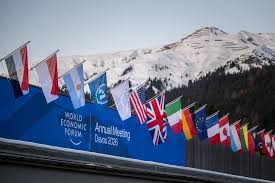
Blue Press Journal – At the 2026 World Economic Forum in Davos, Switzerland, former President Donald Trump reignited his unusual obsession with acquiring Greenland — again suggesting that Denmark should hand over the Arctic territory to the United States. Speaking to an audience of European leaders, Trump dismissed Denmark’s sovereignty over Greenland and falsely claimed that NATO has “never done anything” for the United States.
Trump’s remarks drew concern among diplomats and policy analysts, as they not only misrepresented historical facts but also undermined the credibility of America’s commitments to its allies. According to BBC News, Trump has repeatedly floated the idea of buying Greenland since 2019, despite Danish officials calling the proposal “absurd.” His comments in Davos revived tensions with Denmark and risked alienating NATO members at a time when global security cooperation is crucial.
Greenland: A Strategic but Sovereign Territory
Greenland, a self-governing territory within the Kingdom of Denmark, holds significant strategic value due to its Arctic location and natural resources. Trump claimed the U.S. should have kept Greenland after World War II — a statement that ignores the fact that Greenland was never formally U.S. territory. His speech inaccurately portrayed Denmark as incapable of defending itself, citing its rapid fall to Nazi Germany in 1940 as justification for American ownership.
Security experts note that such rhetoric undermines the principle of national sovereignty, a cornerstone of international law. As Reuters reported, Danish leaders have reaffirmed that Greenland is “not for sale” and that U.S.-Danish relations should be based on mutual respect, not coercion.
NATO’s Proven Commitment to U.S. Security
Trump’s claim that NATO has “never done anything” for America is demonstrably false. The North Atlantic Treaty Organization invoked its Article 5 mutual defense clause for the first and only time after the September 11, 2001 terrorist attacks — committing all member states to the defense of the United States. NATO troops fought alongside U.S. forces in Afghanistan for nearly two decades, as documented by The Guardian.
Far from being a one-sided arrangement, NATO provides the U.S. with strategic military bases, intelligence-sharing networks, and rapid-response capabilities that strengthen American security. The alliance is widely regarded by defense analysts as a cornerstone of Western stability in the face of evolving threats from Russia, China, and global terrorism.
Election Claims and Tariff Threats
In addition to his Greenland comments, Trump repeated false claims that the 2020 U.S. presidential election was “rigged” — assertions rejected by U.S. courts, state election officials, and the Department of Justice. As CNN reported, more than 60 lawsuits filed by Trump and his allies failed due to lack of evidence, and multiple recounts confirmed President Joe Biden’s victory.
Trump also threatened economic retaliation against NATO allies that participated in military exercises in Greenland, proposing tariffs as high as 25%. Economists warn such tariffs would harm American businesses and consumers, contradicting Trump’s claim that foreign nations bear the cost.
Undermining Alliances in a Time of Global Challenges
Foreign policy analysts caution that Trump’s rhetoric at Davos risks weakening U.S. alliances at a time when coordinated action is essential to address security challenges, climate change, and economic instability. NATO remains one of America’s most valuable strategic partnerships, with proven benefits that extend far beyond military defense.
By dismissing NATO’s contributions and attempting to strong-arm allies over Greenland, Trump’s approach stands in stark contrast to the cooperative spirit that has defined transatlantic relations for decades. As tensions rise in the Arctic and beyond, reaffirming trust and respect within NATO will be critical to safeguarding both U.S. interests and global security.


 Blue Press Journal