Tag: voter suppression

  • Why the Republican “SAVE Act” Threatens American Voters – Costly, Undemocratic, and Discriminatory

    Clear ballot box filled with papers, wrapped in heavy metal chains and secured with a padlock.

    Blue Press Journal – The Republican‑backed “Secure American Voter Eligibility (SAVE) Act,” championed by President Donald Trump’s allies, proposes that every voter present a passport or an original birth certificate to cast a ballot. While the bill is marketed as a safeguard against fraud, the reality is far more troubling: it would impose prohibitive costs, undermine constitutional authority, and disproportionately disenfranchise women, low‑income workers, and minority communities.

    A Financial Burden No Voter Can Afford

    A standard U.S. passport now costs $165 for an adult, plus an additional $35 for expedited service (U.S. Department of State, 2024). For many Americans, especially those earning the federal minimum wage of $7.25 per hour, this fee represents a full day’s wages. The SAVE Act’s requirement for a passport would also force voters to navigate a complex application process that can take weeks—time many cannot spare from multiple jobs or childcare duties.

    Equally daunting is the demand for an original birth certificate. In many states, obtaining a certified copy costs $10‑$30 and can take up to six weeks, according to the National Center for Health Statistics. For a single mother working two jobs, the combined expense and delay could effectively strip her of the right to vote in a single‑day election.

    Constitutional Overreach

    The U.S. Constitution explicitly reserves the conduct of elections to the states (Art. I, § 4). By imposing a uniform federal identification requirement, the SAVE Act usurps state authority and creates a single, nationwide voting rule that many states have already deemed unnecessary. Legal scholars from Harvard Law School have warned that “federal ID mandates risk violating the Elections Clause by overriding state‑crafted eligibility standards” (Harvard Law Review, 2023).

    Targeting Women and Married‑Status Voters

    Women, especially those who are married, are uniquely vulnerable. Many married couples share a single birth‑certificate file, and some states issue a “marriage certificate” rather than an individual birth record for privacy reasons. Requiring an original birth certificate therefore forces women to navigate a bureaucratic maze that can delay or prevent voting. 

    Dr. Maria Lopez, a political scientist at the University of California, Berkeley, told The New York Times: “The SAVE Act would create a gendered barrier. Women who are caretakers often lack the time and resources to procure these documents, effectively silencing a significant portion of the electorate.” (NYT, April 2024).

    Voices From the Ground

    Local activists echo these concerns. Johnathan Reed, director of the voter‑rights group Fair Elections Now, testified before the Senate Judiciary Committee: “Our data shows that 23 % of low‑income voters have never held a passport, and 15 % cannot readily obtain a certified birth certificate. This bill would lock them out of democracy.” (Senate Hearing Transcript, June 2024).

    Similarly, Emily Watkins, a single mother of three from Ohio, told ABC News: “I work nights at a factory and mornings at a daycare. Paying $165 for a passport just to vote is impossible. The SAVE Act would tell me my voice doesn’t matter.” (ABC News, May 2024).

    A Trump‑Era Power Play

    Critics argue the legislation is less about fraud and more about political power. Donald Trump’s 2022 campaign rally in Iowa featured the slogan “Secure the Vote, Save the Nation,” a thinly veiled appeal to a voter‑suppression strategy that has haunted his administration. Political analysts from The Washington Postnote that “the SAVE Act aligns with Trump’s broader effort to reshape the electorate in favor of the GOP, regardless of constitutional limits.” (Washington Post, July 2024).

    The SAVE Act is an expensive, unconstitutional, and discriminatory roadblock that threatens to silence millions of Americans—particularly women, low‑income workers, and minority voters. Rather than protecting elections, it weaponizes bureaucratic hurdles to tilt the democratic process in favor of a single party. As the nation heads toward the 2026 elections, safeguarding universal suffrage must remain a priority, not a political pawn.
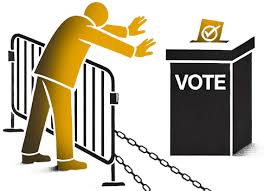
  • Supreme Court’s Delay Thwarts GOP Plan to Gut Black Voting Power Ahead of Midterms

    Supreme Court’s Delay Thwarts GOP Plan to Gut Black Voting Power Ahead of 2026

    Blue Press Journal – A Republican-led scheme to systematically dismantle Black-majority congressional districts across the South has been temporarily thwarted, not by a legal defense, but by the Supreme Court’s own delayed timetable, according to election law experts.

    The plan hinged on the high court’s anticipated ruling in Louisiana v. Callais, a case that could severely weaken or outright strike down Section 2 of the landmark Voting Rights Act. This provision prohibits voting practices that discriminate based on race, a critical tool used to prevent the dilution of Black voting power through gerrymandering.

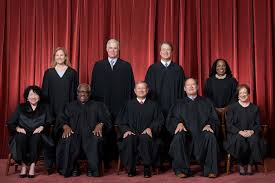
    Had the conservative-majority Court, shaped by three justices appointed by President Donald Trump, issued a ruling gutting the VRA shortly after re-hearing the case in October, it would have greenlit a frantic redistricting process. GOP-controlled state legislatures would have been empowered to “crack” and “pack” Black voters, effectively eliminating districts currently represented by Black Democrats.

    According to a stark analysis by the voting rights group Fair Fight Action, this could have targeted up to 19 House seats across nine Southern states. The move was a blatant partisan power grab, designed to permanently entrench a white conservative majority and make it “increasingly hard for Democrats to win back control of the House,” as reported by HuffPost.

    However, the Court’s failure to issue a decision has now made this scenario “functionally impossible” for the 2026 elections, as primary calendars have rendered it too late for states to redraw maps.

    “We’re at the point where it’s functionally impossible for most Southern states to redraw their maps, unless they do something extraordinary like move or redo primaries,” Michael Li, a redistricting expert at the Brennan Center for Justice, confirmed. States like North Carolina and Texas have already held primaries, while others face imminent deadlines to print ballots for military and overseas voters.

    The GOP’s intent was clear. Louisiana’s Republican Governor, Jeff Landry, called a special legislative session on redistricting last fall, anticipating a swift ruling from the Supreme Court. This tactic aligns with the Republican project, championed by Donald Trump, to roll back voting rights protections for Democratic-leaning minority voters.

    The delayed ruling is a temporary reprieve, but the case remains a loaded weapon aimed at the heart of American democracy.

  • The SAVE Act: A “Show Your Papers” Bill Designed to Disenfranchise Millions of American Voters

    VOTER ALERT

    Blue Press Journal – Last week, Republican lawmakers reignited a deeply troubling campaign to pass the SAVE Act, introducing new bills in both the House and Senate. This renewed push, following the widespread rejection of last year’s attempt, represents a blatant effort to undermine the fundamental right to vote for millions of American citizens. Far from securing elections, these proposals, particularly the House’s “Make Elections Great Again Act,” are poised to create chaos, impose significant burdens on voters and election officials, and disproportionately silence marginalized communities.

    At its core, the SAVE Act mandates a “show your papers” requirement for voter registration, demanding documents like passports or birth certificates. This seemingly straightforward requirement masks a harsh reality: over 21 million American citizens lack ready access to these specified documents. As analyses from organizations like the Brennan Center for Justice consistently show, millions of Americans, nearly half the population, don’t possess a passport, and many more lack easy access to a physical copy of their birth certificate. This policy would erect formidable barriers, particularly for younger voters, voters of color, and rural communities who often face greater logistical and financial hurdles in obtaining these documents. Moreover, millions of women whose married names may not align with their birth certificates or passports would be forced to navigate additional, costly bureaucratic hoops simply to exercise their constitutional right.

    The financial burden on voters is undeniable. Obtaining a birth certificate or passport incurs fees, which, for many, represent an unnecessary and prohibitive cost to participate in democracy. This effectively imposes a poll tax, placing the responsibility on individual citizens to pay for documentation that, in most cases, is entirely unneeded to confirm their eligibility.

    Beyond the immediate impact on voters, the SAVE Act proposals threaten to inject unprecedented chaos into election administration. The bills would place unfunded mandates on already stretched state and local election officials, compelling them to manage complex new verification processes. Officials making honest mistakes could face severe civil and even criminal penalties, risking punishment for allowing an eligible citizen to vote if the “papers” aren’t deemed sufficient. A rushed implementation, set to take effect within a year or two, would inevitably lead to widespread confusion, further hindering citizens’ ability to cast ballots.

    The House’s “Make Elections Great Again Act” introduces an alarming array of additional obstacles. It demands not only proof of citizenship but also proof of residence at registration, potentially disenfranchising millions who have recently moved but haven’t updated their driver’s licenses. The bill also proposes a restrictive photo ID requirement at the polls, a standard more stringent than nearly every current state law. Student IDs, even from state universities, would be prohibited, and many tribal IDs would be rendered invalid due to the lack of an expiration date. Furthermore, it mandates voter roll purges every 30 days, disrupting the vital 90-day quiet period before elections and increasing the risk of eligible voters being mistakenly removed. The legislation also aims to eliminate universal mail voting, forcing all mail voters to apply for a ballot – a move that would upend the primary voting method in eight states and Washington, D.C.

    Even the Senate’s “SAVE America Act” presents its own set of challenges, requiring voters to present documents twice – at registration and again when casting a ballot – unless states agree to routinely share their voter rolls with the Department of Homeland Security’s (DHS) SAVE program. This raises serious privacy concerns, especially given the Trump administration’s history of requesting state voter files under questionable pretenses. As reported by news outlets like The Washington Post, the administration faced significant pushback from dozens of states unwilling to provide sensitive voter data due to concerns about misuse, even admitting that Social Security Administration team members had turned over voter rolls to an advocacy group seeking to “find evidence of voter fraud and to overturn election results.”

    Crucially, the SAVE Act offers no solution to a non-existent problem. All available evidence, including findings from the Trump administration’s own inquiries, consistently demonstrates that instances of non-citizens voting are vanishingly rare. States that have meticulously investigated their voter rolls, such as Louisiana and Utah, have repeatedly confirmed this fact. These bills are not about “election integrity”; they are about suppressing votes and sowing distrust in our democratic processes.

    The League of Women Voters of the United States rightly shares “grave concerns and strong opposition” to the Make American Elections Great Again Act, stating it is “not an attempt to secure our elections, but rather an attempt to make it harder for eligible Americans to register and vote.” This legislation, in any form, is a dangerous and undemocratic proposal. Congress must reject the SAVE Act once again and protect the freedom to vote for all American citizens.

  • Federal Agents at the Polls: Trump’s Brazen Threat to Democracy and a Violation of Law

    Blue Press Journal – The integrity of our democratic elections is a cornerstone of American society. Yet, alarming patterns of federal interference, particularly from U.S. Immigration and Customs Enforcement (ICE), threaten to undermine this fundamental right. It is unequivocally illegal for ICE or any federal agents to be present at polling sites, actively interfering with the electoral process. This isn’t just about preserving norms; it’s about upholding federal and state law against a dangerous trend of voter intimidation.

    The Illegality of Federal Presence at Polling Sites

    Multiple federal statutes explicitly prohibit the presence of armed federal agents at or near polling locations. The bedrock of these protections includes:

    • 18 U.S. Code § 592 – Troops at polls: This critical federal law makes it a crime for any officer or member of the Armed Forces, or “any officer or employee of the United States,” to “bring troops or armed men to the place where a general or special election is held, unless it be necessary to repel armed enemies of the United States.” This clearly applies to federal agents like ICE, whose presence, particularly if armed or uniformed, is designed to intimidate, not to repel foreign enemies. Source: Cornell Law – 18 U.S. Code § 592
    • The Voting Rights Act of 1965, Section 11(b): This landmark civil rights legislation prohibits any person from intimidating, threatening, or coercing any other person for voting or attempting to vote. The presence of federal agents, especially those known for aggressive enforcement, inherently creates an intimidating environment, directly violating the spirit and letter of this act. Source: U.S. Department of Justice – The Voting Rights Act of 1965

    Beyond federal statutes, numerous state laws reinforce these protections, often prohibiting armed personnel, electioneering, or interference within a specified distance of polling places. These state-level mandates underscore a bipartisan commitment to ensuring unfettered access to the ballot box, free from overt or implied coercion.

    Trump’s Dangerous Playbook: Suppressing the Vote Through Fear

    As leading investigative journalists have meticulously documented, Donald Trump has consistently demonstrated an unconcealed disdain for democratic elections that could undermine his pursuit of total power, his 2020 Big Lie is a prime example. Concerns about ICE’s role in this authoritarian agenda first emerged with alarming clarity in 2025. Trump launched aggressive immigration enforcement operations in major cities like Los Angeles and Chicago, then threatened to deploy National Guard troops to back them up.

    Figures like California Governor Gavin Newsom and Illinois Governor J.B. Pritzker, both Democrats, immediately recognized these operations for what they were: not merely about deporting undocumented immigrants, but a preview for leveraging armed federal agents to seize control of elections and suppress dissent. Congressional Democrats have increasingly voiced alarm, especially as chaos related to these tactics escalated in communities like Minnesota. This experience shows that even absent ICE directly surrounding polls, Trump’s immigration enforcement operations spread enough fear and chaos to terrorize minority communities and significantly transform how campaigns are run.

    Targeting Democracy’s Pillars

    This tactic is no accident. Black, Latino, and Asian communities are major components of the Democratic Party coalition. Instilling fear and creating a climate of uncertainty within these communities serves a clear purpose: to suppress their votes and unfairly aid the Republican Party. The GOP’s historical reliance on voter suppression, whether through restrictive ID laws or purges of voter rolls, finds a new and profoundly dangerous iteration in the weaponization of federal law enforcement.

    Yet, despite these brazen attempts to tear apart communities and suppress the vote, there’s a powerful counter-narrative emerging. In places like Minnesota, Trump’s actions have, ironically, spurred a rise in dispersed community networks. These grassroots efforts document ICE activities, challenge arrests, and provide mutual aid to those too afraid to leave their homes. This resilience demonstrates that while the threat to our democracy is real, so is the will of the people to protect it.

    The presence of ICE at polling sites is not merely an act of intimidation; it is an assault on American democracy, a flagrant violation of federal and state laws designed to protect the sanctity of the ballot. We must remain vigilant, hold leaders accountable, and ensure that our elections remain free, fair, and accessible to every eligible voter, without fear of federal interference.

    TAGS: ICE, polling sites, voter suppression, election integrity, federal law, state law, Donald Trump, GOP, democracy, civil rights, voting rights, voter intimidation, election interference, 18 U.S. Code 592, Voting Rights Act, political weaponization

  • Weaponizing Fiction: How Debunked 2020 Election Lies Threaten American Democracy

    Exposed: The Perilous Playbook of Debunked Election Lies and Trump’s Weaponization of the FBI

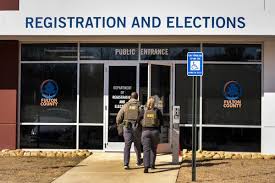
    Blue Press Journal – The recent FBI raid on Fulton County, Georgia, seizing nearly 700 boxes of 2020 election ballots and records, has unveiled a deeply disturbing pattern: the aggressive recycling of thoroughly debunked election lies. Far from uncovering new evidence, the court-ordered affidavit supporting the raid reads like a greatest hits compilation of conspiracy theories, long-ago disproven in countless courts and by exhaustive audits. This alarming development signals a dangerous escalation in the campaign to undermine American democracy, leveraging law enforcement agencies for overtly political ends.

    The Return of Baseless Allegations

    The FBI’s affidavit, intended to establish probable cause for a criminal offense, relies heavily on claims that have been exhaustively investigated and widely discredited. Georgia’s Republican Secretary of State Brad Raffensperger, who famously resisted pressure to “find” votes in 2020, aptly dismissed these assertions as “baseless and repackaged.” [Source: The Atlanta Journal-Constitution] Even Fulton County Board of Commissioners Chair Robb Pitts described the affidavit as based on “recycled rumors, lies, untruths and unproven conspiracy theories.” [Source: CNN]

    Consider the affidavit’s core arguments:

    • Missing Scanned Images: The FBI highlighted that Fulton County “does not have scanned images of all the 528,777 ballots.” Yet, this was not a violation of Georgia law at the time of the 2020 election. The requirement was added by the GOP-led state legislature months later, in March 2021. To present this as evidence of wrongdoing is deliberately misleading.
    • Multiple Ballot Scans: The affidavit also pointed to instances of ballots being scanned multiple times. Independent investigations into this issue, including those in Fulton County, found no evidence of fraud. Ballots can be rescanned due to tabulation errors, with initial erroneous scans deleted. Crucially, multiple audits—the initial count, a hand-counted audit, and a machine recount—consistently affirmed Joe Biden’s victory margin of 11,779 votes in Georgia. [Source: Associated Press] The affidavit offers no evidence to suggest these procedural issues were the result of intentional criminal action.

    As Stanford Law professor Orin Kerr succinctly stated, “In drafting a search warrant affidavit, the Fourth Amendment requires the inclusion of facts that would negate probable cause, if they exist. The government can’t pick facts that, if true, could support a finding a probable cause, but omit the facts that cancel that.” [Source: X / @OrinKerr] The Fulton County affidavit appears to be a stark example of such crucial omissions, presenting a one-sided narrative divorced from established facts and legal precedents.

    The Legal System’s Resounding Rejection of Election Lies

    These recycled theories have not just been debunked by election officials and independent journalists; they have been definitively rejected by virtually every level of the American judiciary. Following the 2020 election, Donald Trump and his allies filed over 60 lawsuits alleging widespread fraud, from state courts to the Supreme Court.

    • Pennsylvania: In Trump v. Boockvar, federal courts found no evidence of fraud sufficient to overturn the election, a decision upheld on appeal.
    • Georgia: Cases like Pearson v. Kemp, which challenged the state’s election procedures, were dismissed for lack of standing or merit.
    • Supreme Court: The most significant rebuke came when the U.S. Supreme Court, in Texas v. Pennsylvania, et al., unequivocally rejected a lawsuit seeking to overturn results in four key states, citing Texas’s lack of standing. This unanimous decision underscored the absence of credible evidence for systemic fraud.

    These judicial pronouncements, delivered by judges across the ideological spectrum, consistently affirmed the integrity of the 2020 election. The attempt to resurrect these thoroughly discredited claims through an FBI investigation represents an appalling disregard for legal due process and factual accuracy.

    The Insidious Role of Kurt Olsen and the Weaponization of the FBI

    Perhaps the most alarming revelation from the affidavit is that the FBI’s “criminal investigation originated from a referral sent by Kurt Olsen,” a temporary White House employee and a figure central to the “Stop the Steal” movement. Olsen is a notorious election denier who lobbied the Department of Justice to intervene in 2020 and was intimately involved in efforts to overturn the election. His record of promoting unsubstantiated allegations is so extensive that he was sanctioned by a federal court for making “false, misleading and unsupported factual assertions” in a 2022 Arizona election challenge. [Source: Arizona Republic]

    Olsen’s involvement in initiating an FBI investigation he has used as a political weapon poses a serious threat to American democracy. This is not a legitimate inquiry but a blatant political weaponization of federal agencies. Allowing a known purveyor of debunked conspiracies, who has faced legal penalties for dishonesty, to trigger an FBI raid sets a troubling precedent. It signifies a dangerous erosion of federal law enforcement’s impartiality and its vulnerability to partisan manipulation.

    The unusual involvement of the Office of the Director of National Intelligence (ODNI) in a domestic law enforcement operation further amplified concerns, prompting Senators Alex Padilla (D-Calif.) and Mark Warner (D-Va.) to demand immediate briefings. [Source: The Washington Post] This intermingling of intelligence and domestic law enforcement, particularly when driven by demonstrably false premises, poses an existential threat to the rule of law.

    A Clear and Present Danger to Democracy

    This episode is more than just a rehash of old lies; it is a calculated effort to “dramatically remake our elections to curtail who is able to vote and whose votes are counted,” as Lauren Groh-Wargo, CEO of Fair Fight Action, warned. [Source: NPR] The willingness of federal agencies to act on such flimsy, politically motivated referrals—rooted in the discredited narratives of figures like Kurt Olsen—sets a perilous precedent. It undermines public faith in democratic institutions, emboldens those who seek to disenfranchise voters, and paves the way for further partisan interference in our electoral processes. The deliberate recycling of debunked election lies, now amplified by the power of the federal government, is an undeniable assault on the foundations of American democracy.

  • The Troubling Intersection of Election Denial and Federal Overreach in Minnesota

    The Dangerous Intersection of Election Denial and Federal Overreach: A Critical Look at Trump’s Actions in Minnesota

    Blue Press Journal – In an alarming display of federal overreach, former President Donald Trump has leveraged the power of Immigration and Customs Enforcement (ICE) to pursue his unfounded claims of election fraud in Minnesota. Critics argue that his obsession with the state stems from a desperate need to validate his belief that he won Minnesota in 2016, 2020, and 2024—claims that have been thoroughly dismissed by the courts and factual evidence.

    Norm Eisen, a former White House lawyer under Barack Obama, bluntly captures the chaos: “It’s almost unbelievable to think that election denial wasn’t a key factor driving his reckless animus, which in turn led to the ICE surge and the horrific fallout. This entire debacle reeks of a concoction built on nothing but lies.”

    The Trump administration’s recent tactics in Minnesota include a demand from Attorney General Pam Bondi for extensive voter data. This request arrives amid a backdrop of tragic incidents related to ICE operations, including the recent shooting of protester Alex Pretti. Bondi’s assertion that obtaining this data is essential for “free and fair elections” is seen by many as a thinly veiled attempt to intimidate voters and suppress legitimate electoral participation.

    In 2020, courts across the nation refuted Trump’s baseless allegations of widespread voter fraud, yet he continues to propagate these falsehoods. During a gathering in St. Paul in May 2024, Trump proclaimed, “I thought we won in 2016. I know we won it in 2020.” This starkly contrasts with the reality that he lost Minnesota in all three elections, including a 7.1-point defeat to Joe Biden in 2020—one of many losses that continue to fuel his unfounded claims.

    Democratic National Committee Chair Ken Martin, a Minnesota native, emphasized the absurdity of Trump’s fixation: “Minnesota voters rejected Donald Trump three times, a fact that he either willingly ignores or his addled, aging brain can’t remember.” Martin further noted that Trump’s obsession with Minnesota is intertwined with his administration’s unlawful ICE tactics aimed at instilling fear among voters.

    Marc Elias, a prominent election lawyer, pointed out that Bondi’s request for voter data is part of a broader strategy to suppress Democratic votes in upcoming elections. “He is punishing those states by sending in federal officers, federal officials to terrorize the population,” Elias stated. This alarming strategy underscores how Trump is willing to weaponize federal agencies to support his false narrative of election fraud.

    The troubling reality is that Trump’s historical pattern of claiming electoral theft dates back to his first political run. After losing the Iowa caucuses in 2016 to Ted Cruz, he immediately accused Cruz of cheating. Following his electoral victory, Trump continued to claim that he lost the popular vote to Hillary Clinton due to illegal immigrant voting—a conspiracy theory he later abandoned after a task force found no evidence to substantiate it.

    As recently as his speech in Davos, Switzerland, Trump reiterated his false claims, stating, “It was a rigged election. Everybody now knows that they found out. People will soon be prosecuted for what they did.” This rhetoric not only undermines democracy but also threatens the integrity of federal institutions, as Trump continues to blur the lines between political ambition and lawful governance.

    The situation in Minnesota serves as a critical reminder of the potential dangers posed by the abuse of federal power in the pursuit of unfounded claims. As federal agencies like ICE become entangled in Trump’s political vendettas, the safety and rights of citizens hang in the balance, raising urgent questions about the future of democracy in America.