Tag: war powers act

  • Sen. Chris Murphy Accuses Trump Officials of Misleading Congress Over Venezuela Operation

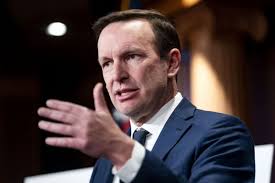
    Blue Press Journal – In a sharp rebuke of Trump administration officials, Senator Chris Murphy (D-Conn.) accused Defense Secretary Pete Hegseth and Secretary of State Marco Rubio of deceiving both Congress and the American public regarding the U.S. military’s recent actions in Venezuela. The senator’s remarks come in response to U.S.-led operation that resulted in the capture of Venezuelan President Nicolás Maduro and his wife, Cilia Flores—an event that has sparked serious debate about the scope of executive authority in foreign interventions. 

    According to Murphy, administration officials “literally lied to our face” before the Venezuelan operation, insisting that the mission was a limited counternarcotics effort and not an attempt at regime change. “They aren’t being straight with the American people,” Murphy stated, emphasizing the absence of any formal briefing for Congress to clarify the operation’s objectives or strategy moving forward. 

    Questions Over War Powers and Executive Authority

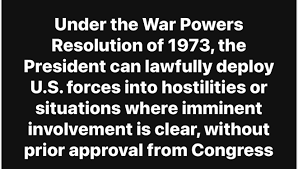
    Murphy’s criticism also reignites discussion about the War Powers Act of 1973, a law designed to ensure that Congress maintains oversight over the deployment of U.S. armed forces. Under the Act, the president must notify Congress within 48 hours of committing military forces to action and withdraw them within 60 days unless Congress authorizes the use of force. 

    By bypassing this process, Murphy argues, the administration has undermined constitutional checks and balances. “Even if there are dictators around the world, that does not give any president unilateral power to invade another nation,” he said, cautioning that such actions erode the legitimacy of U.S. foreign policy and set a dangerous precedent for future administrations. 

    The Broader Implications for U.S. Foreign Policy

    The controversy underscores a recurring tension between the executive branch and Congress over control of military operations abroad. Critics contend that the lack of transparency not only damages America’s global credibility but also risks dragging the nation into unwarranted conflicts. 
  • Trump Administration’s March Towards War in Venezuela Sparks Outrage and Concern in Congress

    Blue Press Journal – In a stark contradiction to his campaign promises, the Trump administration is inching closer to entangling the United States in a war with Venezuela, sparking widespread concern and outrage. Despite his vocal criticism of previous presidents for their involvement in foreign wars, Trump’s own administration is pushing towards a military intervention in the South American country with minimal checks, clarity, or justification.

    The latest reports suggest that U.S. officials have identified targets for airstrikes in Venezuela, including government installations, which could be approved imminently. This development has raised alarm bells among experts, who warn that such actions would undoubtedly constitute an act of war. The administration’s claim that the strikes are aimed at targeting drug traffickers is being questioned, as there is no evidence to support this assertion, and the proposed plan would likely exacerbate the chaos in the region.

    The Trump administration’s actions are being carried out without any formal debate, authorization, or clear plan to deal with the consequences. The War Powers Act, which requires the president to consult with Congress before engaging in military action, seems to be being disregarded. Secretary of Defense Pete Hegseth has failed to respond to requests from the Senate Armed Services Committee to share the orders and legal rationales behind the anti-drug operation.

    The situation is further complicated by the administration’s broad definition of terrorism, which has led to the labeling of a wide range of individuals and groups as terrorists. This has raised concerns that the administration is asserting its right to drone strike anyone deemed a terrorist, without due process or accountability. The fact that members of the Trump administration are calling a broad swath of Americans terrorists, while also pursuing military action in Venezuela, is a chilling development that has many experts warning of the dangers of unchecked executive power.

    Trump’s campaign promise to keep America out of war now seems like a distant memory. His administration’s actions in Venezuela are a clear example of the kind of interventionism that he once criticized. The lack of transparency, accountability, and moral justification for these actions is a cause for concern, and many are questioning the true motives behind the administration’s push for war.

    The consequences of a war in Venezuela would be devastating, not just for the people of Venezuela but also for the United States. The chaos and instability that would ensue would likely lead to a humanitarian crisis, and the economic costs of such a war would be substantial. It is imperative that the administration provides clear evidence and justification for its actions, and that Congress exercises its constitutional authority to oversee and authorize military action.

  • Presidential Authority in Military Action Against Iran

    As the possibility of U.S. involvement in military action against Iran looms, questions are being raised regarding the President’s authority to act without explicit Congressional approval. Reflecting these concerns, lawmakers introduced resolutions in both the House and Senate this week that would mandate Congressional authorization before U.S. forces could participate in any offensive operations.

    The debate hinges on the interpretation of the “Declare War” clause in the Constitution. The Department of Justice’s Office of Legal Counsel (OLC) has previously recognized that this clause potentially limits the President’s inherent Article II authority to deploy the military into situations that constitute a “war.”

    While presidents possess significant constitutional authority to use military force, historically, both Republican and Democratic administrations have generally sought Congressional authorization – or argued that existing authorizations apply – before undertaking substantial or prolonged military engagements. This practice reflects a desire to navigate both the legal and political complexities inherent in deploying U.S. forces abroad.

    An attack on Iran represents a potentially significant expansion of presidential authority in this area. Such action carries considerable risks for U.S. military personnel and citizens, further underscoring the need for careful consideration of the legal and constitutional implications.