A closer look at how landmark legislation signed by President Trump has enriched the wealthy while leaving millions of vulnerable Americans behind
by Winston Wendell
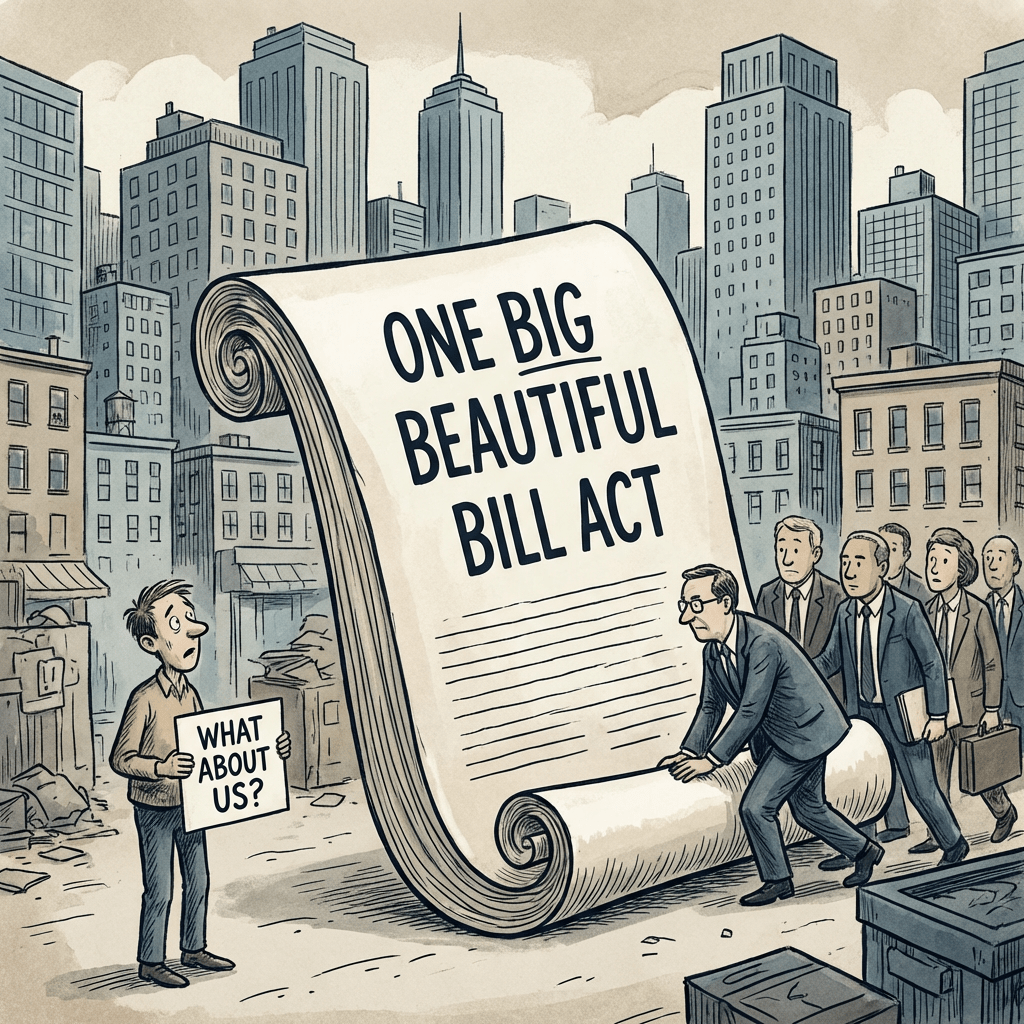
When President Trump signed the “One Big Beautiful Bill Act” last year, his fans cheered for sweeping change. And they sort of got it—just not for everyone. If you’re in one of America’s wealthiest families, you’re probably thrilled. For most people, though, it’s a different story.
I’ve been following this law since day one, and every new report just confirms what a lot of folks feared. Defend America Action laid out the numbers for Common Dreams, and it’s pretty clear: the richest are cashing in, while working-class Americans are stuck on the sidelines.
The numbers tell their own story, and—wow. The Institute on Taxation and Economic Policy says the richest 1% will get $117 billion in tax breaks by 2026, which averages out to about $66,000 per wealthy household. Meanwhile, if you add up all the tax breaks for the bottom 60% of earners, their total doesn’t even match what one rich person gets. And with prices creeping up and surprise fees stacking on, a whole lot of working families are actually worse off.
Nobody’s really surprised. Critics just call it the same old playbook: benefits for corporations and the ultra-rich, scraps (if that) for everyone else.
But it’s not just about paychecks. Healthcare’s taken a beating, too. The law chopped more than $1 trillion from Medicaid and the Affordable Care Act. We’re already feeling it—a year later, Medicaid enrollment has dropped by 3.8 million people. Experts predict 15 million could lose coverage by 2034.
The Affordable Care Act marketplace is a mess. Premiums have more than doubled. One out of every five people on ACA plans has already dropped coverage. If you’re buying insurance yourself, you’ll shell out over a third more than before. More than 8 million folks have lost health insurance so far, and it’s not slowing down.
It’s not just about national numbers, either. Take Nevada—about 100,000 people there could lose Medicaid coverage. That’s 22,000 in one congressional district alone.
Then there’s food assistance. The bill ripped $187 billion from SNAP, the program that helps people buy food. Four million people—kids and seniors included—have already lost that support, and the hurdles to keep benefits are higher than ever. Young adults are getting hit especially hard. They’re losing food help even though steady jobs are still tough to find.
Clean energy took a major blow, too. When Congress gutted clean energy tax credits, hundreds of projects vanished. That cost around 140,000 jobs and scared off $69 billion in investment. Now consumers are facing an extra $92 billion in energy bills, and dirty, expensive energy is all that’s left for many.
Electric vehicles? Same story. Killing off the $7,500 EV tax credit tanked sales. So, people stick with less efficient cars that cost more to run—especially with gas prices climbing, thanks in part to foreign policy headaches.
Jared Bernstein—a former White House adviser—didn’t sugarcoat it: ditching clean energy isn’t just about falling behind, it’s about giving that lead away to China. “This isn’t China just eating our lunch. This is us serving our lunch to them,” he said.
People see what’s happening, and they’re not buying the spin. Just a few months after the bill passed, 55% disapproved, and only 31% were on board. Not much has shifted—today, just a third support it.
Rep. Dina Titus from Nevada put it straight: “They’re always up for cutting programs. They call it fraud, waste, and abuse, but it’s not. It’s benefits people needed.”
With the midterms coming, it’s tough to hide the fallout. The law really did change America, just like they promised—but not for the better, and definitely not for most of us.