Tag: White House

  • Trump’s White House Remodel Plans Spark Lawsuit from National Trust for Historic Preservation

    Bleu Press Journal – President Donald Trump’s ambitious renovation plans for the White House have hit a roadblock, courtesy of a lawsuit filed by the National Trust for Historic Preservation. The congressionally chartered non-profit, dedicated to preserving America’s most treasured historic buildings, is seeking an injunction to block the construction of a massive new ballroom until review panels have assessed the potential impact on the iconic presidential residence.

    At the heart of the dispute lies the Trump administration’s desire to expand the White House’s social and entertainment spaces. The proposed addition of a grand ballroom, part of a larger renovation effort, has raised concerns among preservationists that the historic integrity of the building might be compromised. The National Trust, which has a long-standing relationship with the White House, is urging caution and calling for a more deliberative, public process to ensure that any changes align with preservation standards.

    “We understand the desire to modernize and enhance the White House as a working residence and symbol of American democracy,” said Stephanie Meeks, President and CEO of the National Trust for Historic Preservation. “However, such significant changes must be carefully vetted and balanced against the building’s irreplaceable cultural and historic value.”

    The lawsuit, filed in the U.S. District Court for the District of Columbia, argues that the Trump administration’s plans are moving forward without adequate public input and review by the relevant federal agencies and the Commission of Fine Arts, which advises on architectural matters related to the White House and its grounds.

    The National Trust is seeking a preliminary injunction to halt construction until the review process is completed. In a statement, the organization emphasized its commitment to working collaboratively with the White House and other stakeholders to find a solution that respects both the building’s historic character and the president’s needs.

    As the legal battle unfolds, the case highlights the delicate balance between preserving America’s cultural heritage and accommodating the needs of its current occupants. The White House, a National Historic Landmark since 1960, is not only a symbol of U.S. democracy but also a working residence, requiring periodic updates to meet the evolving demands of the presidency.

    The Trump administration has argued that the planned renovations, including the addition of a 6,500-square-foot ballroom, are essential for enhancing the White House’s functionality and Dubai-style entertainment capabilities. However, preservationists counter that such alterations could irreversibly alter the building’s historic fabric and compromise its long-term integrity.

    The lawsuit’s outcome will set a crucial precedent for balancing preservation objectives with the needs of public institutions like the White House. As the National Trust’s Meeks noted, “The White House is a national treasure that belongs to all Americans, and it’s our responsibility to protect it for future generations.”

    With the legal proceedings underway, the fate of President Trump’s grand ballroom plans remains uncertain. One thing is clear, however: the debate underscores the enduring importance of historic preservation in America and the need for thoughtful, deliberative approaches to ensuring that our nation’s most cherished landmarks remain vibrant, relevant, and enduring symbols of our shared heritage.

  • Behind the Curtain: Unsettling Questions About Who’s Really Running the White House

    Blue Press Journal

    In the American system of government, the buck is supposed to stop at the President’s desk. The person in the Oval Office is the ultimate decision-maker, the commander-in-chief, and the individual accountable to the public for the actions of the executive branch. But what happens when the public sees moments that cast doubt on that individual’s engagement? Recent observations have ignited a serious and necessary conversation about the operational structure of the current White House and the fundamental question of who is truly at the helm.

    These concerns were brought into sharp relief by recent footage that appeared to show the President asleep during a public event. For political commentator Symone Sanders, this wasn’t just an isolated, embarrassing moment. It was a catalyst for a much deeper inquiry into the chain of command. “It brought up the questions again about what the actual apparatus at this White House is and who is actually in charge here,” Sanders said. “Because that can’t be the first time the president fell asleep…So when that happens, who is making the decisions?”

    This is not a trivial question. It strikes at the heart of executive function. If the principal decision-maker is disengaged, even temporarily, a power vacuum is created. The critical question then becomes: who fills it? Is it the Vice President? The Chief of Staff? Or is it unelected advisors and policy architects operating without a direct public mandate?

    The issue extends beyond moments of apparent fatigue. Former Homeland Security Advisor Fran Townsend pointed to a pattern of behavior that suggests a potential disconnect between the President and the policies he enacts. She raised concerns about public bill-signing ceremonies where the President seemed to be learning the details of the documents for the first time. “When the president was doing these public signings of these executive orders, and they come in and they explain to him what the executive order is and he’s like, ‘Oh, okay. Yeah.’ I wonder, is that the first time you heard this?”

    This observation is profoundly unsettling. Executive orders are powerful instruments that can have sweeping impacts on national policy, the economy, and the lives of millions of Americans. The suggestion that a president might be unfamiliar with the contents of an order he is about to sign into law raises serious questions about his level of involvement in the policy-making process. Is the President reviewing, debating, and shaping these policies, or is he merely serving as the final stamp of approval on decisions made by others?

    Townsend drove this point home by naming a specific, influential advisor and posing a direct challenge. “And so we’re using ‘I’ statements? Are you the one making the decision, Stephen Miller, about these strike force teams?” she asked. “How much aware is the president of what is going on? These are questions I think they deserve to be asked.”

    This is the crux of the matter. The American people elect a president, not their advisors. While every administration relies on a team of experts and aides, that team is meant to inform and execute the president’s vision, not supplant it. When questions arise about whether senior staff are making pivotal decisions with limited presidential oversight, it becomes a matter of democratic accountability.

    These are not partisan attacks; they are fundamental questions of governance. The public has a right to trust that the person they chose to lead the country is actively and knowingly doing so. When credible observers from across the political spectrum express concern about the President’s awareness and engagement, it is a signal that we need more transparency, not less. The questions have been asked. The American people deserve the answers.

  • The Trump Administration’s Assault on American History: A Reckless Pursuit of Ego and Opulence

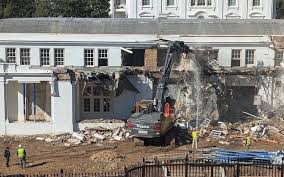
    Blue Press Journal – As the world watches, the Trump administration is pushing forward with a plan to demolish a significant portion of the White House’s East Wing to make way for a $200 million ballroom. This egregious act of vandalism is not only a blatant disregard for the historic significance of the building but also a stark reflection of President Trump’s limited moral compass and prioritization of personal ego over national heritage.

    The White House, often referred to as the “People’s House,” has been a symbol of American democracy and history for over two centuries. Its walls have borne witness to some of the most pivotal moments in the nation’s history, from the Civil War to the Civil Rights Movement. However, under the Trump administration, this sacred institution is being desecrated to accommodate the President’s desire for a grand, luxurious ballroom.

    Historians and preservationists are outraged by this decision, and rightly so. As Edward Lengel, a historian and author, noted, “To me, the thing that’s shocking is not from the perspective of White House history and the building itself, it’s more changing the nature of the edifice, and what it represents goes counter to what the founders intended this to be. … They wanted it to be the people’s house.” The founders’ vision of the White House as a symbol of democracy and public service is being callously discarded to satisfy the President’s craving for opulence and self-aggrandizement.

    The Society of Architectural Historians has also expressed its “great concern” over the ballroom project, stating that it should be subject to “a rigorous and deliberate design and review process.” However, the Trump administration has chosen to disregard these concerns, opting instead to fast-track the construction process. The excavators have already begun their work, tearing into the East Wing and sending parts of the roof, exterior, and interior crumbling to the ground.

    This reckless pursuit of ego and luxury is a betrayal of the trust placed in the President to protect and preserve America’s national treasures. The White House is not a personal playground for the President and his family; it is a historic landmark that belongs to the American people. As such, any alterations or renovations should be undertaken with the utmost care and respect for the building’s significance and the principles it represents.

    The demolition of the East Wing is not only a physical destruction of the White House but also a symbolic erosion of the values that America holds dear. It is a stark reminder that, under the Trump administration, the interests of the President and his cronies take precedence over the nation’s heritage and the well-being of its citizens.

    As the ballroom construction continues, Americans must speak out against this act of vandalism. We must urge our leaders to prioritize the preservation of our heritage and protect historic landmarks. The White House is not a plaything for the President’s ego; it deserves our respect and care.

    In the words of Lengel, “The thing that’s shocking is not from the perspective of White House history, but changing the nature of what it represents goes counter to what the founders intended.” We must preserve the White House as a symbol of democracy and public service, standing together to protect our national heritage and the principles of freedom, justice, and equality that America embodies.

  • Trump Unveils Plans for $200 Million Ballroom Addition to White House, Sparking Concerns and Criticism

    In a move that has raised eyebrows and sparked controversy, President Trump has unveiled plans for a lavish $200 million ballroom addition to the White House. The proposed expansion, which was announced on Thursday, has been met with criticism and skepticism, with many questioning the need for such an opulent upgrade.

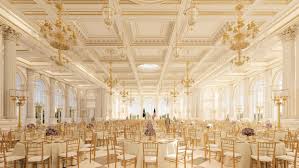
    According to renderings provided by the White House, the new ballroom will feature a vast space adorned with gold and crystal chandeliers, gilded Corinthian columns, a coffered ceiling with gold inlays, gold floor lamps, and a checkered marble floor. The design has been likened to the grand ballroom at Trump’s Mar-a-Lago resort, a comparison that has not been taken as a compliment.

    Trump has insisted that the $200 million cost of the project will be borne by himself and private donors, claiming that it will be his “gift to the country.” However, critics argue that this is just another opportunity for Trump to solicit donations and curry favor with wealthy backers. They point to his history of using his position to raise funds for his own personal projects and interests, such as his presidential library and his failed cryptocurrency venture.

    Many have expressed concerns that the ballroom addition is just the latest example of Trump’s insatiable need for adulation and self-aggrandizement. The project has been compared to his infamous birthday military parade, which was widely criticized as a waste of taxpayer dollars and a blatant attempt to feed Trump’s ego. Additionally, Trump’s efforts to pressure the Smithsonian to remove references to his two impeachments from its exhibits have been seen as a further attempt to rewrite history and boost his own image.

    “This is just another example of Trump’s reckless disregard for the public’s interests and his own insatiable need for praise and attention,” said one critic. “The fact that he’s trying to pass this off as a ‘gift to the country’ is just laughable.”

    The ballroom addition has also raised questions about the use of private donations to fund projects at the White House. While Trump has claimed that the project will be funded entirely by himself and private donors, many are skeptical about the true source of the funds and the potential quid pro quos that may be involved.

    As the project moves forward, it is likely to face intense scrutiny and criticism from lawmakers, watchdog groups, and the public at large. Whether or not the ballroom addition will ultimately become a reality remains to be seen, but one thing is certain: it will be a highly contentious and closely watched development in the world of politics.