Washington, D.C., Sept. 24 — A federal judge’s order to restore White House press credentials for three news outlets has been ignored, as MSNBC correspondent Laura Barron‑Lopez was denied entry on Thursday, mirroring recent turn‑aways of CNN and Politico journalists.
Update: 10:20am est.
A reporter for the online outlet MS NOW was turned away from the White House press entrance on Thursday, bringing the media outlet into a growing dispute over access that already includes correspondents from CNN and Politico.
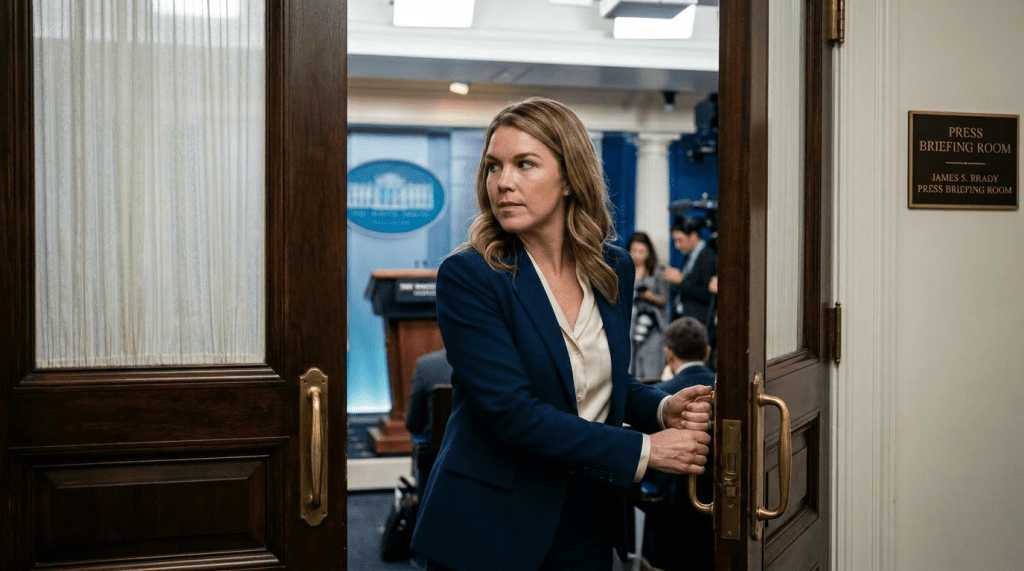
Laura Barron‑Lopez, a senior reporter for the news outlet, said she arrived at the Press Briefing building, swiped her badge at the security checkpoint and watched the indicator turn red before being stopped by a uniformed security guard.
“I got as far as the press pass security hut, swiped my badge, and the light started flashing red,” Barron‑Lopez told reporters after the incident. “The guard told me I could not proceed and escorted me off the premises.”
Her experience mirrors that of a CNN reporter and a Politico correspondent, both of whom were denied entry his morning under the same circumstances.
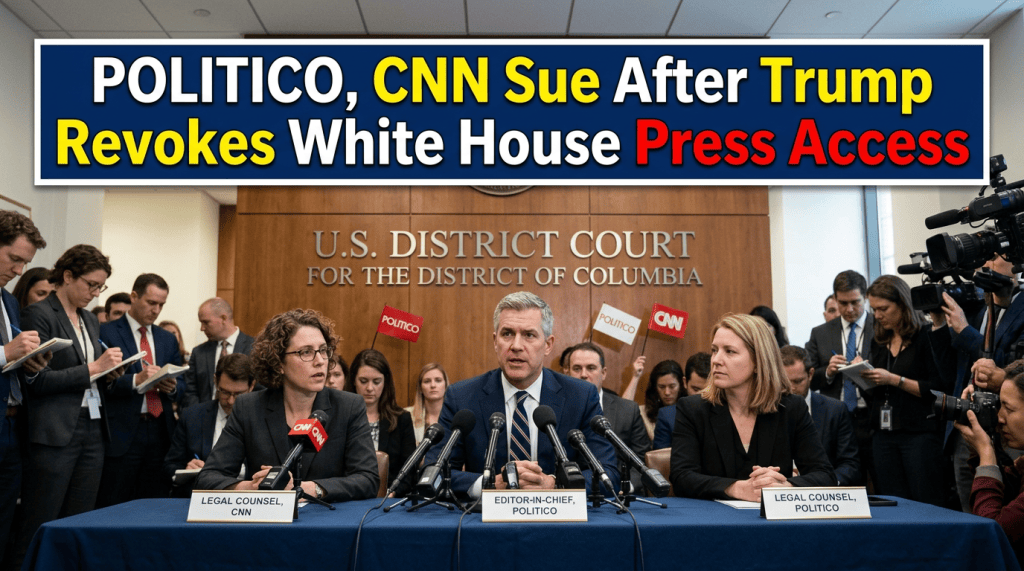
MS NOW, CNN and Politico have scheduled a joint press conference for Thursday afternoon to discuss the broader implications of the White House’s security procedures on media freedom.
The Trump administration wants a court order letting the executive branch decide who receives White House press credentials, and it is challenging a long-standing legal precedent that protects journalists covering the West Wing.
In a brief filed late Tuesday, the Justice Department said barring POLITICO, CNN and MS NOW from the White House complex was justified by how those outlets had reported on sensitive information.
The administration told the courts that the president believed the plaintiffs had failed basic journalistic standards by revealing classified details and national security matters.
Responding to an emergency injunction from the three media companies seeking immediate restoration of access, the government brief cited articles from each outlet about the conflict with Iran, US military reserve levels and a leak investigation into FBI Director Kash Patel. It also objected to POLITICO’s release of a Secret Service document originally given to Senate Republicans to help build a new presidential ballroom.
The DOJ brief also included copies of letters supposedly sent to the organisations that day explaining the credential revocations and setting a Friday deadline for a response.
But the documents had no signatures or letterhead and never explicitly said any cited example in the articles contained classified information. Several examples were also largely unrelated to national security; the letter to POLITICO objected to an article about internal tensions at a Texas Republican convention.
Government attorneys conceded the retroactive letters do not meet the standard set by Sherrill v. Knight, a 49-year-old D.C. Circuit ruling holding that the state cannot arbitrarily exclude specific news organisations from White House press facilities based on its perceived coverage.
Instead, the Justice Department is formally asking the courts to overturn the Sherrill precedent, dismantling the legal framework that ensures equal press access. The administration instead wants wider use of a different ruling from last year suggesting the president has discretion to restrict entry to high-security parts of the White House grounds, such as the Oval Office.
POLITICO, CNN and MS NOW sued on Monday, arguing that revoking their press passes violates the First Amendment. They have also asked for a temporary restraining order forcing the administration to restore their credentials while the case is heard.
U.S. District Judge Timothy Kelly, appointed by Trump, has set a hearing for Wednesday afternoon.
The Disconnect: Leadership Challenges Amidst Escalating Conflict and Economic Strain by Winston Wendell
The Middle East is inching toward a crisis. Two U.S. service members lost their lives this week, and the Pentagon confirmed it. All out war with Iran doesn’t just seem possible, it feels closer than it has in months. Meanwhile, inflation keeps gnawing away at paychecks, and gas prices are spiking again thanks to more trouble in the Persian Gulf. At home, folks are feeling squeezed, but the White House gives off this strange sense of being elsewhere, almost detached.
Life on Main Street looks pretty rough right now. The latest numbers from the Bureau of Labor Statistics show that prices won’t budge. Every week, it’s the same story: another trip to the grocery store, more sticker shock, and it’s getting tougher and tougher for families just to make it to Friday. People want the president in the thick of things during times like these, steady, present, and reassuring.
That’s not what they’re getting. Instead, public schedules and social media updates show President Donald Trump heading for the golf course instead of the Situation Room. Over the weekend, while everyone waited for updates from the Middle East, he was out golfing at his club in New Jersey.
And this didn’t come out of nowhere, people have noticed a pattern. Analysts and writers, including The Atlantic, keep pointing out: when tension flares abroad, the president’s often seen prioritizing downtime over direct action. Well he is 80 years old. For plenty of Americans, especially anyone worried about national security, this feels out of step with the country’s needs.
Then there’s his upcoming itinerary. It’s right there in the official plan, while families grieve and the economy faces more pressure, President Trump’s next high-profile event is the FIFA World Cup Final at MetLife Stadium, right alongside the First Lady.
So, here’s the tension. The country’s teetering at the edge of war. Prices keep rising. And the president is taking in a soccer match. News sites like Reuters aren’t letting it slide, they’re highlighting how serious things with Iran have become. And regular people are starting to ask, “Is this really the time for leisure?”
That’s the crux of the matter: Americans are demanding their leader to step up, particularly in these tumultuous times. With war looming and expenses skyrocketing, the chasm between public expectations and presidential reality is widening. It’s a question everyone is left grappling with where is President Donald Trump when we need him most?
I’ve been closely monitoring political scandals for quite sometime, but let me tell you, nothing has highlighted the chasm between campaign promises and reality like this outrageous White House ballroom debacle involving Donald Trump. It all began as a so-called privately funded renovation, an ambitious yet dubious plan to dismantle the west wing and build a grand ballroom. Now, it has exploded into a staggering billion-dollar bill funded by taxpayers, mired in evasions and skyrocketing costs, while Republicans in Congress sit idly by.
It’s not just the price tag, which let’s face it, is jaw-dropping for a single room. What really stands out is the sheer disregard for public accountability. When Trump rolled out the plan to tear down part of the East Wing and build a fancy ballroom, he promised no federal money would be used. Corporate sponsors and private donors would foot the bill not taxpayers. This wasn’t an accident it was carefully staged to let him chase his luxury dream without being accused of wasteful spending the very thing he’d spent so much time railing against.
That promise fell apart on Monday night. Senator Chuck Grassley revealed that the Republican budget earmarked $1 billion for the ballroom. What was supposed to run $200 million and be paid for by private donations is now a full on federal takeover. Now very penny will come from taxpayers. It’s a giant flip: the president looked the public in the eye, made a promise, and then his Republican friends in Congress did the exact opposite.
It’s not just the dollars that bug me, though. The deafening silence from Republicans is almost as bad. Not one Republican senator or representative has spoken out against this shift even though it flies in the face of everything the party says it believes. They ran on cutting government waste and giving power back to the people. Now, they’re quietly signing off on a billion-dollar ballroom most Americans don’t even want. Take the numbers: a Washington Post poll found just 28 percent support for the project, while 56 percent oppose it. Even Republican voters aren’t buying in. If a president can’t get majority support from his own base on a signature project, something’s seriously broken.
Let’s talk about the cost hike. This thing started at $200 million and suddenly needs $1 billion, a fivefold jump that just doesn’t add up. The official explanation is “security features” like bulletproof windows, reinforced walls, drone detectors. Sure, security’s important, but those upgrades aren’t worth a billion bucks. And if $600 million for security was included before, where’s the detailed accounting? All we get are vague promises and a blank check. Normally, big projects handled by private companies have competitive bidding, contracts, and audits. Here, there’s barely any oversight rules that apply to everyday government spending seem to vanish when the president’s interests are on the line. The Republican congress just lines up behind this stupid idea without questions or oversight.
The timing couldn’t be worse, either. While Trump obsesses over floor layouts, marbel and gold trimming, the middle class is struggling. Buying a house? Nearly impossible. Health insurance? Premiums keep climbing. Groceries? More expensive every week. And at the pump, four bucks a gallon is the new normal with the price increasing everyday. Daniel Pfeiffer, who worked for Obama, nailed it when he said Trump’s priorities are “fiddling while Rome burns.” It sounds cliché, but honestly, it fits the moment.
Internationally, the situation is even messier. Tensions with Iran are driving up gas prices, and Americans are caught in the fallout. All of this lands squarely on working families with already tight budgets. Against that backdrop, asking taxpayers to pay for a presidential ballroom shows either a total disconnect or a flat-out abandonment of priorities. He campaigned on America first, but it sure looks like Donald Trump first!
This ballroom won’t make us safer. It won’t bring down gas prices. It won’t fix healthcare or help anyone who’s struggling at the kitchen table. It’s just another monument to one man’s comfort and ego. The absolute lack of pushback from congressional Republicans shows they’re willing to drop their supposed principles to stay loyal to party over country.
So, when exactly did we start accepting this nonsense? The chaos in the ballroom isn’t merely a display of government waste or political posturing; it hints at something far more concerning. It seems that accountability is just a choice for those in power, while duty has been sacrificed on the altar of convenience. A thousand people can throw a party in that ballroom, yet it appears that not a single principal managed to survive the festivities.
Blue Press Journal – The second Trump administration is making it clear they want to shake up how executive communication works, ditching the usual journalistic filters for a hand-picked “new media” crowd. You saw this in action at a recent press conference—Press Secretary Karoline Leavitt gave Jack Posobiec, a far-right YouTuber and activist known for pushing fringe theories, a front-row guest seat again.
The administration is making a point of ignoring mainstream outlets. They set up a rotating seat for digital creators, and these guests get to ask the first question. But bringing in Posobiec has raised a lot of eyebrows. The Southern Poverty Law Center says Posobiec has a history of connections with white nationalist figures. He also played a leading role spreading the “Pizzagate” conspiracy—a wild theory claiming a child sex-trafficking ring ran out of a Washington D.C. restaurant. That conspiracy actually led to someone showing up at the restaurant with a gun in 2016.
At the briefing, Leavitt called Posobiec someone from the independent media landscape. This wasn’t just a one-time thing. NBC News found that the administration has used Posobiec in this way at least three times to help kick off their new media strategy.
Looking closely at how Posobiec interacted with Treasury Secretary Scott Bessent, you see the change: there’s less tough questioning and more reinforcing the administration’s narrative. Posobiec asked about what he called a “media narrative” that criticized the current tax season and said it was “too soft.” That pretty much gave Secretary Bessent a free shot to dismiss critics and celebrate the administration’s work, saying the season has been “incredible.”
Critics say this strategy makes it hard to tell where official government info ends and partisan messaging begins. The New York Times reported that bringing in content creators known for right-wing misinformation can shield the administration from having to field tough questions, while making everything look open and transparent. Instead of experienced political reporters, digital influencers who line up with the White House’s views take over—basically creating a curated reality in the briefing room.
The Trump administration claims this is about opening up the First Amendment and letting nontraditional voices have a say, but picking figures like Posobiec again and again shows they’re really building up alternative media narratives right at the top of government.
Bleu Press Journal – President Donald Trump’s ambitious renovation plans for the White House have hit a roadblock, courtesy of a lawsuit filed by the National Trust for Historic Preservation. The congressionally chartered non-profit, dedicated to preserving America’s most treasured historic buildings, is seeking an injunction to block the construction of a massive new ballroom until review panels have assessed the potential impact on the iconic presidential residence.
At the heart of the dispute lies the Trump administration’s desire to expand the White House’s social and entertainment spaces. The proposed addition of a grand ballroom, part of a larger renovation effort, has raised concerns among preservationists that the historic integrity of the building might be compromised. The National Trust, which has a long-standing relationship with the White House, is urging caution and calling for a more deliberative, public process to ensure that any changes align with preservation standards.
“We understand the desire to modernize and enhance the White House as a working residence and symbol of American democracy,” said Stephanie Meeks, President and CEO of the National Trust for Historic Preservation. “However, such significant changes must be carefully vetted and balanced against the building’s irreplaceable cultural and historic value.”
The lawsuit, filed in the U.S. District Court for the District of Columbia, argues that the Trump administration’s plans are moving forward without adequate public input and review by the relevant federal agencies and the Commission of Fine Arts, which advises on architectural matters related to the White House and its grounds.
The National Trust is seeking a preliminary injunction to halt construction until the review process is completed. In a statement, the organization emphasized its commitment to working collaboratively with the White House and other stakeholders to find a solution that respects both the building’s historic character and the president’s needs.
As the legal battle unfolds, the case highlights the delicate balance between preserving America’s cultural heritage and accommodating the needs of its current occupants. The White House, a National Historic Landmark since 1960, is not only a symbol of U.S. democracy but also a working residence, requiring periodic updates to meet the evolving demands of the presidency.
The Trump administration has argued that the planned renovations, including the addition of a 6,500-square-foot ballroom, are essential for enhancing the White House’s functionality and Dubai-style entertainment capabilities. However, preservationists counter that such alterations could irreversibly alter the building’s historic fabric and compromise its long-term integrity.
The lawsuit’s outcome will set a crucial precedent for balancing preservation objectives with the needs of public institutions like the White House. As the National Trust’s Meeks noted, “The White House is a national treasure that belongs to all Americans, and it’s our responsibility to protect it for future generations.”
With the legal proceedings underway, the fate of President Trump’s grand ballroom plans remains uncertain. One thing is clear, however: the debate underscores the enduring importance of historic preservation in America and the need for thoughtful, deliberative approaches to ensuring that our nation’s most cherished landmarks remain vibrant, relevant, and enduring symbols of our shared heritage.
In the American system of government, the buck is supposed to stop at the President’s desk. The person in the Oval Office is the ultimate decision-maker, the commander-in-chief, and the individual accountable to the public for the actions of the executive branch. But what happens when the public sees moments that cast doubt on that individual’s engagement? Recent observations have ignited a serious and necessary conversation about the operational structure of the current White House and the fundamental question of who is truly at the helm.
These concerns were brought into sharp relief by recent footage that appeared to show the President asleep during a public event. For political commentator Symone Sanders, this wasn’t just an isolated, embarrassing moment. It was a catalyst for a much deeper inquiry into the chain of command. “It brought up the questions again about what the actual apparatus at this White House is and who is actually in charge here,” Sanders said. “Because that can’t be the first time the president fell asleep…So when that happens, who is making the decisions?”
This is not a trivial question. It strikes at the heart of executive function. If the principal decision-maker is disengaged, even temporarily, a power vacuum is created. The critical question then becomes: who fills it? Is it the Vice President? The Chief of Staff? Or is it unelected advisors and policy architects operating without a direct public mandate?
The issue extends beyond moments of apparent fatigue. Former Homeland Security Advisor Fran Townsend pointed to a pattern of behavior that suggests a potential disconnect between the President and the policies he enacts. She raised concerns about public bill-signing ceremonies where the President seemed to be learning the details of the documents for the first time. “When the president was doing these public signings of these executive orders, and they come in and they explain to him what the executive order is and he’s like, ‘Oh, okay. Yeah.’ I wonder, is that the first time you heard this?”
This observation is profoundly unsettling. Executive orders are powerful instruments that can have sweeping impacts on national policy, the economy, and the lives of millions of Americans. The suggestion that a president might be unfamiliar with the contents of an order he is about to sign into law raises serious questions about his level of involvement in the policy-making process. Is the President reviewing, debating, and shaping these policies, or is he merely serving as the final stamp of approval on decisions made by others?
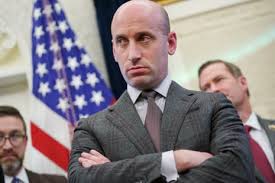
Townsend drove this point home by naming a specific, influential advisor and posing a direct challenge. “And so we’re using ‘I’ statements? Are you the one making the decision, Stephen Miller, about these strike force teams?” she asked. “How much aware is the president of what is going on? These are questions I think they deserve to be asked.”
This is the crux of the matter. The American people elect a president, not their advisors. While every administration relies on a team of experts and aides, that team is meant to inform and execute the president’s vision, not supplant it. When questions arise about whether senior staff are making pivotal decisions with limited presidential oversight, it becomes a matter of democratic accountability.
These are not partisan attacks; they are fundamental questions of governance. The public has a right to trust that the person they chose to lead the country is actively and knowingly doing so. When credible observers from across the political spectrum express concern about the President’s awareness and engagement, it is a signal that we need more transparency, not less. The questions have been asked. The American people deserve the answers.
Blue Press Journal – As the world watches, the Trump administration is pushing forward with a plan to demolish a significant portion of the White House’s East Wing to make way for a $200 million ballroom. This egregious act of vandalism is not only a blatant disregard for the historic significance of the building but also a stark reflection of President Trump’s limited moral compass and prioritization of personal ego over national heritage.
The White House, often referred to as the “People’s House,” has been a symbol of American democracy and history for over two centuries. Its walls have borne witness to some of the most pivotal moments in the nation’s history, from the Civil War to the Civil Rights Movement. However, under the Trump administration, this sacred institution is being desecrated to accommodate the President’s desire for a grand, luxurious ballroom.
Historians and preservationists are outraged by this decision, and rightly so. As Edward Lengel, a historian and author, noted, “To me, the thing that’s shocking is not from the perspective of White House history and the building itself, it’s more changing the nature of the edifice, and what it represents goes counter to what the founders intended this to be. … They wanted it to be the people’s house.” The founders’ vision of the White House as a symbol of democracy and public service is being callously discarded to satisfy the President’s craving for opulence and self-aggrandizement.
The Society of Architectural Historians has also expressed its “great concern” over the ballroom project, stating that it should be subject to “a rigorous and deliberate design and review process.” However, the Trump administration has chosen to disregard these concerns, opting instead to fast-track the construction process. The excavators have already begun their work, tearing into the East Wing and sending parts of the roof, exterior, and interior crumbling to the ground.
This reckless pursuit of ego and luxury is a betrayal of the trust placed in the President to protect and preserve America’s national treasures. The White House is not a personal playground for the President and his family; it is a historic landmark that belongs to the American people. As such, any alterations or renovations should be undertaken with the utmost care and respect for the building’s significance and the principles it represents.
The demolition of the East Wing is not only a physical destruction of the White House but also a symbolic erosion of the values that America holds dear. It is a stark reminder that, under the Trump administration, the interests of the President and his cronies take precedence over the nation’s heritage and the well-being of its citizens.
As the ballroom construction continues, Americans must speak out against this act of vandalism. We must urge our leaders to prioritize the preservation of our heritage and protect historic landmarks. The White House is not a plaything for the President’s ego; it deserves our respect and care.
In the words of Lengel, “The thing that’s shocking is not from the perspective of White House history, but changing the nature of what it represents goes counter to what the founders intended.” We must preserve the White House as a symbol of democracy and public service, standing together to protect our national heritage and the principles of freedom, justice, and equality that America embodies.
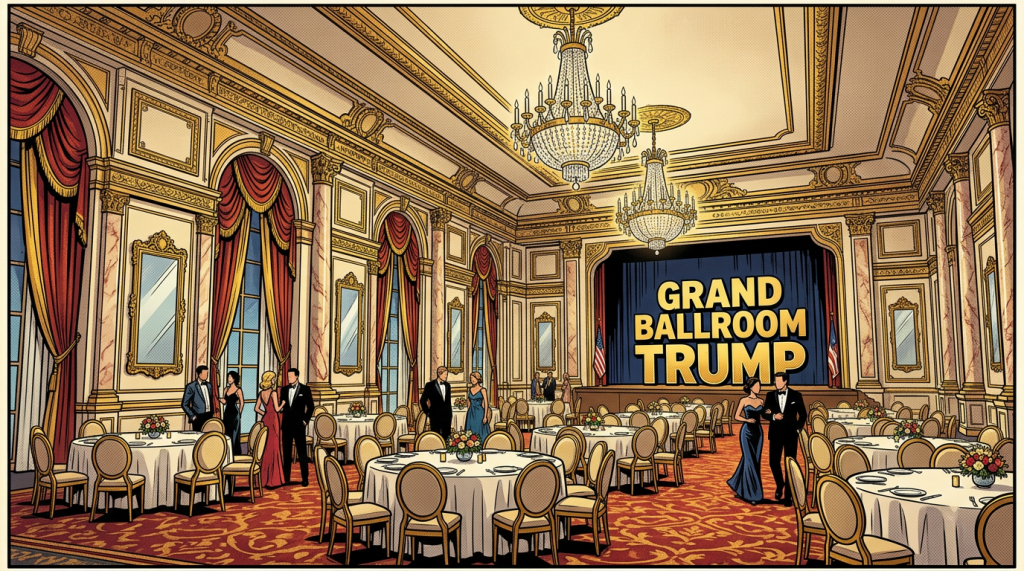
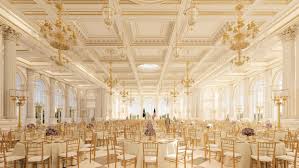
According to renderings provided by the White House, the new ballroom will feature a vast space adorned with gold and crystal chandeliers, gilded Corinthian columns, a coffered ceiling with gold inlays, gold floor lamps, and a checkered marble floor. The design has been likened to the grand ballroom at Trump’s Mar-a-Lago resort, a comparison that has not been taken as a compliment.
Many have expressed concerns that the ballroom addition is just the latest example of Trump’s insatiable need for adulation and self-aggrandizement. The project has been compared to his infamous birthday military parade, which was widely criticized as a waste of taxpayer dollars and a blatant attempt to feed Trump’s ego. Additionally, Trump’s efforts to pressure the Smithsonian to remove references to his two impeachments from its exhibits have been seen as a further attempt to rewrite history and boost his own image.
“This is just another example of Trump’s reckless disregard for the public’s interests and his own insatiable need for praise and attention,” said one critic. “The fact that he’s trying to pass this off as a ‘gift to the country’ is just laughable.”
The ballroom addition has also raised questions about the use of private donations to fund projects at the White House. While Trump has claimed that the project will be funded entirely by himself and private donors, many are skeptical about the true source of the funds and the potential quid pro quos that may be involved.
As the project moves forward, it is likely to face intense scrutiny and criticism from lawmakers, watchdog groups, and the public at large. Whether or not the ballroom addition will ultimately become a reality remains to be seen, but one thing is certain: it will be a highly contentious and closely watched development in the world of politics.