Blue Press Journal
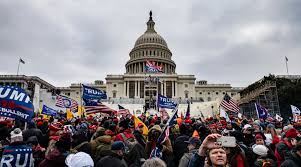
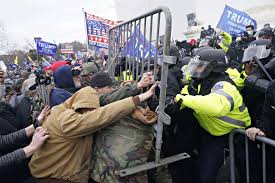
On January 6, 2021, the United States witnessed an unprecedented assault on its democratic institutions. As lawmakers gathered to certify the results of the 2020 presidential election, a violent mob stormed the Capitol — breaching security, assaulting law enforcement officers, and leaving millions of dollars in damage. The attack was not a spontaneous protest; it was the culmination of weeks of false claims about election fraud, amplified by Donald Trump.
Five years later, the events of that day remain a stark reminder of how fragile democracy can be when misinformation, political extremism, and disregard for the rule of law converge. The controversy deepened when Trump later issued full pardons to more than 1,500 individuals tied to the attack, including leaders of extremist groups such as the Proud Boys and Oath Keepers.
A Turning Point in American Political History
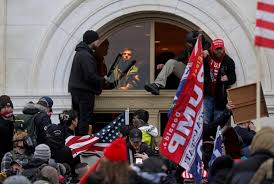
The January 6 riot was more than just a violent disruption — it was a direct challenge to the constitutional process. It exposed vulnerabilities in Capitol security and revealed the extent to which partisan polarization could fuel political violence.
The bipartisan shock that followed quickly gave way to deep political division. While many Americans viewed the attack as an insurrection and an attack on democracy, others — influenced by disinformation — downplayed its severity or sought to reframe it as a legitimate protest. This divergence in perception has only intensified the nation’s political rift.
Pardons That Undermined Accountability
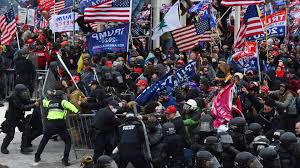
The decision to grant pardons to those involved in the January 6 attack has raised serious concerns among legal experts, lawmakers, and the public. According to a Judiciary Committee report, at least 33 of the pardoned individuals have since been convicted of, arrested for, or charged with serious crimes — ranging from child sexual assault and kidnapping to homicide and illegal firearm possession.
Rep. Zoe Lofgren (D-Calif.), who served on the January 6 Committee, criticized the pardons, stating:
“Trump likes to say he backs the blue. That’s absurd. He just pardoned the people who attacked the police.”
Such actions send a troubling message: political loyalty can outweigh accountability, even when crimes involve violence against law enforcement and direct threats to democratic governance.
The 2022 Final Report — Evidence of Intent
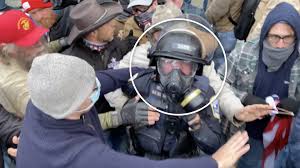
The House Select Committee’s final report in 2022 concluded that Donald Trump “purposely disseminated false allegations of fraud” to aid his effort to overturn the election. This was not a matter of misunderstanding or miscommunication; it was a deliberate strategy that fueled anger and mobilized extremist groups.
Groups like the Proud Boys and Oath Keepers were accused of spearheading the attack, coordinating efforts to breach the Capitol, and encouraging violence. Pardoning their leaders not only absolved them of accountability but also emboldened similar movements across the country.
A Continuing Threat to Democracy
The January 6 attack stands as one of the most dangerous threats to the rule of law in America since its founding. But the danger did not end when the rioters were cleared from the Capitol steps. By pardoning those responsible and minimizing their actions, a precedent was set — one that risks normalizing political violence.
Republican efforts to condone or rewrite the history of January 6 magnify the threat. It is essential to remember that democracy depends on the principle that every vote counts and that disagreements must be resolved through lawful and peaceful means.
Lessons Learned — And the Need for Vigilance
The attack prompted a sweeping reassessment of security across Washington, yet physical barriers alone cannot safeguard democracy. Preventing future threats requires:
- Accountability — Ensuring that political violence is met with legal consequences.
- Truth — Countering misinformation with verified facts.
- Civic Education — Strengthening public understanding of democratic processes.
- Political Leadership — Rejecting rhetoric that undermines election legitimacy.
January 6, 2021, will forever be remembered as the day democracy came under siege from within. The violence, the pardons that followed, and the ongoing attempts to distort the truth are a warning: democracy can only survive if citizens remain vigilant, informed, and committed to the rule of law.
The events of that day — and the decisions made afterward — underscore a sobering reality: when leaders excuse or reward political violence, they open the door to future attacks. If we are to preserve the integrity of our democratic system, we must confront these truths directly and ensure that such an assault on our institutions can never happen again.
 Blue Press Journal
Leave a comment