Tag: Iran war

  • A National Milestone, For All the Wrong Reasons: How GOP Fiscal Recklessness Pushed Our Debt Past a Grim Threshold

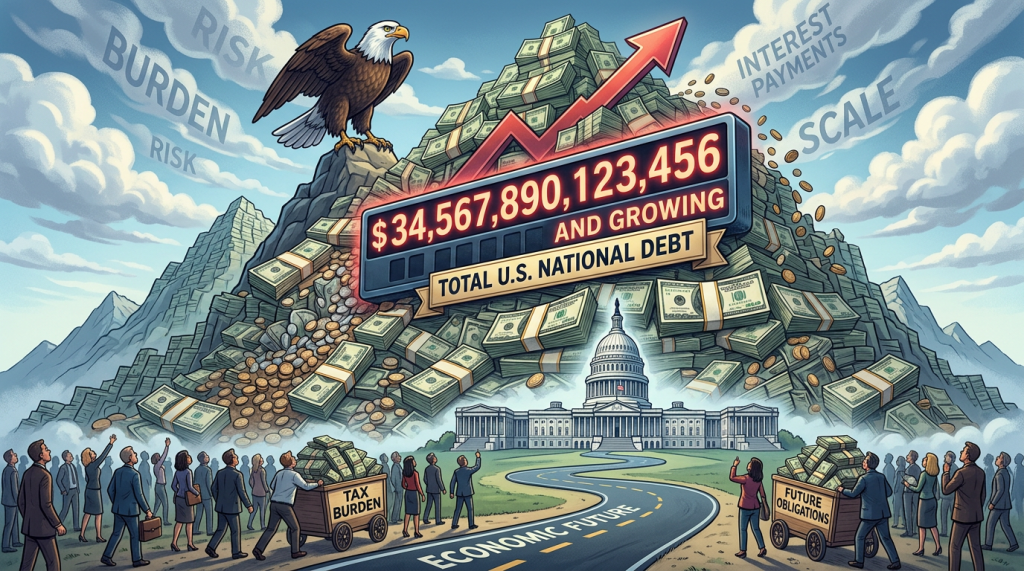
    U.S. national debt counter with $34,567,890,123,456 above Capitol building and people carrying tax burden and future obligations

    by Winston Wendell

    I’ve covered the messy space where politics and economics meet for years, and honestly, fiscal benchmarks usually come and go without much press coverage. This week’s news hits differently and it’s troubling, to say the least. The latest government numbers show that, for the first time since the aftermath of World War II, our national debt has officially blown past 100% of the country’s Gross Domestic Product. The debt now sits at $31.265 trillion, just nudging past our GDP of $31.216 trillion.

    Sure, it sounds like a dry statistic that the average American would find unimportant. But look beneath the surface, and you’ll find a story about deep fiscal irresponsibility, a story that traces straight back to choices made by the Donald Tump’s administration and the current Republican Party.

    It has not always been this way, two Democrats actually balanced the budget. President Bill Clinton balanced the federal budget, achieving consecutive budget surpluses between fiscal years 1998 and 2001 and President Lyndon B. Johnson achieved a balanced budget in 1969.

    Let’s not kid ourselves: This didn’t happen suddenly, and it didn’t happen by chance. Every recent administration has added to the debt, but one deliberate shift in policy put us on fast-forward. I point directly to the Republican 2017 Tax Cuts and Jobs Act. This was the centerpiece of Trump’s economic playbook. It sold itself as a “middle-class miracle,” but honestly, it was a massive giveaway to the wealthy where the average American saw little longterm advantage.

    The Center for American Progress, a non-partisan think tank, crunched the numbers on the law. They found that the top 1 percent got an average tax cut of $61,090, while the bottom 80 percent saw about $870. We were told growth would explode and pay for everything. That didn’t happen. The Congressional Budget Office backs that up, showing the law pumped the deficit and added about $1.9 trillion to national debt over ten years. Now we’re staring at the fallout and it’s clear what caused this.

    And circumstances are on the brink of worsening dramatically. The “Big Beautiful Bill” of 2025, the darling of Republican Congressional leaders and Trump’s staunch backers, threatens to deepen our deficit yet again, pushing through reckless tax cuts for corporations and the wealthy elite. This initiative disregards fiscal responsibility; it paves a perilous path toward financial disaster. In essence, it’s a lavish tax giveaway to the affluent, leaving the hardworking American taxpayer to bear the brunt of the costs.

    There’s another piece we can’t ignore: the cost of war. Trump’s reckless and unconstitutional conflict with Iran on shaky intelligence opened a new financial black hole. The Associated Press covered the mounting costs: Pentagon estimates put price tag for military operations in the Persian Gulf at over $1 billion a month on borrowed money, supporting a war that didn’t have to happen. These figures are backed up by recent congressional hearings.

    The Wall Street Journal points out that these massive deficits aren’t going away anytime soon. But they leave out, like most major news media, the real reason: revenue took a hit from tax cuts favoring the wealthy, while spending spiked everywhere except where it would actually help the middle class.

    That headline number of 100.2% isn’t just a statistic—it’s judgment. It stands as proof of a political mindset that threw fiscal responsibility out the window, favoring the rich and fueling pointless, expensive adventures overseas. Now, the bill for years of parties thrown for millionaires and billionaires has landed and the rest of us are left to pay it.

  • Elise Stefanik’s Defense of Trump’s Iran Genocide Threat Exposes Political Hypocrisy and Religious Contradiction

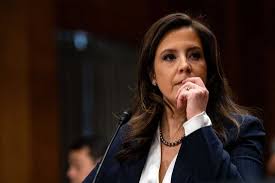
    CNN’s Jake Tapper confronted the GOP Representative over her double standards on inflammatory rhetoric, her justification for “civilizational obliteration” revealed dangerous inconsistencies in MAGA’s moral calculus. By Windsor Wendell – Blue Press Journal

    On the latest episode of CNN’s State of the Union, Jake Tapper pressed Representative Elise Stefanik about Donald Trump’s comments on Iran. But it wasn’t just routine political back-and-forth—you could actually see the strain of trying to defend her party over what was said. The whole thing was sparked by Trump’s latest social media post, where he basically threatened to wipe out Iran’s entire civilization.

    I watched Stefanik twist herself up, scrambling to make Trump’s words sound harmless. Tapper called out Trump’s post as, essentially, a “call for genocide,” even quoting the “your whole civilization will die tonight” line almost directly. Stefanik immediately jumped in, insisting Tapper was just misrepresenting what Trump meant, brushing off the threat against eighty million people as no more than “diplomatic back-and-forth.” But Tapper wasn’t stretching the truth—he was quoting Trump almost word-for-word. This was way more than a warning to the Iranian regime. It was aimed right at a whole culture, one with a long, rich history. That distinction matters, especially when you think of international law and the rules we have in place to stop genocide.

    It’s tough to ignore the double standard here, remembering how fiercely Stefanik grilled college presidents in 2023. The Guardian covered the way she went after them, claiming students who chanted “from the river to the sea” were making genocidal threats, demanding the schools condemn those protests immediately. But now, when the President uses even stronger language about annihilating Iranians, Stefanik suddenly gets cagey, refusing to call it out—and always finding a way to protect Trump. The hypocrisy is hard to watch.

    The part that really gets to me is how easily religious values get sidelined for politics. Both the Pew Research Center and the National Catholic Register say Stefanik’s a Roman Catholic. That faith puts God and the Pope above any politician. Scripture lays it out plainly—faith comes first, not political leaders. Yet here she is, making excuses for threats against civilians, showing more loyalty to a political figure than to the principles her faith is supposed to stand for. This is all happening as tensions with Tehran ratchet up even further, all thanks to President Trump pulling the U.S. out of the JCPOA and pushing his “maximum pressure” approach. The Iran nuclear deal—the JCPOA—was a 2015 agreement between Iran and the P5+1 to roll back Iran’s nuclear program as sanctions were lifted. And honestly, it was working.

    Now, with war looming, Stefanik’s shifting logic feels like a betrayal—of both her oath to the Constitution and the heart of her religious beliefs. Her district up in Northern New York deserves real answers, not dodges and blind loyalty. The bigger question is, will voters call her out and finally demand she put basic decency over political showmanship?

  • Trump’s Iran Conflict Fuels Highest Wholesale Inflation in Three Years

    Grocery store shelves showing price increases on milk, bread, eggs, and cereal

    Blue Press Journal (DC) – The escalating military engagement with Iran has propelled American producer inflation to its highest level in over three years, with the Labor Department confirming that the Producer Price Index surged 0.5% in March 2026 and climbed 4% annually. According to Bloomberg, the spike stems primarily from an 8.5% monthly explosion in energy costs as regional hostilities disrupt critical supply chains, while the Washington Post reports that retail gasoline prices have pushed consumer inflation to 3.3% over the past year.

    In spite of this growing pressure, President Trump continues to insist on reducing interest rates further, an action that the Financial Times observes runs counter to the emerging agreement between policymakers that there is a need to adopt stricter measures to avoid the economy from overheating. Even though inflation growth was only 0.1% when volatile industries were stripped off, Reuters points out that the International Energy Agency has recently made its first reduction of global oil demand forecasts since the COVID-19 period due to infrastructure sabotage and the closing of the Strait of Hormuz.

    Given that food costs offer little in terms of relief following the volatility seen in February, the potential disconnect between the government’s military and economic policies suggests that market uncertainty may persist even after the mid-term elections.

  • The High Cost of Chaos: Questioning the Trump Administration’s Iran Strategy

    Naval combat scene with burning ships, missiles, helicopters, and a soldier operating a gun on a boat

    Blue Press Journal – The escalation of conflict between the United States and Iran has pushed the global economy to the brink, fostering an environment of instability that many experts argue was entirely preventable. By initiating a campaign of military aggression without congressional authorization, the Trump administration has by passed legislative oversight, leaving the American public to bear the brunt of surging inflation and a precarious geopolitical landscape.

    Current negotiations center on a fragile two-week ceasefire, yet this “peace” effort remains deeply troubling. Critics argue that using the threat of mass civilian casualties as a bargaining chip to reopen the Strait of Hormuz is not only reprehensible but strategically bankrupt. Data from Lloyd’s List Intelligence confirms that shipping volumes plummeted 90% at the height of the conflict, while reports from the Financial Times indicate that Iran intends to levy hefty cryptocurrency tolls on vessels—effectively turning a vital international waterway into a proprietary toll road.

    The administration’s shifting narrative and erratic policy goals have created what many characterize as a “credibility gap.” While the White House touts progress, the Associated Press notes that claims of regional stability are contradicted by continued missile fire reported across Kuwait, the UAE, and Qatar. Furthermore, as the New York Times reports, the imposition of $2 million fees per ship suggests a significant concession that threatens the status of the Strait as an international waterway.

    Many military analysts have a scathing assessment of the presidents war describing his current posture as a “total fold.” After weeks of reckless bluster, the U.S. now finds itself negotiating on terms dictated by an Iranian 10-point proposal. We are left asking: What has actually been gained? With Iranian nuclear capabilities degraded, by how much? Now we face the potential for Russian or Chinese rearmament of Iran looming, the administration’s strategy appears to be a reactive, uncoordinated mess.

    If an American president cannot maintain a coherent policy, ignores the potential for long-term strategic catastrophe, and accelerates the financial hardship of working families, we must critically evaluate their fitness for office. This unnecessary war, characterized by its lack of transparency and disregard for international norms, remains a defining failure of the Trump administration.


  • Trump’s 2027 Budget: A $500 Billion Pentagon Surge at the Expense of Seniors and the Nation

    Blue Press Journal – The White House’s latest fiscal‑year 2027 budget request places an unprecedented $1.5 trillion in defense outlays on the table—an increase of roughly 42 % that eclipses any military expansion since the Cold War.  According to Reuters, the proposal earmarks nearly $500  billion for the Pentagon while slashing $73  billion from non‑defense programs. 

    The cuts are not abstract; they target the Environmental Protection Agency’s environmental‑justice initiatives, renewable‑energy grants, community‑service block funding, and, most alarmingly for seniors, a proposed reduction in Medicare’s supplemental supportThe New York Times has warned that trimming Medicare could force millions of retirees into “catastrophic” out‑of‑pocket expenses, undermining the social safety net that the United States built after World War II. 

    Even as the administration touts a “historic” investment in the Department of Homeland Security, it simultaneously promises a $350 billion “slush fund” for an aggressive posture toward Iran—an approach that The Washington Post describes as a “reckless escalation that risks dragging the nation into another costly conflict.” Critics argue that the budget’s war‑centric focus dovetails with a broader “America Last” philosophy, where essential services such as child care, Medicaid, and affordable housing are deemed expendable. 

    Public‑policy experts, including co‑president of Public Citizen Robert  Weissman, call the plan “a moral obscenity.” If enacted, the budget would push non‑defense discretionary spending to its lowest level in modern history, leaving seniors, students, and climate‑action programs to bear the brunt of the fiscal sacrifice. 

    Congress must scrutinize this proposal, demand transparency from OMB Director Russell  Vought, and protect the health and security of American families from a budget that prioritizes war over welfare.

    Fediverse Reactions
  • Trump’s Easter Remarks on Sacrificing Medicare for War Buried by Media Blackout

    Trump signing 'Medicare Repeal Act' with 'Eliminating Medicare for Seniors' sign and 'PRESIDENT' nameplate.

    Blue Press Journal 4/3/2026

    The footage vanished from the White House website within hours, but the implications remain impossible to erase. During a private Easter lunch gathering, President Donald Trump reportedly abandoned any pretense of federal responsibility for American families, declaring that his administration could not afford to fund child care, Medicare, or Medicaid while financing military interventions abroad. Business Insider preserved the video before it disappeared. Mainstream networks barely mentioned it.

    This was not merely another offhand comment in the chaotic theater of the Trump presidency. It was a rare moment of candor revealing a calculated trade-off: the health and security of senior citizens and young families sacrificed on the altar of unnecessary military adventurism. While the drums of war beat louder against Iran—opposed by even our closest allies—the administration effectively signaled its intent to balance the budget for conflict by gutting the social contract.

    The silence of the major networks is not a simple lapse—it is a flagrant violation of the First Amendment’s purpose. Rather than scrutinizing a Commander‑in‑Chief who, behind closed doors, treats Medicare as a pawn in his foreign‑policy games, the news media have chosen sensationalism. They have bent to the lure of easy storylines, allowing the genuine, growing dangers to our nation’s stability to fester unseen, unreported, and ignored. The fourth estate should be holding power to account, not surrendering to convenient narratives.

    The consequences of this journalistic failure will fall heaviest on those least equipped to bear them. Seniors facing the erosion of medical coverage will confront the same bureaucratic indifference that launches Tomahawk missiles. Young families struggling with childcare costs will watch resources diverted to theaters of war that strategic experts warn were never necessary for American security.

    When a president openly concedes that he cannot afford both bombs and benefits, democracy requires a press corps willing to amplify that confession. Instead, the deletion of digital evidence was met with collective shrugs from newsrooms that once prided themselves on speaking truth to power. The video may have disappeared from official servers, but the truth it contained—that this administration views its vulnerable citizens as acceptable losses in budget wars—deserves resurrection.

    The cost of war is always measured in more than dollars. For millions of Americans, that price will be extracted in denied prescriptions, foreclosed medical care, and the quiet desperation of parents who cannot afford both rent and daycare. The media had one job: to ensure those voices weren’t drowned out by the sound of silence.

    WATCH: The White House took down this video, but we still have it. Trump: We can't take care of daycare. We're a big country. We're fighting wars. It's not possible for us to take care of daycare, Medicaid, Medicare, all these things.

    The Lincoln Project (@lincolnproject.us) 2026-04-02T15:45:28.821986468Z
  • Trump’s $200 Billion Iran Conflict: Funding Forever Wars by Slashing American Healthcare

    Cartoon THE BIG SNIP: GOP elephant cuts HEALTHCARE FUNDING ribbon; signs read SAVE OUR CARE and PEOPLE OVER PROFITS.

    Blue Press Journal – The escalating prospect of a $200 billion conflict with Iran under Donald Trump’s “America First” banner is exposing a deep hypocrisy in current Republican fiscal policy. National leadership is now eyeing drastic cuts to Medicaid and essential nutrition programs to bankroll foreign military intervention—a move that prioritizes global volatility over domestic survival.

    As reported by The Hill, House Budget Committee Chair Jodey Arrington is championing this pivot, framing a “war on fraud” as a convenient mask for gutting social safety nets. However, this strategy is meeting fierce resistance from those who see it as a betrayal of the working class. HuffPost notes that millions of Americans have already lost insurance coverage due to previous GOP maneuvers, yet Trump’s allies seem intent on further dismantling healthcare to finance a reckless Middle East strategy.

    Critics argue this policy shift is not only economically dangerous but morally bankrupt. According to The New York Times, the reliance on “reconciliation” to bypass legislative debate shows a willingness to sacrifice the health of the American public for unilateral executive aggression. Rather than focusing on the surging cost of living, which Reuters reports remains a primary concern for the electorate, this administration’s trajectory trades the well-being of families for the catastrophic costs of an avoidable war.

  • Trump’s Reckless Rhetoric: Provoking War Crimes in Iran?

    Blue Press Journal – Donald Trump’s recent threats to obliterate Iran’s energy infrastructure and desalination plants have ignited a firestorm of criticism, drawing widespread condemnation from international legal experts and human rights organizations. Such declarations, made on his Truth Social platform, are not merely bombastic; they represent a dangerous escalation that eminent figures warn could constitute war crimes under international law.

    Trump’s explicit warning of striking “all of their Electric Generating Plants, Oil Wells, and Kharg Island (and possibly all desalinization plants!)” has been met with urgent concern. Former Swedish Prime Minister Carl Bildt unequivocally stated that “attacking civilian infrastructure, and acutely desalination plants, is a war crime.” Brian Finucane, a senior adviser at the International Crisis Group, echoed this sentiment, calling the categorical framing of these threats a clear indication of a “threat to commit war crimes.”

    The humanitarian implications are catastrophic. Erika Guevara-Rosas of Amnesty International highlighted that such actions would “plunge an entire country into darkness,” potentially depriving millions of their fundamental human rights to water, food, healthcare, and an adequate standard of living. As Kenneth Roth, former executive director of Human Rights Watch, told The New York Times, there’s “no difference between what Trump is threatening to do in Iran and what the International Criminal Court charged four Russian commanders for doing in Ukraine,” referencing recent ICC arrest warrants for targeting civilian objects.

    Iran, a water-stressed nation, faces suffering despite the aid of desalination plants. Grist’s Frida Garza noted that attacks on power plants could cripple water treatment, causing scarcity and disease. Iran’s refusal for direct diplomatic talks threatens Middle East stability and adherence to international law. Trump’s reckless policies invite further instability and humanitarian disaster.

  • Trump’s Iran War Faces Diplomatic Revolt as Allies Declare ‘Not Our Conflict’

    Blue Press Journal – As the Trump administration escalates military operations in Iran, Washington confronts mounting isolation from its closest Western partners. During a tense G7 foreign ministers’ summit at Vaux-de-Cernay Abbey outside Paris, major NATO allies made clear they want no part in offensive operations against Tehran, according to coverage from Reuters and the Associated Press.

    French Defense Minister Catherine Vautrin explicitly distanced Paris from the conflict, declaring the war “is not ours” while emphasizing strictly defensive positioning. The remarks, reported by France 24 and European outlets, underscore deepening transatlantic fractures four weeks into the American and Israeli military campaign that has roiled global oil markets and threatened regional stability.

    Multiple EU governments revealed they received no prior consultation before Washington launched strikes, despite facing severe economic consequences from the resulting instability. British Foreign Secretary Yvette Cooper acknowledged London’s divergence from U.S. strategy, favoring diplomatic channels over offensive military action, while German Foreign Minister Johann Wadephul emphasized post-conflict planning for Strait of Hormuz security rather than active combat participation, according to BBC and Guardian reports.

    The diplomatic rupture widened when Trump publicly berated NATO allies during a Thursday Cabinet meeting, falsely claiming the alliance had done “absolutely nothing” regarding Iran. This criticism ignores that Canada, France, Germany, Italy and Britain—all G7 members—belong to NATO while maintaining sovereign foreign policies independent of Washington’s unilateral decisions.

    Compounding anxieties, Secretary of State Marco Rubio suggested Ukraine might face diverted weapon shipments for Middle East demands, prompting urgent German warnings against compromising Kyiv’s defense. French Foreign Minister Jean-Noël Barrot secured G7 consensus on immediate civilian protection and freedom of navigation in Hormuz, sidelining the administration’s go-it-alone approach as Trump complains about insufficient support for his widening war.

  • Trump Dismisses Iran War Economic Costs as “Short-Term” While Americans Face Surging Oil Prices

    Digital gas price sign showing Unleaded 5.89 9/10 with concerned customers nearby.

    Blue Press Journal – President Donald Trump openly acknowledged this week that military confrontation with Iran would trigger severe economic consequences, stating the potential for skyrocketing energy costs and stock market declines “didn’t matter to me” during a Republican fundraising address (Associated Press).

    The admission comes as crude oil prices hit $99.75 per barrel and national gas prices jumped roughly 30%, driven by Iranian retaliation and the blockade of the Strait of Hormuz (Forbes). While the billionaire president—whose net worth recently exceeded $6 billion through cryptocurrency investments—calls these disruptions temporary, working families face hardship. Seattle commuters report abandoning personal vehicles for lengthy public transit routes as operating costs become unsustainable (HuffPost).

    Trump’s justification that previous presidents “lacked the guts” to strike Iran has collapsed under scrutiny. Bill Clinton, Barack Obama, Joe Biden, and George W. Bush all denied the alleged private conversations where they supposedly expressed regret for not initiating conflict (The Wall Street Journal).