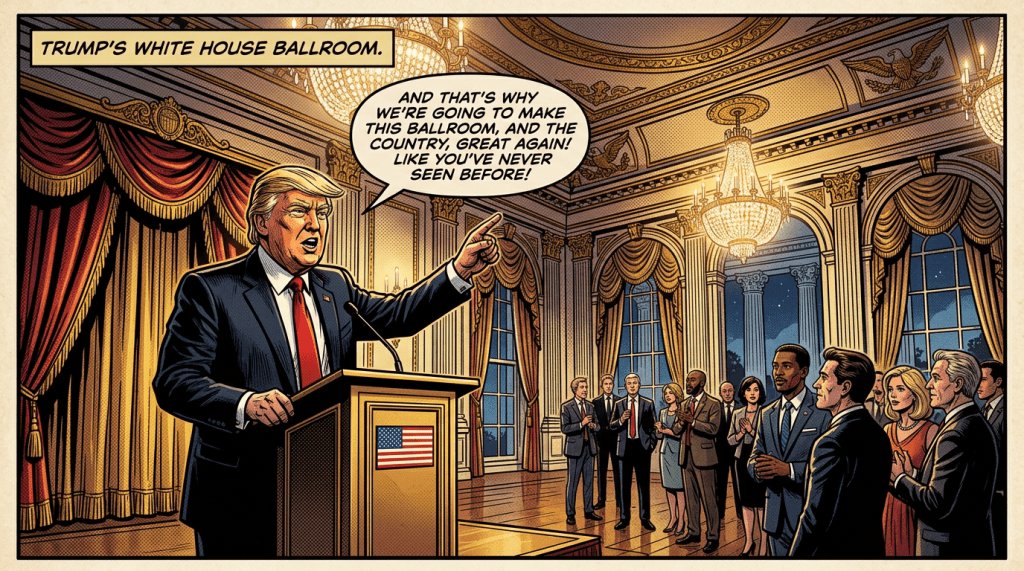
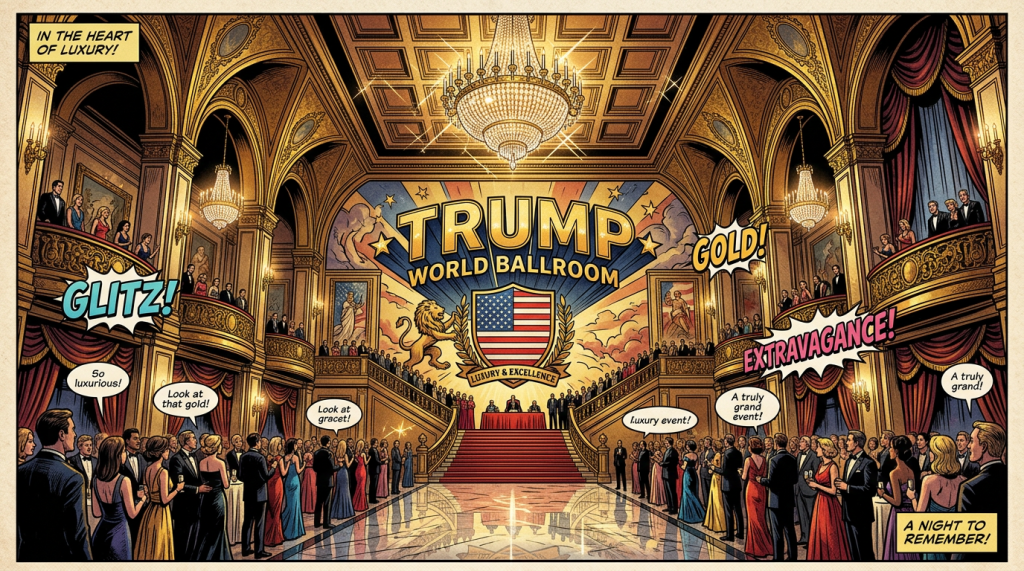
WASHINGTON – A federal appeals court has paused construction on President Donald Trump’s budgeted 400 million-dollar project of the White House ballroom. The court ruled that building the ballroom should be immediately stopped from proceeding with any jobs “above ground”, including features the government claims are necessary security measures.
.
On Friday, a 2-1 panel of the D.C. Circuit Court of Appeals ruled to uphold a preliminary injunction against the President. The National Trust for Historic Preservation, an organization that protects buildings, filed the injunction in December 2025 after the administration began demolition of the East Wing to make way for a 90,000 square foot subterranean ballroom not approved by Congress.
Patricia Millett’s and Bradley Garcia’s opinions, in which they ruled in favor of preservation, were joined by judges who were appointed by President Barack Obama and Joe Biden. They stated that the Constitution does not permit presidential edicts to dictate the use of federal resources.
They continued, “whether a large ballroom should be built…is a decision for Congress, not the President” due to the fact that the Constitution grants spending authority over the federal assets to lawmakers, not the executive branch, despite the security reasons cited by the administration.
However, the decision to halt the work was only made official for two weeks in order to allow the Trump administration to appeal to the U.S. Supreme Court.
Neomi Rao, who was nominated by President Trump, filed a dissenting opinion in response to the majority’s ruling. She stated that the injunction which stopped the work was an act of judicial activism.
“By stepping in and taking control over something as monumental as the White House, the district court engaged in judicial activism,” she wrote. “Courts shouldn’t be running building projects”
The administration’s original plan was to decommission the East Wing while keeping the West Wing as a separate unit. However, the White House Complex’s budget requires funding beyond the president’s official salary so the administration argued that the entire wing be demolished to make way for the expansion of the subterranean chamber.
Furthermore, the administration claims that the ballroom project is part of larger security upgrades to the complex.
President Trump expressed dissatisfaction with the decision in his Truth Social page. He stated that the ruling was “politically motivated and completely illegal.” He argued that not completing the ballroom project endangered future presidents, staff, diplomats, and the general public.
The two-week pause in the construction of the ballroom project means that the future of the project depends on whether or not Trump’s emergency appeal to the Supreme Court is granted.
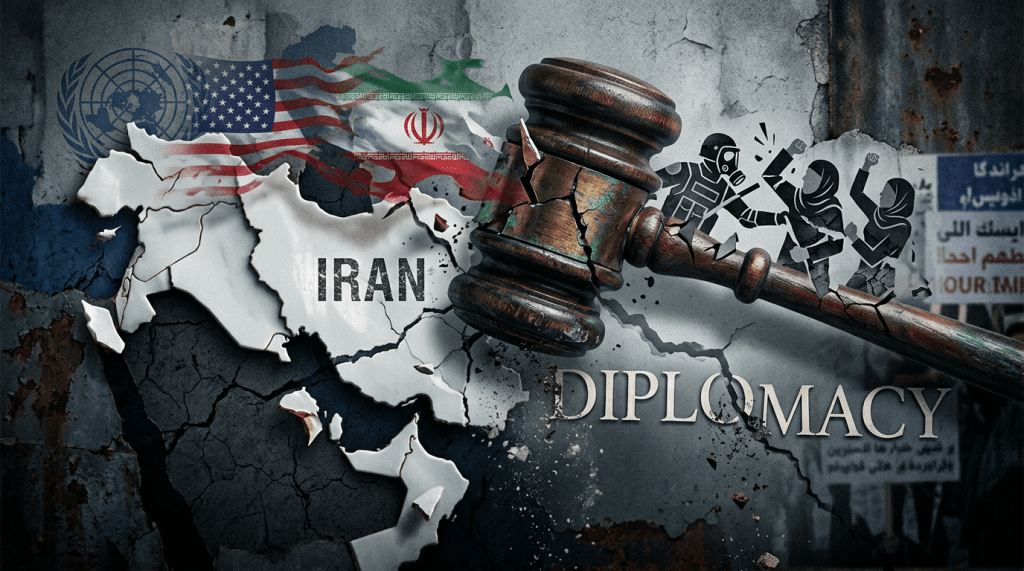
How Trump’s “Bold” Moves Turned a Working Iran Deal Into a Self-Inflicted Crisis
by Winston Wendell
Wars don’t always begin with explosions. Sometimes you lose before a single shot—when your rivals grow stronger, your network of allies weakens, and your own choices hurt more than help. That’s what happened after Trump tore up the Iran nuclear deal, the JCPOA, and started his so-called “maximum pressure” campaign. Looking back now, it’s clear: all that posturing did more harm than good.
Let’s break down how we got here—how the tough talk just made things messier, gas prices spiked, markets stumbled, and even America’s best friends started doubting us.
Grandstanding Isn’t the Same as Getting Results
Trump loved making a scene. He’d throw out fiery tweets, trash the Iran deal at every rally, and promise something “better.” He called the JCPOA weak, claiming it caved to Tehran and left America empty-handed.
But reality didn’t match the rhetoric. The facts were plain: the JCPOA was working. Iran cut its enriched uranium stockpile by 98%, dismantled thousands of centrifuges, and opened up its nuclear sites to unprecedented inspections from the IAEA. The deal put hard limits in place.
Still, the Trump administration never came up with a better alternative. All “maximum pressure” really meant was punishing sanctions, hoping Iran would fold and come crawling back. Of course, that didn’t happen. Instead, Iran held its ground, which is pretty much what history teaches us about relying on pressure without a backup plan.
Walking Away From Progress
The Decision
In May 2018, Trump yanked America out of the JCPOA and hit Iran with sanctions again. I remember thinking: why break something that’s actually working? The real answer wasn’t about better policy. It was politics.
Immediate Fallout
Iran didn’t just shrug and take it. They cranked up uranium enrichment, ignoring the deal’s strict limits. Suddenly, the path to building a bomb got a lot shorter.
Diplomatic ties started unraveling. The negotiating group shrank, with the U.S. out and Europe struggling to shield Iran from American sanctions. Everyone’s bargaining power sagged without U.S. support.
America’s allies noticed. When one country tears up a major deal, trust dries up fast. It’s not easy earning that back.
Leaving the JCPOA handed Iran a whole new set of advantages: the freedom to enrich more uranium, the chance to play the victim, and a divided bunch of opponents.
The Economic Domino Effect: Oil, Markets, Wallets
Oil Prices Spike
Sanctions knocked 2–3 million barrels of Iranian oil a day off the world market. Saudi Arabia and Russia tried to cover the slack, but oil prices still jumped from $70 a barrel to nearly $85 in a few months.
We felt it, our weekly gas bill jumped about 15%. Drivers everywhere noticed, along with businesses shipping goods or running trucks.
Markets Wobble
Investors hate not knowing what’s next. Trump’s moves spread uncertainty all over:
Stock markets bounced around, especially for energy companies and businesses with a Middle East footprint. Countries like India, China, and South Korea scrambled to find new oil suppliers. Their budgets felt the hit and so did the cost of goods at home.
These numbers weren’t just for headlines. Groceries cost more, energy bills crept up, and even retirement savings got dinged if they were tied to the markets. Decisions in Washington rippled straight to regular people.
Leaving Allies Out to Dry
Europe on the Spot
Europe tried to save the JCPOA with a workaround, INSTEX, but without U.S. backing, European companies ran for cover. I remember German and French leaders sounding pretty frustrated, caught between supporting the deal and avoiding U.S. penalties.
Asia’s Dilemma
Japan and South Korea got a few short-term waivers to keep buying Iranian oil. But every few months, diplomats scrambled to figure out what Washington would do next. It was exhausting for everyone involved.
Trust Gets Shaky
When the rules keep changing, allies grow suspicious. NATO wasn’t thrilled. Neither were old partners, watching America toss aside another agreement. Doubt crept into military exercises, intelligence sharing, and every future negotiation. And that kind of mistrust is hard to reverse.
Why “Maximum Pressure” Missed the Mark
The biggest mistake? Betting it all on sanctions without leaving room for real negotiation. Iran’s leaders just doubled down, ramped up their nuclear work, and kept stirring up trouble in the region. More pressure just meant less cooperation, not more.
So what did the U.S. get? A dead inspection program, an Iran with more nuclear options, shaky world markets, and cooler alliances all around. Everyday Americans ended up paying for it.
Honestly, a smarter move would’ve been to stick with JCPOA inspections and use them as leverage to fix the deal’s flaws on missiles, on regional actions. Not trashing the whole thing.
Lessons for Next Time
Here’s what I take away:
If something’s working, don’t destroy it, improve it. Check if it’s actually hitting its goals, then build on that. Sanctions only work if there’s an exit. Just squeezing harder makes the other side push back.
Stay tight with partners. America’s strongest when its friends trust and cooperate. Go it alone, and you end up isolated and less effective.
When Showmanship Wins, Everyone Pays
I watched the fallout from one attention-grabbing decision echo all the way from the UN to my local pump. Trump’s bold moves made for good TV but wrecked progress and ordinary people picked up the bill.
The Iran deal wasn’t perfect, but it did the job. Scrapping it gave Iran new momentum, touched off economic pain, strained alliances, and made life harder for regular folks.
If we want to avoid repeating this, we need to stick with what works, trust the facts, and focus on steady, smart partnerships. Real strength isn’t just about big talk. It’s about reliable leadership that others (and the world) can count on.
If this breakdown made sense to you, pass it on or subscribe for more straight-shooting analysis on politics, economics, and global security.
President Barack Obama defended the Joint Comprehensive Plan of Action (JCPOA) with a blunt warning: “The choice we face is ultimately between diplomacy or some form of war.”
Now, years later, I watch that warning turn painfully real. When Donald Trump pulled the United States out of a nuclear deal that had kept Tehran’s nuclear ambitions in check, his administration threw the country into a disaster of its own making.
On the military front, this war’s a failure from every angle. Targeted strikes came and went, and the Iranian government endures, now with even tougher hardliners from the Islamic Revolutionary Guard Corps in charge. Iran still holds most of its missile stock, its mobile launchers, its underground bunkers. Drone and missile factories keep running. Worst of all, Tehran’s grip on the Strait of Hormuz—is even tighter. Those photos of commercial ships stuck near Larak Island say it all. Washington’s shortsighted choices gave our adversaries control of some of the world’s most important economic lifelines.
The cost? It’s staggering, both in dollars and lives. We burned through about $25 billion at the start, and the spending hasn’t stopped. At home, Americans feel it everywhere, gas prices, groceries, you name it. But it’s the human cost that hurts most. U.S. service members have died, and hundreds cope with wounds they’ll never shake, all for a conflict with no clear end, no real transparency, and not a word of congressional approval. Like millions of others, I feel deep frustration. This is a war with no purpose, no strategy, and no exit.
Trump’s aggressive reversal left America boxed in with terrible options. If Washington caves to Tehran—giving up huge sums of money or control over the Strait of Hormuz—we abandon the basic principle of free maritime navigation. Global commerce depends on that. An emboldened Iranian regime, flush with cash, will just buy new air defenses, load up on missiles, and use the Strait for leverage as long as it wants.
No one wins here. There’s only the bitter fallout of a war we never needed, a conflict that put America’s security at risk, bled our economy, and left the world less stable than ever.
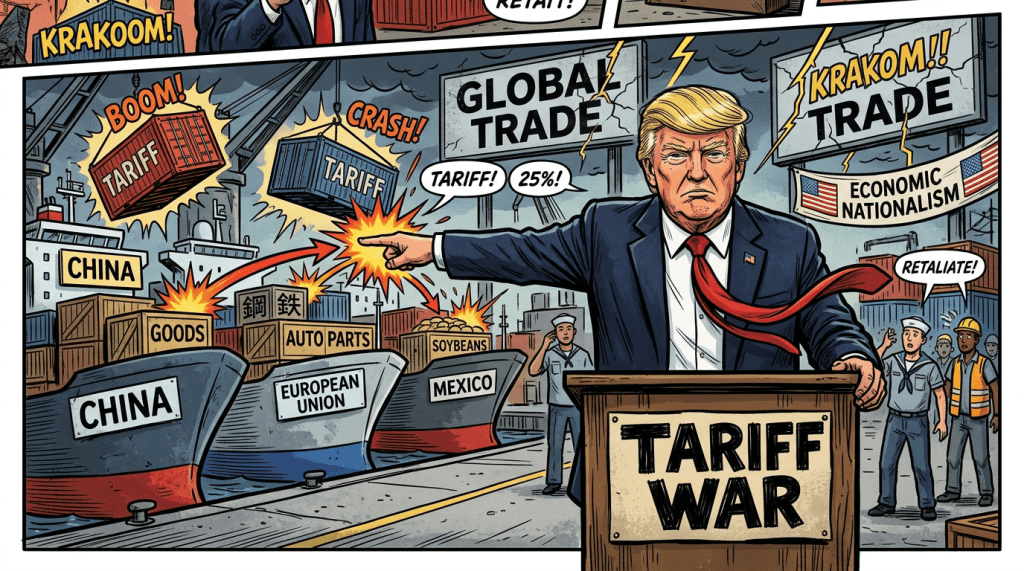
The Tariff Trap: Why Trump’s Economic Obsession Risks a “Catastrophic” Reckoning
by Winston Wendell
Watching the latest news about Donald Trump and his planned wave of new tariffs, I can’t help but feel like we’ve seen this before—and not in a good way. Trump likes to talk up these tariffs, spinning them as a way to force other countries to play by our rules and to shield the American economy. But truthfully, the reality looks a lot harsher. What we’re seeing is a strategy built for show, not for the real grind of keeping supply chains steady and costs down for everyday Americans.
Inside Trump’s own circle, people seem alarmed. The Financial Times reported that his advisers are scrambling behind the scenes, trying to steer him off this dangerous path. These aren’t just casual disagreements; his team is pulling the fire alarm, warning that this move could turn out to be a disaster.
What really worries me is how this policy feels like a classic “shoot the messenger” move. We all saw what happened during Trump’s first term: other countries fired back with their own tariffs, American factories struggled, and farmers got stuck with huge losses as export markets dried up. Even with the economy on shaky ground right now, Trump looks set to gamble one more time.
People are stretched thin—prices at the gas pump are heading toward $4 because of turmoil in places like Iran, and Americans are feeling the squeeze every time they shop or drive. Most voters aren’t happy with how Trump has handled living costs. And now, he wants to slap on new tariffs, knowing that every extra tax at the border gets passed straight to shoppers. That’s not just risky for a campaign—it really feels like economic arrogance.
Then there are those behind-the-scenes talks about dodging Supreme Court limits by labeling the tariffs as probes into “forced labor.” It’s a tactic, sure, but a pretty cynical one. Instead of leading with sound economic thinking, this approach depends on bending the rules to please his supporters, even if it causes bigger problems for everyone else.
At the end of the day, Trump’s advisers have good reasons to worry about the political fallout. If the idea is to protect American jobs, these tariffs could backfire and hurt the same prosperity he talks about defending. By shutting out the practical warnings from his own team, Trump is gambling with the one thing that was supposed to be his strongest campaign argument: the economy. At this point, we’re staring down the road to a trade war that could make life a lot more expensive for the people he swore to help.
I’m at my desk, coffee going cold next to a stack of briefing notes, trying to make sense of the noise before Trump’s primetime address on July 16, tonight. Networks keep dropping hints, he’ll talk about “integrity of the U.S. electoral process.” No surprise there. He’s been crying about this topic ever since 2020, and the tension tonight isn’t just about midterms coming up. There’s hype about new declassified intel that’ll supposedly back up claims of foreign meddling.
After years following these political showdowns, I see three simple layers.
First, Trump’s story really hasn’t changed much. Since 2016, he’s warned that mail-in ballots and voting machines are risks. His warnings turned into bills like the SAVE America Act, which push for stricter voter ID and tighter registration. Even when his own team ran election security in 2020, he stuck to the same talking point: the system’s rigged and only tough reforms can rebuild trust.
Second, the intel folks and outside experts don’t buy it. Renee DiResta at Georgetown reminds everyone that Trump’s own appointees led security through the last election, and oversight was intense. Her point, echoed by Lawrence Norden at the Brennan Center, is that you have to separate foreign “influence”, the usual disinformation, from actual “interference,” which would mean someone hacked votes or tampered with databases. All the credible sources say that just didn’t happen in a way that could’ve shifted results. In 2021, the NIC, DOJ, and DHS all agreed: sure, Russia, Cuba, and Venezuela ran influence ops, but nobody messed with the vote counts themselves.
Third, the courts didn’t see any evidence, either. Over sixty lawsuits challenged the results, none succeeded. The 2020 election was watched closer than any before, and Biden’s 306 electoral votes and seven-million lead stand. In 2022, a bipartisan panel went through everything again and said the same. Despite all the noise and lawsuits, the system worked.
So what’s Trump going to say? If the new “declassified” info just recycles old news about small-scale influence campaigns, it’ll land as more rerun than revelation. But the goal is pretty transparent: keep doubts alive, energize his base, push for stricter voting rules, and keep this issue hot as 2024 gets closer.
As the clock drags toward primetime tonight, I wonder what viewers are really in for, a real call for better election security, or another round of practiced accusations, heavy on suspicion, short on facts. All the data points one way. In the end, the question is whether Americans can tell the difference between a real threat and a story told for political effect from Trump’s deranged mind.
Watching this election season unfold, I can’t help but notice how much Donald Trump seems to have run out of new tricks. Same old slogans, the usual list of complaints, those rallies loaded with nostalgia and bitterness, they’re just not hitting like they used to. Now, with his usual playbook worn thin, Trump’s decided to go back to one of the oldest strategies around: fearmongering, this time in the threadbare costume of anti-communism. It’s basically Cold War reruns, and honestly, it should have stayed in the past.
Trump’s Playbook Feels Tired
Here’s what stands out to me: Trump’s running on empty. He can’t lean on the economy, it’s a tough sell when folks see their paychecks eaten up by inflation each month, buying less and less while everything keeps getting pricier. That “economic revival” he pushed in 2016? People know it never materialized.
Foreign policy? Not much shelter there either. The situation with Iran is unresolved, his tariffs fell flat both as leverage and as economic policy, and he didn’t end the war in Ukraine like he’d said he would. These aren’t just small blips, this is the story falling apart, top to bottom. Any claims that Trump had some special knack for foreign affairs ring hollow now.
Even his supposed home turf—immigration and mass deportations—has run out of steam. The drama just doesn’t whip up crowds the same way. The talking points sound old, and voters seem to see his proposals for what they are: more show than action.
Dragging Out the Red Scare
So, what does he do when the old moves don’t work? He leans on the most cynical tactic in conservative politics: calling progressive leaders “communists.” This isn’t new. It’s almost identical to the “Red Scare” playbook from after both world wars—a moment when anti-communist panic was turned into a weapon to smear the left, ruin reputations, and block policies that might actually help people.
When Senator Joe McCarthy whipped up anti-communist frenzy, he wasn’t protecting democracy. He was out for power, and he used fear to silence critics and strengthen his own hand, tearing down any institution that didn’t fit his vision. It’s the same story, just dusted off for a new generation.
This wasn’t just McCarthy, either. After World War II, Republicans tried to brand the New Deal as communism, which couldn’t be further from reality. Southern segregationists then used the same trick to demonize civil rights activism and labor movements. This tactic helped the GOP grab power in 1946 and launched careers like Richard Nixon’s. But strip away the drama, and it was always about fear and spin, not the truth.
Take Trump’s speech at Mount Rushmore, he stood there and painted the country’s 250th birthday as a final battle against “radicals” threatening American values. He made it sound like you either vote for him or open the door to communist takeover. It’s right out of the old playbook, like a rerun that hopes to scare up different results.
Completely Out of Step
What stuns me most is just how out of touch this approach is with what’s happening today. Trump tries to paint people like Zohran Mamdani or Alexandria Ocasio-Cortez as dangerous left-wing radicals, but it just doesn’t stick. Their ideas, Medicare for All, affordable childcare, making big corporations play fair—these aren’t communist schemes. They’re attempts to fix real, everyday problems for Americans.
And the old scare words are losing their bite, especially for younger people. Look at the numbers from the Cato Institute or Axios-Generation Lab—Gen Z doesn’t have much faith in a capitalist system that leaves them struggling to afford housing, healthcare, or any sense of security. “Socialism” isn’t an insult to them; it’s looking more and more like a possible solution. The same solution “ Social Security” was for their grandparents and parents.
The fearplay that fired up older crowds just doesn’t connect with young voters who already feel the system’s failed them. It’s not that Democrats are messaging badly. The ground is shifting, and younger Americans simply see the economy differently.
What Trump’s Really After
If I’m honest, Trump’s jump into anti-communist theatrics isn’t going to do much for him in the midterms. More than that, it says something larger about who he really is. People care more about trust in their government right now—they’re worried about corruption and democracy falling apart, not labels that have lost their punch.
What bugs me most is that Trump doesn’t have any real philosophy or plan. He’s not out to save America from socialism. He just craves the spotlight. It’s self-preservation masquerading as political battle, a last-ditch attempt to stay relevant by recycling the ghosts of McCarthy and his mob.
The guy who once bragged about being a “stable genius” is grabbing for the loudest, tiredest tricks in the book. This isn’t leadership. It’s just survival, and that really says it all: Trump isn’t leading anybody, he’s just refusing to take the exit. The anti-communist schtick is just his latest attempt to find an audience.
So, as the midterms draw closer, I’m not really scared. I’m almost curious. The show goes on, but the crowd’s losing interest. Eventually, even the most desperate act has to face the music when the seats are empty.
I’ve watched the Democratic Party stretch to build a bigger tent, always talking up diversity and inclusion, but never at the expense of democratic values or national security. Lately, though, I can’t ignore it any longer: there’s a limit to what the party can tolerate. Some statements and associations just go too far, drifting out to the fringes, even slipping into anti-American territory. After Darializa Avila Chevalier won the 2026 primary in New York’s 13th District, it’s clear she shouldn’t just slide into Congress. The party needs to act, now, before she’s elevated as a new face of the Democratic Party.
The warnings started early. On October 8, 2023, right after Hamas attacked Israel, Avila Chevalier joined a pro-Palestinian protest in Times Square. Protest is a right, sure. But the timing and the setting sent a message that struck many as flat-out hostile toward a close U.S. ally. Critics jumped on the moment, calling it “tone-deaf,” and it’s haunted her ever since, fueling a steady campaign controversy.
Look no further than her social media history. In 2019, Avila Chevalier posted, “I wiped my hand on an American flag instead of a napkin.” Far from a throwaway joke, this was a calculated insult to a symbol that service members have died defending. She followed that up during the 2020 election by trashing her own party’s nominee, calling Joe Biden a “rapist” and “war criminal,” and calling the U.S. a “f**king disgrace.”
Now, she claims she has “matured” since then. But a sudden change of heart doesn’t erase the record, especially for someone in their 30s. You simply cannot publicly mock the flag and then pretend to share the values of mainstream Democrats.
Her suggestion to unite the Dominican Republic and Haiti went over terribly. She claimed that if the island had never split, it could have been one unified nation.
People immediately warned her to back off. Why? Because the Dominican Republic fought hard for its independence from Haiti. Bringing up a “unified island” triggers deep, historic fears for Dominican voters who are fiercely protective of their sovereignty.
Instead of clearing the air, she completely dodged the question during a Spanish radio interview. Bailing on the conversation only made her look guilty, leaving voters more suspicious than ever.
The issues don’t stop there. Her policies lean further left than even the most progressive lines. She calls herself a “prison abolitionist,” but when asked whether convicted murderers should go to prison, she dodged the question. She told the New York Editorial Board she’d “rather focus on fixing the systemic root causes of violence.” That isn’t leadership—it signals she’d rather excuse violent crime than enforce the law.
Then there’s her 2022 tweet about Ukraine. She accused the United States of “bullying Russia ever since the Cold War ended,” like Russia’s full-scale invasion of another country didn’t even matter. Even after fierce criticism, her response was tepid at best barely acknowledging Ukraine’s plight, still demanding a diplomatic “solution” that would reward Russian aggression.
The Democratic Party can’t afford to repeat the GOP’s mistake of coddling voices on the fringe until they wreck the party’s credibility. Too much is at stake now: our reputation, trust from voters, and national security. Party leadership has to show where the line is, and not seat Avila Chevalier as a Democrat. It’s time to say stop—to refuse to keep anyone who opposes the nation’s defining principles, or else risk handing our opponents a win and losing the voters we’re supposed to stand up for.
The Democratic Party history is to support progress, inclusion, and upholding the law. Darializa Avila Chevalier’s record shows she doesn’t share those values. I’m calling on party leaders: take a stand, reject her candidacy, and keep the party rooted in the values that have always sustained American democracy.
France feels different this week, quiet, maybe a bit somber. A decade of upended traditions is ending not with a bang, but a sigh. Take Donald Trump: he’s at his sixth G7, but the old swagger is gone. Back in 2017, you couldn’t miss him: loud, insistent, pulling everyone’s attention his way. Now? He looks worn down. Age hangs on him, the kind you can’t hide, no matter how much makeup you skip. At 80, the relentless drive isn’t there anymore. He seems smaller, almost faded, and it’s obvious the world isn’t watching him like it used to.
His “big moment” in France—a supposed landmark deal with Iran—barely turned heads. Sure, there’s talk of a $300 billion economic boost for Tehran, lifting oil sanctions, and calling for a ceasefire. On paper, that sounds ambitious, a shot at lasting peace. But in reality, it just seems like an exhausted attempt to end a mess that’s sapped America’s cash and reputation. Benjamin Netanyahu already brushed it off. This isn’t bold diplomacy; it’s almost a repeat of Trump’s old routine, only without the drama.
The contrast with Trump’s early G7 days is jarring. 2018, 2019—he showed up chomping at the bit. He demanded Russia’s return to the fold, gave NATO leaders lectures about money, even tried to turn the meetings into commercials for his hotels. That relentless energy, gone now. There’s a distant air about him. Ukraine barely comes up, and when it does, he sounds tired, going through the motions. The other G7 leaders feel the shift. They don’t count on the US for guidance the way they used to. They’re making their own plans for Kyiv, building their own safety nets.
Everyone sees this drop in US influence. Pete Hegseth’s offhand remarks about the D-Day legacy still sting on this side of the Atlantic, and Europe’s leaders seem more focused than ever on going their own way. Waiting for Washington? Not anymore, they’re tired of the mood swings.
Even the summit trappings fell flat. The German Chancellor handed Trump a soccer jersey. He barely cracked a smile, just mumbled thanks. At Versailles, standing in the hall of mirrors, gold everywhere, he looked a little more comfortable. Maybe it was all that gleaming reminder of power. For a second, you could almost believe he belonged.
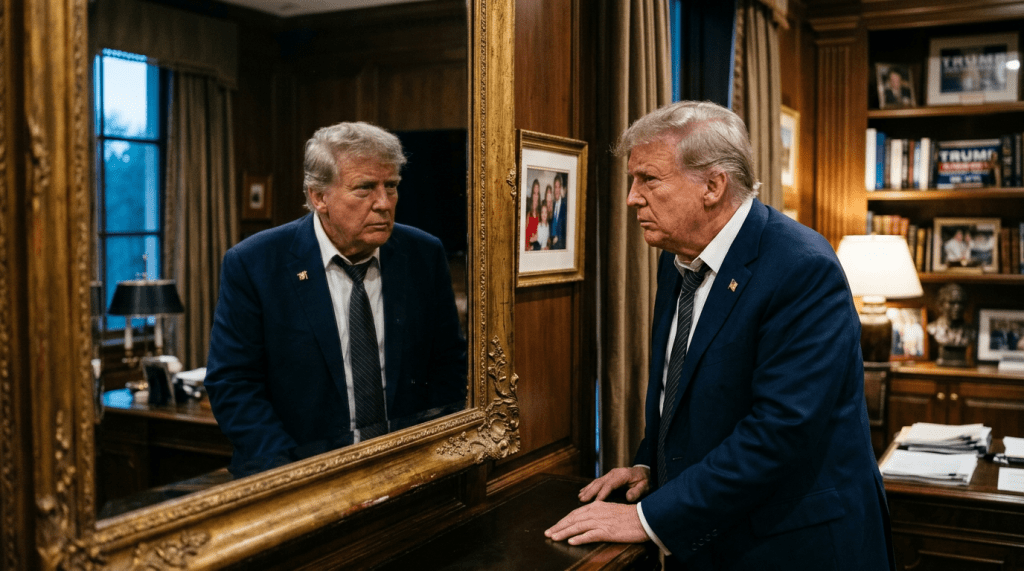
When it’s time to head home, Trump isn’t the “great negotiator” he set out to be. There’s no big legacy, no Nobel Prize, none of the things he once seemed sure he’d win. What’s left is an uncertain scene, with his spot in world affairs slipping away. Maybe, back in Washington, he’ll dream up another grand project—a hall of mirrors just for him. That’d fit. In these final days, it’s like he can’t look anywhere but at his own reflection. His aging reflection.
Donald Trump always called himself the king of making deals, a real budget hawk who’d slash government waste wherever he found it. But when you start looking closely at the ballooning costs of his White House ballroom project, a whole different story starts to surface. Instead of thrift, you see broken promises, some pretty clever budget gymnastics, and a jaw-dropping bill of $300 million dumped straight onto the American people.
At first, the ballroom was supposed to be a $200 million renovation, all paid for by private donors. That promise didn’t last. Now it’s ballooned to a bloated $600 million construction saga. Even worse, the whole idea of “private funding” just fell apart. An investigation from The Washington Postfound that taxpayers are now picking up about half the tab, even though Trump kept insisting otherwise.
Clark Construction, the company handling this massive overhaul, spelled out exactly how things got off track. This project isn’t just a fancy party room anymore, they’ve expanded it to include full demolition of part of the East Wing, plus a high-security underground bunker. Sure, presidents need security. But nobody’s been upfront about where the money’s really coming from, and that’s got critics riled up.
Look at the numbers. Project summaries from March lay it all out: the Secret Service is kicking in $155 million; the White House Military Office, another $149 million. They’re even pulling $3 million from the Executive Residence budget. Instead of just calling this what it is, spending on a luxury ballroom, they’re labeling everything as “security upgrades.” Outlets like The New York Times keep pointing out this move; it’s classic Trump-era accounting.
The $400 million gap between what was promised and where things stand now says a lot. This is an administration, Donald Trump, that loved grand promises, but flopped on fiscal responsibility. By burying construction costs inside military and Secret Service budgets, they’ve hidden just how expensive this ballroom actually is.
So as the total skyrockets, everyday Americans are left utterly bewildered. How on earth did a project billed as “privately funded” morph into a public bill? For a president who claimed to be the champion of cutting government fat, this outrageous $600 million ballroom is shaping up to be the poster child for the very wastage and irresponsibility he vowed to eradicate.
The recently released 2026 Social Security Trustees Report has ignited a fervor of alarm among fiscal conservatives and so-called policy experts. Their fixation is on the alarming headline: by 2034, Social Security may face the grim reality of being unable to fulfill its commitments, potentially resulting in a staggering 22 percent cut for recipients unless lawmakers act decisively to secure new funding.
But after spending sometime with the actual projections, I see three major points that usually get lost in the noise:
First, the supposed economic catastrophe of the trust fund running dry simply isn’t as bad as people make it sound.
Second, the main reason Social Security faces this shortfall is fifty years of wealth shifting toward the very top.
Third, the so-called Social Security “crisis” doesn’t even come close to matching the kind of military spending increases Donald Trump is pushing in his 2027 budget. Let’s break these down one by one.
The Nuance of Trust Fund Accounting Start with the first point: the trust fund itself. There’s always confusion around how it really works. When Social Security starts tapping its trust fund, which could happen in 2033, it’s drawing on the bonds the fund holds—money that comes from the Treasury, ultimately. The key thing here? Whether the program is redeeming bonds in 2033 or has run out of them by 2034, the Treasury is the one paying the bills either way.
Yes, it’s true that—under current law—Social Security has a legal right to the funds needed to redeem those bonds, but not an explicit right to keep paying full benefits once the trust fund runs out. Legally, this distinction matters when it comes to running the program. But economically, the money still comes from the same place. If we can afford full benefits when the trust fund is being redeemed, nothing fundamental changes once the trust fund’s empty—Congress just has to change the law. The capacity to pay benefits is a matter of real resources, not accounting rules.
So, when people talk about the trust fund running out, it’s much more of a legal and political challenge than an actual economic wall. That’s a detail people need to understand before declaring a “crisis.”
How Wealth Redistribution Impacts Social Security The next factor is income distribution. Go back to 1982—the last major Social Security reform. At that time, about 10 percent of all wage income went over the payroll tax cap (now around $185,000) and escaped the 12.4 percent Social Security tax. Today, that’s nearly 17 percent.
We’re not just talking about more rich people—the whole system tilts more wage income past the cap, exempting it from taxes that support Social Security. And this doesn’t even factor in the broader shift from wages to corporate profits over twenty-five years. Put simply: revenues that should have supported Social Security have been steadily siphoned upward, out of the program’s reach.
Here’s the kicker: many of the folks who pushed the trade deals, intellectual property protections, bank bailouts, and tech policies that concentrated this wealth are now the loudest in calling for Social Security cuts. When I look at the numbers, the pattern is clear: years of economic policies pushed the money upward, and now, those same voices argue that programs for everyday Americans are unsustainable. That only makes sense if you ignore where the money went.
Military Spending vs. Social Security: A Matter of Scale Finally, let’s put the Social Security “shortfall” in perspective by comparing it to military spending. The media loves to toss around giant budget numbers, but rarely do we get real context. The same people sounding alarms about Social Security’s budget gap barely blink at massive defense increases.
Just look at Donald Trump’s proposal: he wants the Pentagon’s budget to leap from $864 billion (Biden’s last year) to a wild $1.5 trillion in 2027. Even if you adjust for inflation, that’s nearly $590 billion more in a single year. And what’s the reasoning for that kind of jump? You won’t find it in Trump’s campaign promises.
Stack up the numbers: at an inflation-adjusted 2.5 percent annual rate, Trump’s military spending request hits almost $700 billion above current levels (in 2034 dollars). Social Security’s projected shortfall for that same year? $314 billion.
No matter how you slice it, Trump’s planned military bump dwarfs Social Security’s gap—it’s over twice as big. If Social Security’s deficit is a “major fiscal challenge,” then logically, Trump’s military buildup is much, much worse.
Even more, remember: Social Security’s funding isn’t just another line item—it’s payroll money already paid in by millions of workers. It’s a shuffle within the government’s own finances. But the military increase is pure new spending: an extra 1.6 percent of GDP yanked straight from the Treasury, putting real strain on the broader economy.
If you’re serious about fiscal responsibility, you can’t claim Social Security is a problem and then look away from military spending on this scale. It’s just not honest.
Here’s what it Means Let’s cut to the chase: the so-called looming Social Security “crisis” is nothing but a flimsy narrative that disintegrates under real scrutiny. The trust fund? It’s merely an accounting gimmick, not a hard economic boundary. The so-called funding shortfall is a reflection of deliberate choices that funneled billions into the pockets of the GOP’s billionaire elite, not some unavoidable demographic catastrophe. It’s striking how those who scream about a $314 billion gap in Social Security conveniently overlook the staggering nearly $700 billion surge in military spending.
So the real question isn’t about whether we can “afford” Social Security. It’s whether we’re ready to have a genuine, all-in conversation about what our priorities are—with every number, not just the convenient ones.




 Blue Press Journal