Tag: Protectionism

  • The Cost of Trump Protectionism: Assessing the Economic Strain of 2025‑2026


    By Winston Wendell

    It has been quite an eventful year – to be more precise, the economic policy of President Trump during his second term of office is turning ordinary everyday activities into a burden. Americans jokingly refer to the current situation as “Trumpflation”. However, one might wonder what is causing the increase of prices? Let us examine the causes in detail.
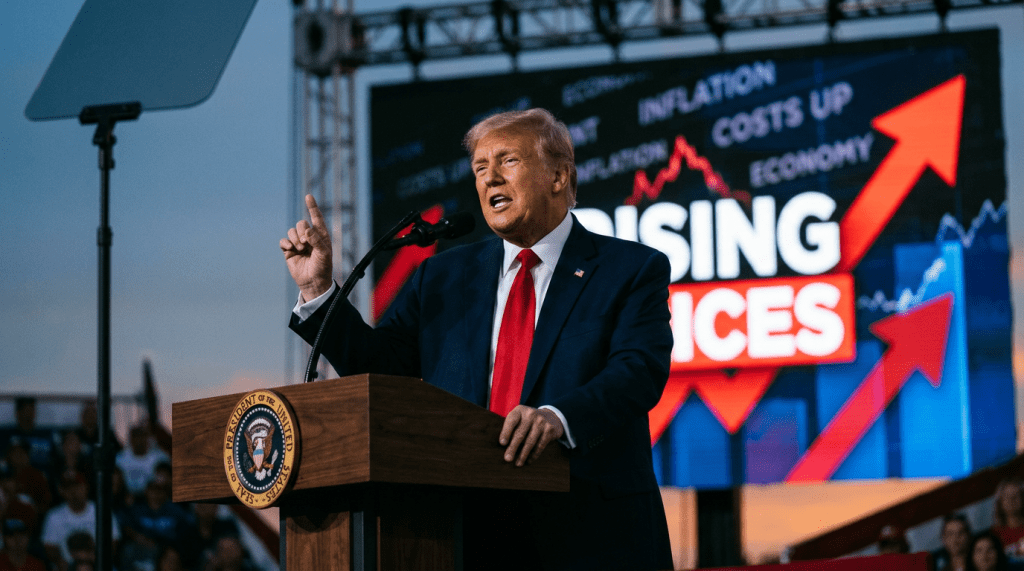
    Former U.S. president giving speech at podium with 'Rising Prices' and inflation graphics behind him

    Tariffs and Price Surges

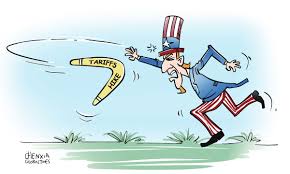
    In 2025, President Trump introduced the tariffs of 10% on imports and 60% on imports from China, claiming that it will boost production in the USA. However, economists from the Peterson Institute did not hesitate in criticizing the move as a sales tax for citizens.

    By June 2026, the level of inflation in the USA reached 6.5% which is the highest one since before COVID-19.

    One of the places where this process becomes obvious is a local supermarket. America is still dependent on foreign fertilizer, chemicals, and farming equipment. As a result, any increase in the costs of importing them makes local products more expensive. A gallon of milk cost increased by almost 80% reaching $5.10. Moreover, even staple goods and food are increasing in price faster than the rate of inflation, and families making $50,000 to $150,000 a year face this problem.

    Oil Shock: The Iran War and Gasoline

    However, things get worse overseas. By the end of 2025, Trump began to attack Iran causing the start of what became known later as “The Iran War”. This led to the closure of Strait of Hormuz which accounts for 20% of global oil transportation. As a result, gasoline prices exploded.

    As a result, in early 2026, the average price of gasoline reached $5.65 a gallon. In Arizona and in the Midwest regions, the price per gallon was $6. With the yearly mileage of 12,000 miles, one will spend additional $1,200 on gasoline. Such expenses become unbearable for families with low budgets.

    Forbes reports that small businesses suffered a great deal from the situation described above – particularly those which use trucks and ships. Many business owners decided to increase their prices, but some of them simply had to fire some workers to pay for their increased costs.

    The 2025 Tax Law: The Winners and Losers

    Also, Trump passed the tax reform legislation known as “the Big Beautiful Bill”. It was said that such legislation would benefit ordinary Americans. However, the examination of the law shows that most of the profits will not reach Americans. Corporate tax breaks which were introduced in 2017 remained unchanged, but sales and excise taxes increased drastically. The Congressional Budget Office and Tax Policy Center calculated that the 1% of the richest Americans received 65% of the total benefits, and most of other people received no or little changes to their wallets.

    Such conclusion is supported by data from the Federal Reserve. Any advantage gained from tax breaks disappeared in front of rising prices. Families with middle incomes of $100,000 decreased their disposable income by 3 to 4% between 2024 and 2026.

    How Everyone Survives

    People are talking about this problem constantly. According to the Gallup poll conducted in June 2026, 68% of Americans believe that the current trend of the national economy is heading downwards. Also, according to the survey conducted by Pew, more than 75% of Americans are worried about the food and gas prices; they blame the trade war for keeping inflation.

    What Will Happen in Future?

    The Federal Reserve announced that it will continue holding interest rates at present levels to bring prices down. However, with constant tariffs and conflict with Iran, such action seems rather fruitless. Also, based on conversations with the experts, they claim that as long as the protectionism and foreign disputes remain the focus of government policy, stagflation (a combination of slow growth and high prices) is imminent.

    Such trends cannot be overlooked. It is tariffs, foreign conflicts, and tax reforms favorable to corporations which increase the cost of goods for Americans. For America’s middle class, the slogan “America First” is becoming synonymous with spending extra money on goods and gasoline.
    Fediverse Reactions
  • Trump’s Tariff Tantrum: Why a One-Two Punch on Canada and Generic Drugs Hurts America and the GOP

    by Winston Wendell

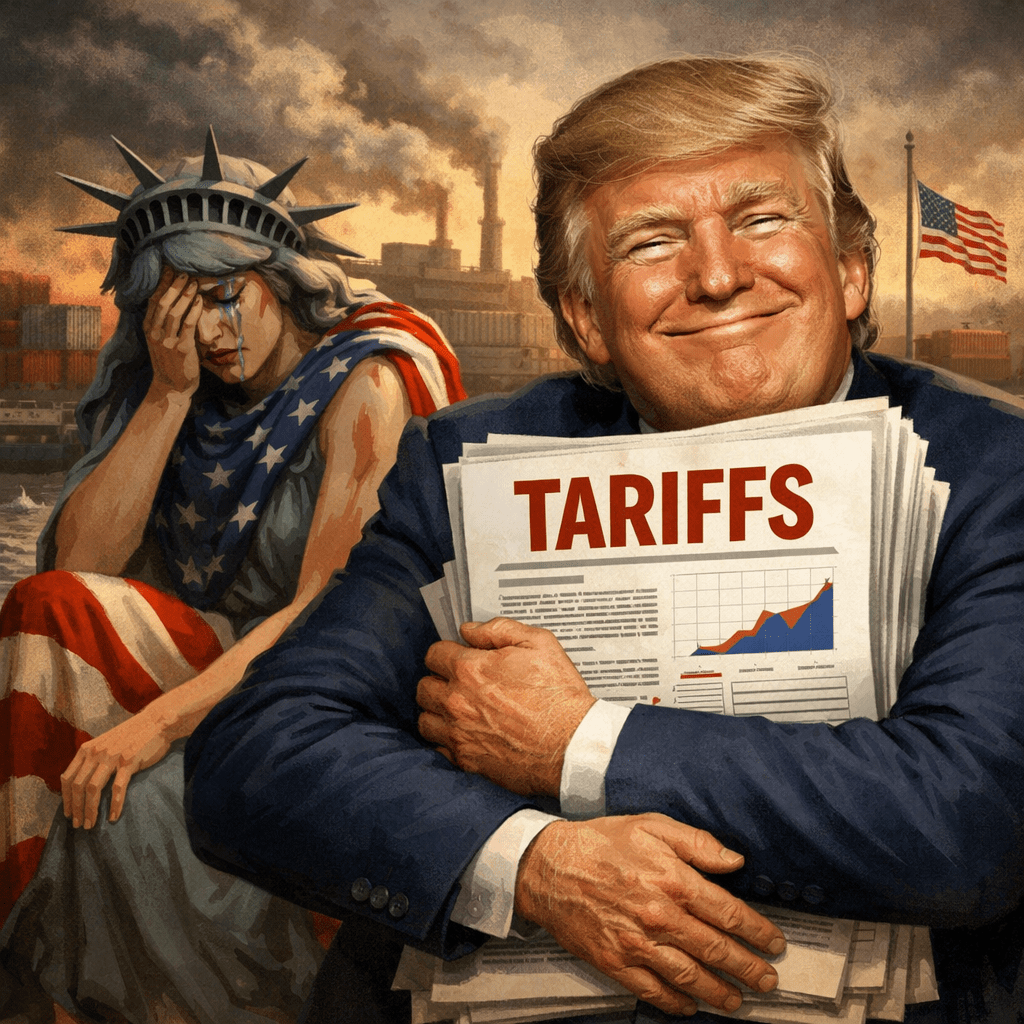
    I’ve watched the White House do the same thing over and over: grab a tariff, call it “targeted,” and insist it’ll only hurt foreign rivals. But now, they’re rolling out up to 50% tariffs on $20 billion of Canadian goods and threatening a 100% duty on generic pharmaceuticals starting in 2028. It’s familiar, sure except the risks are bigger and the fallout is faster. As someone who wants economic policy to help regular people, not steamroll them, I see this as a costly mistake. It’ll drive up prices, mess up supply chains, and chip away at the Republican Party’s standing with the voters it claims are its top priority.

    Donald Trump hugging papers labeled tariffs with a sad, crying Statue of Liberty draped in the American flag

    A Costly Bet on a Tired Storyline

    Trump’s obsession with tariffs really took off during the China fight in 2018 and 2019. He pitched those tariffs as “tough love,” meant to bring jobs home. Now it’s the same formula: slap a 50% tariff on Canadian goods like hockey equipment, lumber, alcohol plus a 100% duty on generic drug ingredients set to hit in 2028. This time, tariffs on Canada start August 19, 2026, while the drug measure waits two more years.

    Officials claim the grace period gives businesses time to “brace for impact” and that consumers won’t feel the squeeze. But history is pretty clear. Back in 2018, a Peterson Institute study showed about half the cost of U.S. tariffs winds up in consumer prices. So, when that burden lands on working families, the same folks Republicans are eyeing for November it’s more than just a broken promise; it’s downright cruel.

    Consumers Can’t Dodge the Fallout, Even with Exemptions

    The White House points out that groceries, energy, and other basic goods aren’t on the list, arguing inflation’s about housing and gas not hockey sticks. Still, thinking tariffs on “signature” Canadian goods won’t ripple out is just wishful thinking. Canada sends $383 billion in goods to the U.S. each year, and the $20 billion targeted for tariffs is baked right into our supply chains.

    Canadian softwood lumber is a textbook example, it’s crucial to construction and furniture in the States. A 50% duty squeezes supply, making homes and rent pricier something voters in states like Michigan, New York, and Pennsylvania are already upset about. Bloomberg says a lumber tariff could add costs to a new Midwestern home. That’s not just a number; it’s real money for families trying to secure a roof.

    Now look at the 100% threat on generic drugs. This isn’t about everyday aspirin, it’s the bulk pharmaceutical ingredients manufacturers need. When costs jump, the price hike rolls right down to patients. Reuters reports a common generic heart medication shot up 12% in the past year, more so as the White House added new duties in 2024. For seniors and low-income Americans who rely on affordable generics, the chance of prices doubling is alarming.

    The Political Math Just Doesn’t Work

    Republican strategists hope tariffs will feel too abstract for voters to notice. But every poll says the opposite. Quinnipiac’s June 2026 survey showed 57% of likely mid-term voters worried about inflation, 22% specifically troubled by prescription drug costs. Gallup found 61% of Americans now see trade policy as crucial, a sharp change from 2016 when hardly anyone cared.

    Even a senior White House aide quietly admitted, “Any talk about more tariffs, unless it’s about cutting them, spells trouble for Republicans.” Yet the administration keeps going, banking on a tough image to rally the base. Trouble is, that base isn’t so uniform; a lot of those folks are already stretching to handle the higher costs from Trump’s old trade battles. When the impact finally lands at the pharmacy or lumberyard, the political math flips against the GOP.

    Canada Fights Back and So Does U.S. Industry

    Canada isn’t just watching. Officials warn of big consequences on both sides. If the U.S. wins concessions, like getting American liquor back in Canadian stores there’s no guarantee Canadians will actually buy it. Canada’s trade ministry expects a 50% tariff could cut U.S. imports of Canadian wood, paper, and farm goods by around 30% in two years.

    That means trouble for local economies built on cross-border trade. Maine’s paper mills and Michigan’s auto-parts suppliers are barely hanging on. Patrick Woodcock, Maine’s Chamber of Commerce chief, didn’t mince words: hundreds of local businesses are reconsidering operations and getting ready for shocks that threaten jobs. When tariffs disrupt material flow, the hurt spreads farther than just importers, it hits manufacturers, transport, and workers.

    Tariffs Are a Blunt Tool, Not a Strategy

    Trump’s heavy reliance on tariffs doesn’t get much love from economists. The IMF’s 2024 report warned that hiking tariffs by yourself, especially over and over, just drives up domestic costs without any of the promised leverage. Legally, there’s not much support either. The Supreme Court ruled 6–3 on February 20, 2026, that President Trump overstepped his authority by using the 1977 International Emergency Economic Powers Act (IEEPA) to impose sweeping global and reciprocal import tariffs. That ruling casts a shadow over every new tariff the administration tries.

    The Bottom Line

    I see Trump’s latest tariff threats as political moves dressed up as strategy, ignoring clear evidence. Higher prices hit consumers, supply chains get backed up, and the GOP’s “average American” story rings hollow. Delays and carve-outs won’t stop the fallout, expect inflation in home materials, medicine, and more.

    Fediverse Reactions
  • Why Trump’s New Tariff Obsession is a Dangerous Gamble

    The Tariff Trap: Why Trump’s Economic Obsession Risks a “Catastrophic” Reckoning

    by Winston Wendell

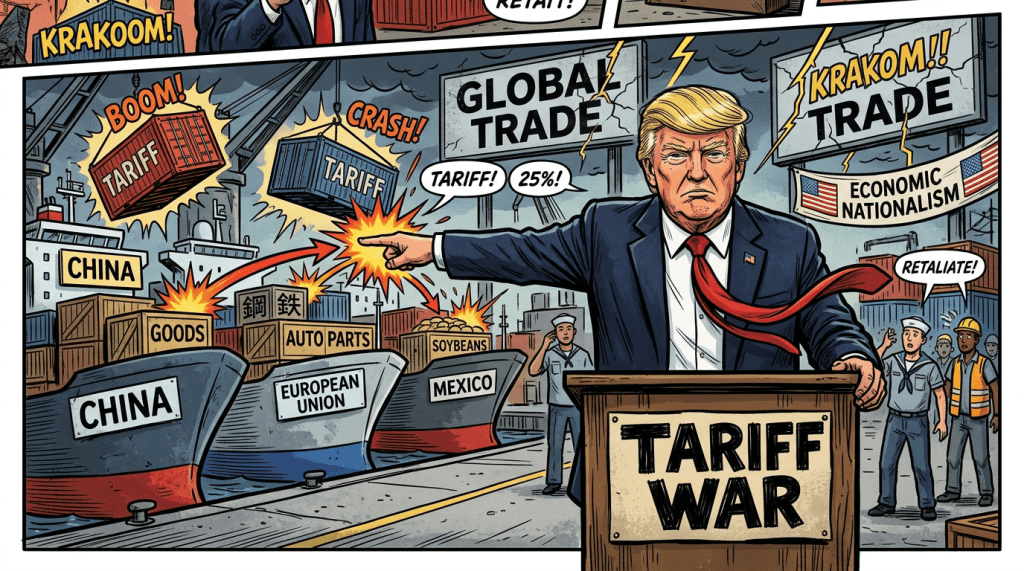
    Watching the latest news about Donald Trump and his planned wave of new tariffs, I can’t help but feel like we’ve seen this before—and not in a good way. Trump likes to talk up these tariffs, spinning them as a way to force other countries to play by our rules and to shield the American economy. But truthfully, the reality looks a lot harsher. What we’re seeing is a strategy built for show, not for the real grind of keeping supply chains steady and costs down for everyday Americans.

    Political cartoon of a man pointing at cargo ships labeled China, European Union, Mexico with tariff containers causing explosions and trade conflict

    Inside Trump’s own circle, people seem alarmed. The Financial Times reported that his advisers are scrambling behind the scenes, trying to steer him off this dangerous path. These aren’t just casual disagreements; his team is pulling the fire alarm, warning that this move could turn out to be a disaster.

    What really worries me is how this policy feels like a classic “shoot the messenger” move. We all saw what happened during Trump’s first term: other countries fired back with their own tariffs, American factories struggled, and farmers got stuck with huge losses as export markets dried up. Even with the economy on shaky ground right now, Trump looks set to gamble one more time.

    People are stretched thin—prices at the gas pump are heading toward $4 because of turmoil in places like Iran, and Americans are feeling the squeeze every time they shop or drive. Most voters aren’t happy with how Trump has handled living costs. And now, he wants to slap on new tariffs, knowing that every extra tax at the border gets passed straight to shoppers. That’s not just risky for a campaign—it really feels like economic arrogance.

    Then there are those behind-the-scenes talks about dodging Supreme Court limits by labeling the tariffs as probes into “forced labor.” It’s a tactic, sure, but a pretty cynical one. Instead of leading with sound economic thinking, this approach depends on bending the rules to please his supporters, even if it causes bigger problems for everyone else.

    At the end of the day, Trump’s advisers have good reasons to worry about the political fallout. If the idea is to protect American jobs, these tariffs could backfire and hurt the same prosperity he talks about defending. By shutting out the practical warnings from his own team, Trump is gambling with the one thing that was supposed to be his strongest campaign argument: the economy. At this point, we’re staring down the road to a trade war that could make life a lot more expensive for the people he swore to help.

    Fediverse Reactions
  • Trump’s Tariff Recalibration: Legal Setback Ignored, Consumers Still Face the Bill

    Blue Press Journal – A recent Supreme Court decision has delivered a significant legal setback to former President Donald Trump’s trade agenda, curtailing his ability to unilaterally impose tariffs under the International Emergency Economic Powers Act (IEEPA). However, this judicial review appears to be little more than a momentary speed bump for an administration determined to reconstitute its protectionist apparatus, with grave implications for American consumers and businesses.

    The 6-3 ruling, issued Friday, clarified that while IEEPA grants the president power to regulate trade for national security in emergencies, it does not extend to levying tariffs – a power reserved exclusively for Congress. This decision validates the concerns of thousands of businesses, potentially opening avenues for tariff refunds. Yet, Trump, undeterred, quickly announced his intent to employ alternative legal frameworks, vowing “much higher” tariffs for any nation perceived to be challenging his trade policies.

    Economists like Diane Swonk of KPMG suggest the White House anticipated this outcome, noting the administration has been “preparing for this” by identifying other levers. Trump’s immediate response included moving to impose a 10 percent universal tariff via Section 122 of the Trade Act of 1974, ostensibly to address balance of payments issues – a justification many experts find dubious. More enduringly, the administration is now pivoting towards Section 301 of the Trade Act of 1974 and Section 232 of the Trade Expansion Act of 1962.

    Section 301 empowers the president to impose tariffs in response to a foreign country’s unfair trade practices. This provision has a lengthy history, notably used by Trump against China during his first term. Its established precedent makes it a formidable tool, with experts like Edward Alden of the Council on Foreign Relations believing courts are unlikely to second-guess executive judgment under this authority.

    Meanwhile, Section 232 grants expansive power to impose tariffs on products deemed a threat to national security. Trump previously applied this to steel and aluminum imports, later extending it to goods like autos, lumber, and even furniture, often with questionable national security justifications. While some applications of Section 232 appear tenuous, courts historically defer to presidential assessments of national security, making challenges difficult.

    Crucially, regardless of the legal mechanism, tariffs are not paid by foreign governments or producers; they are a tax levied on domestic importers, which is then passed directly to American consumers in the form of higher prices. This hidden tax reduces purchasing power and stifles economic growth. As Goldman Sachs analysts Alec Phillips, Elsie Peng, and David Mericle warn, this constant recalibration of trade policy introduces significant volatility, disrupting global supply chains and creating uncertainty for businesses. The Supreme Court may have pruned one branch of Trump’s tariff strategy, but the root system remains deeply entrenched, promising continued turbulence and higher costs for ordinary Americans.

  • Trump’s New Tariffs: Another Costly Tax on American Families

    Blue Press Journal – In a move that has once again ignited concerns across the economic landscape, the Trump administration has announced a sweeping 10% tariff on goods imported to the U.S. from across the globe. This comes hot on the heels of a Supreme Court ruling on Friday, which deemed the administration’s previous use of the International Emergency Economic Powers Act (IEEPA) for issuing tariffs as unjustified. Despite this judicial setback, the President quickly pivoted, citing Section 122 of the 1974 Trade Act to impose these new levies, which are set to take effect on February 24th.

    While the administration touts these “import taxes” as a strategy to address “large and serious” trade deficits, the overwhelming consensus among economists and trade experts is clear: tariffs are not paid by foreign producers; they are a tax paid by American consumers and businesses.

    The Illusion of Protection: Who Really Pays?

    The notion that tariffs are a punitive measure exclusively against foreign nations is a dangerous misconception that has plagued Trump’s economic policy. In reality, when a tariff is imposed, it’s the American importer—a company, large or small, that brings goods into the country—who pays that tax to the U.S. Treasury. To recoup these costs, importers typically do one of two things:

    1. Raise Prices: They pass the increased cost directly onto consumers through higher retail prices.
    2. Absorb Costs: They absorb the cost, leading to reduced profits, which can translate into lower wages for employees, less investment in their businesses, or even job cuts.

    A comprehensive analysis by the National Bureau of Economic Research (NBER), for instance, found that “U.S. tariffs were almost entirely borne by U.S. domestic consumers and importers.” This sentiment is echoed by the Peterson Institute for International Economics (PIIE), which concluded that the burden of previous Trump administration tariffs fell “almost entirely on American consumers and firms.” These aren’t abstract economic theories; they are concrete realities felt in every American household.The Hidden Costs of Tariffs for American Households

    Impact CategoryDescription
    **Higher Consumer Prices**Increased costs for everyday goods, from clothing and electronics to household appliances, directly reducing purchasing power.
    **Reduced Business Investment**Companies face uncertainty and higher input costs, leading to less investment in expansion, innovation, and job creation.
    **Slower Wage Growth**As profits are squeezed, businesses have less capacity to offer competitive wages or bonuses.
    **Supply Chain Disruptions**Forced reshuffling of global supply chains can lead to inefficiencies, product shortages, and further price hikes.
    **Retaliatory Tariffs**Other countries often impose their own tariffs on U.S. exports, harming American farmers and manufacturers who rely on international markets.

    A Familiar, Flawed Playbook

    This latest round of tariffs, while excluding agricultural products, pharmaceuticals, electronics, certain vital minerals and metals, and goods from Canada and Mexico (due to a 2020 trade agreement), still casts a wide net over the global economy. It’s a return to the same protectionist policies that characterized the administration’s first term, often leading to costly “trade wars” that hurt American industries and consumers alike.

    The economic consequences of such policies are often multifaceted:

    • Inflationary Pressures: Tariffs contribute to rising prices across the board, fueling inflation and eroding the value of American wages.
    • Supply Chain Instability: Businesses struggle to plan and maintain efficient supply chains, leading to higher operational costs and potential product shortages.
    • Reduced Competitiveness: American companies that rely on imported components become less competitive globally.

    Facing Domestic Opposition

    Even within his own party, the President’s tariff strategy is facing significant pushback. Rep. Don Bacon (R-Neb.) was quick to signal that these tariffs will likely “be defeated” in Congress. As he told CNN in an interview, “It may not have a veto-proof majority, but it will have a majority that will go against that 10 percent global tariff, so I think the president is making a mistake here.”

    This confidence stems from the foundational principle that under the 16th Amendment, lawmakers hold broad authority over federal taxes, including tariffs. The legislative branch has the power to reject what many view as an economically damaging policy being unilaterally imposed.

    The True Cost of Protectionism

    The evidence is overwhelming: tariffs are a self-inflicted wound. They masquerade as a solution to trade imbalances but function as a regressive tax on hardworking American families and a burden on businesses. Instead of fostering economic growth, they invite retaliatory measures, disrupt supply chains, and ultimately make everyday life more expensive for millions.

    It’s time to move past the misleading rhetoric and embrace policies that truly strengthen the American economy through open markets, fair trade, and genuine competitiveness, rather than punishing our own citizens with higher taxes disguised as patriotism.


  • GOP Tariff Shield Crumbles: What This Means for Your Wallet

    Trump’s Tariff Gambit Backfires: GOP Revolt Exposes Rising Consumer Costs

    Blue Press Journal D.C. — A significant political maneuver on Capitol Hill this week has thrown President Trump’s favored trade weapon, tariffs, back into the spotlight, exposing deep divisions within the Republican Party and rekindling critical debate about their economic impact on American consumers. House Speaker Mike Johnson’s attempt to block future votes on Trump-era tariffs failed dramatically on Tuesday, signaling a growing bipartisan unease with protectionist trade policies.

    In a rare display of internal dissent, three Republican lawmakers – Thomas Massie of Kentucky, Kevin Kiley of California, and Don Bacon of Nebraska – joined forces with Democrats to defeat a crucial procedural measure by a slim 217-214 margin. This unexpected revolt clears the path for the House to consider resolutions disapproving of President Trump’s 25% duties on Canadian goods, and potentially others.

    For nearly a year, House Republican leadership had shielded its members from politically difficult votes on these tariffs, a strategy that crumbled on Tuesday. The procedural block, last extended in September, allowed members to avoid taking a stand on duties that have fomented uncertainty and drawn criticism from various economic sectors. Rep. Kiley, speaking after his “no” vote, emphasized the importance of institutional integrity, stating, “I don’t think that the House should be limiting the authority of members and enlarging the power of leadership at the expense of our members.”

    The Hidden Cost: Tariffs and Your Pocketbook

    While often framed as tools to protect domestic industries, economic analyses, including those from organizations like the Tax Foundation and reports cited by outlets such as The Wall Street Journal, have consistently demonstrated that tariffs act as a direct tax on American consumers and businesses. These import duties inevitably drive up costs for manufacturers and retailers, ultimately leading to higher prices on store shelves for everything from imported components to finished goods. Consumers, often unknowingly, bear the burden of these added expenses, seeing their purchasing power eroded.

    Indeed, the long-term imposition of Trump’s “reciprocal” tariffs on a multitude of countries has generated economic headwinds, stifling competition and adding significant overhead for companies across various sectors.

    With the shield now gone, Democrats are poised to force votes, even if largely symbolic given potential presidential vetoes. Their goal is clear: to put House Republicans on record regarding their support for these controversial duties. As the Supreme Court weighs the legality of the President’s authority to impose such sweeping tariffs, the renewed congressional focus underscores a critical question: At what cost do these protectionist policies come, and who ultimately pays the price?