President Donald Trump has intensified economic pressure on Iran with new sanctions and blockades, claiming it will strengthen the United States. Instead, record diesel prices are fueling backlash from farm and energy interests, pushing Republican lawmakers from rural states to consider a diesel export ban that cuts against his own policy.
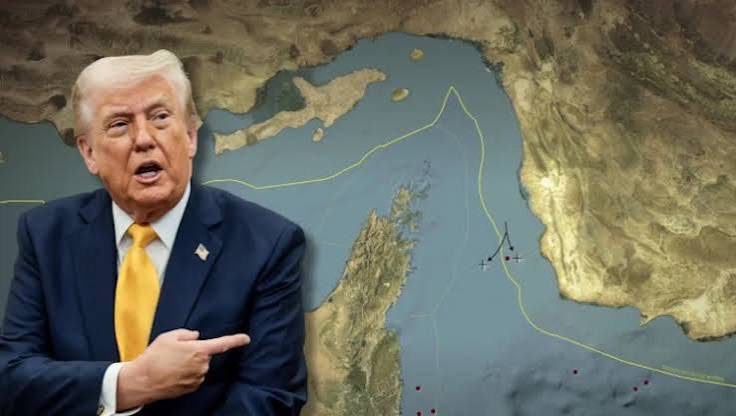
Mr. Trump’s war with Iran has reduced Iranian oil exports and triggered a blockade of the Strait of Hormuz, creating a shortage in European and Asian markets. With diesel demand still high, prices have hit record levels, hammering the agricultural sector and driving up the cost of goods and services. As the 2026 midterm elections approach, Republicans risk losing farm voters who blame the President and his party for surging inflation.
Many Republicans in Congress refuse to budge because they rely on big oil money from companies like Exxon and Chevron, which profit when diesel prices soar. Their lobbying power drowns out farmers who are being squeezed by high fuel costs. This GOP loyalty to oil giants over rural voters exposes a blatant hypocrisy that could cost them crucial farm‑state electoral support.
Critics say the President’s Iran policy is less about security and more about staging a confrontation with Tehran to distract voters. They argue his hardline moves have failed to explain to voters why Iran was a looming threat, but a political tactic to distract from stubbornly high prices for everyday goods and services because of this tariffs.
For farmers and American’s, it means that prices of commodities and services are about to rise again. The President’s and Republican’s current course of action will be detrimental for the country, we need change!
Tariffs, escalating conflicts, and soaring closures reveal a painful economic reality for American agriculture.
by Winston Wendell
In the 2024 presidential election, farmers in America voted overwheming for Donald Trump, betting that the president would stand by their interests. However, an objective review of Trump’s activity as a president demonstrates that his policies have diverged significantly from the interests of the rural population. The president’s support for free trade undermined the position of farmers, resulting in substantial losses.
His foreign policy, which started a war against Iran, contributed to the current panic in the world markets. Causing oil to skyrocket. The Trump administration has pursued a policy of imposing high tariffs on imports, which have led to the loss of foreign markets for many farmers. Clearly the president’s policies do not support farmers’. For example, family-owned farms are disappearing as enterprises with vast resources swallow up small players or they just go bankrupt.
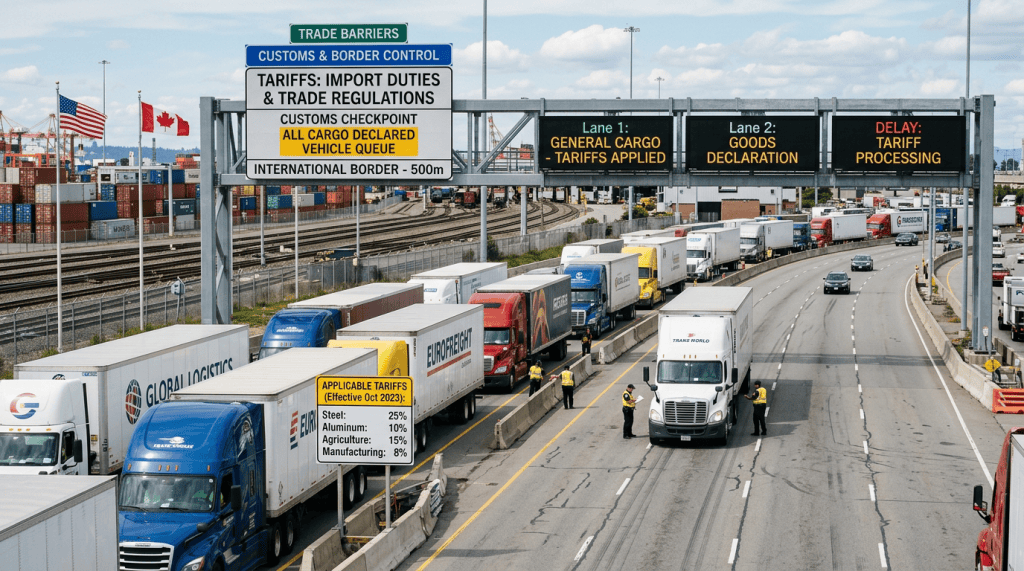
Trump’s high tariffs resulted in billions of dollars in payments to farmers by the Treasury Department from our tax dollars increasing the national debt. His foreign policy has also affected agricultural production in the country, as Canada is a leading producer of fertilizers in north America have now been tariffed.
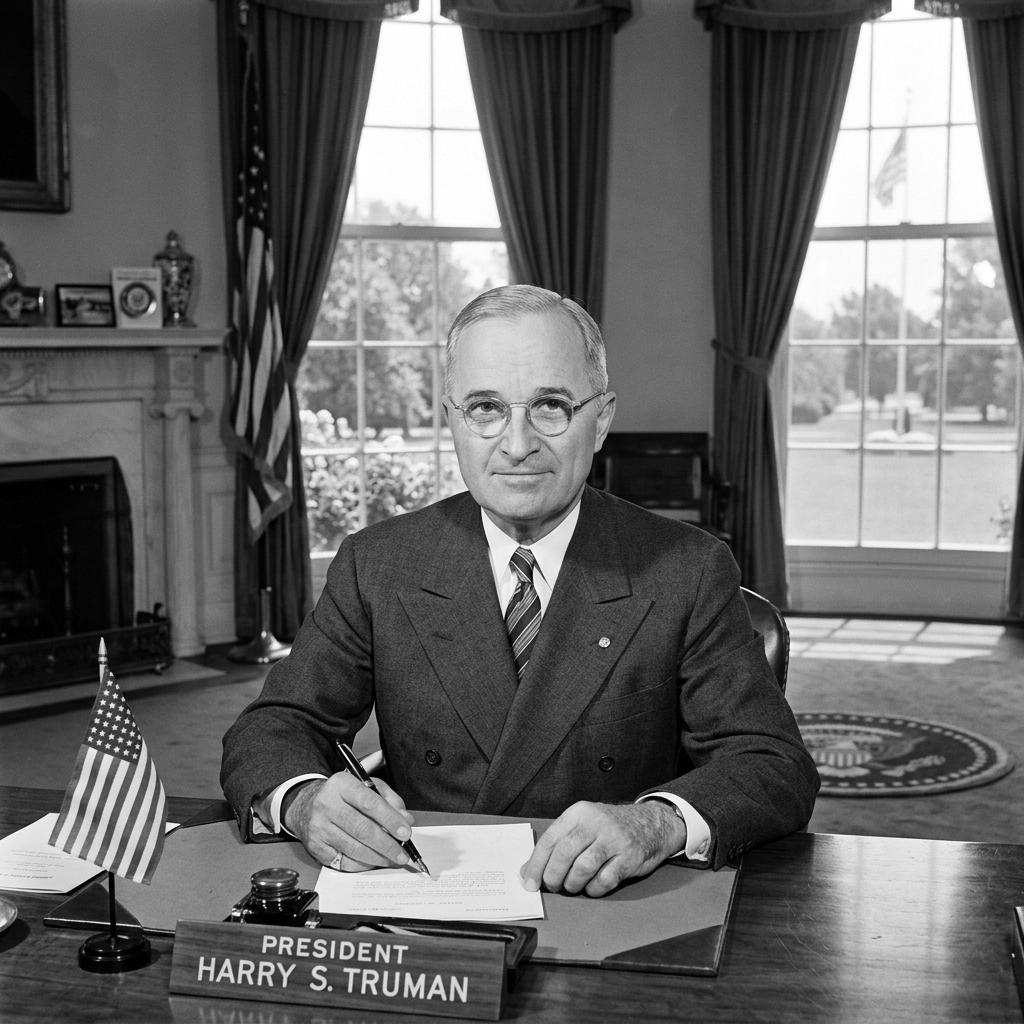
In the 1948 presidential race, Harry S. Truman warned voters not to back populist candidates in the West.
Truman warned farmers that Republicans are trying to “put a pitchfork in the farmer’s back.” The presidential candidate emphasized that he would fight to protect the integrity of free enterprise against monopolies and tariffs. Thus, Trump’s actions in the direction of protectionism and provocative foreign policy destroyed the positions of farmers, family-owned farms in particular.
Farmers who voted for Trump in the hope of improving the situation in the their lives were clearly deceived by Donald Trump, and it is clear that they have not learned the lesson of history.
How a Needless Conflict Is Crushing American Family Budgets
By Winston Wendell
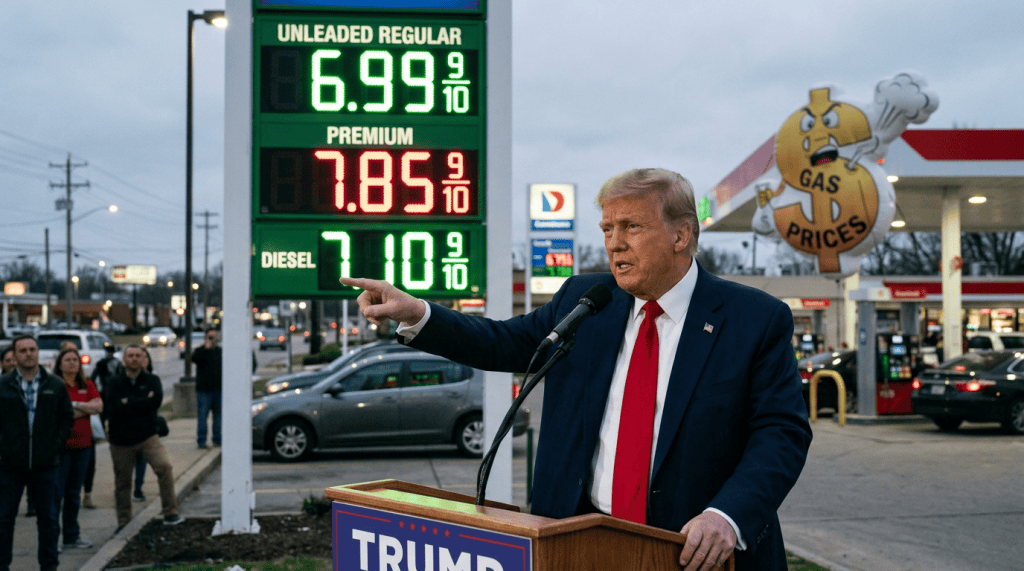
Gas prices in America have once again reached a breaking point. For many families, the prospect of filling up their cars is an unbearable prospect. Energy prices directly impact the global economy, and its repercussions are being felt by ordinary families. As an essential good, increases in its price effectively act as a tax on all other goods and services.
The devastating impact of this development is felt most strongly by middle-class families. Yet, what many people fail to understand is that this crisis is a direct result of an avoidable conflict engineered by Donald Trump.
During the 2024 election campaign, US president Donald Trump courted working-class voters by promising to ease the rising costs of living. Voters were promised that a Trump administration would be good for the economy and energy prices would plummet. Many were drawn to his populist rhetoric and pledged their vote to the former president, hoping that he would deliver on his promises.
They delivered their votes, but not much else.
With little provocation, the President decided to embark on a geopolitical and military adventure in Iran. By fueling a senseless war, Trump pushed global oil prices to a record high, devastating families that trusted him to restore stability to the economy.
This development is an unforgivable betrayal of the middle-class voters that placed their trust in him. Ordinary Americans that believed in his populism are now faced with the ugly reality of Trump’s presidency. With every visit to a gas station and a grocery store, they are reminded that their president is responsible for their financial struggles.
These people know that they were misled and their trust betrayed. They understand that the America First rhetoric masked Trump’s recklessness and irresponsibility as a leader.
For the American middle class, there is no justice. For everyone else, there is at least some form of redemption.
During the 2024 campaign, commentators, economists, and analysts warned of the potential economic ramifications of Trump’s presidency. They spoke of skyrocketing energy prices and a possible inflation crisis. Throughout the election race, they were dismissed as irresponsible and unworthy of attention.
Now, as the damage is being tallied, these commentators can finally take a deep breath and say: “we told you so”.
American families deserve better leadership than what they have been offered during the 2024 campaign. They deserve better than a foreign policy fueled by ego and a domestic policy of perpetual war and division.
The price for Trump’s vanity and incompetence will be paid in higher gas prices and unbearable costs of living. It is only fitting that those that promoted this vision of America, MAGA, are held accountable. Voters must understand that a vote for a Trump and Republicans are a vote for higher taxes and budget deficits. The electorate needs to hold the president and his Republican Party enablers in Congress responsible for the manufactured crisis at home and abroad.
How Trump’s Illegal Trade Duties Transformed Into a Multibillion-Dollar Corporate Windfall
by Winston Wendell
When President Donald Trump returned to office in January 2025, he promised a new set of tariffs would fix the damage caused by his own 2017 tax cuts. He said regular folks wouldn’t notice the extra charges on imported goods, American manufacturers would see a boom, and those millions in profits that used to flow to the national elite would finally go away.
That’s not what happened. Instead, import duties turned into a backwards tax on the middle class, who got hit with higher prices as businesses passed the costs right along. And now, after a historic Supreme Court decision called these Trump’s tariffs illegal, billions in refunds are landing right in shareholders’ pockets.
Tariff Refunds Go Right to Shareholders
This giant shift of cash from regular middle class Americans to the wealthiest is all thanks to a Supreme Court ruling in February. The Court said Trump’s use of the International Emergency Economic Powers Act for tariffs was illegal.
So the government had to pay back the businesses that shelled out $166 billion in tariffs, half that money, the Court decided, should go straight to the firms who paid it.
But are the companies who squeezed extra billions out of Americans actually planning to refund the people they overcharged?
Big corporations say they won’t. Even after these firms got their government refund (plus interest), they’re just using the money to make shareholders richer and further pump up profits.
Here’s how some companies are spending their “surprise” rebate:
Nike: In summer 2025, Nike executives said they’d cover a $1 billion tariff cost by getting creative, including strategic $5 to $10 price hikes to consumers on US goods. Fast forward, and after scoring nearly $1 billion back, Nike execs called the cash an “unplanned benefit” to bump up their profits. Meanwhile, there’s now a class-action lawsuit accusing Nike of “double-dipping”: raising prices to cover tariffs, then pocketing the refund.
Dollar Tree: The loss cost discount retailer landed $383 million in tariff refunds, but only set aside $22 million for price cuts as part of a “tariff reinvestment initiative.” The rest? It doesn’t even compare. Dollar Tree also announced a $605 million share buyback, a move to pad shareholders’ wallets, at 27 times the size of their consumer refund gesture.
Steve Madden: The shoe company bragged about just raising prices and letting customers pay for the tariffs. Now, they’re sitting on a $92 million rebate and say they’ll use it to pay off company debt.
Levi Strauss: After hiking prices to offset tariff costs, Levi’s got $80 million back. Execs said they’re not sure what to do with the cash. And like Nike, Levi Strauss faces a class-action lawsuit for not paying customers back.
Walmart, Target, and Lowe’s: These giants all made vague promises about using the rebate to lower prices or to help “fund price leadership” in their industries. Concrete numbers? Still missing. Lowe’s even changed its tune, swapping “customer-facing actions” for promises of “strong profitability” for itself and its shareholders.
The Truth About These Refunds
One reason companies get away with this? It’s almost impossible to figure out how to break the rebate apart for each individual shopper, since those tariff costs were part of millions of everyday items’ prices.
Still, the bigger problem is the federal government. If these tariffs had gone through proper approval, they would’ve just been another regressive tax on middle class Americans. But slapping them in as an executive order under the IEEPA set up this jackpot in the first place.
So, the policy, in the end, was just another regressive tax on the poor and middle class. Like the tax cuts from 2017 and 2025, this is yet another “win” for everyone except for the workers and consumers who always end up paying the bill.
President Donald Trump has asserted that America has entered upon a new “Golden Age.” This is a far cry from the reality we see on the ground today, where over one hundred thousand jobs have been lost in just the past two months. Gas prices are skyrocketing, and groceries are costing a record amount.
Yet another consequence of the Trump administration’s disastrous war with Iran is that we are facing unprecedented deficits and soaring gas prices. More concerning still, the military’s most vital missiles for the defense of America’s allies and military installations in the Middle East are nearly depleted.
The Washington Post recently reported that the Pentagon’s stores of precision guided missiles and large diameter rockets needed for its most sophisticated missile-defense systems are nearly depleted after more than five months of relentless strikes on Iran. This leaves the president with only limited options regarding renewed attacks on the Islamic Republic.
At the same time, however, Reuters looked at this issue from a different angle, citing security analysts for the statement that the U.S. would be unable to respond adequately to a Chinese attack on Taiwan or other regional provocations if they were to occur, given the current levels of defense readiness. This development is exceptionally concerning given the heightened tensions with China at the moment, and it is not reassuring that the U.S. has so few options available in the event of a large-scale attack on any of its allies.
If Trump decides to continue with his campaign of airstrikes against Iran, the limited number of precision-guided weapons in the Pentagon’s inventory poses a potentially dangerous dilemma for the President. Reuters added that the U.S. is already down to just eight THAAD missiles and thirteen Patriot missiles, having burned through nearly 80% of THAAD and 50% of Patriot since the beginning of hostilities with Iran.
Despite the urgent need, defense officials estimate it will take several years before America’s missile inventory will be back to where it was before the war with Iran began, even if the defense-contracting companies ramp up their production rates to maximum.
It all boils down to the President himself, who, with his unilateral declaration of war on Iran, has placed the U.S. in an exceptionally perilous position both at home and abroad. Neither the American public nor our allies wanted this, and it is clear that Trump thought through the economic impact of his decision much too little. By launching this kind of reckless campaign, he has undermined both the economic and national security of the United States.
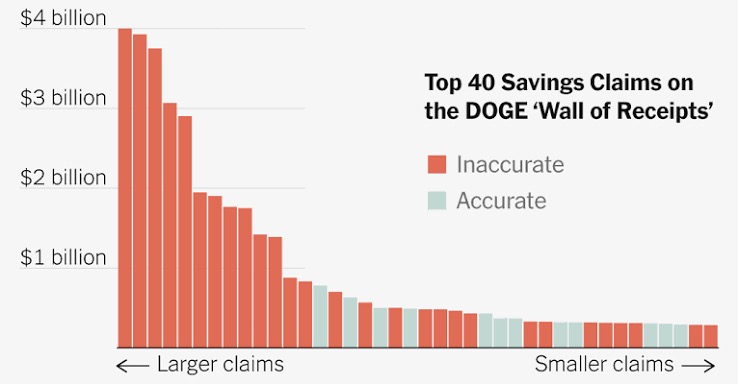
According to a report released on Thursday, the Department of Government Efficiency, better known as DOGE, led by Elon Musk himself, was making up figures about the amount of money it was saving the country. The report was requested by Democratic senators Gary Peters of Michigan and Richard Blumenthal of Connecticut and was conducted by the Government Accountability Office.
DOGE was found to have used “misleading practices” when it came to canceled leases and active government contracts. Additionally, the audit found that the department provided insufficient evidence for the methods used in 96 percent of the canceled grants.
The Department of Government Efficiency was also found to have failed to follow their own formulas when it came to calculating figures for canceled leases and contracts, and in the cases where they did follow their formulas, they either missed out on the details or did not disclose them when they should have. When they did follow their own procedures, the Government Accountability Office found that they overlooked the complexities of government contracts, including liabilities and penalties that come with breaking a contract before the due date.
“The report shows that the Trump administration’s cost-saving mission was conducted in a misleading fashion, achieving little apart from putting at risk taxpayer data and key programs,” said Senator Peters.
“President Trump and his allies in the Senate and House have been using DOGE as a fig leaf to hide tax-cut giveaways to the wealthy and large corporations while pretending to save the deficit,” said Senator Blumenthal.
Many people have responded to the report, including Jessica Tillipman, associate dean of the GWU School of Law, who specializes in government procurement. Tillipman cited several errors she found on the social media accounts of DOGE, one of which being a claim that the department had saved $28 million reduction in expenditures for an Air Force agreement, whereas the actual financial relief amounted to roughly $600,000 from a canceled lease. “That figure doesn’t account for the present value of future lease payments, which would reduce the supposed $3.7 million savings,” Tillipman said.
“DOGE’s fiscal wins were mostly fictional,” write Reason editor-in-chief Eric Boehm, who covered the story for the libertarian magazine. “According to a new report from the Government Accountability Office, the Trump administration’s claims about savings from slashing federal spending were often based on faulty math.”
“DOGE may soon start spending more taxpayer money, but at least the government watchdogs are forcing Musk’s agency to be more open about how it spends our money when it comes to cutting back federal services,” concluded Senator Blumenthal.
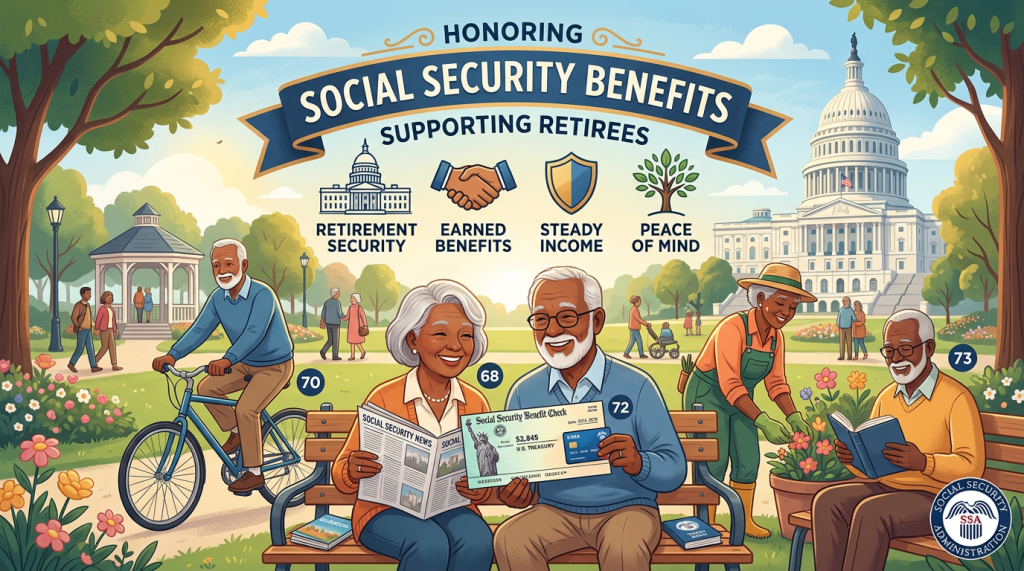
The recently released 2026 Social Security Trustees Report has ignited a fervor of alarm among fiscal conservatives and so-called policy experts. Their fixation is on the alarming headline: by 2034, Social Security may face the grim reality of being unable to fulfill its commitments, potentially resulting in a staggering 22 percent cut for recipients unless lawmakers act decisively to secure new funding.
But after spending sometime with the actual projections, I see three major points that usually get lost in the noise:
First, the supposed economic catastrophe of the trust fund running dry simply isn’t as bad as people make it sound.
Second, the main reason Social Security faces this shortfall is fifty years of wealth shifting toward the very top.
Third, the so-called Social Security “crisis” doesn’t even come close to matching the kind of military spending increases Donald Trump is pushing in his 2027 budget. Let’s break these down one by one.
The Nuance of Trust Fund Accounting Start with the first point: the trust fund itself. There’s always confusion around how it really works. When Social Security starts tapping its trust fund, which could happen in 2033, it’s drawing on the bonds the fund holds—money that comes from the Treasury, ultimately. The key thing here? Whether the program is redeeming bonds in 2033 or has run out of them by 2034, the Treasury is the one paying the bills either way.
Yes, it’s true that—under current law—Social Security has a legal right to the funds needed to redeem those bonds, but not an explicit right to keep paying full benefits once the trust fund runs out. Legally, this distinction matters when it comes to running the program. But economically, the money still comes from the same place. If we can afford full benefits when the trust fund is being redeemed, nothing fundamental changes once the trust fund’s empty—Congress just has to change the law. The capacity to pay benefits is a matter of real resources, not accounting rules.
So, when people talk about the trust fund running out, it’s much more of a legal and political challenge than an actual economic wall. That’s a detail people need to understand before declaring a “crisis.”
How Wealth Redistribution Impacts Social Security The next factor is income distribution. Go back to 1982—the last major Social Security reform. At that time, about 10 percent of all wage income went over the payroll tax cap (now around $185,000) and escaped the 12.4 percent Social Security tax. Today, that’s nearly 17 percent.
We’re not just talking about more rich people—the whole system tilts more wage income past the cap, exempting it from taxes that support Social Security. And this doesn’t even factor in the broader shift from wages to corporate profits over twenty-five years. Put simply: revenues that should have supported Social Security have been steadily siphoned upward, out of the program’s reach.
Here’s the kicker: many of the folks who pushed the trade deals, intellectual property protections, bank bailouts, and tech policies that concentrated this wealth are now the loudest in calling for Social Security cuts. When I look at the numbers, the pattern is clear: years of economic policies pushed the money upward, and now, those same voices argue that programs for everyday Americans are unsustainable. That only makes sense if you ignore where the money went.
Military Spending vs. Social Security: A Matter of Scale Finally, let’s put the Social Security “shortfall” in perspective by comparing it to military spending. The media loves to toss around giant budget numbers, but rarely do we get real context. The same people sounding alarms about Social Security’s budget gap barely blink at massive defense increases.
Just look at Donald Trump’s proposal: he wants the Pentagon’s budget to leap from $864 billion (Biden’s last year) to a wild $1.5 trillion in 2027. Even if you adjust for inflation, that’s nearly $590 billion more in a single year. And what’s the reasoning for that kind of jump? You won’t find it in Trump’s campaign promises.
Stack up the numbers: at an inflation-adjusted 2.5 percent annual rate, Trump’s military spending request hits almost $700 billion above current levels (in 2034 dollars). Social Security’s projected shortfall for that same year? $314 billion.
No matter how you slice it, Trump’s planned military bump dwarfs Social Security’s gap—it’s over twice as big. If Social Security’s deficit is a “major fiscal challenge,” then logically, Trump’s military buildup is much, much worse.
Even more, remember: Social Security’s funding isn’t just another line item—it’s payroll money already paid in by millions of workers. It’s a shuffle within the government’s own finances. But the military increase is pure new spending: an extra 1.6 percent of GDP yanked straight from the Treasury, putting real strain on the broader economy.
If you’re serious about fiscal responsibility, you can’t claim Social Security is a problem and then look away from military spending on this scale. It’s just not honest.
Here’s what it Means Let’s cut to the chase: the so-called looming Social Security “crisis” is nothing but a flimsy narrative that disintegrates under real scrutiny. The trust fund? It’s merely an accounting gimmick, not a hard economic boundary. The so-called funding shortfall is a reflection of deliberate choices that funneled billions into the pockets of the GOP’s billionaire elite, not some unavoidable demographic catastrophe. It’s striking how those who scream about a $314 billion gap in Social Security conveniently overlook the staggering nearly $700 billion surge in military spending.
So the real question isn’t about whether we can “afford” Social Security. It’s whether we’re ready to have a genuine, all-in conversation about what our priorities are—with every number, not just the convenient ones.
President Donald Trump yesterday brushed off questions about Americans struggling financially, telling reporters their problems aren’t even on his mind as he pushes his clash with Iran further. It’s a pretty shocking show of just how out of touch he seems with what regular people are feeling and honestly, it sums up the broader sense of indifference that’s defined his second term.
The facts don’t exactly flatter him. A new CNN poll says 70 percent of Americans disapprove of how Trump is handling the economy, a low point he never hit during his first term. It’s not just about party lines either. Seventy-seven percent of those polled, including most Republicans, say his policies have directly driven up living costs where they live. That’s an incredible level of agreement across political divides, and it speaks to just how frustrated people are.
While American families get squeezed by inflation, (3.8 %) at its highest point in three years and gas sitting above $4.50 a gallon, Trump hasn’t brought much to the table. His big idea? A federal gas tax holiday. Sure, it sounds like he’s trying to help frustrated drivers, but when you look closer, it’s either a sign he doesn’t get how government works or he’s just making promises he can’t keep as usual. The president doesn’t actually have the authority to suspend the 18-cent-a-gallon federal gas tax on his own, it takes a sign-off from Congress, and that hasn’t happened.
But even if it were possible, the idea doesn’t hold up. The savings are so small they’d barely make a dent at the pump, and skipping the tax for a few months would blow a huge hole, about $17 billion, according to the Bipartisan Policy Center in the fund that pays for roads and bridges. Any pocket change drivers might keep would get eaten up by worse road conditions. Think busted suspensions, worn-out tires, and less-safe highways and bridges. And by the way all those lost construction jobs keeping our road system safer would also be a cost of his proposal.
It’s not just at home where Trump’s vision seems lacking. He tore up the Iran nuclear deal back in 2017, throwing away safeguards that experts said were actually working. Now, he’s chosen war, gas prices have shot up, and he’s openly admitted he doesn’t feel any urgency to negotiate. Even the Wall Street Journal’s editorial board noticed that Iran looks pretty sure it “can outlast a president who no longer wants the fight”, a damning thing for a sitting president’s reputation on the world stage.
At the end of the day, Americans need a president who puts their economic security first, not someone whose focus drifts to overseas conflicts while costs back home keep climbing. Trump’s casual attitude toward working families struggling to get by isn’t just a policy disagreement, it’s a failure of leadership that goes beyond politics. For all those who voted for him, is this what you wanted?
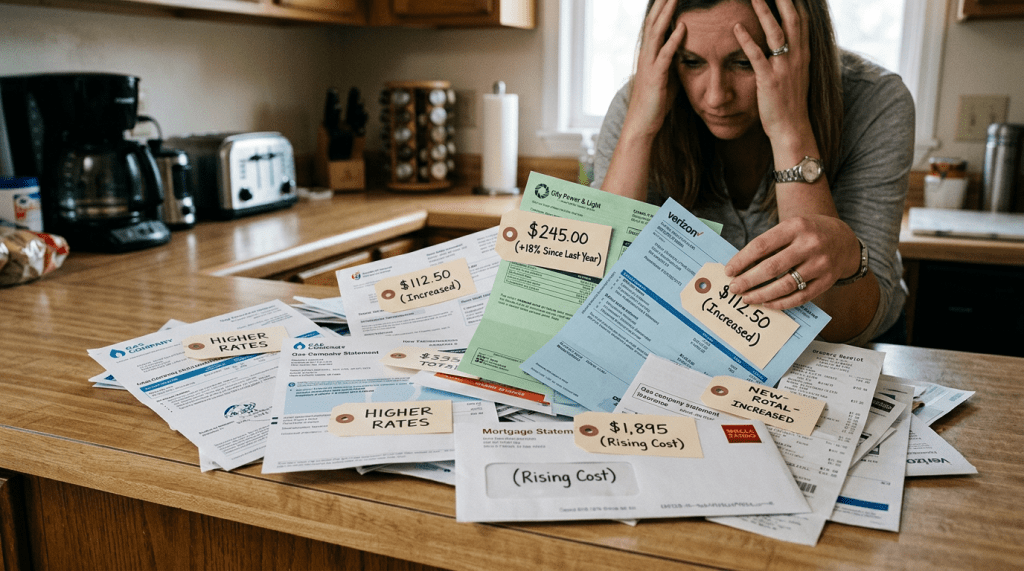
The today’s Consumer Price Index report makes it quite clear: April’s inflation rate climbed by 3.8% compared to the previous year, surpassing Wall Street’s 3.7% prediction. For American households already struggling with rising prices at the grocery store, these figures simply confirm their everyday experience that living expenses continue to increase under Donald Trumps administration.
Separately today, before heading to a meeting in China, Donald Trump discussed the significant financial burdens associated with his ongoing military actions in Iran. He stated that monetary considerations were not his primary concern when weighed against achieving his military objectives, whatever those are.
Energy prices led the way, soaring nearly 18% since April 2025. In a country still tethered to unpredictable oil markets, that’s meant higher gas and utility bills for everyone. Grocery shopping hasn’t brought much comfort either. Five out of six major food categories went up, beef’s 2.7% higher, fruits and vegetables bumped up 1.8%. Families just trying to make dinner now face real challenges.
Economists are no longer tiptoeing around the connection between Washington’s choices and what happens at people’s kitchen tables. Joseph Brusuelas at RSM came right out and said it … the U.S. economy is locked in a higher-inflation mode, and median-income households face tough adjustments for the rest of the year.
The University of Michigan’s Survey of Consumers reported record-low consumer confidence due to concerns over price hikes from the Iran conflict. Economist Justin Wolfers noted that economic uncertainty arises from “empty promises,” trade disputes, and military actions, leading to a shifting market cycle.
The public’s just as frustrated as the experts. A recent CNN poll found 70% unhappy with how the administration’s handled the economy, and 75% said the war with Iran has hit their finances personally.
Alex Jacquez from the Groundwork Collaborative didn’t hold back. He called the situation “Trump’s illegal and reckless war in Iran” and said it “reignited inflation,” and there’s just no clear end in sight.
April’s CPI report presents a critical question: Will Trump comprehend that his international decisions significantly impact American citizens at the gas station and grocery store? It is evident that voters are continuously forced to shoulder the financial burden of decisions they did not endorse.
Right now, it’s tough to ignore how Donald Trump’s policies have a direct impact on the struggles regular Americans deal with every day. Whether people are stretching their paychecks at the grocery store or worrying about their retirement funds, you can feel stability slipping away—and it’s obvious that the President Trump and his administration played a major role in this.
You can see it in everybody’s wallets. AAA reports the national average for a gallon of gas has jumped to $4.04, way up from last year’s $3.17, according to the EIA.
But this spike isn’t random. Ongoing chaos in energy markets—especially around the Strait of Hormuz and Trump’s war with Iran—has thrown oil supply chains all over the world into disarray. That little waterway handles a fifth of the planet’s oil every day. Industry experts say these shipping problems are here to stay, and you shouldn’t expect gas to drop below $3 anytime soon, maybe not even next year.
People aren’t blind to all this. Polls show that Trump’s approval is dropping. In a Quinnipiac poll, 65% said Trump’s policies deserve at least “some” or “a lot” of the blame for higher gas prices. Then there’s the stock market—wild swings, driven by the Trump’s unpredictable announcements and trade moves like tariffs, are now blowing up the retirement plans folks thought were safe.
But honestly, it runs deeper than just the numbers. The way the national conversation is shifting feels heavy and exhausting. There have been organized attacks on the free press, and weird feuds, like Trump going after the Pope. The war on Iran stands totally opposed to the “Just War Doctrine” at the heart of the Christian faith, exactly as the Vicar of Christ put it.
What really has people worried is the reckless language Trump uses around foreign conflicts. He fired off a warning on Truth Social, saying a “whole civilization will die” when talking about Iran. Jake Tapper from CNN brought up how Republicans—like Rep. Elise Stefanik (R-N.Y.)—rush to criticize campus protesters but stay quiet about these apocalyptic threats from the president. The administration loves acting strong on national security, but all this tough talk only isolates the country and stirs up global danger. Talk about leaving NATO? That’s not just irresponsible—it’s a big risk for America’s security.
Manufacturing jobs keep disappearing. Food prices keep climbing. The United States’ reputation is getting shakier. Blaming everything on bad luck is just a way to look away from reality. This is what happens when a president’s leadership is all about picking fights instead of working together or thinking things through.
If you look at slowdowns in manufacturing, shrinking savings, and a pushier attitude on the world stage, you start to see the pattern. America’s problems aren’t just random—they’re the result of leaders. Trump, who care more about grudges than solving real problems. Americans deserve more—leadership that brings stability, sticks to the facts, and fights for actual peace around the world. We deserve better than Donald Trump and the Republican leadership in Congress.