Category: Posts

  • Trump’s Latest Attack on Consumer Protections Gets Blocked — For Now

    Why this matters for Americans

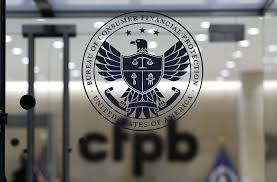
    Blue Press Journal (DC) Dec 30, 2025 – In yet another attempt to undermine protections for ordinary Americans, the Trump administration tried to starve the Consumer Financial Protection Bureau (CFPB) of its funding — a move that could have effectively shut down the agency and laid off its entire staff. This time, the scheme came through Trump’s budget director, Russell Vought, who sought to kneecap the watchdog by cutting off its budget. 

    But on Tuesday, federal district court Judge Amy Berman Jackson slammed the brakes on that plan. She ruled that the White House cannot allow the CFPB’s funding to lapse, and that the agency can continue to receive money from the Federal Reserve — even though the Fed itself is operating at a loss. The administration’s new legal theory for blocking the CFPB’s funding, Jackson made clear, simply doesn’t hold water. 

    Why This Matters
    The CFPB was created in the wake of the 2008 financial crisis to protect consumers from predatory banks, payday lenders, and other financial scams. Gutting it is a dream for Wall Street lobbyists — and a nightmare for working families. Trump’s effort to quietly pull the plug on the agency is part of a long-running Republican campaign to weaken or dismantle it entirely, handing more power back to the very industries it was designed to police. 

    How the CFPB Is Funded
    Unlike most federal agencies, the CFPB does not rely on the annual Congressional appropriations process. Instead, it draws its budget directly from the Federal Reserve, up to a capped amount set by law. This structure was intentional: it insulates the CFPB from political interference and allows it to pursue investigations and enforcement actions without worrying about Congress or the White House using the budget as leverage. 

    The Bottom Line
    Trump’s team knew they probably couldn’t kill the CFPB outright without a fight, so they tried to choke off its funding instead. Judge Jackson’s ruling is a win for consumers — but it’s also a reminder of how far this administration was willing to go to dismantle protections for the public in service of corporate interests.

  • A Federal Monument or a Trump Family Fiefdom? The Dubious Legality of Renaming the Kennedy Center

    Blue Press Journal – There’s a word that gets thrown around a lot these days: “unprecedented.” It’s often used to describe the chaotic political landscape, but sometimes, a single action manages to feel uniquely jarring, a break not just with recent norms but with the very fabric of American tradition. The latest case in point? The apparent attempt to rebrand the John F. Kennedy Center for the Performing Arts by adding Donald J. Trump name to the center.

    This isn’t just another bizarre headline or a simple act of vanity. This is an attack on a federal institution, a desecration of a national memorial, and an action that legal experts are already calling profoundly, unequivocally illegal.

    It’s a Federal Law, Not a Real Estate Deal

    Let’s be perfectly clear about what the Kennedy Center is. It is not a private venue that can be bought, sold, or rebranded at the whim of its management. It is a living memorial, established by a specific act of Congress, the National Cultural Center Act of 1958, which was later amended and signed into law by President Lyndon B. Johnson in 1964, just months after President Kennedy’s assassination.

    The law itself codifies the institution’s name: the “John F. Kennedy Center for the Performing Arts.” This name is not a suggestion; it is a legal mandate passed by the legislative branch of the U.S. government to honor a slain president.

    As legal scholars and government ethics experts have pointed out, a president cannot simply issue an executive order or exert influence to unilaterally alter a federal law. The power to rename a federal memorial of this stature rests exclusively with Congress. To attempt to change it through administrative pressure or a deal with the center’s board is to bypass the fundamental American principle of separation of powers. It is, in a word, illegal.

    An Assault on National Memory

    Beyond the legalities, there’s the profound disrespect this move shows. The Kennedy Center was created to be a non-partisan, national institution—a monument to a president’s vision for arts and culture in America. It stands as a symbol of a bygone era of national aspiration.

    To change the centers name and add that of a contentious modern political figure is nothing short of a political upheaval. It aims to obliterate a fragment of our collective national memory while driving a partisan wedge into a monument that should serve as a beacon for all Americans. It would be akin to defacing the Lincoln Memorial with a crude spray-painting of a new name. Such an act is a profound desecration of its sacred purpose.

    A Presidency as a Brand

    This move is part of a larger, more troubling pattern. We have seen the president’s name stamped on everything from stimulus checks to federal buildings, blurring the line between public service and personal branding. Federal law actually prohibits government officials from using their office for self-promotion, but the norms have been systematically eroded.

    Turning the Kennedy Center into “the Trump Center” would be the ultimate expression of this ethos. It’s an attempt to secure a legacy not through historical achievement, but through the forceful rebranding of public property. It turns a national monument into a personal monument, a federal building into a family business asset.

    Where Do We Draw the Line?

    If this can happen to the Kennedy Center—a landmark enshrined in federal law—what is next? The Lincoln Memorial? The Jefferson Memorial? Are they all subject to the political whims of the person in the Oval Office?

    This isn’t about one president or another. It’s about whether we are a nation of laws and shared heritage, or a nation of personalities and brand loyalty. The Kennedy Center is more than a building; it’s a promise—a promise that some things in America are bigger than any one of us, and that they belong to all of us. We cannot allow that promise to be broken.

  • “The Trump Administration’s War on Science: How RFK Jr. is Undermining Public Health”

    Blue Press Journal – The Trump administration’s second term has been marked by controversy, but one of the most alarming developments has been the transformation of the Department of Health and Human Services under the leadership of Robert F. Kennedy Jr. Since taking office in February, Kennedy has been on a mission to reshape the department in his image, rejecting the medical establishment and promoting his own brand of pseudoscience.

    One of the most significant changes has been the elimination of thousands of jobs within the department, a move that has been widely criticized by experts and lawmakers alike. According to a report by the Washington Post, the cuts have “decimated” the department’s capacity to respond to public health crises. The Post reported that the department had lost over 3,000 employees since Kennedy took office, with many more facing uncertainty about their future.

    In addition to the job cuts, Kennedy has also frozen or canceled billions of dollars in scientific research, a move that has been denounced by the scientific community. The New York Times reported that the cancellations have “halted or delayed research into some of the most pressing health issues of our time, including cancer, Alzheimer’s disease, and infectious diseases”.

    Kennedy’s Make America Healthy Again movement has been the driving force behind these changes, and has been characterized by a rejection of established medical wisdom. He has used his position to promote discredited ideas about vaccines, seed oils, fluoride, and Tylenol, often citing debunked research and conspiracy theories to support his claims.

    For example, Kennedy has repeatedly used his authority to promote the false claim that vaccines are linked to autism, a claim that has been thoroughly debunked by the scientific community. The Centers for Disease Control and Prevention (CDC) and the World Health Organization (WHO) have both concluded that there is no evidence to support a link between vaccines and autism.

    The consequences of Kennedy’s actions are already being felt. The department’s abandonment of evidence-based medicine has created confusion and uncertainty among the public, and has undermined trust in the medical establishment. As Dr. Eric Widera, a professor of medicine at the University of California, San Francisco, told the New York Times, “When you have a government that’s not grounded in science, it’s a recipe for disaster”.

    The Trump administration’s decision to put Robert F. Kennedy Jr. in charge of the Department of Health and Human Services has been a disaster for public health. By rejecting the medical establishment and promoting pseudoscience, Kennedy has undermined the department’s ability to respond to public health crises and has put the health and well-being of Americans at risk.

  • Bacon Rebukes Trump for Echoing Putin’s Unverified Claims on Ukraine Drone Attack

    BLUE PRESS JOURNAL – Rep. Don Bacon (R-Neb.) delivered a sharp rebuke to former President Donald Trump on Monday, criticizing him for swiftly endorsing Russian claims that Ukraine launched a drone attack on a presidential residence in the Novgorod region—despite a complete absence of verifiable evidence.

    In a post on the social media platform X, Bacon urged Trump and his team to “get the facts first before assuming blame,” adding a pointed indictment of Russian President Vladimir Putin: “Putin is a well-known boldface liar.”

    The controversy erupted after Trump claimed he was “very angry” about the alleged attack, which Moscow said involved 91 long-range drones. When pressed on whether there was any evidence to support the claim, Trump responded: “Well, we’ll find out. You’re saying maybe the attack didn’t take place? That’s possible, I guess, but President Putin told me this morning.”

    That response sparked outrage from foreign policy experts and political leaders across the spectrum. For Bacon, a senior Republican notorious for his hardline approach to Russia and unwavering support for Ukraine, Trump’s naïve acceptance of Putin’s claims was not merely diplomatically careless—it was downright reckless and posed a serious threat.

    “President Trump and his team should get the facts first before assuming blame,” Bacon emphasized. His statement underscored growing concern within parts of the Republican Party about the former president’s repeated deference to authoritarian leaders, particularly Putin.

    Ukrainian President Volodymyr Zelensky vehemently rejected the Russian claims, branding them as “a blatant fabrication crafted to justify further assaults on Ukraine.” He fiercely warned that these insidious disinformation campaigns are not just tactics but calculated attempts to sabotage peace initiatives and distort the truth on the battlefield.

    Indeed, past Russian accusations of Ukrainian aggression—often debunked—have preceded intensified military offensives. Analysts say these claims are part of a strategy to shift blame and erode international support for Kyiv.

    Bacon’s criticism reveals a rift in Republican foreign policy. While Trump praises Putin and downplays Russian aggression, Bacon argues for a firm U.S. stance based on truth, intelligence, and alliances.

    “Trusting Putin’s word over verified facts doesn’t just mislead the public—it endangers our global standing and emboldens dictators,” Bacon said in a follow-up interview. “We can’t afford to be complicit in spreading Russian propaganda, especially while Ukraine fights for its survival.”

    As the war in Ukraine drags into its third year, the fight for information has morphed into a battleground just as vital as the war front itself. Deceptive narratives, fueled by influential political figures, wield the power to twist public perception, manipulate aid decisions, and steer diplomatic efforts into uncharted territory.

    Trump’s repeated reliance on uncorroborated claims from an adversarial regime raises urgent questions about judgment, foreign policy competence, and the lasting impact of rhetoric on national security.

  • Donald Trump’s Christmas Meltdown: A Disturbing Sign of Mental Decline

    BLUE PRESS JOURNAL – While most Americans were spending Christmas Eve with family, friends, and traditions steeped in warmth, Donald Trump was doing something else entirely: furiously posting online well past midnight. In a torrent of over 100 posts, the former president lashed out at his usual list of perceived enemies — Democrats, people of color, and anyone who dares question his legacy. He even went so far as to once again rage about the 2020 election, a grievance he has refused to let go more than three years later.

    The language was particularly ugly. Trump referred to his political opponents as “Radical Left Scum,” a phrase that, aside from its cruelty, underscores his inability to engage in the kind of unifying rhetoric expected from a national leader. It was a performance not of strength, but of bitterness, pettiness, and obsession.

    An Unraveling in Public View

    Trump’s late-night posting spree is part of a broader pattern that has become more visible over the past year: an almost compulsive need to relitigate the past, settle scores, and portray himself as a perpetual victim. Instead of presenting coherent policy ideas or offering a positive vision for the future, his public communication is increasingly dominated by personal vendettas and conspiracy-laden grievances.

    It’s not simply that these angry outbursts are unbecoming — they are politically self-destructive. Every minute spent rehashing old battles is a minute not spent persuading undecided voters, articulating solutions to real-world problems, or showing leadership in moments of national challenge. For someone seeking (or holding) high office, that’s a glaring red flag.

    The Epstein Cloud

    One of the more telling aspects of this latest meltdown is the apparent sensitivity Trump shows whenever Jeffrey Epstein’s name comes up. While public records confirm that Trump and Epstein knew each other in the late 1980s and early 1990s, Trump has since tried to distance himself. Yet, his social media eruptions suggest the mere mention of Epstein still touches a nerve. The defensiveness is striking — and it fuels curiosity about why this particular topic provokes such an intense reaction.

    Why It Matters

    Even if one sets aside the moral and ethical concerns about Trump’s rhetoric, the practical political consequences are significant. A leader who spends Christmas Eve in a rage spiral online is not projecting stability, discipline, or focus. Instead, he is reinforcing an image of someone consumed by grudges, unable to move forward, and increasingly out of step with the broader electorate.

    For his base, these moments might feel like evidence of “fighting” against the establishment. But for everyone else — including moderates and independents — they serve as a reminder of why Trump remains one of the most polarizing and exhausting figures in American politics.

    If this pattern continues, it won’t simply be a problem for Trump’s public image. It will raise deeper questions about his capacity to lead — questions that grow louder every time he chooses rage over reason.

  • Washington Chaos: Why the GOP’s Gridlock is Costing Taxpayers Dear

    BLUE PRESS JOURNAL – As the holiday decorations come down, the political climate in Washington is heating up. While American families are trying to plan their year, the Congressional GOP, the Senate, and the Trump administration (whose influence remains heavy within the party) are once again steering the country toward a fiscal cliff.

    If you are a taxpayer, you should be worried. Not because of political tribalism, but because the cost of this incompetence is measured in billions of wasted dollars and economic instability.

    Here is why the current dysfunction is a raw deal for the American taxpayer.

    1. The High Cost of Political Brinkmanship

    The most immediate threat is another government shutdown. Following a contentious health care debate and a two-week holiday recess, the House legislative calendar is dangerously thin.

    As it stands, lawmakers have passed only three of the 12 appropriations bills required to fund the government. With the January 30 deadline looming, they have barely any time left to finish the job.

    Why does this matter to your wallet? Every time Republicans force a shutdown showdown to score political points, the American economy pays a price. According to an analysis by S&P Global, the 2018 shutdown alone cost the U.S. economy $6 billion—far more than the savings from the shutdown itself. That is money that evaporated from the economy, lost productivity, and wasted government resources. By dragging their feet and creating artificial crises, the GOP is risking your tax dollars on a game of chicken.

    2. Health Care Instability and the Broken Promises

    The House GOP is currently paralyzed by a civil war over health care subsidies. Specifically, subsidies for the Affordable Care Act (ACA) are set to expire at the end of the month.

    The chaos is so bad that four Republican lawmakers broke ranks to sign a discharge petition to force a vote on a three-year extension of these subsidies, bypassing their own leadership.

    The instability caused by this hesitation directly impacts taxpayers. If these subsidies expire, premiums will skyrocket for millions of Americans. Furthermore, this uncertainty wreaks havoc on the insurance markets. When the government creates artificial scarcity and uncertainty, it drives up costs for everyone—including the federal government, which ultimately has to step in to mitigate the damage. The GOP’s inability to govern effectively puts the financial health of American families at risk.

    3. Democrats are Forced to Play Hardball

    The situation has become so toxic that Democrats are preparing to use the January 30 funding deadline as leverage. If the GOP fails to resolve the subsidy issue before the funding deadline, Democrats plan to oppose any funding package that doesn’t address the issue.

    This is a recipe for a total government shutdown. The Republicans control the White House and both chambers of Congress, yet they cannot unite to keep the lights on or keep insurance premiums stable. By failing to lead, they are forcing a showdown that will inevitably result in wasted taxpayer money on “stopgap measures” and emergency funding.

    The Bottom Line

    The Congressional GOP, Senate leadership, and the lingering influence of the Trump administration are proving once again that they are incapable of managing the basic duties of governance. From threatening shutdowns that cost billions to creating chaos in the healthcare market, their dysfunction is expensive.

    American taxpayers deserve a government that works, not one that holds the economy hostage every few weeks.

  • No, Trump Did Not End Taxes on Social Security, Yet another Lie

    Blue Press Journal – In recent months, President Donald Trump and J.D. Vance have claimed that the “One Big Beautiful Bill” (OBBB), signed into law in July, eliminated taxes on Social Security benefits. However, a review of the legislation — and independent fact‑checks — show that this is not true.

    What the OBBB Actually Did:
    The bill reduced the number of seniors who pay taxes on their Social Security benefits by raising the income thresholds at which those benefits become taxable. This means some retirees with modest incomes will no longer owe taxes on their Social Security. But for millions of Americans — particularly middle class and those with higher retirement incomes — taxes still apply. 

    The History of Social Security Taxes:
    Social Security benefits were not taxed at all until 1983, when President Ronald Reagan signed bill that included taxing up to 50% of benefits for individuals earning above certain thresholds. In 1993 a law increasing the maximum taxable portion to 85% for higher‑income beneficiaries was passed. The OBBB did not repeal either of these taxation provisions; it simply adjusted the income thresholds upward.

    Expiration:
    The OBBB’s threshold increases are temporary. Unless Congress acts, they will revert to pre‑OBBB levels after the set expiration date.


    Social Security Benefit Taxation Thresholds

    Filing StatusPre‑OBBB Thresholds (1983–2024)OBBB Thresholds (2024–Expiration)Expiration Date
    Single$25,000 (up to 50% taxable), $34,000 (up to 85% taxable)$35,000 (up to 50%), $48,000 (up to 85%)12/31/2027
    Married Filing Jointly$32,000 (up to 50%), $44,000 (up to 85%)$45,000 (up to 50%), $60,000 (up to 85%)12/31/2027

    Bottom Line:
    Despite political claims, the OBBB did not eliminate taxes on Social Security. It temporarily raised the income thresholds, reducing the number of seniors affected, but millions still owe taxes on their benefits. Unless extended, the thresholds will revert after 2027, restoring the broader tax reach set by previous laws.

  • Democrats See Rural Opportunity in Trump’s Policies Ahead of 2026 Midterms

    BLUE PRESS JOURNAL – For years, rural America has been a political stronghold for Republicans — and especially for President Donald Trump, who won over farming communities with populist rhetoric and promises of economic revival. But as the 2026 midterm elections approach, Democrats see a shifting landscape — one shaped not by party rhetoric, but by the real-world consequences of Trump’s policies. 

    For years, the Democratic Party has had a tough time making headway in rural areas. But now, with current policies hitting hard, farmers are getting more and more frustrated. Trump’s bold tariff moves, which were supposed to protect American businesses, have actually hurt those in agriculture. Farmers growing soybeans, corn, and wheat are seeing foreign markets dry up and prices drop, all while their costs are still sky-high thanks to ongoing inflation.

    Meanwhile, rural residents are grappling with a healthcare crisis. The closure of more than 120 rural health centers since 2025 — a direct result of federal funding cuts in the Republican’s Big Beautiful Bill (BBB) — has left many communities without access to basic medical care. Emergency wait times have spiked, and recruiting doctors to understaffed areas has become nearly impossible. 

    Even public lands programs, once bipartisan priorities, have seen steep reductions. Programs that supported conservation, wildfire prevention, and outdoor recreation — vital economic drivers in rural regions — have been gutted, alienating not just environmentalists but also hunters, anglers, and small-town business owners. 

    Democrats believe these issues present a rare opening. “We’re not asking rural Americans to abandon their values,” said Rep. Maya Thompson (D-Minn.), who recently toured struggling farming communities in the Midwest. “We’re asking them to see how current policies are undermining their livelihoods — and to consider a different path.” 

    The party is rolling out a new rural outreach initiative focused on affordable healthcare, sustainable agriculture, and investment in rural infrastructure. It’s a long-term play, but one grounded in listening — and in offering concrete alternatives (DemocracyDocket.com, October 2026). 

    While the road to rural support remains steep, Democrats are hopeful that substance — not slogans — might finally shift the tide.

  • Flashing Signs in the White House on President Donald Trump’s Cognitive Decline

    BLUE PRESS JOURNAL – Washington, D.C. — The mood inside the executive mansion in early 2025 was unlike anything seasoned staffers had witnessed before. President Donald Trump, midway through his second term, had become the subject of intense speculation not only from political opponents but also from medical professionals observing his public appearances.

    Dr. John Gartner, a psychologist and former professor at Johns Hopkins University, was among the most vocal. “Because of his cognitive decline, [Trump] is focusing on things like the [White House] ballroom and the paper that he writes things on,” Gartner told The Daily Beast. He warned that the President was exhibiting “flashing signs” of what he described as “immense cognitive decline.”

    Inside the Beltway, aides whispered about the President’s shifting priorities and his tendency to dwell on trivial details during high‑level meetings. Earlier in the month, Trump had unleashed a furious tirade at The New York Times after it published an article suggesting he had “significantly reduced his workload” in his second term. The public saw flashes of these outbursts in press conferences, where he frequently interrupted reporters and dismissed challenging questions.

    His behavior was increasingly erratic. At one gathering with journalists, he directed a racist slur toward a foreign correspondent, prompting gasps from those present. In another instance, he cut off a female reporter with an angry monologue that left even loyalists unsettled.

    The most shocking moment came when Trump referred to the tragic murders of Rob and Michele Reiner, suggesting they were linked to what he called “Trump Derangement Syndrome.” The remark was widely condemned as “heartless” and “inexplicable,” even from members of his own party.

    Political analysts began openly discussing whether the President could complete his term, given the mounting evidence of decline. Yet his core supporters dismissed these concerns, rallying around him with chants of loyalty, framing any criticism as part of a long‑running conspiracy against him.

    In the marble halls of the White House, the question remained unspoken but ever‑present: was the leader of the free world still capable of leading? For Dr. Gartner, the signs were clear. “We’re watching this happen in real time,” he said, “and the consequences could be profound.”

  • Donald Trump’s White House Plaque: A Dangerous Precedent for Democratic Norms

    The recent controversy over a White House plaque criticizing former President Joe Biden, described by Trump as “so crazy,” underscores a troubling pattern of using public office to attack political rivals. Podcast host Joe Rogan, in an episode released on Christmas Day, condemned the move as an “attack on democratic norms,” noting that Trump’s actions undermine the integrity of the presidency itself. Rogan’s criticism—echoed by many observers—highlights how Trump has repeatedly weaponized government resources to advance personal vendettas rather than uphold the dignity and impartiality expected of the executive branch. 

    By commissioning a plaque that derides Biden’s legacy, Trump sets a dangerous precedent for future leaders. The use of taxpayer-funded platforms to disseminate partisan messaging risks normalizing the abuse of power, blurring the line between public service and political theater. This tactic is not new; Trump’s history of divisive rhetoric and baseless claims of election fraud has already eroded trust in democratic institutions. Yet the plaque incident demonstrates a new level of brazenness, turning even symbolic gestures into tools of political warfare. 

    Such behavior poses a direct threat to democratic norms. Presidents are expected to foster unity, not stoke division through calculated insults funded by the American public. Trump’s actions reflect a disregard for the ethical boundaries of leadership, prioritizing personal grievance over the collective good. As Rogan pointed out, allowing such behavior may embolden future leaders to follow suit, further destabilizing the very foundations of governance. 

    To preserve democracy, accountability for such abuses cannot be optional. Elected officials must be held to a higher standard, ensuring that public institutions remain above partisan feuds. Without it, the precedent set by Trump’s plaque could mark the beginning of a slippery slope where civility and integrity take a backseat to vitriol. 

    Source: Joe Rogan’s comments on “The Joe Rogan Experience.”