At the heart of the issue is Trump’s insistence that all NATO countries must agree to stop buying Russian oil before the US moves forward with sanctions. However, this demand is seen as unrealistic, given the strong trade relationships between Russia and certain NATO member countries, such as Hungary and Turkey.
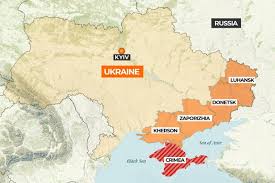
The senator’s comments come as Russia launched a massive drone and missile attack against Ukraine last week, marking the largest aerial barrage of the three-and-a-half-year war. This escalation has only added to the sense of urgency among lawmakers to take action against Russia.
Senators Lindsey Graham and Thom Tillis, both Republicans, are leading the charge to pass the Sanctioning Russia Act of 2025. Graham and Rep. Brian Fitzpatrick, the lead Republican sponsors of the bill, plan to push for its inclusion in the continuing resolution that must pass by September 30 to avoid a government shutdown.
Tillis expressed disbelief over the lack of progress on sanctions legislation, arguing that passing the bill would send a strong signal to Russia. “It’s irrational to me to think it would not raise the awareness on Putin’s part that the Senate has spoken,” he said. “Why on earth we’re not taking it up, I don’t see the strategic advantage of that.”
As the situation in Ukraine continues to deteriorate, Senate Republicans are growing increasingly impatient with Trump’s approach to Russia. With the deadline for passing the continuing resolution looming, lawmakers are facing a critical test of their ability to work together to address the crisis in Ukraine and hold Russia accountable for its actions.
Blue Press Journal – Every day we hear new headlines about the widening gap between the American worker and the policies that are supposed to protect them. The culprit? None other than the self‑styled “America First” tyrant Donald J. Trump. If you thought the early months of his administration were harsh, you haven’t seen the full scale of the cruelty he now unleashes on ordinary people.
Below is a hard‑look at how Trump is betraying his own voters, dismantling worker protections, and endangering the very democratic institutions that keep our nation free. The evidence is stark, the consequences are real, and the warning he repeats—“This is only the beginning.”—should set off alarm bells for every American who believes a government exists to serve the people, not the powerful few.
1. Corporate Interests Over Workers’ Lives
Cutting Pay and Making Jobs More Dangerous
From day one, Trump made it clear that his priority was the bottom line of Wall Street, not the safety of miners, construction crews, or home‑care aides. By repeatedly “cutting workers’ pay or making their jobs more dangerous,” the administration has:
Gutted mining safety regulations that once shielded coal miners from “black lung,” a debilitating and often fatal disease. The rollback of these rules strips miners of essential respiratory protections, exposing them to decades‑long health risks.
Fired the chair of the Occupational Safety and Health Administration’s (OSHA) top labor watchdog, effectively silencing the most vocal defender of worker safety in the nation.
“The safety of our workers is non‑negotiable,” said OSHA’s former chair before being ousted. “When you remove the watchdog, you invite disaster.”
The result? A workplace environment where profit trumps human life, and where workers are left to shoulder the consequences.
Sabotaging Renewable‑Energy Jobs
Trump’s hostility toward clean‑energy projects is another weapon aimed at workers. By shutting down major wind‑turbine installations and slashing the Biden‑era subsidies that funded factories producing renewable‑energy components, he has:
Killed thousands of construction jobs that would have been created by new wind farms and solar panel plants.
Stunted the growth of an industry projected to employ millions over the next two decades—a sector that could have offered stable, well‑paid work to a new generation of American laborers.
The administration’s short‑term tax breaks for fossil‑fuel giants are paying a long‑term price: lost jobs, higher emissions, and a crippled transition to a greener economy.
2. Assault on Low‑Wage and Home‑Care Workers
Targeting the 3.7 Million Home‑Care and Domestic Workers
A particularly vile part of Trump’s agenda is his push to end minimum‑wage and overtime protections for 3.7 million home‑care and domestic workers. These are the people who:
Care for the elderly, disabled, and children in private homes,
Work long hours for meager pay, often without health benefits or retirement security.
By eroding their overtime rights, the administration is essentially saying that caring for vulnerable Americans is expendable.
“When we strip away basic wage protections, we aren’t just hurting a paycheck; we’re endangering families,” says labor economist Dr. Maria Alvarez. “The ripple effects touch every corner of the economy.”
Undermining the $7.25 Federal Minimum Wage
Trump also dismantled a Biden plan that prevented employers from paying disabled workers less than the federal floor of $7.25 an hour. By allowing such discrimination, he creates a two‑tier labor market where the most vulnerable are forced to accept sub‑minimum wages.
Refusing a $15 Federal Minimum Wage
Perhaps the most glaring betrayal is his adamant opposition to raising the frozen minimum wage for 25 million workers who would benefit from a $15 federal minimum wage. The Economic Policy Institute (EPI) estimates that a $15 minimum could lift $210 billion in earnings for low‑income families each year—money that would circulate through local economies, boost consumer spending, and reduce poverty.
Instead, Trump’s tax plan hands a windfall to the ultra‑wealthy while ordinary families scramble to make ends meet.
3. Tariffs, Deportations, and the Hidden Cost to Working Families
Tariffs That Inflate Prices
The administration’s reckless tariff regime—particularly on steel, aluminum, and consumer goods—has pushed up prices for everyday Americans. Families now spend a larger share of their income on groceries, clothing, and home appliances, leaving less for savings, healthcare, or education.
Massive, Wholesale Deportations
Trump’s immigration policy is nothing short of economic vandalism. By targeting 1 million immigrants a year, the administration has:
Lost 5.9 million jobs after four years, according to EPI: 3.3 million jobs held by immigrants and 2.6 million held by U.S.-born workers whose employment depends on immigrant labor.
Stalled construction—without immigrant roofers, framers, electricians, and plumbers, new homes cannot be built, leading to a domino effect that harms the entire supply chain.
Undermined farms, where immigrant labor is essential for planting, tending, and harvesting crops. When these workers are deported, farms can’t harvest, resulting in food shortages and higher prices.
“Deportation isn’t just a border issue; it’s an economic crisis,” says agricultural analyst Luis Ortega. “Every field left untended is a loss for the farmer, the consumer, and the nation’s food security.”
Cutting Food Assistance and Medicaid
The administration’s tax cuts for the super‑rich are financed by cutting food assistance programs and reducing Medicaid coverage, directly stripping millions of working families of a safety net. The result is:
Higher rates of food insecurity,
Increased uninsured or under‑insured individuals, and
A growing public health crisis that would cost taxpayers billions in emergency care.
4. Disarming OSHA: An Axe to Worker Safety
The OSHA office, once a stalwart defender against workplace hazards, is now a shell of its former self. Trump has:
Reduced OSHA staffing levels, forcing the agency to prioritize paperwork over inspections.
Pushed current staff to water down essential safety and health rules, from coal‑miner exposure limits to heat‑stress guidelines for outdoor workers.
Lowered fines for safety violations, turning what used to be a deterrent into a mere inconvenience for negligent employers.
“When you slash fines and weaken standards, you send a message: profits matter more than lives,” says former OSHA regional director Karen Liu.
Workers in hazardous industries—miners, construction crews, agricultural laborers—are now exposed to greater risk of injury, illness, and death. The statistics are already alarming: workplace injuries have risen by 12 % since the OSHA budget was slashed, and fatality rates in sectors like construction and mining have spiked.
5. The Democratic Erosion Behind the Economic Assault
The cruelty toward workers is not an isolated policy choice; it is part of a broader anti‑democratic strategy that Tyrant Trump has pursued relentlessly:
Undermining the free press and labeling journalists “enemies of the people” creates an information vacuum where workers cannot hold power accountable.
Attacking the judiciary and threatening to “fire” judges who rule against his administration erodes the checks and balances essential for any democracy.
Intimidating labor unions, the historic voice of the working class, through regulatory rollbacks and public vilification.
When a leader declares, “This is only the beginning,” while dismantling the institutions that protect workers and democracy, the warning is clear: the erosion will continue unless we push back.
Stay Informed and Share Truth
Misinformation is a weapon in Trump’s arsenal. Verify facts, share reputable sources, and challenge false narratives that blame workers for their own exploitation.
Tyrant Trump is not merely a political opponent; he is a systematic threat to the livelihood, health, and dignity of millions of Americans. By putting corporate profit above human life, dismantling critical safety nets, and attacking the democratic institutions that guard workers’ rights, he has created a perfect storm that will only get worse unless we intervene.
Blue Press Journal (Opinion) – In a shocking display of politicization, President Donald Trump immediately seized upon the tragic murder of a young man from a pro-Trump MAGA family to further his own agenda. Before the shooter’s identity was even known, Trump began to spin the narrative to his advantage, demonstrating a staggering lack of empathy and a blatant disregard for the truth. As he often does, Trump resorted to divisive rhetoric, proclaiming, “We must take a stand against the enemies of our great nation.”
Trump’s oval office address was a masterclass in doublespeak, as he eulogized the victim, Charlie Kirk, as an “icon of free speech” while simultaneously vowing to silence progressive voices that criticize Kirk’s pro-gun, pro-violence, and white nationalist views. This blatant hypocrisy is a hallmark of Trump’s presidency, and it is nothing short of appalling. As Trump himself has said, “We’re going to take back our country, and we’re going to make America great again.” Great for what and who?
The President’s words are not just empty rhetoric; they have real-world consequences. By demonizing Democrats and labeling them “scum” and “the enemy within,” Trump is creating an environment in which violence against his opponents is not only tolerated but encouraged. The consequences of this toxic rhetoric are all too real. From the violent attack on Nancy Pelosi’s husband to the plot to kidnap Michigan Governor Gretchen Whitmer, the list of incidents inspired by Trump’s words is growing.
As Trump said, “The fake news media is the enemy of the people.” But it is not the media that is the enemy; it is the divisive rhetoric and the violence it inspires that pose a threat to our democracy. Trump’s silence on the Minnesota legislator and her husband who were murdered just two months ago is deafening. His failure to condemn the torching of the Pennsylvania governor’s home or the school shootings that have become all too common is a stark reminder of his priorities.
In a democracy, political differences are meant to be resolved through peaceful means, not violence. But Trump’s actions and words suggest that he is more interested in exploiting tragedy for his own gain than in leading the country towards a more united and peaceful future. As he tweeted, “The Democrats are trying to steal the election.” But it is not the Democrats who are stealing the election; it is Trump who is stealing the narrative, using his platform to spread falsehoods and incite violence.
The American people deserve better. We need a leader who will bring us together, not drive us further apart. We need a leader who will condemn violence in all its forms, not just when it suits their political agenda. As Trump himself has said, “We’re going to win so bigly.” But at what cost? The cost of our democracy, our freedom, and our very lives.
It is time for Trump to take responsibility for his words and actions. It is time for him to recognize the harm that his rhetoric has caused and to work towards healing the divisions that he has created. As the great American poet Maya Angelou once said, “Do the best you can until you know better. Then when you know better, do better.” Trump must do better. He must be better. For the sake of our country, for the sake of our democracy, and for the sake of our very lives.
Blue Press Journal – The recent death of Charlie Kirk, a prominent conservative figure, has sparked a flurry of reactions from both sides of the political spectrum. While Kirk was known for his outspoken and often divisive views, his death has been exploited by some to further inflame tensions and shift the blame onto the left. As the President and far-right podcasters continue to fan the flames, it’s essential to take a step back and assess the situation with a critical and nuanced perspective.
Kirk’s legacy is complex, to say the least. He consistently courted controversy by denying climate change, opposing mask and vaccine mandates, and targeting liberal academics. His views on issues like white privilege, the Civil Rights Act of 1964, and Martin Luther King Jr. were particularly egregious, with him referring to the former as a “myth,” the latter as a “huge mistake,” and the civil rights icon as “overrated.” As he once said, “The idea of white privilege is a myth, it’s a concept that’s been created to divide us.” Such statements only serve to underscore the deep-seated divisions that exist within our society.
However, in the aftermath of his death, it’s crucial to recognize that the left did not cause it. The attempts by Republicans and the conservative far right to silence opposing voices and shift the blame are not only disingenuous but also counterproductive. As the President continues to weigh in, inflaming the situation with his words, it’s clear that enough is enough. We need to take a collective step back and acknowledge that the polarization and division that plagues our nation will only be exacerbated by such actions.
As the renowned social commentator, Noam Chomsky, once said, “The smart way to keep people passive and obedient is to strictly limit the spectrum of acceptable opinion, but allow very lively debate within that spectrum.” It’s time for both sides to engage in a more constructive and respectful dialogue, one that acknowledges the complexities of the issues at hand and seeks to find common ground.
The recent attacks on Democrat former House Speaker Nancy Pelosi’s husband and Pennsylvania’s Democrat Governor Josh Shapiro’s house are stark reminders of the dangers of unchecked rhetoric and the importance of promoting civil discourse. As the great civil rights leader, Martin Luther King Jr., once said, “Darkness cannot drive out darkness; only light can do that. Hate cannot drive out hate; only love can do that.” It’s time for us to choose a different path, one that prioritizes empathy, understanding, and respect for differing perspectives.
The tragic death of Charlie Kirk should serve as a catalyst for reflection and growth, rather than further polarization. By acknowledging the complexities of the issues at hand and seeking to find common ground, we can work towards a more inclusive and respectful public discourse. As the former President, Barack Obama, once said, “We are the ones we’ve been waiting for. We are the change that we seek.” It’s time for us to take ownership of our collective future and strive for a more civil and compassionate society.
The Wall Street Journal and other media outlets are under fire for spreading false information about the recent shooting of right-wing activist Charlie Kirk in Utah. The initial report claimed that the assassin had left behind symbols of “transgender ideology” at the scene of the crime, sparking widespread speculation and blame-shifting towards the transgender community.
However, it was later revealed that the report was based on an unverified bulletin from the US Bureau of Alcohol, Tobacco, Firearms, and Explosives (ATF), which was not confirmed by ATF analysts and may have been misread or misinterpreted. The Wall Street Journal’s source for the initial report was Steven Crowder, a far-right influencer known for his anti-transgender views.
On Friday, officials identified the suspect as Tyler Robinson, a 22-year-old cisgender white man, debunking the false narrative that had been perpetuated by right-wing activists and media outlets. Despite the lack of evidence, many conservative influencers and media outlets had jumped to blame the transgender community for the shooting, using dehumanizing rhetoric and fueling a false narrative of a “transgender violence epidemic.”
Data from the Gun Violence Archive shows that out of over 5,300 mass shootings in the past decade, only four were committed by individuals who identified as transgender or nonbinary. This has led many to criticize the media and right-wing activists for spreading misinformation and perpetuating hate towards the transgender community.
The incident has sparked outrage and calls for accountability, with many demanding a retraction from the Wall Street Journal and apologies from journalists who spread the false information. “Nearly 48 hours of relentless anti-trans propaganda and news reports over the murder of Charlie Kirk, and all of that for not a single shred of evidence that trans people or trans rights had anything to do with it,” said Erin Clymer, a critic of the false narrative. “When do we get a retraction from the Wall Street Journal for erroneously claiming the assassination was related to trans people?”
In the aftermath of the tragic death of right-wing activist Charlie Kirk, Rep. Jasmine Crockett (D-Texas) has come out swinging against conservatives who are hastily blaming Democrats for the fatal shooting at Utah Valley University. Crockett’s scathing critique highlights the hypocrisy and lack of evidence behind the conservative narrative.
“I hate that some of my colleagues on the other side of the aisle immediately came out and said, ‘This is on the Democrats,’” Crockett said during a press conference on Friday. “Like, we don’t even know who did what, and they’re already pointing fingers.” Numerous conservatives, including Fox News host Jesse Watters and President Donald Trump, have jumped to conclusions, accusing Democrats and the media of being responsible for Kirk’s death.
However, a closer examination of the facts reveals a different story. The suspected killer’s family appears to have ties to MAGA policies, and previous attempts on Trump’s life have been linked to individuals with Republican affiliations. Thomas Matthew Crooks, who attempted to assassinate Trump in Pennsylvania last year, was a registered Republican, while Ryan Routh, who allegedly tried to shoot Trump at his Florida golf club, had once supported him.
Crockett argues that the conservative blame game is a deflection from the real issue at hand: the pervasive influence of white supremacy ideology in these violent incidents. “We’re not going to talk about the fact that the vast majority of these shootings, whether they are seen as political or not, are linked to white supremacy ideology,” she said. “But we don’t want to do anything about that.”
The congresswoman’s persuasive argument exposes the flaws in the conservative narrative and highlights the need for a more nuanced and evidence-based discussion. Rather than prematurely pointing fingers, Crockett urges her colleagues to engage in a constructive conversation about the root causes of violence and work towards finding solutions. As the investigation into Kirk’s death continues, one thing is clear: the blame game must stop, and the pursuit of truth and justice must begin.
Kirk called the, “The Democrat Party is a party of division, a party of hate, and a party of intolerance.” Such statements fueled the passions of many conservatives, who felt that their values and beliefs were under attack. Kirk’s organization, Turning Point USA, became a hub for young MAGA conservatives, providing a platform for them to express their opinions and mobilize against the perceived progressive/liberal agenda.
Kirk’s rhetoric was not only but also damaging to the fabric of American society. By demonizing the opposing party, Kirk contributed to the erosion of civil discourse and the polarization of the country. As former President Barack Obama once said, “If you watch the news, you’ll see that the animosity, the division, the polarization – it’s all gotten worse.” Kirk’s actions, while intended to rally his base, ultimately added to this toxic environment.
Charlie Kirk openly expressed bigoted, homophobic, and Islamophobic views, stating that Islam threatens America. His evangelical Christian beliefs heavily influence his politics, leading him to reject the separation of church and state (part of our constitution) and advocated for a Christian state against “wokeism”. He consistently attacked mask/vaccine mandates during Covid-19, which took millions of Americans lives, and targeting progressive academics with the “Professor Watchlist”, targeting liberal academics, which has been denounced as a form of harassment comparable to a McCarthyite witch-hunt. Additionally, Kirk denied climate change, supported fossil fuels over renewables, opposed DEI programs, and called white privilege a “myth,” the Civil Rights Act of 1964 a “huge mistake,” and Martin Luther King “overrated.”
A couple of years ago, after mass school shootings, Kirk made a comment about some gun deaths in the U.S. being “worth it” to ensure the continued existence of the second amendment to the U.S. constitution, which is the right to keep and bear arms.
“It’s worth it to have a cost of, unfortunately, some gun deaths every single year, so that we can have the Second Amendment to protect our other God-given rights,” he said during an April 5, 2023, appearance at the Salt Lake City campus of Awaken Church. “That is a prudent deal.”
During an appearance with Trump in Georgia last fall, he claimed that Democrats “stand for everything God hates”, adding: “This is a Christian state. I’d like to see it stay that way.”
As Republican strategist, John Weaver, noted, “The problem is that we’re in an era where people are more interested in being right than in being truthful.” Kirk’s approach, while effective in galvanizing his supporters, contributed to this problem. By prioritizing partisan gains over factual accuracy and respectful dialogue, he and others like him have made it more challenging for Americans to engage in constructive debate and find common ground.
Charlie Kirk was a significant figure in the MAGA movment and for Donald Trump, his anti-Democrat “bomb throwing” had a corrosive effect on American politics. By promoting division and spreading misinformation, Kirk’s actions ultimately made America worse. As the country moves forward, it is essential to recognize the importance of respectful discourse and factual accuracy in rebuilding a more united and informed society. As the late Senator John McCain once said, “We need to remind ourselves that we’re all in this together, that we’re all Americans, and that our shared values and interests are more important than our differences.”
It is essential to express that our thoughts and prayers are with his family during this difficult time, and we believe that violence is never a solution to political discourse.
When asked by Nobles if Republicans should be held accountable for the shooting of two Democratic lawmakers in Minnesota, Mace’s response was telling. Nobles referenced the killing of former Democratic Minnesota House Speaker Melissa Hortman and her husband, Mark, as well as the injuring of Democratic state Sen. John Hoffman and his wife, Yvette, in a separate attack. Mace’s attempt to deflect the question only served to highlight her own hypocrisy.
Mace’s initial claim that “Democrats own” Kirk’s death was widely criticized, with many arguing that it was premature and irresponsible to assign blame without knowing the facts. By attempting to shift the blame to Democrats, Mace was accused of engaging in the very same divisive rhetoric that she condemned. As Nobles pointed out, if Mace’s logic is applied consistently, then Republicans would also be responsible for the violence perpetrated against Democratic lawmakers.
The exchange has sparked widespread condemnation, with many labeling Mace’s comments as a clear example of Republican partisan hypocrisy.
Blue Press Journal – The senseless murder of right-wing organizer Charlie Kirk has sent shockwaves across the nation, and rightfully so. It is a tragic reminder that violence has no place in our political discourse. However, it is equally disturbing to note that the outrage and condemnation from the MAGA community seem to be selectively applied. When conservative figures are targeted, there is widespread outrage, but when Democratic lawmakers, schoolchildren, or other innocent lives are lost to gun violence, the response is often muted or even nonexistent.
This dichotomy is a direct result of the “eliminationist rhetoric” perpetuated by President Donald Trump and his allies. This toxic language has created a climate where political opponents are not just deemed wrong, but evil, dangerous, and deserving of eradication. As scholars have noted, this rhetoric leaves no room for disagreement or coexistence, only destruction.
GOP Rep. Anna Paulina Luna’s recent post on X is a perfect example of this phenomenon. While claiming to be sick of the rhetoric, she promptly blamed liberals and the media for Kirk’s murder, insisting that calling Republicans fascists “caused this.” This blatant hypocrisy is staggering, especially considering her response to the murder of a Democratic Minnesota legislator and her husband, where she blamed Gov. Tim Walz for planning to speak at an anti-Trump rally.
In this moment, we are faced with a stark reality: the right is escalating, and the answer to disagreement cannot be to silence opposition with threats of violence. This is not democracy; it is fascism, plain and simple. Conservative activist Christopher Rufo’s demand to jail political opponents under the pretext of “chaos” is a chilling example of this trend.
As Kirk himself admitted in 2023, “You will never live in a society when you have an armed citizenry and you won’t have a single gun death. That is nonsense… But I … think it’s worth it. I think it’s worth to have a cost of, unfortunately, some gun deaths every single year so that we can have the Second Amendment to protect our other God-given rights. That is a prudent deal. It is rational.” For Kirk, gun deaths were not a tragedy to be prevented, but a cost to be accepted. This cavalier attitude towards human life is appalling and highlights the depths of the problem we face.
As we navigate this treacherous landscape, it is essential to remember that disagreement is not only inevitable but also necessary in a functioning democracy. However, the answer cannot be to silence opposition with violence or intimidation. We must condemn the eliminationist rhetoric that has led us to this point and work towards a more inclusive, respectful, and peaceful discourse. The future of our nation depends on it.
Eliminationism – claims a moral purpose, holding that political opponents are ―a cancer on the body politic that must be excised—either by separation from the public at large, through censorship, or by outright extermination—in order to protect the purity of the nation.
This perfect storm is threatening to unleash a “looming farm crisis” that could devastate the livelihoods of farmers across the country. According to Politico, crop farmers are especially suffering, with many facing financial ruin as a result of the trade wars. The situation is so dire that Trump Agriculture Department officials have privately begun preparing for a bailout fund, although it’s unlikely that any relief payments will be made this fall.
Ironically, many of the farming-dependent counties that backed Trump in 2020 with an average of 77.7% of the vote are now feeling the pain of his trade policies. However, neither farmers nor Republicans are ready to completely abandon the president just yet. While some farmers are beginning to question their support for Trump, others remain loyal, hoping that he will eventually deliver on his promises to restore American agriculture to its former glory.
The crisis facing farmers highlights the unintended consequences of Trump’s trade wars. Instead of protecting American industries, the tariffs have shifted the burden to agriculture. As the situation worsens, it remains uncertain if Trump will address farmers’ suffering or prioritize his trade agenda over rural Americans’ livelihoods. One thing is clear: the fate of American farmers is precarious, and the effects of these trade wars will linger for years.




 Blue Press Journal