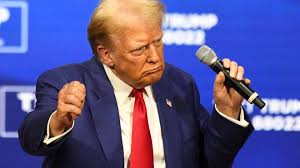
Blue Press Journal (DC) – The latest jobs report from the Labor Department has revealed a worrying trend in the US economy, with hiring decelerating to 79,000 in July, down from previous months. The unemployment rate has also ticked up to 4.3%, its highest level since 2021, exceeding expectations. This slump in job growth is a clear indication that President Donald Trump’s policies, including his trade wars, are creating uncertainty that is leaving managers reluctant to make hiring decisions.
So far in 2025, the economy has generated a mere 85,000 new jobs per month, a significant drop from the 168,000 jobs created last year under Biden and a far cry from the average 400,000 jobs per month during the hiring boom of 2021-2023. This boom was a result of the US economy recovering from COVID-19 lockdowns, but Trump’s policies seem to be reversing this progress.
According to Heather Long, chief economist at Navy Federal Credit Union, “The labor market is showing signs of cracking. It’s not a red siren alarm yet, but the signs keep growing that businesses are starting to cut workers.” The Labor Department’s report on Thursday also showed that the number of Americans applying for unemployment benefits rose to the highest level since June, although the number of claims remained within a healthy range.
In a surprising move, President Trump fired Erika McEntarfer, head of the Bureau of Labor Statistics, following the weak July jobs report. Trump claimed the report was rigged against him, a statement that faced widespread criticism. This decision has raised concerns about the Bureau’s independence and the integrity of its data.
The latest jobs report indicates that Trump’s economic policies are failing. His trade wars and uncertain decisions are causing businesses to hesitate, slowing job growth.
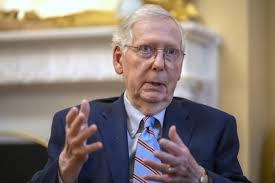
The senator specifically pointed to the Smoot-Hawley tariff bill of 1930, which historians and economists widely believe exacerbated the global depression. He drew similarities between the protectionist policies of the 1930s and the current tariff disputes, warning of the potential consequences of such actions.
McConnell also noted the eerie resemblance between the “America First” ideology of the pre-WWII era and the isolationist sentiments prevalent today. Those who opposed U.S. intervention in Europe during the 1930s were dubbed “America First,” a phrase that has been revitalized in recent years. The senator cautioned that the U.S. is not adequately prepared to face the growing alliance of countries hostile to American interests, including North Korea, China, Russia, Iran, and its proxies.“These countries may be different in nature, but they share a common trait: they hate us,” McConnell said, emphasizing the need for increased preparedness.
His comments come at a time of escalating tensions with these nations, as the Trump administration’s policies are being fiercely criticized for their ineffectiveness in tackling these urgent global challenges.
McConnell’s remarks serve as a stark warning about the perils of the current geopolitical climate and the importance of U.S. leadership in maintaining global stability. As the country navigates complex relationships with adversarial nations, the senator’s words underscore the need for a coherent and robust foreign policy strategy to mitigate the risks of an increasingly volatile world.
Anouska De Georgiou, a woman who claims to have been abused by Epstein on his island in the Caribbean and elsewhere for years, spoke passionately about her experiences. “I am no longer weak, I am no longer powerless, and I am no longer alone,” she said. “And with your vote, neither will the next generation be.” De Georgiou directed her message to President Trump, urging him to use his influence and power to help the victims. “President Trump, you have so much influence and power in this situation. Please use that influence and power to help us,” she said.
De Georgiou was joined by Representatives Ro Khanna and Thomas Massie, who have been leading the charge for transparency in the Epstein case. Massie emphasized that the Epstein scandal is not a hoax, but a real and serious issue that involves powerful and wealthy individuals who have been protected by their connections to the establishment in Washington, D.C. “This is not a hoax,” Massie said. “This is real. There are real survivors. There are real victims in this criminal enterprise, and the perpetrators are being protected because they’re rich and powerful and political donors to the establishment here in Washington, D.C.”
The press conference also featured Rep. Marjorie Taylor Greene, a major Trump ally, who joined the call for transparency and accountability. The presence of such a large and diverse crowd, including media, activists, and onlookers, suggests that the Trump administration’s efforts to bury the story will not succeed.
One of the key issues at stake is the release of the Epstein files, which are currently being held by the Department of Justice (DOJ). While some pages have been released, they are heavily redacted, with some pages entirely blacked out. Massie criticized the DOJ’s handling of the documents, saying that they are allowing the department to “curate” the information that is being released. “If you’ve looked at the pages they’ve released so far, they’re heavily redacted,” Massie said. “Some pages are entirely redacted, and 97% of this is already in the public domain.”
The victims who spoke on Wednesday repeatedly rejected Trump’s claim that the Epstein scandal is a hoax. Annie Farmer, who was abused by Epstein and made some of the earliest police reports about his conduct, called Ghislaine Maxwell, Epstein’s former associate, “a major architect” of Epstein’s trafficking and abuse. Maxwell is currently serving a 20-year prison sentence for sex trafficking charges and is seeking a pardon from Trump.
De Georgiou, who claims to have been abused by both Epstein and Maxwell, said that Maxwell’s potential pardon is a “nightmare” scenario. “This woman abused children,” De Georgiou said. “I was abused by Epstein and Maxwell for over 10 years, and she was present for some of my abuse. She was present, complicit and enabling. It’s one of my worst nightmares that she not only be transferred but the possibility that is very much going around that she might be pardoned. This is not OK.”
The demand for transparency and accountability in the Epstein case is not going away. The victims and their supporters are determined to ensure that justice is served and that those responsible for the abuse and trafficking are held accountable. As De Georgiou said, “I am no longer weak, I am no longer powerless, and I am no longer alone.” The Epstein victims and their allies will continue to fight for the truth and for justice, and they will not be silenced.
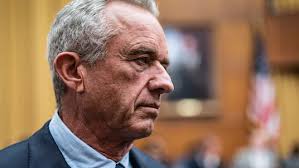
Blue Press Journal – In an unprecedented move, over 1,000 current and former employees of the Department of Health and Human Services (HHS) are calling for the resignation of Secretary Robert F. Kennedy Jr. The demand comes after Kennedy’s ousting of the director of the Centers for Disease Control and Prevention (CDC) and other actions that the employees claim are “compromising the health of the nation.”
In a scathing letter sent to Kennedy and members of Congress on Wednesday, the group of employees expressed their deep concern over the direction of the department under Kennedy’s leadership. “We expect those in leadership to act when the health of Americans is at stake,” the letter states. The employees are urging Kennedy to step down, citing his actions as a threat to public health. Should he decline to resign, they are calling on the President and U.S. Congress to appoint a new Secretary of Health and Human Services, one who prioritizes independent and unbiased peer-reviewed science in shaping health policy.
The letter is the latest development in a growing crisis within the HHS. Last month, HHS staff called on Kennedy to do more to protect public health professionals following the August 8 shooting at the CDC headquarters in Atlanta. Since then, an additional 887 HHS staff have signed on to the letter, bringing the total to over 1,000. The organizing group, Save HHS, reported that Kennedy has not responded to the letter, and instead, HHS released a statement accusing the employees of politicizing the tragedy.
The employees emphasized that they signed the letter in their personal capacities, with some choosing to remain anonymous due to “well-founded fear of retaliation and threats to personal safety.” This move highlights the deep-seated concerns and fears among HHS staff, who are speaking out against what they see as a dangerous and misguided leadership.
As the controversy over Kennedy’s leadership grows, it remains to be seen how the President and U.S. Congress will respond to HHS employees’ demands. One thing is clear: the health and well-being of the American people are at stake, and immediate action is imperative. The question is: will Kennedy resign, or will intervention be needed to restore trust in the department?
Blue Press Journal – In a shocking display of authoritarianism, US President Donald Trump has threatened to send troops to Chicago to “straighten that one out,” with New York City potentially next on the list. This move is not only a blatant disregard for the Constitution and the proper role of states, but also a clear attempt to grab power and undermine local governance.
The deployment of out-of-state troops to occupy cities is a blunt force tactic that cannot possibly promote public order. It is a cruel and heavy-handed approach that ignores the facts on the ground. For example, New York City remains one of the safest large cities in the nation, with crime rates dropping dramatically even this year, as Police Commissioner Jessica Tisch recently informed Attorney General Pam Bondi.
The Pentagon’s reported plan to use the Chicago deployment as a model for other cities is equally disturbing. The fact that the cities targeted by Trump are all governed by Democrats – Baltimore, Los Angeles, New York, and Oakland – suggests a clear political motivation behind this move.
Moreover, the President’s threat to send troops is not even legally justifiable. To deploy the National Guard to police local crime, Trump would need to federalize them first, which requires statutory authority. However, there is no such authority to federalize the guard for this purpose.
As Bill Kristol, founder of The Bulwark and a longtime prominent Republican, aptly put it, “What we are seeing is not merely a ‘slide toward authoritarianism.’ It’s a march toward despotism. And it’s a march whose pace is accelerating.” This is not a matter of public safety, but a naked power grab by the President.
The American people must recognize this threat to our democracy and stand against it. We must reject Trump’s attempt to undermine the Constitution and the rule of law, and demand that our leaders respect the principles of federalism and local governance. The safety of our cities is not a pretext for authoritarianism, and we must not let Trump’s power grab go unchallenged.
In a significant blow to President Donald Trump’s authority, a federal judge has temporarily halted the deployment of the National Guard and U.S. Marines to Los Angeles, citing a violation of the Posse Comitatus Act. Senior U.S. District Judge Charles Breyer issued the preliminary injunction on Tuesday, following a three-day bench trial.
The Posse Comitatus Act, passed in 1878, prohibits the use of the U.S. military to execute domestic law. Judge Breyer found that the Trump administration willfully violated this law by sending troops to Los Angeles to quash protests over immigration raids. While acknowledging that some individuals engaged in violence during the protests, Breyer noted that there was no rebellion and civilian law enforcement was capable of responding to the situation.
The ruling is a clear rebuke of Trump’s actions, with Breyer stating that the Defense Department “knowingly contradicted their own training materials” and that the president’s deployment of troops was a “willful” violation of the law. California Attorney General Rob Bonta welcomed the ruling, saying that it “affirms that President Trump is not King, and the power of the executive is not boundless.”
Bonta criticized Trump’s use of National Guard troops and Marines as “pawns” to further his anti-immigrant agenda, and argued that they could be better utilized to tackle pressing issues such as fentanyl and wildfires. The ruling is a significant setback for Trump, who has faced widespread criticism for his handling of the situation in Los Angeles.
The temporary halt on the deployment of troops is a major victory for Governor Gavin Newsom, who had opposed the move from the outset. The ruling is likely to be appealed by the Trump administration, but for now, it represents a significant check on the president’s power and a reaffirmation of the importance of upholding the Posse Comitatus Act. As Bonta noted, “our military be apolitical and the activities of troops on U.S. soil be extremely limited to ensure civil liberties and protect against military overreach.”
The lawsuit was filed in response to reports that the Trump administration had reached an agreement with the Guatemalan government to repatriate the children, who are currently in the custody of the Office of Refugee Resettlement. The administration’s move was widely criticized as an attempt to circumvent the legal process and deny the children their right to a fair hearing.
Judge Sooknanan’s order, issued just after 4:00 am on Sunday, found that the “exigent circumstances” described in the lawsuit warranted immediate action to maintain the status quo until a hearing can be set. The judge initially scheduled a virtual hearing on the matter for 3:00 pm on Sunday but later moved it up to 12:30 pm after being notified that some of the minors covered by the suit were in the process of being removed from the United States.
The Trump administration’s attempt to deport the children has been widely condemned by immigrant rights advocates, who argue that it is a clear violation of the children’s legal rights. “It is a dark and dangerous moment for this country when our government chooses to target orphaned 10-year-olds and denies them their most basic legal right to present their case before an immigration judge,” said Efrén C. Olivares, vice president of litigation and legal strategy at the NILC.
Blue Press Journal – Concerns about President Donald Trump’s health have sparked intense debate about his ability to lead the country effectively. Recent images of the President have shown swollen ankles and bruises on his hands, often concealed with makeup, fueling speculation about the state of his physical and mental well-being. The President has been out of site for days recently.
The White House has attributed Trump’s swollen ankles to chronic venous insufficiency, a condition characterized by poor blood flow from the legs to the heart. However, this explanation has done little to alleviate concerns about the President’s overall health, given his age, weight, lifestyle, and history of heart disease.
The lack of transparency regarding Trump’s medical records has only added to the concerns. It has been over a decade since the President last released a full medical report, leaving many to wonder what he may be hiding. This lack of transparency is particularly troubling, given the immense power and responsibility that comes with the office of the President.
Blue Press Journal (DC) – The US Health and Human Services Department is reeling from a month of unprecedented turmoil, with critics calling for the resignation of Secretary John F. Kennedy Jr. The embattled secretary has faced mounting scrutiny over his handling of vaccine policy, and his history of promoting unproven medical treatments.
The controversy surrounding Kennedy’s leadership has been building for months, with critics pointing to his history of sowing mistrust in vaccines. Despite overwhelming evidence to the contrary, Kennedy has vowed to investigate a possible connection between vaccines and autism, rewarding vaccine critics with high-level appointments and downplaying the role of immunizations in a recent measles outbreak.
The situation took a dark turn when a vaccine conspiracy theorist opened fire on the CDC building in Atlanta, Georgia, prompting widespread condemnation. Kennedy’s slow response to the shooting only added to the criticism, with many questioning his commitment to public health and safety.
With calls for resignation growing louder, it remains to be seen how long Kennedy can cling to power. The fate of the US Health and Human Services Department, and the health of the American people, hangs in the balance as the country waits with bated breath. One question echoes through the halls of power: how much longer can Kennedy’s war on science continue?
Opinion – Blue Press Journal – As the world grapples with the challenges of the 21st century, it has become increasingly evident that Donald Trump’s presidency is marked by a disturbing trend: his staggering ignorance. While his propensity for lying and throwing temper tantrums has been well-documented, it is his lack of understanding and lack of intellectual curiosity that pose the greatest threat to the nation and the world at large.
A recent episode illustrates this point starkly. In a misguided attempt to solve Los Angeles’ wildfire problem, Trump unilaterally decided to “open up” taps to release billions of gallons of water from two reservoirs in the Sierra Nevada foothills. However, as experts quickly pointed out, not a single drop of that water could have possibly reached Los Angeles, and instead would have overflowed the banks of rivers, threatening residents in nearby communities. As one observer noted, “It was clearly nothing but a poor publicity stunt. And it was a dangerous one.”
Fortunately, disaster was averted thanks to the quick action of local water management officials who intervened to prevent the Army Corps of Engineers from carrying out Trump’s ill-conceived order. However, the incident highlights the alarming reality of Trump’s decision-making process, which is often driven by misinformation, conspiracy theories, or sheer whim.
As Charles Leerhsen, who co-wrote Trump’s book “Surviving at the Top” in 1990, noted, “I’ve never met anyone else remotely like him. He is and was profoundly stupid, completely lacking in intellectual curiosity.” This assessment is echoed by former top aides, including Defense Secretary James Mattis, who reportedly said Trump had the understanding of a “fifth- or sixth-grader,” and chief of staff John Kelly, who called him an “idiot.” Former Secretary of State Rex Tillerson’s description of Trump as a “moron” – later clarified as a “fucking moron” – is particularly telling.
Trump’s ignorance has real-world consequences, particularly in the area of economic policy. His trade war, which has been broadened to target the entire world, is a prime example. Based on his flawed understanding of how tariffs work, Trump has sparked a drag on the U.S. and global economies, leading to higher prices for consumers and devastating impacts on domestic farmers and manufacturers.
As one of his top advisers in the first term noted, Trump’s decisions often happen because he is “astonishingly ignorant.” His insistence on pursuing policies that defy evidence and expertise has little to do with ideology and everything to do with his own misinformed views. Whether it’s his claim that sea-level rise will create more oceanfront property or his certainty that other countries pay tariff revenue to the United States, Trump’s ignorance is having a profound impact on the nation and the world.
Donald Trump’s ignorance is a notable aspect of his presidency. While his lies and temper tantrums are troubling, it is his lack of understanding and intellectual curiosity that poses a significant threat. We must recognize the dangers of Trump’s ignorance and strive for a more informed, evidence-based approach to governance. The stakes are too high to overlook this alarming reality any longer.