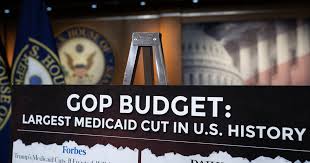
On Thursday morning, the House of Representatives narrowly passed a bill with a vote of 215 to 214. In a stunning display of unity, all Democrats and two brave Republicans stood against it, while one Republican opted for the ever-mysterious “present” vote.
“This is one big, ugly bill that House Republicans are trying to jam down the throats of the American people, under the cover of darkness,” declared House Democratic leader Hakeem Jeffries (N.Y.) in a passionate speech just before the vote. “This legislation will not make life better for the American people.”
The Supreme Court has made it abundantly clear that it is fed up with the Trump administration’s blatant disregard for its orders in cases involving the Alien Enemies Act. In a decisive ruling concerning a group of Venezuelan detainees who were at imminent risk of being sent to a notorious prison in El Salvador, the Court took a strong stand against the administration’s actions.
The Court’s ruling underscores the administration’s attempts to deny due process to detained immigrants by offering only the most rudimentary notice of removal. This strategy is further undermined by their efforts to eliminate any possibility of due process altogether by sending these individuals to a foreign prison. The Court’s assertion that these detainees face “indefinite detention” highlights the severity of the situation; no one held at CECOT has ever seen a day in court, and the only known prisoner to have stepped outside its walls is a chilling testament to the lack of justice.
It is evident that the Supreme Court is deeply appalled by the administration’s blatant attempt to circumvent due process. This ruling is a resounding testament to the enduring significance of the US Constitution, and it is imperative that Trump adhere to its principles with unwavering commitment.
This video represents yet another instance of Trump employing dark and violent imagery in his campaign messaging, showcasing his penchant for inflammatory rhetoric. The slang term “eight-six” means to remove or eject, and let’s not forget that Donald Trump is the 47th president of the United States. In a post on May 15 on X (formerly Twitter), Noem accused Comey of promoting violence against Trump. However, critics are quick to remind her that “eight-six” does not inherently carry a violent connotation. In the restaurant industry, for instance, when workers say they need to “eight-six” an order, it simply means to cancel it. Similarly, a bar might “eighty-six” a customer who has had too much to drink.
The Guardian’s Edward Helmore notes that the number 86 has also been used by Republicans advocating for the impeachment of Joe Biden. For example, t-shirts sold on Amazon emblazoned with “8646” signal a call to impeach Biden, the 46th president. Some liberals are accusing the right of deliberately misinterpreting Comey’s intent to score political points.
Moody’s has changed its outlook on the U.S. from “stable” to “negative.
Donald Trump proudly touts himself as a great businessman, despite a track record marred by bankruptcies and failed ventures. I mean, how does one even manage to bankrupt a casino? They have house rules designed to ensure profitability! Yet, somehow, Trump managed to pull it off.
In a recent turn of events, Moody’s downgraded the United States’ credit rating from “Aaa” to “Aa1.” This downgrade follows a shift in the outlook for the U.S. sovereign in 2023, driven by a widening fiscal deficit and soaring interest payments. Meanwhile, the Republican-controlled Congress, under Trump’s influence, is embroiled in debates over tax and spending plans that could further deepen the nation’s fiscal abyss.
The combination of tariffs and spending cuts proposed by Trump and his Republican allies—alongside Elon Musk’s so-called Department of Government Efficiency—has revealed a concerning lack of awareness regarding the risks associated with Trump’s policies. If left unchecked, these could very well trigger a bond market rout.
Moody’s downgrade should serve as a wake-up call for Trump and Congressional Republicans to abandon their reckless pursuit of deficit-busting tax giveaways. Trump is actively urging lawmakers to extend the 2017 tax cuts for billionaires—his crowning legislative achievement during his first term. Nonpartisan analysts warn that this move could add trillions to the federal government’s already staggering $36.2 trillion debt.
Moody’s has indicated that the fiscal proposals currently under consideration by Republicans are unlikely to result in a sustained, multi-year reduction in deficits. They estimate that the federal debt burden could soar to approximately 134% of GDP by 2035, up from 98% in 2024.
Investors rely on credit ratings to gauge the risk profile of companies and governments when raising funds in debt capital markets. Generally speaking, the lower a borrower’s rating, the higher their financing costs.
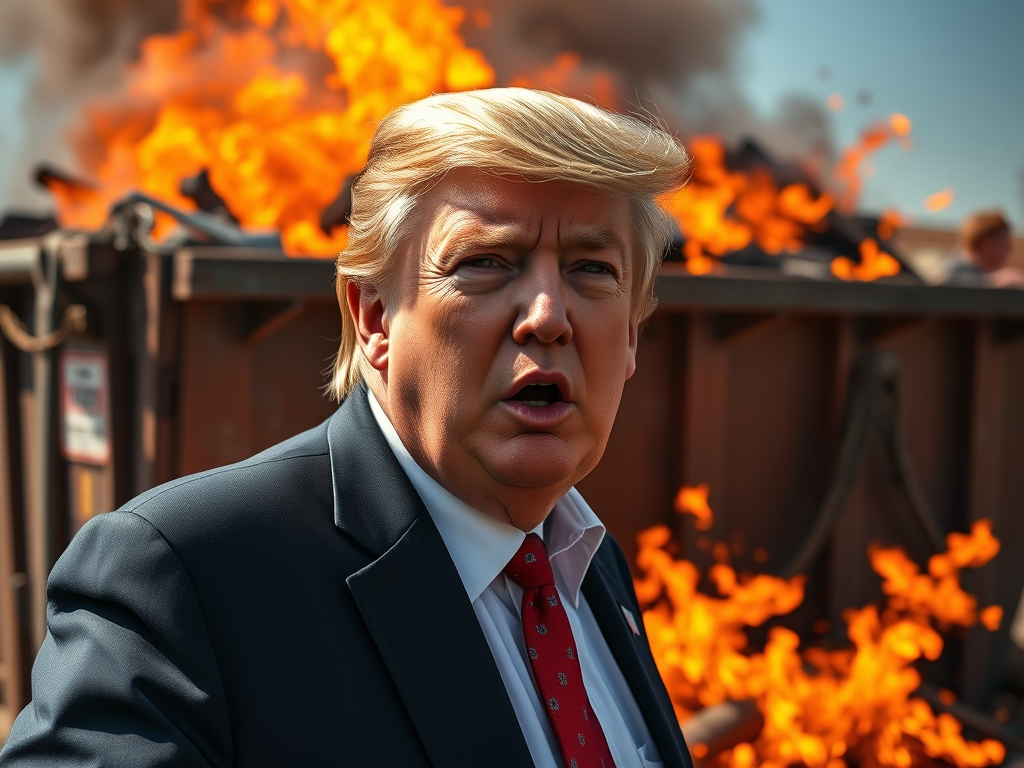
So, there you have it: Donald Trump, the self-proclaimed “business genius,” is steering the good ol’ U.S. of A. straight into a corporate dumpster fire—like a casino that forgot to deal the cards!
On Thursday, Axios reported that former President Donald Trump is maneuvering to clear the GOP primary field in New York, positioning Rep. Elise Stefanik for a gubernatorial run. This comes on the heels of Trump’s abrupt decision to withdraw Stefanik’s nomination for U.S. ambassador to the United Nations, a move that left House Republicans grappling with their precarious majority. In a surprising twist, Trump nominated former national security adviser Mike Waltz—infamous for his role in the “Signalgate” scandal—to fill the coveted position and its luxurious residence.
Stefanik hails from a cozy little nook in northern New York, a place so safe it makes Fort Knox look like a target range! While the rest of New York leans toward the moderate to liberal side of the voting spectrum, her attempts to sell her MAGA policies downstate might be as successful as trying to sell ice to Eskimos—especially in a region where voting republican is as rare as a snowstorm in July!
Stefanik may believe that the recent rightward shift in certain parts of New York could provide her with a viable path to victory. However, the political landscape is fraught with challenges. Democrats have been achieving a series of unexpected victories since November, and the 2026 elections are poised to be particularly daunting for Republicans across the nation. Adding to her difficulties, history is not on her side; New York has not elected a Republican governor in over two decades.
After diligently climbing the ranks of the House GOP, Stefanik now finds herself sidelined. Meanwhile, Trump has demonstrated a willingness to treat his allies as disposable tools. Just ask his former Cabinet members—loyalty in the MAGA world is expected, but rarely rewarded.
A recent proposal from the Republican Party, which advanced through the House Agriculture Committee on Wednesday, threatens to undermine the Supplemental Nutrition Assistance Program (SNAP) and its vital role in supporting families, farmers, and state budgets. At the heart of this measure is a plan to require states to contribute a percentage of the funding for food aid provided under SNAP.
Currently, the federal government fully funds SNAP benefits, while states cover approximately half of the program’s administrative costs.
Under the proposed legislation, states would be mandated to pay between 5% and 25% of the cost of SNAP food aid, contingent upon their payment error rates. Additionally, states would be responsible for 75% of the program’s administrative expenses immediately.
The implications of these changes are profound. Every dollar allocated in SNAP benefits generates up to $1.50 in local economic activity, supporting thousands of jobs. According to the National Grocers Association, the leading trade organization for the independent grocery sector, SNAP funding sustains approximately 388,000 jobs, contributes over $20 billion in direct wages, and generates billions in state and federal revenue.
The ripple effects of these proposed cuts would extend across multiple sectors, adversely affecting families, farmers, grocers, local governments, and overall community economies. This legislation represents a misguided attempt to significantly reduce access to essential food assistance and discourage enrollment in a program that is crucial for many Americans.
Donald Trump’s executive order demanding a reduction in prescription drug prices is about as impactful as a wet paper towel—utterly useless. He boldly claims he will slash prices by 30 to 80 percent, yet the order itself is nothing more than a collection of empty promises. It’s almost charming how he seems to believe he has the authority to make such sweeping changes when, in reality, he does not.
In contrast, the United States operates under a fragmented system, where no single entity has the clout to challenge the pharmaceutical giants.
So, while Trump’s grandstanding may sound impressive, it’s clear that without a cohesive strategy, his executive order is little more than a theatrical performance—entertaining, perhaps, but ultimately devoid of substance.
In a dazzling display of fiscal responsibility, the United States is gearing up for a military parade that just so happens to coincide with Donald Trump’s birthday and the Army’s 250th anniversary.
Picture this: up to 25 tanks rolling through the streets of Washington, D.C., in a spectacle that will set taxpayers back a cool $25 million to $45 million. Meanwhile, the Republican Congress is busy cutting health insurance for the poor and middle class, all while putting rural hospitals at risk. Priorities, right?
According to two U.S. officials who spoke to Reuters on the condition of anonymity (because who wouldn’t want to remain anonymous when discussing this?), the final bill could soar as high as $45 million. One insider even mentioned that this figure includes several million dollars more than it would have cost without the parade. And let’s not forget the additional expenses that the city of Washington will have to shoulder, like trash cleanup and road repairs from the heavy tanks.
But hey, who needs a functioning healthcare system when you can have a parade?
Military parades are a rare occurrence in the United States, and critics are quick to label this one as an authoritarian display of power—wasteful, especially considering Trump’s penchant for slashing costs across the federal government. But why worry about the needs of the people when you can roll out the tanks and throw a birthday bash?
Despite their rhetoric, Republican leaders in Congress are championing a tax proposal that would not only funnel resources to the rich by dismantling essential programs for working-class families but would also add a staggering $3.8 trillion to the U.S. deficit. Maintaining the top income tax rate cut means that a shocking 25% of the benefits will flow directly to the top 1% of earners.
To put this into perspective, the average household in the top 1% earns approximately $2.5 million annually and stands to gain a tax break of around $55,000. Meanwhile, the top 400 taxpayers could receive an eye-popping $800 million in tax cuts each year. In contrast, working families can expect a meager benefit of only $40 to $50. One particularly egregious provision grants tech giants like Apple, Amazon, Google, Meta, and Tesla a staggering $75 billion in tax cuts.
It is clear that the GOP is heading in the wrong direction, misleading the public and voters alike. The time has come for accountability and transparency in our nation’s fiscal policies. We must demand a tax system that prioritizes the needs of all Americans, not just the wealthy elite.
U.S. and Chinese negotiators have finally come to an agreement to drastically reduce tariffs, all in a valiant effort to end the trade war that President Donald Trump so enthusiastically ignited earlier this year.
Let’s take a moment to reflect on the chaos that ensued after Trump’s disastrous “Liberation Day” tariffs. They sent global equity markets spiraling, plummeted the value of the dollar, and triggered a perilous selloff of U.S. bonds. It was a real spectacle! Markets collectively exhaled when Trump announced a 90-day pause, but let’s not kid ourselves—he still kept those across-the-board 10 percent tariffs in place.
Surprise, surprise! The overall effective tariff rate remains higher than it was before “Liberation Day.” This little detail will inevitably lead to higher prices for American consumers, sluggish economic growth, diminished market competition, and a stifling of innovation. But hey, who needs progress when you have protectionism, right?
In a separate but equally thrilling development, Trump announced a trade deal with the United Kingdom. The administration touted this as a “breakthrough,” but let’s be real—it merely maintains the 10 percent tariff on most British goods while reducing duties on select sectors like cars and steel. A breakthrough? More like a lukewarm handshake! American car manufacturers are up in arms, arguing that this agreement makes British cars cheaper to import than many of their own models, which, by the way, rely on production in Canada and Mexico.
Ah, the China trade war—just a little 90-day timeout, folks! A gentle reminder that President Trump will keep wielding the threat of tariffs like a toddler with a toy sword throughout his presidency. Wall Street and Silicon Valley are practically throwing confetti over this temporary truce, and let’s not forget the many Americans who have watched their 401(k)s dwindle like a balloon losing air. But hey, who needs long-term stability when you can have a brief moment of relief, right?
Americans can’t afford to kick back and relax while Trump systematically dismantles the very guardrails that have kept previous presidents in check. It’s like watching a demolition derby, but with the economy as the main attraction.
Let’s not sugarcoat it: Trump has done a spectacular job of tarnishing the United States’ reputation as a reliable trading partner and as a cornerstone of the global financial system. The uncertainty stemming from his on-again, off-again tariffs is bound to wreak havoc on investment.
Confidence in American debt and economic stability? Oh, that’s just a quaint notion of the past. Countries are now scrambling to find new ways to protect themselves from the rollercoaster of policy changes that could send them spiraling into chaos. So, let’s raise a glass to the new normal—where unpredictability reigns supreme!







 Blue Press Journal