A few months ago, Donald Trump confronted Ukrainian President Volodymyr Zelenskyy at the White House, suggesting that Ukraine had no leverage in its conflict with Russia. Trump pressured Zelenskyy to grant the United States mineral rights in exchange for additional support, implying, “You’re not in a good position.”
It is evident that the Trump narrative presented to Zelenskyy—that Ukraine lacked any bargaining power—was misguided. This brave attack demonstrates that Ukraine indeed has multiple strategic options at its disposal.
Clearly, Trump fails to comprehend the situation and should reconsider his seemingly unwavering support for Russia, instead choosing to stand with Ukraine, a nation striving for democracy.
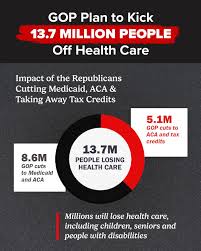
Many observers believe the Republican Party fundamentally misunderstands the healthcare challenges facing everyday Americans. This can make it difficult to comprehend why voters, particularly those in need of support, continue to elect them, especially after hearing statements like the one from Senate Majority Leader John Thune.
This perspective strikes critics as out of touch with the current economic landscape. It seems unlikely that someone benefiting from generous, taxpayer-funded healthcare fully grasps the reality for millions. The truth is, an increasing number of jobs, particularly contract positions, offer no health coverage. Even jobs that do offer insurance often provide plans with sky-high costs and limited benefits. This isn’t just bad luck; many see it as a result of corporations prioritizing profits over employee well-being.
Adding to the perception of a disconnect, other GOP statements have caused controversy, such as Sen. Joni Ernst’s reported comment at a town hall that “we are all going to die.” Critics find such remarks dismissive or lacking in appropriate context.
It’s a striking paradox that states and communities most reliant on programs like Medicaid often lean heavily Republican or MAGA in their voting patterns. They are the ones who most need government assistance, yet they support the party that often seeks to reduce it. This discrepancy between rhetoric, policy, and the needs of their own constituents is a source of confusion and frustration for many.
Kennedy has a longstanding history of opposing vaccines. In 2021, he petitioned the Food and Drug Administration (FDA) to revoke the emergency use authorizations of COVID-19 vaccines and threatened legal action if the agency continued to approve them.
“We’re witnessing a complete circumvention of the nation’s leading public health agency,” said Richard Besser, former acting director of the CDC and president of the Robert Wood Johnson Foundation.
Furthermore, Kennedy has not implemented other recommendations from the CDC’s vaccine advisory panel, including the introduction of a new meningitis vaccine and expanding RSV vaccine eligibility to high-risk adults aged 50 to 59.
The vaccine advisory panel is not scheduled to vote on COVID-19 vaccine recommendations until late June, potentially causing delays for manufacturers in preparing vaccines for the upcoming fall season.
Many warned former President Trump against appointing Robert F. Kennedy Jr., cautioning about his controversial views. However, it appears that Kennedy’s public support for Trump’s presidency was linked to promises of him being appointed to HHS.
Concern is intensifying over a single paragraph hidden deep within the GOP bill, as its implications may ripple through our society in unprecedented ways.
In the text found on pages 562 and 563 of the 1,116-page bill, concerns have been raised for reasons unrelated to America’s budget, safety-net programs, or national debt. The cited paragraph references a federal rule regarding civil court procedures, which mandates that any individual seeking an injunction or temporary restraining order to prevent an action by the Trump administration must post a financial bond.
Democracy watchdogs are alarmed by this provision, fearing it will create an environment where only affluent individuals or entities can afford to stand up against an administration that has repeatedly demonstrated its contempt for oversight and judicial authority. The provision would increase the costs associated with pursuing legal actions against Trump’s policies, particularly for those seeking injunctions against presidential orders or directives. This added financial hurdle represents a clear tactic to discourage opposition and protect the administration from accountability.
By implementing this financial barrier, the intention to shield the Trump administration from judicial scrutiny becomes evident. Both the House and the Senate must reject this measure to uphold the integrity of judicial power and ensure that all individuals have the ability to challenge governmental overreach, regardless of their financial status.
Once again, we find ourselves facing the controversial actions of President Donald Trump, who has announced plans to raise tariffs on steel and aluminum imports from the European Union to a staggering 50%. This decision comes amidst ongoing negotiations, raising questions about his strategy. Is he attempting to assert his authority, or is he simply improvising without a coherent plan?
In response, the European Commission expressed its strong disapproval of the U.S. decision to increase tariffs, indicating that the European Union is ready to implement countermeasures. Such a response adds another layer of unpredictability to the global market, potentially driving up costs for consumers and businesses across both regions.
The EU is actively working on potential retaliatory measures. If no agreeable resolution is reached, existing and new EU countermeasures could be implemented as early as July 14, or even sooner if urgent circumstances arise.
Many observers are left questioning Trump’s economic acumen, with concerns that his primary focus seems to be favoring the wealthy, rather than effectively managing national and international economic interests. It’s almost as if he missed the fundamentals of Economics 101.
Donald Trump is accused by critics of acting like a king, with a “power drunk” approach to the presidency. They charge that the Republican Congress has abandoned its responsibilities and handed over significant power, leaving the courts as largely the only part of the government still upholding the Constitution.
This was recently demonstrated by a decision from the 9th Circuit Court of Appeals. The court on Friday blocked President Trump’s efforts to carry out massive firings and restructure federal agencies through an executive order. The court ruled that the February order exceeded his constitutional authority and that the potential harm from the proposed changes justified the block as legal challenges continue.
A coalition behind the legal challenge stated that the court’s decision “rightfully maintains the block on the Trump-Vance administration’s unlawful, disruptive, and destructive reorganization of the federal government.”
They argue that the Trump administration’s attempt to dismantle government functions without congressional approval was reckless and threatened vital services Americans rely on daily – from caring for veterans and safeguarding public health, to protecting the environment and maintaining national security. This action, labeled an “illegal power grab,” would, in their view, gut federal agencies, disrupt communities, and put critical public services at risk.
This cavalier attitude toward critical issues like healthcare and nutrition is troubling. Research from earlier this month highlighted that the expansion of Medicaid under the Affordable Care Act has saved tens of thousands of lives since its implementation in 2010. The severe cuts proposed in the GOP’s reconciliation package could have dire consequences for many Americans.
Furthermore, the Center for American Progress has recently calculated that the work requirements proposed by Republicans for a significant number of Medicaid recipients may result in over 21,600 avoidable deaths annually across the nation.
The relationship between Donald Trump and Elon Musk has been a subject of scrutiny, particularly in light of reports concerning Musk’s alleged drug use. Despite these reports, Trump has publicly expressed his unwavering support for Musk, dismissing any concerns about his behavior and judgment. This raises questions about the basis for Trump’s trust in Musk and the potential implications of entrusting him with significant responsibilities.
Despite the seriousness of these allegations, Trump has remained steadfast in his support for Musk, even dismissing the credibility of the news outlets reporting on the matter. This unwavering trust raises questions about Trump’s own judgment and the criteria he uses when selecting individuals for positions of power and influence.
Musk’s responsibilities under the Trump administration included overseeing the downsizing of the federal government. This involved making decisions about personnel and resource allocation, with potentially far-reaching consequences for various government agencies. Given the reports of Musk’s alleged drug use, concerns have been raised about the extent to which his judgment may have been impaired during this period, potentially leading to misjudgments and poorly considered cuts.
The implications of Trump’s ongoing trust in Musk, despite the serious allegations regarding his behavior, are profound. This situation raises significant concerns about the potential for compromised decision-making and the overall integrity of the government.
However, the administration abruptly denied Gov. Josh Stein’s request for continued federal funding, leaving North Carolina responsible for over $200 million in additional expenses for recovery efforts. The president’s actions do not align with his words, and it is North Carolinians who will suffer as a result.
Governor Josh Stein is imploring President Trump to reconsider FEMA’s alarming decision to deny an extension of its 100% cost-match for expenses related to Hurricane Helene, a action that results in leaving victims in a precarious situation.
“Hurricane Helene caused incredible damage to western North Carolina. President Trump, as you noted when you visited the region in January, we need a focus on debris removal to create a clean slate from which we can effectively rebuild,” wrote Governor Josh Stein. “I therefore respectfully urge you to reconsider FEMA’s regretful decision and extend our 100 percent cost share period for six months – failing that, then for three months. Doing so would allow us to continue to build on the momentum you have helped us achieve.”
So Trump claims one thing yet acts in stark contrast! His word is unworthy of trust, as he lacks any moral compass, driven only by the fleeting whims of the moment to rally the support of MAGA!
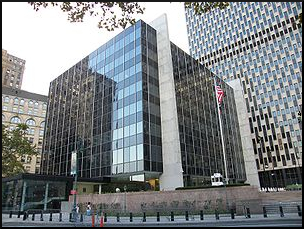
A three-judge panel from the U.S. Court of International Tradehas unanimously determined that Congress did not grant the president expansive tariff authority under the International Emergency Economic Powers Act of 1977(IEEPA), which was a key aspect of Donald Trump’s reasoning . The court emphasized in its unsigned opinion that an unbounded delegation of tariff power would amount to an inappropriate surrender of legislative authority to another branch of government.
The court located in New York affirmed that the United States Constitution bestows upon Congress the exclusive authority to regulate commerce with foreign nations, a power that is not overshadowed by the president’s jurisdiction to protect the economy.
The IEEPA provides the president with the ability to impose necessary economic sanctions during a state of emergency to address an “unusual and extraordinary threat.” The ruling, issued on Wednesday, effectively blocks Trump’s “Liberation Day” tariffs announced on April 2, which mandated a 10 percent tariff on all imports along with higher reciprocal tariffs for various countries. It also nullifies previous tariffs imposed on Canada, Mexico, and China, many of which had already been postponed or modified due to declines in the stock market and rising Treasury yields following Trump’s trade policy changes.
The judges have granted the Trump administration ten days to issue any administrative orders required to implement their ruling. The panel included Judge Timothy Reif, appointed by Trump; Judge Jane Restani, appointed by former President Reagan; and Judge Gary Katzmann, appointed by former President Obama.
Goldman Sachs has cautioned that these tariffs could trigger a recession, highlighting the risk of slower economic growth. The firm warns that increased tariffs could elevate consumer prices and reduce real income, which may ultimately affect consumer spending.






 Blue Press Journal