Tag: donald-trump

  • Trump’s Skyrocketing Disapproval Ratings in Swing State North Carolina Cast Doubt on GOP’s Midterm Chances

    BLUE PRESS JOURNAL – In a stark sign of his dwindling popularity, President Donald Trump has hit a record high in disapproval ratings in the crucial swing state of North Carolina, according to a recent poll. With only 35% of respondents in the key state expressing approval, the 2026 midterm elections are poised to become a major test for Trump and his GOP allies.

    The Elon University and YouGov survey, conducted from November 19 to December 1, paints a bleak picture for Trump, with 51% of North Carolinians voicing disapproval of his job performance. This alarming number is compounded by an additional 14% of undecided voters, a demographic that often proves decisive in close elections. The data suggests Trump’s toxic approval ratings are not only damaging his own re-election prospects but also posing significant challenges for Republicans looking to retain control of Congress.

    North Carolina’s status as a traditional swing state makes these findings particularly concerning for the GOP. Recent voter registration figures from the North Carolina State Board of Elections show a razor-thin margin between the two major parties, with Democrats holding a mere 1,200 voter advantage. This slim margin underscores the state’s impact on national electoral outcomes and underscores the importance of Trump’s performance in the region.

    Trump’s struggles in North Carolina are reflective of his broader national decline in popularity. As the President’s controversial policies and persona continue to polarize the country, many Americans are growing increasingly disaffected with his leadership. His inability to appeal to a broader cross-section of voters in key battleground states like North Carolina raises serious questions about his ability to lead a unified country and effectively represent the diverse interests of the American people.

    With the 2026 midterms fast approaching, the implications of Trump’s plummeting approval ratings in North Carolina are far-reaching and potentially disastrous for the Republican Party. If the President’s unfavorable ratings continue to soar, it could lead to a significant erosion of Republican support among key voter demographics, creating an uphill battle for the party to retain control of Congress.

    Trump’s staggering disapproval ratings in North Carolina act as a glaring alarm bell for the GOP as they gear up for the 2026 midterms. With his divisive presence continuing to redefine the political terrain, his inability to charm swing state voters like those in North Carolina could spell disaster for the Republican Party’s electoral prospects. Time is running out for Trump and his allies to reverse the tide of public sentiment, or they might just find themselves staring down the barrel of a humiliating defeat at the polls.

  • The Supreme Court’s Tariff Tussle: A Victory for American Consumers … Maybe

    Blue Press Journal – The fate of the Trump administration’s tariff regime is currently being weighed by the Supreme Court, and President Donald Trump is anxiously awaiting the outcome. However, regardless of the court’s decision, one thing is clear: tariffs are bad news for American consumers.

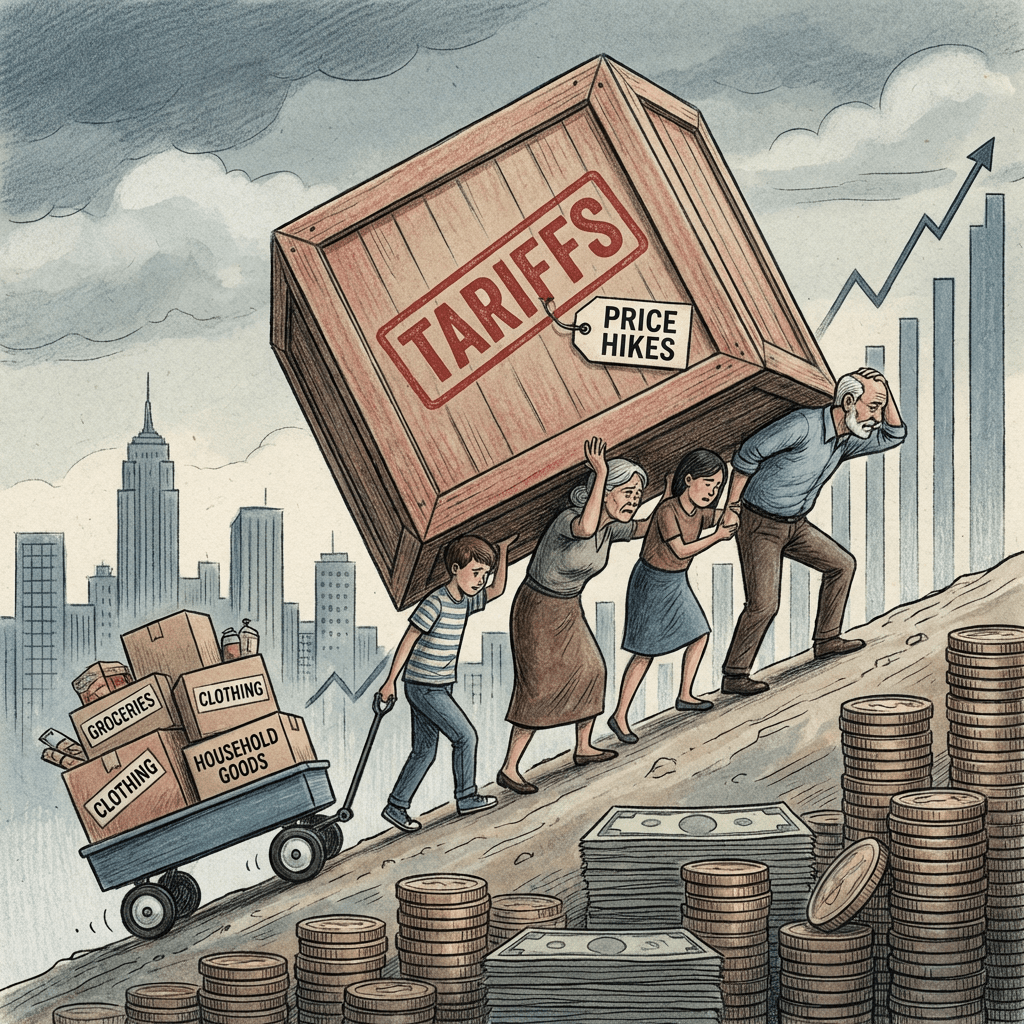
    The tariffs imposed by the Trump administration have been touted as a means to protect American industries and reduce the trade deficit. However, the reality is that these tariffs have resulted in increased costs for American businesses and consumers. By imposing tariffs on imported goods, the administration has essentially levied a tax on American consumers, who are forced to pay higher prices for everyday products.

    The Unintended Consequences of Tariffs

    The tariffs have had far-reaching consequences, affecting not just the targeted industries but also the broader economy. American companies that rely on imported goods have seen their costs rise, leading to higher prices for consumers and reduced competitiveness in the global market. Moreover, the tariffs have sparked retaliatory measures from other countries, harming American exporters and farmers.

    A Victory for Consumers

    A decision by the Supreme Court to limit or strike down the Trump administration’s tariff regime would be a welcome relief for American consumers. It would help to reduce the costs of goods and services, boost economic growth, and promote free trade. On the other hand, if the court upholds the tariffs, it would perpetuate a trade policy that has been detrimental to American consumers.

    As the Supreme Court weighs the fate of the Trump administration’s tariff regime, American consumers should be hoping for a decision that prioritizes their interests and promotes a more open and free trading system.

  • Trump’s Redistricting Pressure Campaign Backfires in Indiana Senate 

    Blue Press Journal – In a stunning rebuke to President Donald Trump’s heavy-handed pressure campaign, 21 out of 40 Republican state senators in Indiana voted against adopting new congressional maps that would have eliminated the state’s two Democratic-held House seats. Trump’s all-or-nothing attempts to strong-arm the senators into submission only led to further division and opposition.

    Trump unleashed a barrage of social media posts, threatening GOP Senate President Pro Tem Rodric Bray and other holdouts with fierce primary challenges if they didn’t cede to his redistricting demands. Vice President JD Vance made multiple rounds to Indianapolis to try to sway the lawmakers personally. Even the White House and House Speaker Mike Johnson (R-La.) got involved, individually calling senators to push them to flip their votes. 

    However, the blitzkrieg of intimidation, threats, and attempted violence targeting senators who opposed the effort only amplified their resolve. Instead of cowering, a majority of the GOP caucus stood united against Trump’s demands, citing concerns that mid-census redistricting was a power grab and should only occur once a decade after the census.

    Senator Eric Bassler was among those who reiterated their commitment to standing by the maps they voted for four years ago, demonstrating an unwavering commitment to principle over political pressure. “I cannot support any mid-census redistricting plan,” Bassler stated firmly. “Four years ago, my Republican colleagues and I voted for our current state and federal legislative maps. I stand by that vote and I will not support legislation to change our congressional maps.”

    This rejection for Trump is a reminder that even political titans can fall when they breach boundaries of decency. It offers hope: if lawmakers stand against bullying, honorable politics might rise from extreme partisanship. Ultimately, Trump’s reckless redistricting gamble leaves him with humiliation, confirming the importance of integrity in public service.

  • Donald Trump and the “Pencil” Problem: Why the President’s Holiday Message Misses the Mark

    Why American’s are Mad as Hell

    Blue Press Journal – Senior Political Analyst

    Published: December 12 /2025


    When President Donald Trump took the podium this week in Pennsylvania to discuss “tightening belts” for the upcoming holiday season, the reaction from ordinary Americans was unmistakable: bewilderment, frustration, and a growing sense that the commander‑in‑chief is living in a reality far removed from theirs. The centerpiece of his address—a quirky, almost whimsical suggestion that families could forgo a few foreign‑made pencils in favor of domestic products—has quickly become a symbol of a deeper disconnect between the nation’s leader and the electorate he was elected to serve.

    The “Pencil” Pitch in Context

    Trump’s remarks were framed as a patriotic call to action: “You can give up certain products, you can give up pencils because under the China policy, every child can get 37 pencils. They only need one or two.” On the surface, the statement seems innocuous—a light‑hearted nod to the ongoing trade war with Beijing. Yet, when examined against the broader economic backdrop, it reveals several troubling undercurrents.

    1. Inflation Is Still a Live Issue
      One of Trump’s central campaign promises in 2024 was to “fix the inflation disaster” that he blamed on President Joe Biden’s fiscal policies. While the Consumer Price Index (CPI) has modestly cooled from its 2022 peak, core inflation remains above the Federal Reserve’s 2 % target. For families already grappling with higher grocery bills, gas prices, and rising rent, a suggestion to surrender a handful of school supplies feels tone‑deaf rather than inspiring.
    2. Supply‑Chain Realities
      The global pencil market is dominated by manufacturers in China and Indonesia, where economies of scale allow a single “pencil” to be produced for a fraction of the cost of a domestically made counterpart. By urging consumers to “give up” imported pencils, Trump implicitly dismisses the fact that many American schools and families rely on low‑cost supplies to keep classroom budgets afloat. The policy he champions—greater protectionism—has historically led to higher prices, not savings.
    3. The Symbolic vs. the Substantive
      A president’s rhetoric matters, but it must be tethered to concrete policy outcomes. Trump’s tariffs have, in some sectors, spurred short‑term gains for a handful of domestic manufacturers. However, the broader economy has seen a slowdown in export‑dependent industries, with retaliatory tariffs eroding market access for U.S. farmers and tech firms. In this light, the “pencil” anecdote is less an earnest call for patriotism than a symbolic gesture that masks the real costs of protectionist policy.

    Why Voters Are Growing Angry

    The holiday season traditionally amplifies concerns about household budgets. According to the latest Pew Research Center poll, 62 % of Americans say they expect to “tighten spending” over the next six months. When a president—especially one who campaigned on restoring economic stability—asks citizens to “give up pencils,” the reaction is not merely a chuckle; it is a genuine expression of frustration.

    • Economic Insecurity Is Not a Gimmick
      For a single‑parent household in the Midwest, the idea of swapping a cheap, imported pencil for a pricier domestic version is not a matter of patriotism but of financial necessity. The president’s comment trivializes the day‑to‑day decisions that low‑income families make: which bills to prioritize, whether to cut back on heating, or if they can afford a modest holiday gift.
    • A Disconnect From the Voter Base
      Trump’s political ascent was built on a promise to “drain the swamp” and bring a business‑savvy mindset to Washington. Yet, his current messaging reflects a leadership style that favors grandstanding over nuanced problem‑solving. The “pencil” remarks, like many of his recent speeches, suggest a preference for rhetorical fireworks rather than a detailed plan to combat the lingering effects of inflation, supply‑chain disruptions, and labor market volatility.
    • Erosion of Trust in Governance
      When elected officials appear out of step with the lived experiences of their constituents, public trust erodes. The 2025 Gallup confidence index shows a modest decline in trust toward the federal government, dropping from 35 % in 2023 to 31 % today. While many factors contribute to this decline, high‑profile missteps—such as the holiday “pencil” pitch— exacerbate the perception that the administration is disconnected from ordinary Americans.

    The Bigger Picture: Policy Over Pantomime

    Trump’s call to “surrender pencils” should be viewed through the lens of his broader trade agenda. Protectionist tariffs, when wielded without strategic nuance, can produce unintended consequences:

    • Higher Consumer Prices
      By limiting imports, domestic producers often raise prices to cover higher production costs. That means families pay more for the very goods they are being asked to “support.”
    • Retaliatory Measures
      China’s own tariffs on American agricultural products have already dented farm incomes, especially in the heartland. The ripple effects extend beyond the farm gate, touching food processing, distribution, and ultimately, grocery shelves. A good example is Trump’s 12 billion dollar farmer bailout because of his Tariffs.
    • Innovation Stagnation
      Open competition spurs innovation. Shielding domestic firms from foreign competition can create complacency, reducing the incentive to improve quality or lower costs—a risk that could ultimately harm American competitiveness on the global stage.

    What a Realistic Response Looks Like

    If the administration truly intends to help Americans navigate a tighter holiday budget, the policy playbook should include:

    1. Targeted Relief for Low‑Income Households – Expand the Child Tax Credit and supplemental nutrition assistance to offset the cost of essential school supplies and groceries.
    2. Strategic Trade Negotiations – Shift from blanket tariffs to sector‑specific agreements that protect critical industries while preserving access to affordable imports.
    3. Transparent Communication – Move away from anecdotal, symbolic exhortations and instead provide clear, data‑driven guidance on how households can stretch their dollars without compromising essential needs.
    4. Investment in Domestic Manufacturing – Support small‑ and medium‑sized enterprises through tax incentives and workforce training, ensuring that “Made‑in‑America” goods are competitive on price and quality.

    President Trump’s holiday message about “giving up pencils” may have been intended as a MAGA rallying cry for economic patriotism, but it ultimately underscores a growing chasm between Donald Trumps Oval Office and the American public. In a time when families are already feeling the pinch of lingering inflation and rising living costs, symbolic gestures ring hollow. What voters need—not a glossy sound bite about pencils—but concrete, compassionate policy that acknowledges their everyday realities.

    The presidency is, at its core, a service to the people. Trump has lost sight of the very individuals he was elected to represent, the social contract frays.

  • GOP Blocks Health Care Rescue Bill as Millions Face Soaring Premiums

    Blue Press Journal (DC) 12/11/25 – A critical bipartisan opportunity to prevent massive health insurance premium spikes has collapsed in the Senate, as Republicans overwhelmingly rejected a Democratic proposal to extend life-saving Affordable Care Act (ACA) subsidies. Despite growing alarm over the financial fallout for American families, the GOP’s refusal to support a clean, three-year extension has left millions at risk of unaffordable coverage just as enrollment for next year begins.

    The Democratic-backed bill, which aimed to continue enhanced subsidies introduced during the pandemic, received 51 votes—just enough to pass under a simple majority if not for the 60-vote threshold required under current Senate rules. Four Republican senators—Susan Collins (R-ME), Lisa Murkowski and Dan Sullivan (R-AK), and Josh Hawley (R-MO)—broke with their party to support the measure. But their bipartisan effort was not enough to overcome unified GOP opposition.

    These subsidies have been instrumental in making health insurance affordable for low- and middle-income Americans. Since their expansion, enrollment in ACA plans has surged to record levels, and average premiums have dropped significantly. Without action, those gains are poised to vanish overnight. Experts project that monthly premiums could increase by hundreds of dollars for millions of Americans, particularly those earning just above the poverty line.

    The consequences are not hypothetical. For a family of four in a mid-sized city, the loss of subsidies could mean paying an extra $5,000 or more annually for coverage. For many, that burden will force impossible choices: pay for health insurance or afford rent, groceries, or prescription medications.

    And yet, the Republican response has been marked by inaction and disarray. While Senate Republicans blocked the Democratic bill, House Republicans remain deeply divided on any alternative solution. There is no unified GOP plan—no proposal with policy details, no cost estimates, no pathway to enactment. Their silence speaks volumes: rather than crafting a solution, the party has chosen political obstruction over human consequence.

    This isn’t just about policy disagreements. It’s about priorities. At a moment when Americans are still grappling with the economic aftermath of a pandemic and enduring high costs for essentials like food, gas, and housing, the Republican leadership has decided that protecting working families from skyrocketing health care costs is not worth their support. Their refusal to act, again and again, underscores a broader abandonment of the very constituents they claim to serve.

    Make no mistake: the bottom line is clear. Republicans—and Donald Trump, whose influence over the party remains profound—have repeatedly demonstrated that they do not care about the affordability and accessibility of health care for ordinary Americans. They have rejected pragmatic, bipartisan compromise not because of policy concerns, but because of political calculation.

  • The Struggle is Real: How Trump’s Policies are Affecting American Affordability

    Blue Press Journal The prevailing economic conditions under the Trump administration have resulted in numerous Americans facing significant difficulties in securing their basic needs. The sobering truth is that both essential commodities and substantial expenditures are becoming progressively out of reach for a considerable segment of the population.

    Recent findings from The POLITICO Poll, conducted by Public First, shed light on the gravity of the situation. Nearly half of Americans reported difficulties in affording essential expenses such as groceries, utility bills, healthcare, housing, and transportation. The consequences of these affordability pressures are far-reaching, with 27% of respondents admitting to having skipped a medical check-up due to costs within the last two years. Furthermore, 23% stated that they had skipped a prescription dose for the same reason.

    These statistics reveal a shocking truth about the economic nightmare many Americans endure. The fact that so many can’t even afford basic necessities screams that current economic policies are failing a vast majority of the population. As the nation pushes ahead, it is absolutely crucial that policymakers wake up and recognize how their decisions are crushing the most vulnerable among us. We need a bold, comprehensive strategy to tackle these crippling affordability issues, or else we risk condemning countless Americans to a life devoid of the essentials they need to survive, let alone thrive.

    One could argue that Trump has completely dozed off at the helm while America spirals into chaos.

  • US Seizes Oil Tanker Off Venezuelan Coast: A Breach of International Law?

    Blue Press Journal – In a bold and unprecedented move, the United States has seized an oil tanker off the coast of Venezuela, according to President Donald Trump. The incident has sparked controversy and raised questions about the legality of the action under international law. As tensions between the US and Venezuela continue to escalate, the move has been met with scrutiny from lawmakers and legal experts.

    The seizure, which was carried out by US forces, is seen as the Trump administration’s latest effort to pressure Venezuelan President Nicolás Maduro, who has been charged with narcoterrorism in the US. The US has been building up its military presence in the region, and has launched a series of deadly strikes on alleged drug-smuggling boats in the Caribbean Sea and eastern Pacific Ocean.

    But was the seizure of the oil tanker a legitimate act, or does it constitute piracy on the high seas? The International Maritime Organization (IMO) defines piracy as “any illegal acts of violence or detention, or any act of depredation, committed for private ends by the crew or the passengers of a private ship or a private aircraft” against a ship or aircraft on the high seas.

    In this case, the US Navy’s seizure of the oil tanker appears to be a state-sponsored act, rather than a private act of piracy. However, the question remains as to whether the action was lawful under international law. The United Nations Convention on the Law of the Sea (UNCLOS) governs the use of force at sea, and permits the use of naval force in certain circumstances, such as self-defense or with the consent of the flag state.

    In this instance, it is unclear whether the US had the consent of the flag state or whether the seizure was justified as an act of self-defense. Trump’s comment that “we keep it, I guess” when asked what would happen to the oil aboard the tanker, has raised further questions about the motivations behind the seizure.

    Sen. Chris Van Hollen, a member of the Senate Foreign Relations Committee, has expressed concerns that the seizure casts doubt on the administration’s stated reasons for the military buildup and boat strikes in the region. “This action raises more questions than answers,” Van Hollen said.

    Some legal experts have also questioned the legality of the seizure, arguing that it may have violated the laws governing the use of deadly military force. The use of force at sea is subject to strict rules and regulations, and any action that is deemed to be unlawful could have serious consequences under international law.

    The seizure of the oil tanker is a significant escalation of the US’s campaign to pressure Maduro’s government, and has raised the stakes in the region. Venezuela is a major oil producer, and the state-owned oil company sells most of its output to refiners in China. The US sanctions have locked the country out of global oil markets, and the seizure of the tanker is likely to exacerbate the situation.

    As the situation unfolds, it remains to be seen if the US will face consequences under international law. The seizure of the oil tanker has added complexity to US-Venezuela relations and raised important questions about state power on the high seas.

  • Justice Kagan Warns Supreme Court Ruling on Texas Map Could Erode Voter Rights 


    Blue Press Journal (DC) – In a sharply worded dissent, U.S. Supreme Court Justice Elena Kagan has cautioned that the Court’s recent decision to greenlight Texas’s new congressional map could undermine constitutional protections for voters—particularly those from racial minority communities. Earlier this week, the Court’s conservative majority allowed Texas to implement its redrawn districts for upcoming elections, despite a lower court’s finding that the map was likely drawn with impermissible racial considerations. 

    The lower court had determined that the map—crafted by the Republican-controlled state legislature—split communities along racial lines in ways that could diminish the political power of Black and Latino voters. Such a move, the court said, potentially violates both the 14th Amendment’s guarantee of equal protection and the 15th Amendment’s prohibition against racial discrimination in voting. 

    Justice Kagan, joined by Justices Sonia Sotomayor and Ketanji Brown Jackson, accused the majority of rushing to judgment without fully grappling with the evidence. “Today’s decision,” Kagan wrote, “disregards the careful, thorough analysis conducted by the district court and replaces it with a hasty greenlight for a map that may well be unconstitutional.” She emphasized that the lower court’s examination had been not only extensive but grounded in testimony, demographic data, and a deep review of the legislative process. 

    Kagan also warned that the Court’s intervention sends a troubling message about how voting rights cases will be handled going forward. “When this Court short-circuits lower court processes,” she noted, “it risks both the constitutional rights at stake and the public’s trust in the judiciary’s commitment to protecting them.” 

    The ruling is expected to have ripple effects beyond Texas. Redistricting battles are already underway in several states, including California, where a newly approved map is projected to favor Democrats. Some legal analysts believe the Texas decision could embolden partisan mapmakers elsewhere, knowing they may face fewer judicial roadblocks. 

    Critics of the ruling argue that it diminishes the role of trial courts in independently scrutinizing maps for racial bias and weakens long-standing protections designed to ensure fair representation.  

    The timing of the decision—so close to upcoming elections—adds to the controversy. Historically, the Supreme Court has been cautious about altering election rules too near a vote, citing the potential for confusion. In this case, however, the majority opted to leave the disputed map in place. For voters in Texas’s affected districts, the consequence is immediate: they will cast ballots in districts whose boundaries remain hotly contested. 

    As the 2026 election cycle intensifies, the Supreme Court’s posture on redistricting and voter rights will be under even closer scrutiny. Justice Kagan’s dissent underscores the stakes: “Our Constitution promises equal political voice to all citizens, regardless of race. Today’s decision risks breaking that promise.” 

  • ObamaCare’s Ticking Clock: Moderate Republicans Urge Action Before Election Fallout

    Blue Press Journal – As the calendar pages dwindle, a palpable sense of urgency – and mounting frustration – is spreading through a segment of the House Republican conference. The looming expiration of enhanced ObamaCare tax credits is creating a stark dilemma for moderate Republicans, many of whom fear that a failure to act could have significant, negative repercussions for the party’s slim majority in the crucial 2026 midterm elections.

    With less than ten legislative days remaining before millions of Americans brace for substantial increases in their health insurance premiums, a vocal group of centrist GOP lawmakers is making a strong case for extending these subsidies. Currently, these credits are a lifeline for over 20 million individuals, making healthcare more affordable. However, their pleas are encountering stiff resistance from Speaker Mike Johnson (R-La.) and a more conservative wing of the party. These members view the subsidies as a fundamental flaw within the Affordable Care Act and are largely opposed to any extension. Republicans currently hold 219 seats while the Democrats have 213.

    The path forward is cluttered with competing ideas. Proposals range from one- to two-year extensions, with some attempting to incorporate restrictions like income caps or the elimination of zero-premium plans. Yet, despite these varying approaches, a consensus remains elusive, and none of the proposed plans have secured a commitment for a floor vote.

    Leading the charge for a pragmatic solution are Representatives like Don Bacon (R-Neb.), Jeff Hurd (R-Colo.), and Brian Fitzpatrick (R-Pa.), who are advocating for a two-year extension. Simultaneously, a bipartisan framework spearheaded by Representatives Jen Kiggans (R-Va.) and Josh Gottheimer (D-N.J.) has garnered some traction, but has been met with a firm rejection from top Republican leadership.

    For these moderate Republicans, the principle of ideological purity is clashing with the realities of effective governance. As Representative Jeff Van Drew (R-N.J.) put it, the current inaction is akin to “buffoonery,” highlighting both the potential political fallout and the very real human cost of allowing healthcare premiums to skyrocket. Others, such as Representative Kevin Kiley (R-Calif.), are emphasizing the broad agreement that exists across different factions to at least pass a temporary fix, thereby averting public anger and protecting vulnerable Republican incumbents.

    Even the White House weighed in, proposing a two-year extension that included some conservative-leaning reforms. However, this initiative was quickly withdrawn amidst internal Republican opposition. Speaker Johnson has publicly committed to presenting a leadership-backed plan before the end of the year, but the specifics of this proposal remain shrouded in uncertainty.

    As internal Republican party tensions escalate, the clock is relentlessly ticking. The decision made in the coming days – or lack thereof – on extending these vital ObamaCare tax credits will undoubtedly carry significant weight, impacting not only the health and financial well-being of millions of Americans but also the political fortunes of Republican lawmakers fighting for their seats in a challenging electoral landscape.

  • Donald Trump’s Economic Policies: Analyzing Inflation and Consumer Sentiment

    Blue Press Journal – As the economic landscape of the United States continues to evolve, the influence of policies, particularly those of Donald Trump, remains a critical topic of discussion. Promising to combat inflation “on day one” of his presidency, Trump’s economic policies aimed to create a vigorous and prosperous economy. However, a closer examination reveals a contrasting reality, marked by persistent inflation and declining consumer sentiment.

    Inflation Trends Under Trump’s Policies

    Inflation in the U.S. has remained stubbornly high, recently reported at 3%, a figure that represents a significant trend upward since April 2025. This uptick coincided with Trump’s announcement of his tariff program, a keystone of his economic strategy. Tariffs were intended to protect American industries by taxing imports, thereby making domestically produced goods potentially more competitive. However, a side effect of such measures has been an increase in prices, as businesses often pass on the costs of tariffs to consumers.

    Despite Trump’s assertion that there is “virtually no inflation” during his presidency, the reality has proved otherwise. In a bid to highlight the achievements of his administration, Trump often pointed to positive economic indicators, such as low unemployment rates and stock market performance, neglecting to address the inflationary pressures that were beginning to mount. As businesses grappled with increased costs, many consumers were left to shoulder the burden through higher prices on goods and services.

    The Disconnect Between Policy and Consumer Experience

    Trump’s commitment to ending inflation was a significant part of his campaign rhetoric, promising a return to “better economic times.” Yet, as inflation has persisted, many Americans find themselves increasingly discontent with their financial situations. According to a recent report by Bloomberg News, consumer sentiment has plummeted to near-record lows, with personal finance perceptions at their dimmest since 2009.

    The ongoing inflation crisis is deeply intertwined with consumer sentiment. As prices rise, the purchasing power of the average American decreases, causing anxiety and frustration. Insights from Bloomberg indicate that concerns over the high cost of living and job security are growing; the probability of personal job loss has reached its highest level since July 2020. Such anxiety can fuel a negative feedback loop, where consumer confidence wanes, leading to reduced spending and potential economic stagnation.

    The Implications for Future Economic Stability

    While proponents highlight the initial gains in employment and stock performance, the issues of rising inflation and consumer dissatisfaction cannot be overlooked. The tariffs, while intended to protect American interests, may have inadvertently contributed to the inflationary pressures felt by consumers today.

    As policymakers and economists examine the lessons learned from the Trump administration, it is crucial to recognize the multifaceted nature of economic management. Addressing inflation requires a holistic approach that considers both production costs and consumer behavior.

    Trump’s Policies

    The economic policies of Donald Trump, marked by a decisive shift toward protectionism and rhetoric promising to curb inflation, have not yielded the desired outcomes for many Americans. With inflation lingering and consumer sentiment at a low ebb, it is evident that the path to robust economic recovery is fraught with challenges. The ongoing saga of inflation and consumer confidence serves as a reminder that economic policies must be adaptable, responsive, and focused on the well-being of all citizens.