Tag: donald-trump

  • Trump Refuses to Rule Out Pardon for Ghislaine Maxwell, Notorious Sex Offender and Former Associate

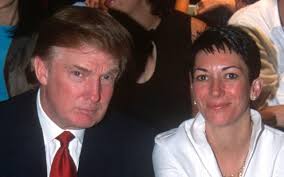
    Blue Press Journal: In a stunning display of ambiguity, President Donald Trump declined to rule out the possibility of granting clemency to Ghislaine Maxwell, a convicted sex offender serving a 20-year federal prison sentence for her role in helping Jeffrey Epstein exploit and traffic underage girls. Trump’s refusal to commit to a decision has sparked widespread concern and criticism, given his past association with Maxwell and the ongoing scrutiny surrounding the Epstein case.

    When questioned about a potential pardon for Maxwell, Trump deflected the inquiry not once, but twice, leaving the door open for speculation about his intentions. This development comes as Todd Blanche, Trump’s former criminal defense attorney and current deputy attorney general, which conducted a second day of interviews with Maxwell. The purpose of these interviews is to determine whether Maxwell possesses incriminating information about Epstein’s alleged clients, a revelation that could have far-reaching implications.

    Critics argue that Maxwell has a clear motive to provide Trump with favorable information in exchange for a pardon, which could undermine the pursuit of justice and truth in the Epstein case. Similarly, Blanche’s involvement in the questioning process has raised concerns about his potential bias towards protecting Trump’s interests rather than uncovering the facts.

    The controversy surrounding Trump’s stance on a potential Maxwell pardon is likely to fuel the ongoing “Epstein-files mania” that has consumed his presidency. The FBI’s New York Field Office has reportedly reassigned thousands of agents from critical cases involving terrorism, drugs, and gangs to work on the Epstein case, with many agents putting in 12-hour days to review and redact sensitive information from the files.

    As the investigation continues to unfold, Trump’s refusal to rule out a pardon for Maxwell has only added to the public’s perception of a presidency embroiled in scandal and controversy. The American people and especially MAGA will be watching closely to see how this situation develops, and whether justice will ultimately be served in the case of Ghislaine Maxwell and the victims of Jeffrey Epstein’s heinous crimes.


  • Trump’s Desperate Attempt to Manipulate Job Numbers: A Threat to Truth and Democracy

    Blue Press Journal: In a shocking move, President Trump fired Erika McEntarfer, the chief labor statistician of the U.S. Bureau of Labor Statistics, last week. McEntarfer, who was confirmed by the Senate with a bipartisan vote of 86-8, was just 16th commissioner to hold the position since its creation in 1884. The firing has raised concerns that Trump is trying to manipulate the job numbers to fit his own narrative, rather than relying on accurate and reliable data.

    The Bureau of Labor Statistics is responsible for producing consistent and reliable data that informs policy decisions. However, Trump’s actions suggest that he is more interested in cherry-picking numbers that support his claims of a “great Republican success” than in accepting the truth about the state of the economy.

    The August job numbers are expected to be released soon, and if they are as disappointing as the rest of the summer’s numbers, Trump may try to fire his way through acting commissioners until he finds one who is willing to distort the data to fit his agenda. This would be a disastrous move, as it would undermine the integrity of the Bureau and the trust of the American people.

    The consequences of Trump’s actions are far-reaching and alarming. When a government loses the ability to tell itself the truth, it is doomed to fail its citizens. The manipulation of data and the suppression of facts are tactics that are commonly used by authoritarian regimes, and they have no place in a democratic society.

    Trump’s disregard for data and facts is not just a matter of politics; it’s a threat to the very foundations of our democracy. As the old adage goes, “numbers don’t lie, but liars lie about numbers.” Trump’s policies, including tariffs, the Big Beautiful Bill, and cuts to Medicaid, are not working, and the job loss numbers are a direct result of these failed policies.

    As the holiday season approaches, Americans will be feeling the pinch of Trump’s economic policies. When they have to pay more for Christmas presents, they should remember that it’s not just the cost of living that’s going up, but also the cost of Trump’s failed policies.

    The firing of Erika McEntarfer is a wake-up call for all Americans. It’s a reminder that the truth matters, and that we must hold our leaders accountable for their actions. We must demand accurate and reliable data, and we must reject any attempts to manipulate the truth for political gain. The future of our democracy depends on it.

  • Rural Hospitals Face Uncertain Future and Closures After Trump Signs Budget Bill into Law

    Blue Press Journal: In a move that has left many in the healthcare community reeling, President Donald Trump signed a budget bill into law on July 4 that is expected to have devastating consequences for rural hospitals across the country. The legislation, which includes significant cuts to Medicaid, is estimated to put 380 independent rural hospitals “at serious risk of closure nationwide,” according to Families USA, a non-partisan consumer health care nonprofit.

    The impact of these cuts will be felt disproportionately in rural areas, where residents rely heavily on Medicaid for their healthcare needs. In an effort to mitigate the damage, GOP lawmakers included a $50 billion “Rural Health Transformation Fund” in the bill, ostensibly to support struggling rural health facilities. However, public health experts argue that this amount is woefully insufficient to offset the estimated $137 billion in losses that rural health facilities are expected to incur under the legislation.

    Furthermore, the distribution methods for the $50 billion fund have been criticized as opaque and seemingly partisan. This lack of transparency has raised concerns that the funds may not be allocated in a way that effectively addresses the needs of rural hospitals and the communities they serve.

    The situation is further complicated by the fact that rural hospitals will be forced to absorb the estimated 16 million uninsured patients that the Medicaid cuts are likely to create. This will put an unsustainable strain on already-overburdened healthcare systems, exacerbating existing shortages of health professionals in rural areas.

    The potential consequences of these cuts are dire, with many rural hospitals facing the very real possibility of closure. This would not only deprive communities of essential healthcare services but also have a devastating impact on local economies. As the full effects of the budget bill begin to unfold, it remains to be seen whether the $50 billion Rural Health Transformation Fund will be enough to stem the tide of hospital closures and ensure that rural communities continue to have access to quality healthcare.

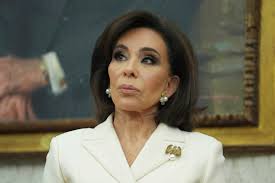
  • Senate Republicans Confirm Pro-Trump Figure Jeanine Pirro as US Attorney Despite being ‘Unfit and Unqualified’

    In a highly contentious and strictly party-line vote, the US Senate confirmed Jeanine Pirro, a former Fox News commentator and vocal supporter of former President Donald Trump, as the next US Attorney for the District of Columbia on Saturday night. The move has been met with widespread criticism from Democrats and legal experts, who argue that Pirro is deeply unqualified for the position and has a history of promoting far-right conspiracy theories.

    Pirro, who has been serving as the acting US Attorney for Washington, D.C. since May, has been a prominent figure in promoting Trump’s baseless claims of election fraud in the 2020 presidential election. She was a key player in the Dominion Voting Systems lawsuit against Fox News, which alleged that the network had defamed the company by spreading false information about the election.

    Critics argue that Pirro’s confirmation is a clear indication that Senate Republicans are more interested in pleasing Trump than in upholding their constitutional duty to advise and consent on presidential nominations. “By confirming Pirro, Senate Republicans made one thing clear: they care more about pleasing Donald Trump than honoring their constitutional duty to advise and consent on presidential nominations,” said one critic.

    Pirro’s track record has been widely panned by Democrats and legal experts, who point to her lack of credibility and her history of promoting extremist ideologies. “Over the past decade, Ms. Pirro has consistently demonstrated that her loyalty lies with Donald Trump the person, not with the Constitution or the rule of law,” said Representative Jamie Raskin in a letter to Senate leaders.

    Raskin also criticized Pirro’s support for the “big lie” that the 2020 election was rigged, her defense of convicted January 6th rioters, and her incendiary rhetoric, which has urged Trump to seek retribution against his perceived enemies. “Republicans have handed the keys to our nation’s capital to a Trump loyalist with zero credibility and a track record of unhinged extremism,” Raskin said.

    The confirmation of Pirro has sparked widespread outrage among Democrats and progressive groups, who argue that she is unfit to serve as a US Attorney. The move is seen as a significant blow to the integrity of the US justice system and has raised concerns about the ability of the Justice Department to remain impartial under Pirro’s leadership.

  • Declassified Document Deals Blow to DNI Director’s Claims of Anti-Trump Conspiracy

    Tulsi Gabbard Has been Fabricating Claims

    Blue Press Journal – A newly declassified document has undermined claims made by Director of National Intelligence Tulsi Gabbard that the Obama administration conspired against Donald Trump in the 2016 presidential election. The document, an annex to a report by special counsel John Durham, further debunks the theory that Russian spies were not behind the key 2016 emails that were hacked and released during the campaign.

    Gabbard had hoped to uncover evidence of a “treasonous conspiracy” by the Obama administration to falsely blame Russia for interfering in the election to help Trump. However, the declassified document, combined with previous findings by special counsel Robert Mueller and the Senate intelligence committee, suggests that Russian interference was, in fact, a reality.

    The 2019 report by Mueller and a bipartisan report by the Senate intelligence committee in 2020 both concluded with “high confidence” that Russia had interfered in the election to help Trump. These findings were further validated by Russian President Vladimir Putin, who in 2018 admitted to wanting Trump to win the election.

    Former intelligence insiders have dismissed the idea of a “deep state” conspiracy against Trump as a fiction. “Trump is lying when he speaks of a ‘deep state’,” said Fulton Armstrong, a retired CIA analyst. “But if there were one, it would not be Democrat. The culture of that world is deeply Republican.”

    Gabbard’s claims were also contradicted by John Brennan, the CIA director under Obama, who told The New Yorker that Obama had instructed intelligence officials to keep evidence of Russian meddling quiet until after the election to ensure a fair outcome. Brennan cited multiple sources of intelligence, including a high-quality clandestine source, that indicated Putin wanted Trump to win due to his views on Russia.

    The declassified document is the latest blow to Gabbard’s crusade to prove a conspiracy against Trump. The disclosures by Durham further undermine her claims, and it remains to be seen how she will respond to the new evidence. The incident highlights the ongoing controversy surrounding the 2016 election and the role of Russian interference, with many experts continuing to affirm that the intelligence community’s assessment of Russian meddling was accurate.

  • Trump Unveils Plans for $200 Million Ballroom Addition to White House, Sparking Concerns and Criticism

    In a move that has raised eyebrows and sparked controversy, President Trump has unveiled plans for a lavish $200 million ballroom addition to the White House. The proposed expansion, which was announced on Thursday, has been met with criticism and skepticism, with many questioning the need for such an opulent upgrade.

    According to renderings provided by the White House, the new ballroom will feature a vast space adorned with gold and crystal chandeliers, gilded Corinthian columns, a coffered ceiling with gold inlays, gold floor lamps, and a checkered marble floor. The design has been likened to the grand ballroom at Trump’s Mar-a-Lago resort, a comparison that has not been taken as a compliment.

    Trump has insisted that the $200 million cost of the project will be borne by himself and private donors, claiming that it will be his “gift to the country.” However, critics argue that this is just another opportunity for Trump to solicit donations and curry favor with wealthy backers. They point to his history of using his position to raise funds for his own personal projects and interests, such as his presidential library and his failed cryptocurrency venture.

    Many have expressed concerns that the ballroom addition is just the latest example of Trump’s insatiable need for adulation and self-aggrandizement. The project has been compared to his infamous birthday military parade, which was widely criticized as a waste of taxpayer dollars and a blatant attempt to feed Trump’s ego. Additionally, Trump’s efforts to pressure the Smithsonian to remove references to his two impeachments from its exhibits have been seen as a further attempt to rewrite history and boost his own image.

    “This is just another example of Trump’s reckless disregard for the public’s interests and his own insatiable need for praise and attention,” said one critic. “The fact that he’s trying to pass this off as a ‘gift to the country’ is just laughable.”

    The ballroom addition has also raised questions about the use of private donations to fund projects at the White House. While Trump has claimed that the project will be funded entirely by himself and private donors, many are skeptical about the true source of the funds and the potential quid pro quos that may be involved.

    As the project moves forward, it is likely to face intense scrutiny and criticism from lawmakers, watchdog groups, and the public at large. Whether or not the ballroom addition will ultimately become a reality remains to be seen, but one thing is certain: it will be a highly contentious and closely watched development in the world of politics.

  • TRUMP’S NAME SYSTEMATICALLY REDACTED FROM EPSTEIN FILES, REPORT CLAIMS

    A shocking new report from Bloomberg has revealed that a team of FBI agents methodically redacted former President Donald Trump’s name from investigatory files related to the late convicted sex offender Jeffrey Epstein. The report suggests that the FBI used the Freedom of Information Act (FOIA) as a guide to determine what information should be withheld from the public, citing Trump’s status as a private citizen at the time of the Epstein investigation as justification for the redactions.

    According to the report, the FBI’s decision to redact Trump’s name from the files was a deliberate and systematic effort to conceal any potential connections between the former President and Epstein, who was a wealthy financier and socialite with ties to numerous high-profile individuals, including politicians and celebrities.

    The Bloomberg report notes that the FBI’s actions suggest that it is highly unlikely that Trump’s name will ever be unredacted from the Epstein files, stating that “the chances of aliens resurrecting JFK are greater than Trump’s name ever being unredacted from the Epstein files.” This assertion implies that the FBI has taken extraordinary measures to protect Trump’s reputation and conceal any potentially damaging information that may be contained in the files.

    The revelation has sparked outrage and raised questions about the integrity of the FBI’s investigation into Epstein’s activities and the extent to which the agency may have gone to shield high-profile individuals, including Trump, from scrutiny. Critics argue that the redactions undermine transparency and accountability, and that the public has a right to know the full extent of Epstein’s connections to powerful figures like Trump.

    The Epstein case has been shrouded in controversy since his death in 2019, with many questioning the circumstances surrounding his passing and the handling of the investigation into his alleged sex trafficking and abuse of minors. The revelation that Trump’s name was systematically redacted from the files has added fuel to the fire, with many calling for greater transparency and accountability in the investigation.

    As the controversy continues to unfold, it remains to be seen whether the FBI will be forced to disclose more information about its handling of the Epstein investigation and the extent to which Trump’s name was redacted from the files.

  • Trump Administration Accused of Trying to Erase History as Smithsonian Museum Removes Impeachment Label

    In a move that has sparked widespread criticism, the Smithsonian’s American History Museum has removed a label from its exhibit that highlighted former President Donald Trump’s historic distinction as the only U.S. president to be impeached twice. The label, which was added in 2021, was taken down in July as part of a “content review” that the museum had agreed to undertake under pressure from the White House, according to a report by The Washington Post.

    The removal of the label has been met with outrage from critics, who accuse the Trump administration of attempting to rewrite history and erase the former president’s controversial legacy. “Trump can pretend it didn’t happen all he wants, but the facts don’t lie — he was impeached twice,” said Rep. Mark Pocan, D-Wisc., who was a member of Congress during Trump’s presidency. “I know. I was there.”

    This is not the first time that the Trump administration has clashed with the Smithsonian Institution this year. In March, Trump signed Executive Order 14253, which aimed to shape how the story of American history is told. The order claimed that the Smithsonian had come under the influence of a “divisive, race-centered ideology” and sought to “remove improper ideology from such properties.” Critics argue that the order is an attempt to censor and manipulate the narrative of American history, and that the removal of the impeachment label is just the latest example of this effort.

    The controversy has raised questions about the role of museums and cultural institutions in preserving and presenting historical facts, and the extent to which they should be subject to political pressure and influence. “Museums have a responsibility to tell the truth and preserve history, not to erase it or distort it for political gain,” said a spokesperson for the American Historical Association. “The removal of this label is a disturbing example of the politicization of history and the erosion of trust in our cultural institutions.”

    The Smithsonian Institution has not commented publicly on the removal of the label, citing its policy of not discussing internal decisions or controversies. However, the incident has sparked a wider debate about the importance of preserving historical accuracy and the dangers of attempts to manipulate or erase the past for political purposes. As one historian noted, “History is not a partisan issue, and it’s not something that can be rewritten or erased to suit the interests of a particular individual or ideology. The facts are the facts, and they should be presented honestly and accurately, without fear or favor.”

  • TRUMP CAUGHT NAPPING AGAIN: President Struggles to Stay Awake During White House Event

    Blue Press Journal – In a embarrassing moment for the White House, President Donald Trump was caught dozing off during a press event where he was supposed to be launching a new health tracking system. The incident, which was caught on camera, showed the 79-year-old president struggling to keep his eyes open as Dr. Mehmet Oz, the Medicare administrator, discussed the program and praised Trump’s leadership.

    The president’s apparent boredom and lack of interest in the event was palpable, with his eyes drooping and his head nodding forward in a manner that suggested he was on the verge of falling asleep. The incident has sparked concerns about the president’s health and ability to perform his duties, particularly given his advanced age.

    This is not the first time that Trump has been caught dozing off in public. Earlier this month, he appeared to be on the verge of nodding off during an energy and AI summit in Pittsburgh. Additionally, during his “hush money” trial in New York last year, where he was found guilty of fabricating corporate records to conceal a sex scandal with a porn star, he was recorded dozing off multiple times.

    The incident has also sparked irony, given that Trump and his supporters have frequently criticized President Joe Biden as “Sleepy Joe” for his perceived lack of energy and alertness. However, it seems that Trump himself may be struggling with similar issues.

    Trump’s recent visit to Scotland, where he met with European leaders, has also raised concerns about his mental and physical health. His behavior was described as “conceited” and “incredibly strange” by some observers, with many questioning whether he is mentally declining.

    As the president continues to face scrutiny over his age and ability to perform his duties, incidents like this are likely to fuel concerns about his suitability for the role.

  • Trump’s Unqualified Appointee, Tulsi Gabbard, Poses Significant Threat to National Security, Experts Warn

    Blue Press Journal – The Trump administration’s penchant for appointing unqualified and unconventional individuals to key national security positions has raised serious concerns about the country’s vulnerability to terrorist attacks. At the helm of the intelligence community is Director of National Intelligence Tulsi Gabbard, a former Democratic congresswoman from Hawaii who has been criticized for her questionable grasp of reality and propensity for repeating Russian propaganda talking points.

    Gabbard’s appointment has been met with widespread skepticism, with many experts questioning her ability to effectively counter international terrorist threats. Her focus, they argue, has been more on currying favor with President Trump than on addressing the pressing security concerns facing the nation. This has led to fears that the intelligence community is being politicized, with potentially disastrous consequences for national security.

    The latest annual threat assessment, published in March, paints a stark picture of the dangers facing the United States. The report warns that ISIS’s most aggressive branches, including ISIS-Khorasan, will continue to seek to attack the West, including the United States, through online propaganda and exploitation of vulnerable travel routes. This assessment underscores the need for a competent and focused intelligence community, one that is capable of effectively countering these threats.

    Gabbard at the helm, many experts worry that the intelligence community is being led by someone who is more interested in advancing a partisan agenda than in protecting the country from harm. Her claims that findings of Russian interference in the 2016 election were a “treasonous hoax” engineered by Barack Obama and high-ranking officials in his administration have been thoroughly debunked, but they have also raised concerns about her ability to separate fact from fiction.

    The appointment of unqualified and unconventional individuals to key national security positions is a trend that has been evident throughout the Trump administration. The consequences of this approach are potentially catastrophic, as it undermines the ability of the intelligence community to effectively counter terrorist threats and protect the country from harm.

    As the threat assessment makes clear, the United States faces a range of significant security challenges, from ISIS to other terrorist organizations. To address these threats, the country needs a competent and focused intelligence community, one that is led by individuals who are qualified, experienced, and committed to protecting the nation. Unfortunately, the Trump administration’s approach to national security appointments suggests that this is not a priority, and that the country’s safety and security are being put at risk as a result.