Tag: donald-trump

  • The Illegitimacy of Immigration Raids: Masked Agents and Eroding Democracy

    Across the country, armed federal immigration officers have increasingly hidden their identities while carrying out immigration raids, arresting protesters, and roughing up prominent Democratic critics. The widespread use of masks is unprecedented in U.S. law enforcement and a sign of a rapidly eroding democracy.

    “Masking symbolizes the drift of law enforcement away from democratic controls,” said David Cole, the national legal director of the American Civil Liberties Union (ACLU). “It is a way of hiding their actions and escaping accountability.”

    The Department of Homeland Security (DHS) has insisted that masks are necessary to protect officers’ privacy, arguing, without providing evidence, that there has been an uptick in violence against agents. However, critics argue that the use of masks undermines the legitimacy of their actions and weakens the democratic process.

    “The use of masks by immigration agents highlights the illegitimacy of their actions,” said Maria Pabon Lopez, an immigration attorney. “It is a clear indication that they are trying to avoid accountability and transparency.”

    The use of masks has become more common in recent years, particularly under the Trump administration, which has taken a hardline approach to immigration enforcement. This has led to an increase in raids and arrests, often targeting undocumented immigrants and their families.

    In some cases, immigration agents have been accused of using excessive force and violating the rights of those they arrest. The use of masks makes it more difficult for victims to identify the agents involved and seek justice.

    “When immigration agents hide their identities, it creates a climate of fear and distrust,” said Pabon Lopez. “It makes it harder for people to seek help and support when they need it.”

    The use of masks also raises concerns about the militarization of law enforcement. Critics argue that the increasing use of force and secrecy is a sign that the government is prioritizing enforcement over due process and human rights.

    “The use of masks by immigration agents is a symptom of a larger problem,” said Cole. “It is a sign that our democracy is under threat and that we need to take action to protect our rights and freedoms.”

    As the debate over immigration continues, it is clear that the use of masks by immigration agents is a contentious issue. While the DHS argues that masks are necessary for officer safety, critics argue that they undermine the legitimacy of law enforcement and weaken our democracy. It is up to all of us to demand transparency and accountability from our government and ensure that our rights are protected.
  • Blurring the Lines Between Fact and Fiction: Trump lies

    Donald Trump manipulates reality to support his authoritarian agenda by fabricating problems for the purpose of claiming he has resolved them. A pertinent example of this is his decision to deploy troops to Los Angeles.

    A decade ago, Trump famously descended an escalator, flanked by paid supporters who cheered on cue, to announce his presidential candidacy. He portrayed a grim picture of America, claiming it was a “dumping ground for everybody else’s problems.” He insisted the nation was “getting weaker” and no longer had greatness. In reality, his statements were constructed on false premises that contradicted the actual facts.

    Trump has engaged in a persistent disinformation campaign, presenting the United States as a catastrophic landscape whenever it serves his twisted political interests. In the lead-up to the 2024 election, he made outrageous assertions, such as claiming that Haitian immigrants were consuming cats and dogs and that Venezuelan criminals were overtaking towns in the Midwest. These statements lacked any factual basis and were purely fabricated in his distorted mind.

    Recently, he has invoked fictitious emergencies to exploit presidential power, alleging that the influx of undocumented immigrants constitutes an invasion orchestrated by a foreign entity. In response to protests in Los Angeles against his inhumane mass deportation efforts, Trump has redirected his disinformation campaign by sending troops to the city, with plans to extend this military presence to other cities to strengthen his control.

    Los Angeles exemplifies Trump’s manipulation of reality for his own ends. He claimed that the protests had resulted in “a lot of death” and suggested that the city would have been “obliterated” without the intervention of National Guard troops. These statements are far from accurate; the protests were predominantly peaceful until his troops were deployed, leading to only a few minor incidents that were adequately managed and put down by local law enforcement. Trump is shamelessly fabricating a dangerous narrative that vilifies American citizens who were peacefully protesting, their consstitutional right, for his own political gain.

    Many of Trump’s supporters and viewers of Fox News tend to accept his statements without question. A single photograph of three burning, driverless taxis has been repeatedly circulated to validate his actions. This pattern of misinformation resembles a game of whack-a-mole; as one falsehood is disproven, another is quickly generated to divert attention.

    We are witnessing a perilous moment in America. Masked federal agents are patrolling our streets, sometimes detaining American citizens without justification and striping them of their due process rights. In a recent incident, federal agents forcibly removed and assaulted Senator Alex Padilla (D-Calif.) as he attempted to ask a question at a press conference held by Homeland Security Secretary Kristi Noem within a federal building that housed his own offices.

    Trump’s trajectory leads toward authoritarianism, which some might label fascism. This is not reflective of American democracy. At its core, Trump’s disinformation campaign seeks to undermine—if not obliterate—our diverse and imperfect democracy, and his supporters are at the forefront of this assault on America’s fundamental promise.

    As he ages—79 and counting—do you really think things will improve? What’s it like for your grandfather at this ripe old age? Is he the kind of guy who gets into heated debates with the TV like it’s a worthy opponent?

  • Army Values that Trump does not Support or Understand

    On Saturday evening, the capital of the United States will take on an appearance reminiscent of North Korea’s Pyongyang, China’s Beijing, and Russia’s Red Square, featuring tanks and missile launchers parading through the streets. This spectacle—a $45 million “birthday gift” to himself, funded by taxpayers—highlights a troubling trend in American politics.

    The U.S. military is designed to remain apolitical, standing apart from politics and the whims of elected officials. This principle is what sets America apart from other nations and contributes to its greatness. 

    Kentucky Republican Senator Rand Paul expressed skepticism about the parade’s symbolism, telling HuffPost, “I don’t really think the symbolism of tanks and missiles is really what we’re all about. If you ask me about a military parade, the first images that come to mind are of the Soviet Union and North Korea.” 

    Interestingly, this monumental event aligns with the 250th birthday of the U.S. Army, overshadowing Donald Trump’s own 79th birthday. Isn’t it ironic how the mainstream media has made such a fuss over Biden’s age at 81, while we often overlook that Trump is just 79? Let’s not ignore the math here.

    Although both the Navy and the Marines also celebrate significant anniversaries this year, there has been no discussion of organizing lavish $45 million events for them. This raises questions about why only Trump’s birthday seems to warrant such extravagant recognition.

    The military parade appears to promote an authoritarian display of power, further emphasized by the unnecessary deployment of U.S. troops to police American streets, as confirmed by the Los Angeles police chief. 

    Historically, the United States has held very few military parades, the last occurring in 1991 during George H.W. Bush’s presidency, after American forces pushed Iraqi dictator Saddam Hussein out of Kuwait—an event justifying a celebration of military success.

    Despite Trump’s frequent proclamations of support for the armed forces, his history reveals a stark disregard for military service and its values. He evaded the Vietnam War draft, citing “bone spurs,” with a doctor who was a family friend providing the diagnosis. Moreover, during his presidential campaign in 2015, Trump insulted Arizona Senator John McCain—an esteemed veteran who endured nearly six years of imprisonment and torture—by claiming he was not a hero simply because he was captured, stating he preferred those who avoided capture. Reports from his former chief of staff indicate that Trump referred to fallen military members as “suckers” and “losers,” demonstrating a clear lack of respect for their sacrifices.

    Trump also broke the long-standing tradition of a commander-in-chief personally shaking hands with every graduating cadet at a military academy, leaving West Point immediately after his speech to return to his golf resort in New Jersey. In contrast, Joe Biden devoted time to congratulating each graduate last year, spending 70 minutes with them—reflecting a commitment to honoring military service that Trump failed to show during his tenure, even when he had participated in similar ceremonies in the past.

    As we witness this parade today, it’s crucial to honor the Army’s 250 years of service to our nation and celebrate the values they embody—principles that Trump himself seems to overlook or misunderstand.

  • Trump’s False Patriotism: His Grand Parade Satruday

    On Saturday, the nation is slated to witness a grand military parade featuring nearly 6,600 soldiers, 150 military vehicles, and a range of aircraft. Estimated to cost between $25 million and $45 million – a figure likely understating the total impact – this event is presented as a celebration of the United States Army’s 250th anniversary, coincidentally falling on President Donald Trump’s 79th birthday.

    Yet, this planned spectacle is a departure from the norm. Contrary to popular imagination, the U.S. military does not typically conduct large-scale public parades. Those public events that do occur, such as Fleet Week or ceremonial displays, are usually recruitment-focused and deliberately nonpolitical. True military parades on this scale are reserved for moments of national triumph, occasions like the celebrations following the victories in 1946 or 1991, designed to honor those who fought and won major wars. This parade lacks any such victory to celebrate.

    The absence of a traditional justification, coupled with the substantial expense, points to a different purpose. President Trump, who has often praised authoritarian figures, appears to be leveraging this display of military power to enhance his “tough-guy” persona at home and project strength abroad.

    This politicization of the military is deeply problematic, threatening the institution’s apolitical standing and its loyalty to the Constitution. While presidents naturally interact with and represent the military, President Trump’s use of it to validate harsh partisan positions crosses a critical line, fueling concerns that he seeks personal allegiance over fidelity to the Constitution.

    Adding a layer of controversy, this effort to use the military for political gain comes from a figure who reportedly took significant steps to avoid military service himself. According to testimony from his former lawyer, President Trump admitted to inventing a medical reason to evade the Vietnam draft, stating he “wasn’t going to Vietnam.” This stark contrast between alleged personal draft avoidance and the public deployment of military symbols for political purposes raises questions about the sincerity of the patriotism on display, suggesting it may be artificial and politically motivated.

  • Dictator Trump: Patriotic Americans Must Stand for the Constution

    Over the weekend, President Trump ordered the deployment of thousands of National Guard troops to Los Angeles in an effort to suppress protests against his aggressive and unlawful mass deportation campaign. This decision ignited a clash with California’s state government, which neither requested the military assistance nor supported the deployment.

    The largely peaceful protests in Los Angeles against the Trump administration’s deportation policies have now entered their fourth day, but the response to them is generating significant controversy. Specifically, the decision to potentially deploy up to 2,000 troops under federal control to the streets of LA has drawn sharp criticism, particularly from former top military figures. They argue that this move constitutes a violation of the military’s long-held commitment to remain separate from domestic politics, except in the most extreme and justifiable circumstances.

    California Governor Gavin Newsom, a Democrat, announced his intention to sue Trump, labeling the president a “dictator” who is deliberately “fanning the flames” of tension and potential violence in Los Angeles. Newsom also highlighted the broader implications of the June 7 memorandum Trump signed, emphasizing that its reach extends beyond California.

    The memorandum, titled Department of Defense Security for the Protection of Department of Homeland Security Functions, grants Pentagon Secretary Pete Hegseth the authority to “employ any other members of the regular Armed Forces as necessary to augment and support the protection of Federal functions and property in any number determined appropriate in his discretion.” This marks an unprecedented assertion of federal military power across the nation.

    The core concern is the perceived politicization of the armed forces. Critics argue that deploying troops against the wishes of the state’s governor, and in the absence of a clear and genuine civil emergency, appears to be a politically motivated action by the Trump administration. This has triggered alarm within military circles, where the ideal of remaining apolitical is deeply ingrained. As one source noted, the deployment “seems like a political forcing – a forced use of the military by Trump because he can.”

    Recognizing the profound and far-reaching consequences of Trump’s actions, courageous demonstrators across the United States—from Portland, Maine, to the vibrant streets of Houston, Texas, and the resilient heart of Salt Lake City, Utah—rallied with unyielding solidarity alongside the brave protesters in California who are courageously facing military repression.

    Governor Newsom underscored the illegality and immorality of commandeering a state’s National Guard without the governor’s consent, and he confirmed plans to file a lawsuit against the president on Monday in response to the extraordinary deployment. 

    Trump himself has previously made no secret of his willingness to utilize the military for domestic purposes. During his reelection campaign last year, he repeatedly told supporters that, if re-elected, he would deploy the armed forces against what he termed “the enemy within.” This history further fuels the perception that the troop deployment is not a response to a genuine emergency, but rather an attempt to use the military to suppress dissent and further a political agenda.

    Trump’s use of force and intimidation tactics reflects authoritarian tendencies, signaling a constitutional crisis in the United States.

  • KILL the BILL

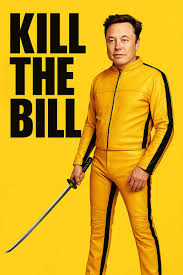
    Elon Musk has gone beyond merely labeling the bill a “disgusting abomination”; he has made it clear that he intends to actively oppose it.

    The former White House advisor has intensified his criticism of the large Republican bill that proposes significant tax cuts and Medicaid reductions, urging Americans to contact their lawmakers and oppose the legislation. While Musk’s reasons differ from those of Democrats, both sides share a common goal: to avoid increasing the national debt further. Historically, Republican presidents have contributed slightly more to the national debt per term than their Democratic counterparts, according to inflation-adjusted data from the U.S. Treasury Department and the Bureau of Labor Statistics dating back to 1913. Notably, President Trump is the largest contributor, having added an estimated $7.1 trillion to the national debt during his first term from 2016 to 2020.

    This legislation is intended to represent the full scope of President Donald Trump’s domestic policy agenda for a his second term, making Musk’s strong opposition—just one week after stepping down as a senior adviser to the president—particularly noteworthy.

    The Republican bill combines over $4 trillion in tax cuts and new spending with less than $2 trillion in cuts to Medicaid and other social programs, resulting in a net deficit increase of $2.4 trillion, according to the Congressional Budget Office. The tax cuts predominantly benefit the wealthy and corporations, which some argue are not paying their fair share.

    On Wednesday, Musk posted, “A new spending bill should be drafted that doesn’t massively grow the deficit and increase the debt ceiling by 5 TRILLION DOLLARS.”

    Musk is asking the public to trust someone who can land rockets vertically and develop self-driving cars more than the Republican lawmakers who passed this bill by a single vote under pressure from Trump and wealthy interests.

    Now, the question remains whether the Republican-controlled Senate will stand firm or yield to Trump and his affluent allies.

  • Blue States: Net Contributors to the Federal Tax System

    Analyses of the financial relationship between states and the federal government consistently reveal a significant, though often overlooked, pattern: states that predominantly vote Democratic tend to contribute more in federal taxes than they receive back in federal spending and benefits, while states that predominantly vote Republican often receive more than they contribute. This effectively means that “blue states” are subsidizing “red states.”

    Numerous studies examining federal tax receipts versus federal expenditures at the state level have repeatedly demonstrated this disparity. The reasons for this imbalance are multifaceted. Many Democratic-leaning states contain major metropolitan areas with high concentrations of wealth and income, leading to higher overall federal tax contributions. Conversely, many Republican-leaning states have economies that rely more heavily on federal spending, such as military bases, government contracts, and direct aid programs.

    This fiscal dynamic is evident in various federal programs and investments. For instance, under traditional Medicaid programs, the federal government covers a larger share of costs in several red states, including Texas, Florida, Georgia, Louisiana, and West Virginia. Furthermore, while blue states initially received a larger share of COVID-19 relief funds, analyses indicate that red states have disproportionately benefited from significant Biden-era legislative investments like the Inflation Reduction Act (IRA), the CHIPS Act, and the Infrastructure Investment and Jobs Act (IIJA), sometimes receiving benefits at a much higher rate.

    Looking at overall flows, data from 2018 to 2022 provides a clear illustration of this pattern. During this period, individuals and organizations located in blue states collectively accounted for nearly 60% of all federal tax receipts but received only 53% of all federal spending directed back to states in the form of direct payments, grants, contracts, or wages.

    Despite this consistent flow of resources from blue states to red states, political discourse and actions sometimes appear to contradict this fiscal reality. Examples include past threats from figures like President Donald Trump and the GOP to block disaster relief for blue states like California, proposals to impede the return of federal relief funds for state and local taxes, and opposition to the very industrial investments from Biden-era legislation that benefit red states. This fiscal dynamic exists alongside the political power structure where red states often hold significant influence in Congress, partly facilitated by gerrymandered districts.

    The data consistently shows that states predominantly voting Democratic are net contributors to the federal system, effectively providing a fiscal transfer to states predominantly voting Republican. This reality is a crucial, though often understated.

  • Opinion: Main Stream Media is to Blame for Trump and the Constitutional Crisis

    We are increasingly weary of the MAGA movement, as well as the news media and political figures who attempt to normalize Trump’s actions and rhetoric. The situation is far from normal; in fact, it is concerning how mainstream news organizations have allowed Trump to manipulate the truth. Despite the media’s attempts to normalize his conduct, Trump’s overt discussions of revenge and his pledges to usurp constitutional authority clearly indicate that America is facing a dangerous descent into autocracy.

    Is Donald Trump too old? In a few months, he will reach the age of 79, which will make him older than Joe Biden when he concludes his term. It raises the question: how many articles have you encountered recently addressing Trump’s age? It appears that mainstream media has largely overlooked this aspect of Trump, whereas they extensively covered Biden’s age during the 2024 election.

    Even with all the buzz about his mental decline, he managed to steer the country through a pandemic and, along with Federal Reserve Chair Jerome Powell, dodged a recession, keeping the economy strong with low unemployment and steady growth. He pushed for some serious investments in high-tech industries and essential infrastructure, like roads and bridges. Plus, he got NATO to stand together against the biggest act of aggressive warfare since 1939. And apart from the withdrawal from Afghanistan, which was already in the works thanks to Trump’s previous agreements he took over, what really bad choices can people blame on his age?

    Let’s take a look at what Donald Trump did during his first few months in office. He really shook things up by cutting down the staff at the National Security Council (NSC), which is pretty important for keeping us safe. Inflation is still a mess, and he hasn’t done anything about grocery prices like he said he would. On top of that, the stock market took a hit (tariffs), which is bad news for folks trying to save for retirement. It’s worrying that he hasn’t been able to tackle the Ukraine situation since day one and seems to be echoing what the Russian government is saying. Plus, those “liberation day” tariffs have just made things more expensive for Americans and soured relationships with our NATO allies and trading buddies. He even brought in Elon Musk, whose cuts to government services have really hurt people because of his no-holds-barred approach. And let’s not ignore the worrying attitude towards the American legal system, which is supposed to protect everyone’s rights.

    The political media’s efforts to validate him notwithstanding, it was clear from Trump’s explicit conversations regarding retribution and his statements about usurping authority beyond constitutional boundaries that America are endangering its democratic principles.

    Even more concerning is the fact that, when presented with the choice between safeguarding democracy or ensuring lower egg prices, America chose the latter. Nevertheless, he deceived the public. Thank you main stream news outlets!

  • House Republicans’ Reckless Bill: A Threat to Everyday Americans

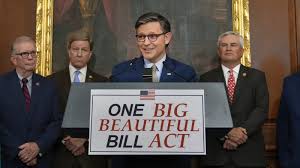
    The so-called “big, beautiful bill” is a stark and alarming proposal that pairs devastating cuts to food assistance and health insurance for low-income Americans with extravagant tax breaks for the wealthy elite. This is not the behavior of traditional conservatives; rather, the Republican majority is acting like revolutionaries, intent on dismantling the established order with reckless haste, all while the nation remains blissfully unaware of the seismic shifts taking place.

    The Congressional Budget Office has yet to assess the full impact of this bill, leaving us in the dark about how many millions of Americans will be stripped of their health insurance or how many trillions the deficit will swell as a result. Cutting taxes for the affluent is already a deeply unpopular move, and slashing Medicaid—an essential lifeline for countless families—is even more so. This is precisely why House Republicans are not boldly championing the bill’s true consequences; instead, they are resorting to obfuscation, pretending that their convoluted work requirements will not result in the very disenfranchisement they are engineering. These requirements are designed to ensnare vulnerable recipients in a web of bureaucratic red tape, effectively pushing them off the program—an outcome they are counting on to generate the savings they seek.

    This bill does not merely threaten to spike the deficit; it prioritizes enriching lawyers and CEOs over the well-being of everyday Americans, including fast-food workers and ride-share drivers. House Republicans have chosen to advance a measure that offers lavish tax cuts for the wealthy while ruthlessly slashing benefits for the poor and middle class, all while jeopardizing the economic health of our nation. 

    The consequences of this legislation are poised to be nothing short of catastrophic! It appears that Republicans are indifferent, as their leaders stubbornly cling to the very policies championed by Donald Trump!

  • Supreme Court Slams Door on Trump Administration

    The Supreme Court has made it abundantly clear that it is fed up with the Trump administration’s blatant disregard for its orders in cases involving the Alien Enemies Act. In a decisive ruling concerning a group of Venezuelan detainees who were at imminent risk of being sent to a notorious prison in El Salvador, the Court took a strong stand against the administration’s actions.

    In an eight-page unsigned opinion, with Justices Samuel Alito and Clarence Thomas dissenting, the Court emphatically rejected the administration’s practice of providing these detainees with a mere 24 hours’ notice before their removal. The ruling not only condemned the administration’s misuse of the Alien Enemies Act to expedite the removal of Venezuelan and Salvadoran immigrants with minimal due process, but it also implicitly accused the administration of dishonesty.

    Evidence presented in the case indicates that, on the afternoon of April 18, the government was actively preparing to remove detainees under the Alien Enemies Act—transporting them from their detention facility to an airport, only to return them later. The Court noted, “Had the detainees been removed from the United States to the custody of a foreign sovereign on April 19, the Government may have argued, as it has previously argued, that no U.S. court had jurisdiction to order relief.”

    The Court’s ruling underscores the administration’s attempts to deny due process to detained immigrants by offering only the most rudimentary notice of removal. This strategy is further undermined by their efforts to eliminate any possibility of due process altogether by sending these individuals to a foreign prison. The Court’s assertion that these detainees face “indefinite detention” highlights the severity of the situation; no one held at CECOT has ever seen a day in court, and the only known prisoner to have stepped outside its walls is a chilling testament to the lack of justice.

    It is evident that the Supreme Court is deeply appalled by the administration’s blatant attempt to circumvent due process. This ruling is a resounding testament to the enduring significance of the US Constitution, and it is imperative that Trump adhere to its principles with unwavering commitment.