Tag: economy

  • The GOP’s Misguided Celebration: How MAGA Media is Spinning a Distorted Inflation ReportGOP’s

    BLUE PRESS JOURNAL – In a stunning display of selective reasoning, MAGA media figures and Trump sycophants are hailing the recent Consumer Price Index (CPI) inflation report as a victory for President Donald Trump’s economic policies. The November 2025 report showed a slightly lower than expected annualized inflation reading of 2.7%, prompting celebratory commentary on Fox and other right-wing outlets. However, this jubilation is not only premature but also grossly misleading.

    Economists have been quick to point out that the report is distorted due to the recent government shutdown, which artificially suppressed certain price indices. This shutdown, caused by the GOP’s own legislative gridlock, has had a ripple effect on the economy, making it difficult to accurately gauge the true state of inflation. Nevertheless, Trump’s media allies are choosing to ignore these caveats and instead are using the report as a propaganda tool to justify the president’s economic agenda.

    The irony of this situation is striking. The 2.7% inflation rate being touted as a success is virtually identical to the inflation rate in November 2024, when high and persistent inflation was a major concern nationwide. At that time, Trump and his supporters were quick to capitalize on the issue, using it to criticize their opponents and pledge to bring inflation under control. Fast forward to the present, and it seems that the president’s media cheerleaders have conveniently forgotten their previous concerns about inflation.

    This selective amnesia is a hallmark of the GOP’s approach to economic policy under Trump. The party has consistently prioritized short-term political gains over long-term economic stability, pursuing a series of policies that have contributed to a stumbling economy this year. The tax cuts, trade wars, and deregulation have all taken a toll on the economy, and the recent government shutdown has only added to the uncertainty.

    The MAGA media’s celebration of the distorted inflation report is a classic example of “alternative facts” in action. By cherry-picking data and ignoring the broader economic context, Trump’s supporters are attempting to create a narrative that vindicates the president’s policies, regardless of the actual outcome. This approach not only undermines the integrity of economic reporting but also perpetuates a false sense of optimism among the American public.

    As the economy struggles, it’s crucial to separate fact from fiction and hold the GOP and President Trump accountable for their policies. The November 2025 CPI report serves as a reminder of the challenges ahead. Policymakers must address the issues driving inflation and promote sustainable economic growth, as anything less betrays the trust of the American people.

  • Trump’s Skyrocketing Disapproval Ratings in Swing State North Carolina Cast Doubt on GOP’s Midterm Chances

    BLUE PRESS JOURNAL – In a stark sign of his dwindling popularity, President Donald Trump has hit a record high in disapproval ratings in the crucial swing state of North Carolina, according to a recent poll. With only 35% of respondents in the key state expressing approval, the 2026 midterm elections are poised to become a major test for Trump and his GOP allies.

    The Elon University and YouGov survey, conducted from November 19 to December 1, paints a bleak picture for Trump, with 51% of North Carolinians voicing disapproval of his job performance. This alarming number is compounded by an additional 14% of undecided voters, a demographic that often proves decisive in close elections. The data suggests Trump’s toxic approval ratings are not only damaging his own re-election prospects but also posing significant challenges for Republicans looking to retain control of Congress.

    North Carolina’s status as a traditional swing state makes these findings particularly concerning for the GOP. Recent voter registration figures from the North Carolina State Board of Elections show a razor-thin margin between the two major parties, with Democrats holding a mere 1,200 voter advantage. This slim margin underscores the state’s impact on national electoral outcomes and underscores the importance of Trump’s performance in the region.

    Trump’s struggles in North Carolina are reflective of his broader national decline in popularity. As the President’s controversial policies and persona continue to polarize the country, many Americans are growing increasingly disaffected with his leadership. His inability to appeal to a broader cross-section of voters in key battleground states like North Carolina raises serious questions about his ability to lead a unified country and effectively represent the diverse interests of the American people.

    With the 2026 midterms fast approaching, the implications of Trump’s plummeting approval ratings in North Carolina are far-reaching and potentially disastrous for the Republican Party. If the President’s unfavorable ratings continue to soar, it could lead to a significant erosion of Republican support among key voter demographics, creating an uphill battle for the party to retain control of Congress.

    Trump’s staggering disapproval ratings in North Carolina act as a glaring alarm bell for the GOP as they gear up for the 2026 midterms. With his divisive presence continuing to redefine the political terrain, his inability to charm swing state voters like those in North Carolina could spell disaster for the Republican Party’s electoral prospects. Time is running out for Trump and his allies to reverse the tide of public sentiment, or they might just find themselves staring down the barrel of a humiliating defeat at the polls.

  • President Trump’s Speech: A Rambling, Fact-Free Diatribe that Ignores the Real Issues

    Blue Press Journal – On Wednesday, President Trump took to the stage to deliver a speech that was more akin to a campaign rally than a presidential address. The speech was a meandering, fact-free diatribe that failed to address the real issues facing the country. Instead, it was a laundry list of self-congratulation, exaggeration, and outright lies.

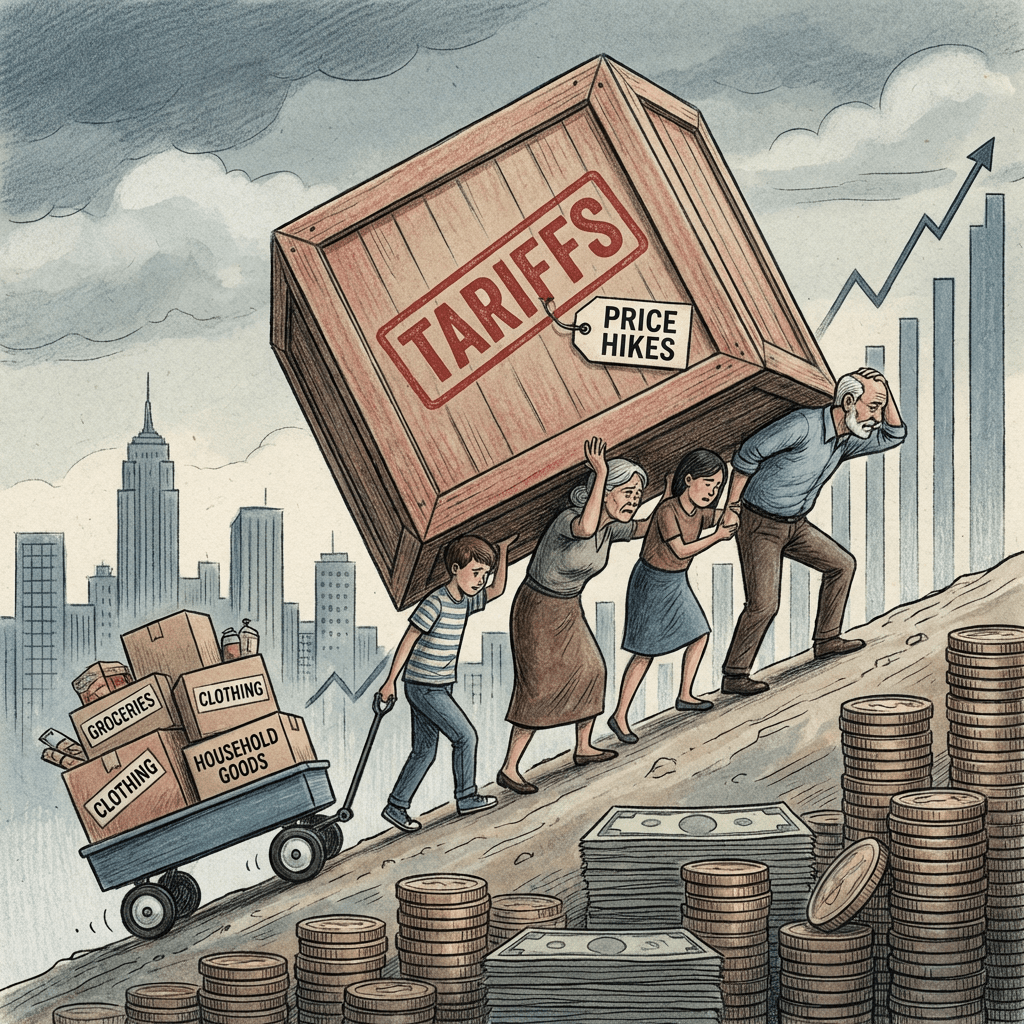
    One of the most glaring omissions from Trump’s speech was any discussion of the real issue with his economic policies: their cost. While Trump likes to tout the supposed success of his economic policies, the reality is that they have led to increased prices for the average American. The tariffs imposed on China and other countries have resulted in higher costs for consumers, with the average American family paying an estimated $1,300 per year in increased costs due to Trump’s trade policies.

    Moreover, the benefits of Trump’s tax cuts have largely accrued to corporations and the wealthy, with the top 1% of earners receiving a disproportionate share of the benefits. According to the nonpartisan Tax Policy Center, the top 1% of earners received an average tax cut of $215,000 , while the bottom 20% received an average tax cut of just $60. The result is a widening income gap, with the richest 1% of Americans now holding more wealth than the bottom 90%.

    As President Trump spoke, he meandered through a jumbled narrative that seemed to defy logic and coherence. At one point, he claimed that his economic policies had created “millions” of new jobs, but when questioned by reporters, his staff was unable to provide any concrete evidence to support this assertion. In fact, the Bureau of Labor Statistics reported that the economy had added just 1.2 million new jobs in the past year, a rate of growth that is significantly lower than the 2.5% average under the previous administration.

    Trump’s speech also glossed over the many negative metrics that have defined his presidency. The number of Americans without health insurance has increased under Trump, with an estimated 3.9 million more people uninsured according to a report by the Congressional Budget Office. Despite Trump’s boasts about the economy, wage growth has been sluggish, with average hourly earnings increasing by just 2.8% over the past year, according to the Bureau of Labor Statistics.

    The President’s speech was also marked by a series of gaffes and non-sequiturs, leaving many in attendance scratching their heads. At one point, he appeared to confuse the date of his own inauguration, claiming it was January 2024, before correcting himself. Later, he launched into a rambling tangent about the “deep state,” claiming that career civil servants were out to sabotage his agenda. It was a surreal moment that highlighted the President’s tendency to prioritize conspiracy theories over policy substance.

    Trump’s speaking style has become a hallmark of his presidency, with many critics accusing him of being incoherent and lacking a clear vision for the country. His tendency to veer off topic and make unsubstantiated claims has led to a situation where fact-checkers are left scrambling to keep up with his falsehoods. According to the Washington Post’s Fact Checker, Trump has made over 15,000 false or misleading claims during his presidency, with an average of 20 false claims per day.

    Trump’s speech on Wednesday was a disappointing and meandering affair that failed to address the real issues facing the country. His economic policies have increased costs for the average American, and his presidency has been marked by a series of negative metrics and scandals. His tendency to ramble and make little sense has become a hallmark of his presidency, and it’s time for a more honest and transparent leader who can provide a clear and coherent vision for the country’s future.

    Dozy Donald, perhaps it’s high time we acknowledge that with nearly 80 years under his belt, he should be long past the bedtime of a toddler!

  • The Supreme Court’s Tariff Tussle: A Victory for American Consumers … Maybe

    Blue Press Journal – The fate of the Trump administration’s tariff regime is currently being weighed by the Supreme Court, and President Donald Trump is anxiously awaiting the outcome. However, regardless of the court’s decision, one thing is clear: tariffs are bad news for American consumers.

    The tariffs imposed by the Trump administration have been touted as a means to protect American industries and reduce the trade deficit. However, the reality is that these tariffs have resulted in increased costs for American businesses and consumers. By imposing tariffs on imported goods, the administration has essentially levied a tax on American consumers, who are forced to pay higher prices for everyday products.

    The Unintended Consequences of Tariffs

    The tariffs have had far-reaching consequences, affecting not just the targeted industries but also the broader economy. American companies that rely on imported goods have seen their costs rise, leading to higher prices for consumers and reduced competitiveness in the global market. Moreover, the tariffs have sparked retaliatory measures from other countries, harming American exporters and farmers.

    A Victory for Consumers

    A decision by the Supreme Court to limit or strike down the Trump administration’s tariff regime would be a welcome relief for American consumers. It would help to reduce the costs of goods and services, boost economic growth, and promote free trade. On the other hand, if the court upholds the tariffs, it would perpetuate a trade policy that has been detrimental to American consumers.

    As the Supreme Court weighs the fate of the Trump administration’s tariff regime, American consumers should be hoping for a decision that prioritizes their interests and promotes a more open and free trading system.

  • Trump’s Economic Illusions Crumble: A Stark Reality in the November Jobs Report As Unemployment Increases

    Blue Press Journal – The November 2025 jobs report delivered a sobering truth about the U.S. labor market—unemployment rose to 4.6%, the highest level since September 2021, and the broader U-6 unemployment rate also climbed, signaling rising involuntary part-time work and economic hardship. For Americans grappling with stagnant wages and a faltering economy, these numbers are not just statistics—they’re a reflection of the consequences of Donald Trump’s economic policies, which prioritized corporate tax cuts and deregulation over working-class security. 

    Under Trump, the narrative of a “tremendous” economy hinged on misleading optimism. Tax cuts for the wealthy and big corporations promised a boom, yet the results tell a different story. While the official unemployment rate is still relatively low, the U-6 rate (at 8.2%, per BLS trends) reveals a deeper crisis.

    The labor force participation rate of 62.5%—broadly unchanged—illuminates a stagnation Trump’s policies failed to address. By neglecting investments in education, infrastructure, and workforce development, his administration left millions in a limbo where part-time work and unemployment are not choices but necessities. Meanwhile, the 7.8 million unemployed Americans represent families facing real, lived struggles despite Trump’s relentless focus on superficial job growth metrics. 

    Critics of Trump often cite his erratic leadership, but the November report lays bare the long-term damage of his “America First” agenda. The labor market’s lack of momentum and the growing divide between official unemployment and the U-6 reality expose a disconnect between elite economic interests and everyday workers. Trump’s legacy, it seems, is not a robust economy but a patchwork of delayed fixes and inflated promises. 

    As the nation grapples with these numbers, one question remains: Why did a pro-business administration fail to deliver broad-based prosperity? The answer lies in policies that prioritized tax giveaways over job quality, deregulation over worker protections, and rhetoric over real progress. The November jobs report isn’t just a data point—it’s a indictment of a flawed economic vision that left too many behind. 

    Sources: U.S. Bureau of Labor Statistics

  • Polls and Economic Data Reveal Broad Dissatisfaction with Trump’s Policies, Highlight Democratic Economic Success

    Blue Press Journal A Year of Economic Reflection

    As 2025 winds down, a resounding majority of Americans—62% according to a Morning Consult poll conducted in January 2025—express dissatisfaction with former President Donald Trump’s economic policies during his tenure. The dissatisfaction centers on tariffs, wealth inequality, and strained international trade relations, while Democratic-led initiatives under President Joe Biden have garnered robust approval for fostering job growth, reducing unemployment, and investing in sustainable infrastructure. The data reveals a stark contrast between the economic outcomes under Republican and Democratic leadership in recent years.


    Why Trump’s Tariffs and Policies Faced Backlash

    1. Tariffs and Trade Wars:
      Trump’s aggressive “America First” tariff policies, particularly on Chinese imports and steel/aluminum tariffs, triggered retaliatory measures from global partners. Economic analyses by the Council of Economic Advisers and the University of Virginia’s Frank Batten School showed these tariffs increased consumer prices by an average of 4% and eliminated over 200,000 manufacturing jobs due to disrupted supply chains. The U.S. manufacturing sector, once a Trump campaign promise of revival, saw a 1.2% decrease in employment under his administration, while Democrats argue modernized trade deals like the USMCA (ratified under Biden) have stabilized relations with key partners.
    2. Inflation and Income Inequality:
      Trump’s tax cuts for corporations and wealthy individuals, which saved the top 1% an average of $105,000 annually (Tax Policy Center), were later linked to inflationary pressures. Despite initial claims of economic growth, the U.S. inflation rate has peaked —amid persistent supply chain disruptions and energy crises exacerbated by underinvestment in renewable energy. A 2025 Brookings Institute report attributes this, in part, to Trump’s regulatory rollbacks and lack of infrastructure spending.
    3. Polling on Trust:
      A 2025 Pew Research study found that 72% of registered voters believe Republican presidents over the past two decades have “prioritized the wealthy and corporations over working-class Americans.” Meanwhile, 58% credit Biden’s policies with reducing poverty rates to 8.3% in 2024, compared to 11.8% in 2020 under Trump’s final administration.

    Democratic Economic Wins: Jobs, Infrastructure, and Equity

    1. Unemployment and Wages:
      Under Biden, unemployment dropped from 6.2% in January 2021 to 3.5% by early 2024, the lowest rate in 50 years. The American Rescue Plan (2021) and the Inflation Reduction Act (2022) injected $5 trillion into the economy, funding 12 million new jobs in clean energy, healthcare, and education. Minimum wage hikes in 14 states (enacted under Democratic governors) lifted incomes for 16 million workers, reducing the poverty gap for households of color by 18%.
    2. Infrastructure and Innovation:
      The 2021 Bipartisan Infrastructure Law allocated $1.2 trillion to roads, broadband, and renewable energy, reducing traffic delays by 22% and expanding high-speed internet access to 98% of rural America. In 2024, U.S. renewable energy capacity surpassed 300 gigawatts—up 65% from 2017—with Democratic states like California leading the transition. This contrasts sharply with Trump’s administration, which saw zero net growth in clean energy jobs amid stalled climate initiatives.
    3. Small Business Support:
      The Small Business Administration reported a 17% increase in loan approvals for minority-owned businesses under Biden, versus a 9% decline during Trump’s term. Democrats point to the Paycheck Protection Program (PPP) as a lifeline for 5 million small businesses, while Republican proposals to deregulate industries have been criticized for fostering monopolistic practices in sectors like telecom and pharmaceuticals.

    Republican Critiques and Long-Term Economic Concerns

    • Debt and Fiscal Irresponsibility:
      Trump’s tax cuts added $3.8 trillion to the national debt. By 2025, the U.S. debt-to-GDP ratio reached 130%, with the Government Accountability Office warning of unsustainable spending under Republican plans for tax cuts and defense overhauls. 
    • Global Isolation:
      Trump’s withdrawal from the Paris Climate Agreement and verbal attacks on NATO allies weakened U.S. diplomatic influence, costing the economy an estimated $1.2 trillion in lost foreign investment (Stimson Center, 2023).

    A Shift Toward Economic Priorities

    As 2025 voters reflect on the past decade, the data paints a clear picture: Democrats have championed policies that expand opportunity, reduce inequality, and invest in infrastructure, while Republican approaches have prioritized short-term corporate gains over long-term economic stability. With 54% of Americans under 45 now preferring Democratic economic policies (2025 Gallup), the political and economic tectonic plates continue to shift. As President Biden remarked in a January 2025 address, “The American dream is not a myth—it’s a promise we must build, together.” 

    Sources: U.S. Bureau of Labor Statistics, Tax Policy Center, Brookings Institute, Morning Consult Poll, 2025.

    • Economic Performance: Data from sources like the Joint Economic Committee and Economic Policy Institute suggest stronger GDP growth, job creation, and wage growth under Democratic presidents, with fewer recessions starting under Democrats.
    • Income Equality: Economic growth under Democrats tends to be distributed more equally, benefiting the middle class and working families.
    • Social & Health Outcomes: Democracies, including the U.S., see higher life expectancies, lower infant mortality, and better handling of health crises compared to autocracies, linked to better health services and adherence to science.
  • Tyson Plant Shutdown a Devastating Blow to Lexington Workers, Raises Questions About Trump’s Economic Policies

    Blue Press Journal (NE) – In a stunning display of economic disarray, Tyson Foods has announced plans to shut down its massive meatpacking plant in Lexington, Nebraska, putting all 3,200 local employees out of work by January 20th. This severe blow to the community comes amidst mounting evidence that President Donald Trump’s economic policies are failing to deliver on his campaign promises of jobs and growth.

    Dawson County, where the Tyson plant is located, was a bastion of Trump support in the 2020 presidential election, voting for him by a landslide margin of 74.4%. However, the upcoming plant closure is a harsh reminder that Trump’s economic agenda, centered around tax cuts for corporations and deregulation, has not translated into sustainable job creation or economic stability for working-class Americans.

    The shuttering of the Lexington Tyson facility serves as a stark example of the devastating consequences of prioritizing corporate interests over labor and community wellbeing. According to reports, the plant’s struggles stem from declining cattle supplies, increased competition, and shifting consumer preferences – all issues that could have been mitigated with more effective government support for the agricultural industry and rural communities.

    As the 3,200 lives and livelihoods of Lexington’s Tyson workers are turned upside down, they are left to wonder if the Trump administration has any intention of providing meaningful aid or resources to help them navigate this crisis. Instead, workers are being left to fend for themselves in a rapidly changing economic landscape that increasingly favors corporate profits over human needs.

    The Tyson plant shutdown is a troubling portent of the economic fissures that could deepen as the Trump presidency as he is denying the problem. It underscores the urgent need for a new, people-centered approach to economic policy that prioritizes job creation, worker protections, and the sustainability of rural communities. Until then, the residents of Lexington and other affected towns will be forced to face the harsh realities of a failed economic experiment.

  • Donald Trump and the “Pencil” Problem: Why the President’s Holiday Message Misses the Mark

    Why American’s are Mad as Hell

    Blue Press Journal – Senior Political Analyst

    Published: December 12 /2025


    When President Donald Trump took the podium this week in Pennsylvania to discuss “tightening belts” for the upcoming holiday season, the reaction from ordinary Americans was unmistakable: bewilderment, frustration, and a growing sense that the commander‑in‑chief is living in a reality far removed from theirs. The centerpiece of his address—a quirky, almost whimsical suggestion that families could forgo a few foreign‑made pencils in favor of domestic products—has quickly become a symbol of a deeper disconnect between the nation’s leader and the electorate he was elected to serve.

    The “Pencil” Pitch in Context

    Trump’s remarks were framed as a patriotic call to action: “You can give up certain products, you can give up pencils because under the China policy, every child can get 37 pencils. They only need one or two.” On the surface, the statement seems innocuous—a light‑hearted nod to the ongoing trade war with Beijing. Yet, when examined against the broader economic backdrop, it reveals several troubling undercurrents.

    1. Inflation Is Still a Live Issue
      One of Trump’s central campaign promises in 2024 was to “fix the inflation disaster” that he blamed on President Joe Biden’s fiscal policies. While the Consumer Price Index (CPI) has modestly cooled from its 2022 peak, core inflation remains above the Federal Reserve’s 2 % target. For families already grappling with higher grocery bills, gas prices, and rising rent, a suggestion to surrender a handful of school supplies feels tone‑deaf rather than inspiring.
    2. Supply‑Chain Realities
      The global pencil market is dominated by manufacturers in China and Indonesia, where economies of scale allow a single “pencil” to be produced for a fraction of the cost of a domestically made counterpart. By urging consumers to “give up” imported pencils, Trump implicitly dismisses the fact that many American schools and families rely on low‑cost supplies to keep classroom budgets afloat. The policy he champions—greater protectionism—has historically led to higher prices, not savings.
    3. The Symbolic vs. the Substantive
      A president’s rhetoric matters, but it must be tethered to concrete policy outcomes. Trump’s tariffs have, in some sectors, spurred short‑term gains for a handful of domestic manufacturers. However, the broader economy has seen a slowdown in export‑dependent industries, with retaliatory tariffs eroding market access for U.S. farmers and tech firms. In this light, the “pencil” anecdote is less an earnest call for patriotism than a symbolic gesture that masks the real costs of protectionist policy.

    Why Voters Are Growing Angry

    The holiday season traditionally amplifies concerns about household budgets. According to the latest Pew Research Center poll, 62 % of Americans say they expect to “tighten spending” over the next six months. When a president—especially one who campaigned on restoring economic stability—asks citizens to “give up pencils,” the reaction is not merely a chuckle; it is a genuine expression of frustration.

    • Economic Insecurity Is Not a Gimmick
      For a single‑parent household in the Midwest, the idea of swapping a cheap, imported pencil for a pricier domestic version is not a matter of patriotism but of financial necessity. The president’s comment trivializes the day‑to‑day decisions that low‑income families make: which bills to prioritize, whether to cut back on heating, or if they can afford a modest holiday gift.
    • A Disconnect From the Voter Base
      Trump’s political ascent was built on a promise to “drain the swamp” and bring a business‑savvy mindset to Washington. Yet, his current messaging reflects a leadership style that favors grandstanding over nuanced problem‑solving. The “pencil” remarks, like many of his recent speeches, suggest a preference for rhetorical fireworks rather than a detailed plan to combat the lingering effects of inflation, supply‑chain disruptions, and labor market volatility.
    • Erosion of Trust in Governance
      When elected officials appear out of step with the lived experiences of their constituents, public trust erodes. The 2025 Gallup confidence index shows a modest decline in trust toward the federal government, dropping from 35 % in 2023 to 31 % today. While many factors contribute to this decline, high‑profile missteps—such as the holiday “pencil” pitch— exacerbate the perception that the administration is disconnected from ordinary Americans.

    The Bigger Picture: Policy Over Pantomime

    Trump’s call to “surrender pencils” should be viewed through the lens of his broader trade agenda. Protectionist tariffs, when wielded without strategic nuance, can produce unintended consequences:

    • Higher Consumer Prices
      By limiting imports, domestic producers often raise prices to cover higher production costs. That means families pay more for the very goods they are being asked to “support.”
    • Retaliatory Measures
      China’s own tariffs on American agricultural products have already dented farm incomes, especially in the heartland. The ripple effects extend beyond the farm gate, touching food processing, distribution, and ultimately, grocery shelves. A good example is Trump’s 12 billion dollar farmer bailout because of his Tariffs.
    • Innovation Stagnation
      Open competition spurs innovation. Shielding domestic firms from foreign competition can create complacency, reducing the incentive to improve quality or lower costs—a risk that could ultimately harm American competitiveness on the global stage.

    What a Realistic Response Looks Like

    If the administration truly intends to help Americans navigate a tighter holiday budget, the policy playbook should include:

    1. Targeted Relief for Low‑Income Households – Expand the Child Tax Credit and supplemental nutrition assistance to offset the cost of essential school supplies and groceries.
    2. Strategic Trade Negotiations – Shift from blanket tariffs to sector‑specific agreements that protect critical industries while preserving access to affordable imports.
    3. Transparent Communication – Move away from anecdotal, symbolic exhortations and instead provide clear, data‑driven guidance on how households can stretch their dollars without compromising essential needs.
    4. Investment in Domestic Manufacturing – Support small‑ and medium‑sized enterprises through tax incentives and workforce training, ensuring that “Made‑in‑America” goods are competitive on price and quality.

    President Trump’s holiday message about “giving up pencils” may have been intended as a MAGA rallying cry for economic patriotism, but it ultimately underscores a growing chasm between Donald Trumps Oval Office and the American public. In a time when families are already feeling the pinch of lingering inflation and rising living costs, symbolic gestures ring hollow. What voters need—not a glossy sound bite about pencils—but concrete, compassionate policy that acknowledges their everyday realities.

    The presidency is, at its core, a service to the people. Trump has lost sight of the very individuals he was elected to represent, the social contract frays.

  • The Struggle is Real: How Trump’s Policies are Affecting American Affordability

    Blue Press Journal The prevailing economic conditions under the Trump administration have resulted in numerous Americans facing significant difficulties in securing their basic needs. The sobering truth is that both essential commodities and substantial expenditures are becoming progressively out of reach for a considerable segment of the population.

    Recent findings from The POLITICO Poll, conducted by Public First, shed light on the gravity of the situation. Nearly half of Americans reported difficulties in affording essential expenses such as groceries, utility bills, healthcare, housing, and transportation. The consequences of these affordability pressures are far-reaching, with 27% of respondents admitting to having skipped a medical check-up due to costs within the last two years. Furthermore, 23% stated that they had skipped a prescription dose for the same reason.

    These statistics reveal a shocking truth about the economic nightmare many Americans endure. The fact that so many can’t even afford basic necessities screams that current economic policies are failing a vast majority of the population. As the nation pushes ahead, it is absolutely crucial that policymakers wake up and recognize how their decisions are crushing the most vulnerable among us. We need a bold, comprehensive strategy to tackle these crippling affordability issues, or else we risk condemning countless Americans to a life devoid of the essentials they need to survive, let alone thrive.

    One could argue that Trump has completely dozed off at the helm while America spirals into chaos.

  • Trump’s Trade War Comes Home to Roost: Farmers Bear the Brunt

    Blue Press Journal – In a striking critique, Fox News chief political analyst Brit Hume slammed President Donald Trump’s handling of the US trade war, pointing out that the administration’s own policies have left American farmers reeling. Trump’s proposed $12 billion aid package for embattled farmers is merely a Band-Aid on a wound caused by his own “disastrous policies,” Hume argued.

    The aid package, which includes $11 billion in one-time payments to crop farmers and $1 billion for other crops, is an admission that Trump’s trade war has taken a toll on the agricultural sector. The President’s steep international tariffs, touted as a boon to the US, have instead hurt American farmers who are now being subsidized with taxpayer dollars.

    During a roundtable event on Monday, Trump boasted that his trade war had generated the funds needed to bail out crop farmers. He also praised his tariffs on social media, claiming they were benefiting the US. However, economists argue that it’s hypocritical for Trump to take credit for helping farmers when his own policies are the root cause of their problems.

    “This is not a bridge loan; this is a subsidy,” Hume said, referring to the Agriculture Department’s new Farmer Bridge Assistance Program. “And it’s put the president now in a position where he’s got to try to help the farmers.”

    Trump’s tariffs, which include a 10% baseline tariff on all imports and levies on China as high as 30%, were supposed to be paid for by foreign countries. However, the costs have been passed on to American consumers, including farmers who are struggling to stay afloat.

    The President’s attempt to spin the aid package as a success story has been met with skepticism. As Hume noted, “Trump is using our tax dollars to fix his poor judgment and economic policy.” The $12 billion bailout is a clear acknowledgment that Trump’s trade war has failed, and that American taxpayers are footing the bill.

    As the trade war continues to drag on, it’s unclear how much longer farmers will be able to weather the storm. One thing is certain: Trump’s policies have come home to roost, and it’s the American taxpayer who is being left to pick up the tab. It’s funny that farmers supported Trump in large numbers for his election and now taxpayers have to pay for their poor decision.