According to the report, committee staffers documented price increases for 688 medications, including 310 brand-name drugs and 378 generic ones, during Trump’s second term. The median increase was 5.5%, with 25 treatments more than doubling in cost. The report also notes that 15 of the 17 companies that received a letter from President Trump on July 31, 2025, raised the price of at least one product since Trump took office. Furthermore, since Trump sent letters asking drug companies to lower prices, the prices of 87 drugs have increased.
The report’s findings come as Trump announced that he will impose a 100% tariff on pharmaceutical products starting October 1, unless a product’s manufacturer is making or planning to make the product in the US. Insurers are already reporting that higher drug prices arising from tariffs will result in higher health insurance premiums.
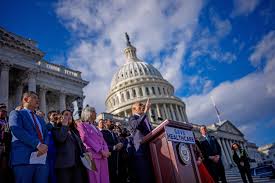
Sanders, a longtime advocate of Medicare for All, called on Trump to support his legislation ensuring Americans pay no more than others for the same prescription drug. “If President Trump is serious about making real change, he will support my legislation,” Sanders said. “Now is the time to end the greed of the pharmaceutical industry.”
The report’s release highlights the ongoing issue of rising prescription drug prices in the US and the urgent need for reform. As the debate continues, Sanders’ report underscores the importance of holding pharmaceutical companies accountable for their pricing practices.
In today’s political landscape, few groups are more closely watched than young voters. Their engagement, preferences, and concerns can shift the direction of elections—and in 2025, their skepticism toward Donald Trump’s economic agenda is telling. While Trump has managed to attract some younger voters with his anti-establishment appeal, new research suggests his support rests on shaky ground.
According to a spring poll from the Harvard Kennedy School’s Institute of Politics, which surveyed more than 2,000 adults aged 18 to 29, opposition among young Americans is high on core economic issues. The numbers are clear: tariffs, cost-of-living concerns, and a lack of faith in Trump’s policies are eroding his credibility with a generation already financially strained.
The Numbers Speak Loudly
Here’s a breakdown of the poll’s most eye-opening findings:
Issue
Support
Oppose
Tariffs on imports
19%
50%
Trump’s economic policies overall
18% (say it will help)
51% (say it will hurt)
These figures highlight what may become a central challenge for Trump: his economic strategy simply doesn’t align with the lived experiences of young people.
Why Young Americans Are Disenchanted
1. Rising Costs and Stagnant Wages
Young adults are deeply sensitive to cost-of-living increases. From soaring housing prices to persistent student debt and wages that have barely kept pace with inflation, this generation feels squeezed from all sides. When Trump’s policies appear to worsen these pressures—such as implementing tariffs that raise consumer prices—opposition is only natural.
2. Weak Partisan Loyalty
Unlike older generations, young voters are far less tethered to a political party. Many identify as independents or express equal frustration with both Democrats and Republicans. This makes them a swing constituency, influenced less by partisan loyalty and more by material outcomes in their daily lives.
3. A Desire for Change, Not Continuity
The attraction to Trump among some young people was never about endorsement of his policies—it was about disrupting a political system they view as broken. That disillusionment worked in Trump’s favor for a time, but it is now colliding with the reality of lived experiences.
Voices from a Generation
Quinton, a 33-year-old account manager from Georgia, expressed a frustration that resonates with many in his peer group:
“The job market is just not good at all. I have a lot of friends and family members who are struggling to find work. He made it seem like he was going to look out for the working-class people, and it’s the exact opposite.”
Quinton’s words reflect the sentiments of countless young workers who expected protection and prosperity but feel left behind.
A Fragile Coalition
Trump’s foothold with younger voters is less about ideological consensus and more about rebellion against the status quo. But rebellion without results cannot sustain a political coalition. The fact that 51% of financially struggling young adults believe Trump’s policies will actively hurt their wallets shows that his foundation with this demographic is starting to crumble.
This fragility also leaves an opening for other candidates. If Democrats can address cost-of-living concerns with concrete proposals on student debt relief, affordable housing, and wage growth, they have a real chance to win back voters disenchanted with Trump. Conversely, if they fail to connect with young people in a genuine way, the vacuum may once again be filled by anti-establishment rhetoric—this time from someone new.
The Stakes Ahead
Why does all of this matter? Because Millennials and Gen Z now comprise the largest voting bloc in America. Their economic fortunes and frustrations are poised to define not just the 2024 election, but the future of U.S. politics.
The lesson is clear: broad slogans won’t cut it. Young Americans expect direct answers to their toughest financial burdens. Tariffs that raise prices, tax policies that don’t favor workers, and vague promises about economic renewal won’t win over a generation that is already skeptical of political spin.
Blue Press Journal – Apothecary Chocolates, a specialty chocolate company based in Colton, NY, has closed its doors due to the uncertainty surrounding tariffs and their impact on the global cocoa market. The company’s owner, Shelby Connelly, cited the fear of impending tariffs as a major factor in her decision to shutter the business.
Connelly founded Apothecary Chocolates in 2017, using European chocolate product Callebaut to create unique chocolate bars and truffles. However, the cost of Callebaut skyrocketed from $90 per 22-pound bag in 2017 to $250 per bag this spring, following President Trump’s announcement of tariffs on cocoa-bean producing countries. Despite efforts to find alternative suppliers, Connelly was unable to mitigate the price increases, which ultimately made it impossible for the business to operate.
The price hikes were not only caused by tariffs, but also by market uncertainty and fear. Suppliers hesitated to produce and distribute cocoa beans, leading to shortages and price increases, which were too much for the small business to overcome.
Connelly is quick to acknowledge that other factors, such as COVID-19-related price hikes and increasing packaging costs, also contributed to the company’s demise. However, the tariff-induced panic was the final nail in the coffin. The fact that the issue was not related to cocoa bean production, but rather a global trade situation, made it particularly difficult for Connelly to accept.
The closure of Apothecary Chocolates has not only affected Connelly but also her three full-time chocolatiers, who have lost their jobs. Connelly, who also works as an acupuncturist, is particularly concerned about the impact on her former employees, who relied on the company as their sole source of income.
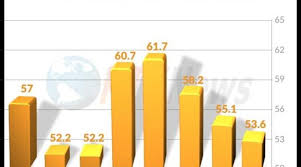
Conducted from September 19-21 among 1,019 Americans with a margin of error of 3 percentage points, the survey shines a spotlight on an evolving economic outlook among the populace. A significant 54 percent of respondents expressed that the nation’s economy is currently on the wrong track. This figure represents a slight increase from August’s 53 percent and a more notable rise from July’s 52 percent, suggesting a growing apprehension about the economic trajectory. The trend indicates a consistent uptick in skepticism over the past few months.
When it comes to the President’s direct handling of economic matters, approval numbers remain relatively low. Just over a third of respondents, 35 percent, approved of President Trump’s approach to the economy. Even more telling is the public’s perception of his administration’s efforts to address the cost of living – a direct and tangible concern for many households. Less than three-in-ten Americans, specifically 28 percent, approved of President Trump’s handling of this crucial issue.
Further complicating the economic picture is the recent fluctuation in employment figures. The unemployment rate, a key indicator of economic health, saw an increase last month, rising to 4.3 percent.
These findings suggest a population uneasy about the nation’s economic course. The rise in those feeling the economy is on the wrong track, paired with low approval for the President’s economic management, signals potential “buyers remorse” among voters, indicating that the Trump’s administration struggles to convince most Americans of its effectiveness in managing economic challenges.
Blue Press Journal – The Trump administration’s aggressive trade policies, particularly the imposition of high tariffs on imported goods, have been touted as a means to achieve a “golden age” of economic growth and prosperity. However, a closer examination of the data reveals that these policies have had a profoundly negative impact on American consumers, resulting in higher prices for everyday goods and services.
According to a recent analysis of federal government statistics, the inflation rate for groceries has surged to 3.1% on an annualized basis, significantly outpacing the 1.8% increase in grocery prices during President Biden’s final year in office. The inflation rate for electricity is even more striking, with a staggering 15.7% increase over the past four months, more than four times the rate during Biden’s final year.
Category
Inflation Rate (Annualized)
Groceries
3.1%
Electricity
15.7%
Overall Inflation
3.1%
The overall inflation rate has also surpassed the rate during Biden’s last 12 months in office, with a current rate of 3.1% compared to 2.8%. This trend is likely to continue, as the effects of the tariffs are still being felt throughout the economy.
Economists had warned that the imposition of tariffs would lead to higher prices, and the data is now bearing out these predictions. As University of Michigan economics professor Justin Wolfers notes, “This is what economists warned would happen. Trump promised these prices would fall. While one could quibble about the rate at which these prices are rising, there’s no question that he hasn’t delivered.”
One of the most extreme examples of the impact of tariffs on prices is the coffee industry, which is experiencing a staggering 63% annualized inflation rate. This is largely due to the 50% import tax on coffee from Brazil, a major coffee exporter. This tax was imposed in response to Brazil’s prosecution of Trump’s friend and ally, Jair Bolsonaro.
The consequences of these policies are likely to be felt by the very voters who supported Trump’s candidacy in the 2024 election. A recent Fox News poll found that “the cost of living” is now Trump’s worst issue, with only 32% of voters approving of his handling of the issue and 67% disapproving.
As the data continues to show, Trump’s “golden age” of tariffs has been a disaster for American consumers. Rather than delivering on his promises of lower prices, his policies have led to higher prices and a declining standard of living. It remains to be seen how the administration will respond to these challenges, but one thing is clear: the American people deserve better than a policy of higher prices and economic uncertainty.
The Trump administration’s trade policies have been a failure, leading to higher prices and a decline in the standard of living for American consumers. The data is clear, and the consequences are real. It is time for the administration to rethink its approach and prioritize the needs of the American people, rather than pursuing a policy of protectionism and economic nationalism.
This perfect storm is threatening to unleash a “looming farm crisis” that could devastate the livelihoods of farmers across the country. According to Politico, crop farmers are especially suffering, with many facing financial ruin as a result of the trade wars. The situation is so dire that Trump Agriculture Department officials have privately begun preparing for a bailout fund, although it’s unlikely that any relief payments will be made this fall.
Ironically, many of the farming-dependent counties that backed Trump in 2020 with an average of 77.7% of the vote are now feeling the pain of his trade policies. However, neither farmers nor Republicans are ready to completely abandon the president just yet. While some farmers are beginning to question their support for Trump, others remain loyal, hoping that he will eventually deliver on his promises to restore American agriculture to its former glory.
The crisis facing farmers highlights the unintended consequences of Trump’s trade wars. Instead of protecting American industries, the tariffs have shifted the burden to agriculture. As the situation worsens, it remains uncertain if Trump will address farmers’ suffering or prioritize his trade agenda over rural Americans’ livelihoods. One thing is clear: the fate of American farmers is precarious, and the effects of these trade wars will linger for years.
The poll also highlights the deep divisions within the country, with nearly half of Democrats (49%) reporting that they are “furious” about the actions of the Trump administration. In contrast, 27% of Republicans say they are “thrilled” with the administration’s actions, while 18% report being “happy” and 28% say they are “satisfied”. These results demonstrate the intense polarization that has come to characterize American politics under Trump’s presidency.
One area where Trump’s ratings are particularly weak is on economic matters. Only 39% of Americans approve of his handling of inflation, while 41% approve of his handling of trade and tariffs. These numbers are concerning, given the significant impact that economic policy can have on the lives of everyday Americans.
On the other hand, there is one issue where Americans are largely united: the use of vaccines to prevent diseases. A whopping 78% of respondents strongly or somewhat support the use of vaccines, with 49% strongly supporting it. This overwhelming majority demonstrates that, despite their differences, Americans can come together on issues that affect the health and well-being of their communities.
Blue Press Journal (Opinion) – The old adage “you reap what you sow” has never been more apt than in the case of Arkansas farmers who are now facing the dire consequences of their support for President Trump and his disastrous trade policies. Despite being warned about the potential risks of Trump’s tariffs and trade wars, many farmers in the state enthusiastically backed the president, hoping that his “America First” agenda would somehow magically benefit them. Fast forward to the present, and it’s clear that their decision has come back to haunt them.
A Perfect Storm of Problems
This year, Arkansas farmers have been hit with a perfect storm of problems that have left them on the brink of bankruptcy. A dismal global market, plunging commodity prices, and sky-high input costs due to inflation and tariffs have combined to create a perfect storm of financial woes. As the table below illustrates, the numbers are stark:
Category
2024
2025
Soybean Prices
$9.50/bushel
$7.50/bushel
Corn Prices
$3.50/bushel
$3.00/bushel
Farm Input Costs
$500/acre
$600/acre
As one farmer lamented, “We’re facing a situation where we can’t even break even, let alone make a profit. The prices are so low, and the costs are so high, it’s like we’re being squeezed from both sides.” Another farmer added, “I’ve been farming for 30 years, and I’ve never seen it this bad. We’re talking about farms that have been in families for generations, and now they’re on the verge of closure.”
The Elephant in the Room
Despite the obvious connection between Trump’s policies and their predicament, not one of the farmers is willing to speak out against the president or the Republicans in Congress. As one farmer sheepishly admitted, “We can’t really say anything bad about Trump, because we supported him. It’s like we’re stuck between a rock and a hard place.” This reluctance to criticize the president is understandable, given the fact that many farmers voted for him in the hopes that he would help their industry.
However, as the saying goes, “you can’t have your cake and eat it too.” By supporting Trump and his policies, farmers essentially made a bet that has not paid off. As economist and trade expert, Dr. Jennifer Hillman, notes, “The tariffs have had a devastating impact on farmers, and it’s only going to get worse. The administration’s policies have created a perfect storm of problems that will take years to recover from.”
The Free Market Solution
So, what’s the solution to this mess? Some might argue that the government should step in and provide a bailout to struggling farmers with our tax taxdollars.. However, this approach only serves to reward bad decision-making and perpetuate a cycle of dependency. As the old saying goes, “if you make a bad bet, you should have to pay the price.” In this case, the price is the loss of their farms and livelihoods.
As columnist and economist, Paul Krugman, argues, “The free market has a way of weeding out inefficient producers and rewarding those who make smart decisions. If farmers made a bad bet on Trump, that’s not the government’s problem to fix.” This approach may seem harsh, but it’s the only way to ensure that farmers and other businesses make informed decisions that benefit the economy as a whole.
The plight of Arkansas farmers serves as a cautionary tale about the dangers of making decisions based on ideology rather than facts. By supporting Trump and his disastrous trade policies, farmers have essentially sealed their own fate. As the old saying goes, “you made your bed, now lie in it.” Perhaps next time, they will think twice before voting for a party and president that is bad for America and the economy.
Blue Press Journal – In a move that has been widely criticized, the Trump administration’s decision to end the “de minimis exemption” for low-value parcels has resulted in a staggering 80% decline in postal traffic to the US. The exemption, which has been in place since 1938, allowed for duty-free entry of parcels valued below a certain threshold. However, the administration claims that it had become a loophole for foreign businesses to evade tariffs and for criminals to smuggle drugs into the country.
The Universal Postal Union (UPU) has expressed frustration with the sudden change, stating that its members were not given sufficient time or guidance to comply with the new procedures. The UPU has started rolling out measures to help postal operators calculate and collect duties, but the damage has already been done. As of August 29, 2025, the global postal network has seen a near-halt in traffic to the US, with carriers and customs agencies struggling to cope with the new rules.
The Trump administration’s decision has been criticized as protectionist, harming international trade. The UPU warns that the new rules will raise costs and delays for consumers, possibly pushing some businesses to leave the US market. This move also negatively impacts small businesses and individuals dependent on international trade.
The elimination of the de minimis exemption is a recent protectionist measure by the Trump administration, raising concerns about global economic impact and potential retaliation. As the US postal network struggles to adapt, it’s uncertain how the administration will respond to international backlash.
Blue Press Journal – The latest jobs report has delivered a devastating blow to US President Donald Trump’s promise to revive the country’s manufacturing sector. Despite his boasts of turning the US into a “manufacturing powerhouse,” the numbers tell a starkly different story. Since Trump’s tariff announcement on April 2, the manufacturing sector has lost a staggering 42,000 jobs, with job openings and new hires declining by 76,000 and 18,000, respectively.
The Center for American Progress (CAP) has slammed Trump’s tariff policies, stating that they have had a disproportionately negative impact on the manufacturing sector. “The manufacturing sector is struggling more than the rest of the labor market under Trump’s tariffs, and manufacturing workers’ wage growth is stagnating,” wrote policy analyst Kennedy Andara and economist Sara Estep. This grim assessment is a far cry from Trump’s campaign promises, which touted his tariff regime as a key component of his plan to revive American manufacturing.
Experts are unanimous in their criticism of Trump’s approach. Michael Hicks, director of the Center for Business and Economic Research at Ball State University, told the CBC that “no treasure trove of jobs” is likely to come out of Trump’s tariffs. The US Supreme Court is expected to review Trump’s tariffs soon, following a ruling by the Court of Appeals for the Federal Circuit that many of them are illegal.
The facts are clear: Trump’s tariffs have not created jobs or boosted manufacturing but have led to losses and stagnant wages.